
- Startseite

- Ölgemälde-Reproduktion
- Franz Ehrlich
- DEVELOPMENT SCHEMES. Existing buildings / development as currently intended / development as it should be intended

 Druck bestellen Bild kaufen
 Versenden
 Teilen
 Details
 Zu Favoriten hinzufügen

 Herunterladen
 Ähnliche Objekte
 Röntgenaufnahme
 Diashow anzeigen
DEVELOPMENT SCHEMES. Existing buildings / development as currently intended / development as it should be intended
 Acrylic On Canvas
- WallArt
- Architectural Drafting
 47.0 x 36.0 cm
 Bauhaus Dessau Foundation
 Weiterlesen
Handgefertigte Öl-Reproduktion
Handgemaltes Ölgemälde auf Leinwand in Ihrer Wunschgröße und mit Rahmen, auf Bestellung von unseren Künstlern angefertigt.




P118B $10

P118H $10

P118W $10

P438Z $10

P508JH $12

P508YH $12

P805H $10

P805Z $10

P919BZ $10

P919G $10

P919XJ $10

P959ZH $10

P968JZ $12

W106C $8

W218G $10

W218JH $8

W218Y $10

W307PJ $10

W316G $10

W316PJ $8

W316Y $10

W398PJ $8

W4111J $10

W500HY $15

W500JH $15

W692G $12

W849H $8

W940BG $15

W953PJ $8




Wählen Sie aus unseren vordefinierten Größen, die den ursprünglichen Proportionen des Kunstwerks entsprechen.

Sie können Ihre eigenen Maße eingeben, um einen bestimmten Rahmen oder Platz auszufüllen. Wenn die gewählte Größe nicht den Proportionen des Originalbildes entspricht, werden wir das Kunstwerk entweder beschneiden oder das Gemälde durch zusätzliche, handgemalte Elemente erweitern. Ein digitales Mockup wird Ihnen zur Genehmigung zugesandt, bevor die Produktion beginnt.
Bitte beachten Sie, dass die Bildschirmvorschau nicht die tatsächliche Beschneidung oder Erweiterung widerspiegelt. Nur das Mockup zeigt die endgültige Komposition exakt an.
Obwohl Sondermaße verfügbar sind, empfehlen wir, eine Größe aus der vordefinierten Liste zu wählen, um die ursprünglichen Proportionen beizubehalten.
Nach der Bestellung wird das ArtsDot.com-Team dem Kunden Anweisungen per E-Mail zusenden und eine Mockup-Vorschau bereitstellen.
Weltweiter Versand () in nur 3 bis 4 Wochen statt der üblichen 5 Wochen. (2 Juli). Keine Kompromisse bei der Qualität.

Kostenloser weltweiter Expressversand

Hochwertige Leinenleinwand

Umfassender Versicherungsschutz beim Versand

Zollsteuer-Rückerstattungsgarantie

Garantie für echte Farbtreue

60-Tage-Rückgaberecht (nur bei Mängeln)

100% Geld-zurück-Garantie

Mengenrabatt verfügbar
 Die Glasoption ist nur in Größen unter 110 cm verfügbar.

DEVELOPMENT SCHEMES. Existing buildings / development as currently intended / development as it should be intended
Art der Reproduktion
Größe der Reproduktion
-


Endpreis aller Optionen
-
Beschreibung des Kunstwerks
Franz Ehrlich’s Development Schemes: A Blueprint for Vision
This meticulously crafted architectural drawing by Franz Ehrlich, dated unknown but originating from the mid-20th century, transcends mere technical documentation; it embodies a profound reflection of modernist ideals and the ambition to reshape urban landscapes. Executed in black ink on paper—a testament to traditional drafting techniques—the artwork presents a striking visual narrative that speaks volumes about its creator’s artistic sensibilities and intellectual engagement with the burgeoning field of architectural planning.- Subject Matter: The drawing focuses squarely on urban development, depicting detailed plans for constructing new buildings alongside existing structures. It's not simply about construction; it’s about reimagining spaces and integrating them harmoniously into the broader cityscape.
- Style & Technique: Ehrlich adheres to a distinctly architectural drafting style—characterized by orthogonal projection and prioritizing dimensional accuracy over artistic embellishment. The use of hatching patterns subtly conveys depth and shading, lending an illusion of realism to the schematic representation. Precise lines delineate building outlines and structural elements, reflecting the meticulous attention to detail demanded by professional architects.
- Historical Context: Produced during a period marked by significant architectural experimentation—particularly influenced by the Bauhaus movement—the drawing embodies the modernist ethos of functionality, simplicity, and rational design. The Bauhaus’s emphasis on uniting art and craft aimed to liberate architecture from ornamentation and elevate it to a higher level of aesthetic expression.
- Composition & Visual Elements: The image is dominated by three horizontal rows of building designs arranged in a grid format—a deliberate choice that underscores the systematic planning inherent in urban development schemes. A rectangular border frames the artwork, reinforcing its formal character and conveying a sense of seriousness.
- Symbolism & Emotional Impact: Beyond its technical precision, the drawing evokes a powerful feeling of order, control, and optimism—reflecting the belief that architecture could contribute to creating more efficient and aesthetically pleasing environments. It’s a visual manifesto for shaping cities according to enlightened principles.
Detailed Examination of Drawing Techniques
Ehrlich's masterful use of hatching is particularly noteworthy. Rather than relying on shading gradients, he employs dense lines to simulate tonal variations within the building facades—a technique that maximizes clarity and minimizes visual distortion. The density of hatching corresponds directly to the perceived level of illumination, creating a convincing illusion of depth without resorting to perspective conventions. This deliberate stylistic choice underscores Ehrlich’s commitment to conveying spatial information accurately while maintaining an understated aesthetic sensibility.Exploring Connections to Bauhaus Ideals
The drawing's stylistic lineage can be traced directly back to the Bauhaus school in Dessau, where Ehrlich honed his artistic skills during a formative period of experimentation and innovation. Like other Bauhaus architects, Ehrlich championed the concept of “Gesamtkunstwerk”—a holistic approach to design that integrates various art forms into a unified aesthetic experience—rejecting the decorative excesses of Victorian architecture. This commitment to functionality and simplicity aligns perfectly with the drawing’s core message: architecture should serve humanity's needs while elevating its visual beauty.A Legacy of Precision and Vision
Franz Ehrlich’s “Development Schemes” remains a compelling exemplar of modernist architectural drafting—a testament to his artistic talent and intellectual curiosity. Its enduring appeal lies not only in its technical accuracy but also in its ability to communicate a powerful vision for shaping urban spaces—a vision rooted in the belief that architecture could contribute meaningfully to improving human life and fostering a more harmonious relationship between art and society.Ähnliche Kunstwerke


Biografie des Künstlers
Early Life and Education
Franz Ehrlich, a name synonymous with both architectural innovation and profound political engagement, was born in Reuth, Germany, in 1907. From his earliest years, a deep-seated passion for the arts ignited within him—a desire to translate vision into tangible form. This innate inclination led him to enroll at the prestigious Bauhaus school in Dessau, beginning in 1927. The Bauhaus represented more than just an educational institution; it was a crucible of artistic experimentation, a breeding ground for avant-garde movements that sought to redefine aesthetics and functionality. Under the tutelage of masters like Walter Gropius, László Moholy-Nagy, Paul Klee, and Joost Schmidt, Ehrlich immersed himself in the principles of modernism, exploring typography, design, and sculpture with an unwavering commitment to innovation. The Bauhaus experience fundamentally shaped his artistic perspective, instilling within him a belief in the power of art to transform society and a deep appreciation for collaborative creativity.Artistic Career and Communist Affiliation
Ehrlich’s career trajectory was inextricably linked to his political convictions. A fervent supporter of the communist party, he became deeply involved in the resistance against the rising tide of Nazism. This commitment ultimately led to his arrest and imprisonment in 1935, a harrowing experience that profoundly altered the course of his life. Despite facing immense hardship and persecution, Ehrlich refused to abandon his artistic pursuits. He continued to contribute significantly to the world of art, leaving behind a legacy marked by resilience, integrity, and a steadfast belief in social justice. His work during this period reflects both the constraints imposed upon him and his unwavering determination to express himself creatively within those limitations.Notable Works
Ehrlich’s artistic output encompassed a diverse range of projects, each demonstrating his unique approach to design and architecture. Among his most celebrated achievements are: “800 YRS. FRAMEWORK WALL 3” (Leipzig Trade Fair), an ambitious exhibition display that showcased his innovative use of space and materials; the meticulously planned foundation drawings for Professor Dr. Baumann’s house, a testament to his architectural expertise; and "1933" – a groundbreaking photo-sculptural advertising project—a daring experiment that seamlessly blended photography and sculpture, revealing Ehrlich's experimental nature and willingness to push artistic boundaries. These projects, along with numerous others, collectively illuminate the breadth of his creative vision and his ability to translate complex ideas into compelling visual forms.Museums and Collections Featuring Ehrlich’s Work
Ehrlich’s work has been preserved in several key institutions, offering visitors a valuable opportunity to engage with his artistic legacy. The ArtsDot.com website features an extensive collection of his works, including the aforementioned projects. Furthermore, the Bauhaus Dessau Foundation (Dessau-Roßlau, Germany) serves as a vital repository for his artistic endeavors, housing original drawings, models, and other artifacts that provide insights into his creative process. The preservation and exhibition of these works ensure that Ehrlich’s contributions to art history will continue to be appreciated by future generations.Legacy and Impact
Franz Ehrlich's impact extends far beyond the confines of his individual creations. His life story—a narrative interwoven with artistic brilliance, political activism, and personal hardship—offers a poignant reflection on the intersection of art and politics during a tumultuous period in German history. He stands as a symbol of resistance against oppression and a testament to the enduring power of creativity to inspire hope and challenge convention. His work continues to resonate today, prompting us to consider the role of art in shaping our understanding of the world and advocating for social justice.
Franz Ehrlich
1907 - 1984 , Deutschland
Kurzinfos
- Artistic Movement Or Style: Bauhaus, Expressionismus
- Artists Or Movements Influenced By This Artist: ['Young Communist League']
- Artists Who Influenced This Artist:
- Gropius
- Moholy-Nagy
- Klee
- Schmidt
- Date Of Birth: 1907
- Date Of Death: 1984
- Full Name: Franz Ehrlich
- Nationality: Deutsch
- Notable Artworks:
- 800 YRS. FRAMEWORK WALL 3
- Das Buch
- Haus Bauman
- 1933
- Place Of Birth: Reuth, Deutschland
Ähnliche Artikel

The Enduring Legacy of Architecture in Art: A Historical Survey of Representation & Meaning
Explore the rich history of architecture in art, from Renaissance theory to 19th-century reconstructions. Discover key artists & movements shaping visual representation – a guide for discerning collectors.

Von der Momentaufnahme zum Schema: KI-gestützte Blaupausen und die zeitlose Ästhetik technischer Repräsentation
Verwandeln Sie Ihre Fotos in einzigartige, handgemalte Kunstwerke! ArtsDot bietet Premium-Qualität, KI-gestützte Blaupausen & persönliche Beratung. Investieren Sie in ein bleibendes Vermächtnis – jetzt gestalten!
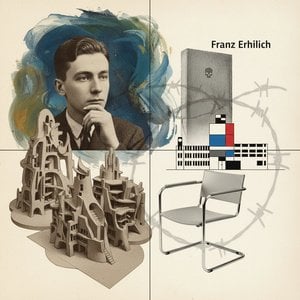
Franz Ehrlich: Bridging Expressionism, Bauhaus & the Shadows of History
Explore the life of Franz Ehrlich, a pivotal Bauhaus architect whose career spanned Expressionism, resistance during Nazi Germany, and GDR reconstruction. Discover his complex legacy & view museum-quality reproductions at ArtsDot.

Concrete Visions: Exploring the Urban Landscape in Painting – From Realism to Contemporary Art
Explore the evolution of cityscape painting from Realism to contemporary art with ArtsDot. Discover key artists & invest in timeless urban visions. Expert guidance, museum-quality reproductions.

Arthur Rackham: Meister der britischen Illustration und die verzauberte Welt der Märchen
Entdecken Sie die zauberhafte Welt von Arthur Rackham (1867-1939), dem Meister der britischen Illustration! Erfahren Sie mehr über seinen einzigartigen Stil, berühmte Werke und den Wert seiner Kunstsammlung. Jetzt lesen!



