


 In echtem Maßstab anzeigen
 Versenden als Grußkarte
 Teilen
 Details anzeigen
 Leitfaden

 Herunterladen
 Ähnliche Objekte
 Röntgenaufnahme
 Diashow
 Besucherstatistiken
Singing Boy with a Flute
 Acryl auf Leinwand
- Wandkunst
- Dutch Golden Age
 1623
1623 62.0 x 55.0 cm
 Staatliche Museen zu Berlin
 Mehr anzeigen
Handgefertigte Ölreproduktion
Handgemaltes Ölgemälde auf Leinwand in Ihrer Wunschgröße und mit Rahmen, auf Bestellung von unseren Künstlern angefertigt. ( Zum Druck wechseln Zum digitalen Bild wechseln)




P118B $10

P118H $10

P118W $10

P438Z $10

P508JH $12

P508YH $12

P805H $10

P805Z $10

P919BZ $10

P919G $10

P919XJ $10

P959ZH $10

P968JZ $12

W106C $8

W218G $10

W218JH $8

W218Y $10

W307PJ $10

W316G $10

W316PJ $8

W316Y $10

W398PJ $8

W4111J $10

W500HY $15

W500JH $15

W692G $12

W849H $8

W940BG $15

W953PJ $8




Wählen Sie aus unseren vordefinierten Formaten, die den ursprünglichen Proportionen des Kunstwerks entsprechen.

Sie können Ihre eigenen Maße eingeben, um einen bestimmten Rahmen oder Platz auszufüllen. Wenn die gewählte Größe nicht den Proportionen des Originalbildes entspricht, werden wir das Kunstwerk entweder beschneiden oder das Gemälde durch zusätzliche, handgemalte Elemente erweitern. Ein digitales Mockup wird Ihnen zur Genehmigung zugesandt, bevor die Produktion beginnt.
Bitte beachten Sie, dass die Bildschirmvorschau nicht die tatsächliche Beschneidung oder Erweiterung widerspiegelt. Nur das Mockup zeigt die endgültige Komposition exakt an.
Obwohl Sondermaße verfügbar sind, empfehlen wir, eine Größe aus der vordefinierten Liste zu wählen, um die ursprünglichen Proportionen beizubehalten.
Nach der Bestellung wird das ArtsDot.com-Team dem Kunden Anweisungen per E-Mail zusenden und eine Mockup-Vorschau bereitstellen.
Weltweiter Versand () in nur 3 bis 4 Wochen statt der üblichen 5 Wochen. (22 September). Keine Kompromisse bei der Qualität.

Kostenloser weltweiter Expressversand

Hochwertige Leinenleinwand

Vollständiger Versicherungsschutz beim Versand

Zollgebühren-Rückerstattungsgarantie

Garantie für exakte Farbtreue

100-tägiges Rückgaberecht (nur bei Mängeln)

100% Geld-zurück-Garantie

Angebot für Mengenrabatt
 Die Glasoption ist nur für Größen unter 110 cm verfügbar.

Singing Boy with a Flute
Reproduktionsmedium
Format der Reproduktion
-


Gesamtpreis
$ 263
Singing Boy with a Flute: A Window into Dutch Golden Age Life
Frans Hals’ “Singing Boy with a Flute,” painted in 1623, isn't merely a portrait; it’s a vibrant snapshot of a fleeting moment, a testament to the artist’s revolutionary approach to capturing human character and emotion. This intimate piece, measuring just 62 x 55 cm, immediately draws the viewer into a scene brimming with youthful exuberance and quiet contemplation. The subject, a young man dressed in a simple yet elegant black hat adorned with a striking white feather – a detail that hints at both status and perhaps a touch of playful vanity – holds a flute to his lips, poised as if about to release a cascade of melody. His gaze, directed squarely at the viewer, is not one of grand pronouncements but rather an expression of absorbed enjoyment, suggesting he’s lost in the pleasure of the music itself.
Hals' genius lies in his masterful manipulation of brushwork. Unlike many of his contemporaries who meticulously rendered every detail with painstaking precision, Hals employed a remarkably loose and expressive technique. Notice how the paint seems to dance across the canvas – short, broken strokes create an immediate sense of movement and vitality. This spontaneity isn’t haphazard; it's deliberate, designed to capture not just the appearance of the boy but also his spirit, his energy, and the very essence of a joyful moment. The background, a deceptively simple blue sky, provides a crucial contrast, emphasizing the figure and adding depth to the composition without distracting from the central subject.
The Artist and His Time: Frans Hals’ Revolutionary Portraiture
Frans Hals I (1582-1585), though his life was tragically short, left an indelible mark on the art world. Born in Antwerp and trained initially in that vibrant artistic hub, he later found a home in Haarlem, where he quickly established himself as one of the most important figures of the Dutch Golden Age. Hals’s work stands apart from the prevailing trends of his era. While other artists focused on idealized representations or elaborate courtly scenes, Hals favored capturing everyday life – portraits of merchants, militia members, and ordinary citizens. This shift reflected a broader cultural change in the Netherlands, where there was growing interest in depicting the lives of common people.
His innovative approach to portraiture wasn’t simply about recording likenesses; it was about revealing personality. Hals frequently used informal poses, direct gazes, and subtle gestures to convey character. He understood that a truly compelling portrait wasn't just a visual representation but an intimate glimpse into the soul of his subject. The inclusion of the feather, for example, is not merely decorative; it’s a detail that adds to the boy’s personality, suggesting perhaps a youthful confidence or a connection to social standing.
Symbolism and Context: A Portrait of Youthful Joy
Beyond the immediate depiction of a young man enjoying music, “Singing Boy with a Flute” offers clues about the cultural context of 17th-century Haarlem. The flute itself was a popular instrument during this period, often associated with entertainment and leisure. The boy’s attire – the simple black hat and clothing – suggests he is likely from a modest background, yet his posture and expression convey a sense of self-possession and contentment. It's a scene that speaks to the pleasures of youth, the importance of community, and the value of artistic expression.
The painting’s placement within the Gemäldegalerie in Berlin is particularly significant. It stands as a cornerstone of Hals’s oeuvre, demonstrating his mastery of capturing fleeting moments and conveying profound emotion with remarkable economy. The work's enduring appeal lies not just in its technical brilliance but also in its ability to transport us back to a specific time and place – a vibrant corner of the Dutch Golden Age where youthful joy and artistic spirit flourished.
Bringing Hals’ Masterpiece Home: A High-Quality Reproduction
ArtsDot offers meticulously crafted, hand-painted reproductions of “Singing Boy with a Flute,” allowing you to experience the artistry of Frans Hals in your own home. Our skilled artisans replicate Hals's distinctive brushwork and vibrant colors with exceptional accuracy, ensuring that your reproduction captures the essence of this iconic painting. Whether you’re an art enthusiast, a collector, or simply seeking a beautiful addition to your interior décor, our reproductions provide a stunning way to connect with one of the greatest masters of the Dutch Golden Age. Explore our collection today and bring a touch of Hals's brilliance into your life.
Ähnliche Kunstwerke


Biografie des Künstlers
Frans Hals I: Ein Leben in Farbe
Frans Hals I war ein niederländischer Maler, der in Antwerpen, Belgien, um 1580 geboren wurde. Obwohl sein frühes Leben bis zu einigen Details unklar ist, stieg er zum wichtigsten Vertreter der holländischen Goldenen Zeit auf und wurde für seine innovativen Porträts und Genreszenen gefeiert.
Frühes Leben und Ausbildung
Die Umstände seines frühen Lebens sind spärlich dokumentiert. Es wird vermutet, dass er in Antwerpen, einem damals bedeutenden Zentrum der Malerei, eine erste künstlerische Ausbildung erhielt. Aufgrund religiöser und politischer Unruhen verlegte seine Familie jedoch nach Haarlem in den Niederlanden. Er trat 1610 dem Zunftzirkel St. Lukas in Haarlem bei und markierte damit den formellen Beginn seiner beruflichen Karriere.
Künstlerischer Stil und Entwicklung
Hals unterschied sich durch einen bemerkenswert frischen und spontanen Stil. Im Gegensatz zu vielen seiner Zeitgenossen, die Wert auf akribische Details legten, setzte er eine lockere und ausdrucksstarke Pinselstrich ein. Diese Technik verlieh seinen Gemälden ein Gefühl von unmittelbarer Präsenz und Lebendigkeit und fing die Persönlichkeit und den Charakter seiner Sujets auf eine Weise ein, die für seine Zeit revolutionär war.
- Seine Porträts waren nicht einfach nur Abbildungen; sie waren psychologische Studien.
- Er brillierte darin, flüchtige Momente – Lachen, Gespräche oder Kontemplation – darzustellen.
- Hals’ Einsatz von Licht und Schatten verlieh seinen Kompositionen Tiefe und Dramatik.
Bekannte Werke
Während Hals eine breite Palette an Werken produzierte, ist er vor allem für seine Porträts bekannt. Zu seinen bekanntesten Gemälden gehören:
- Der Lachende Ritter (1624) – Ein typisches Beispiel für seine Fähigkeit, Charakter und Bewegung einzufangen.
- Malle Babbe (ca. 1633-1635) – Eine eindrucksvolle Darstellung einer alten Frau, die Hals’s Können bei der Darstellung von Alter und Persönlichkeit demonstriert.
- Porträts der Regents der Alten Haus in Haarlem (1664) - Demonstrieren seine Meisterschaft im Gruppenporträt.
Er schuf auch überzeugende Genreszenen – Darstellungen des Alltagslebens – die Einblicke in die niederländische Gesellschaft gewährten.
Einflüsse und Vermächtnis
Es ist schwierig, Hals’s direkten Einflüsse zu bestimmen, da er einen hochindividuellen Stil entwickelt hatte. Es ist jedoch wahrscheinlich, dass er sich mit der Arbeit früherer flämischer Maler wie Pieter Bruegel den Älteren vertraut gemacht hat. Sein innovativer Ansatz für das Porträtieren hatte tiefgreifenden Einfluss auf nachfolgende Generationen von Künstlern.
- Er beeinflusste Künstler wie Adriaen Brouwer und Johannes Vermeer.
- Sein Fokus auf die Erfassung der Persönlichkeit ebnete den Weg für intimere und psychologischere Porträts.
- Spätere Künstler, darunter die Impressionisten, bewunderten seine lockere Pinselstrich und seinen Schwerpunkt auf Licht.
Historische Bedeutung
Frans Hals I spielte eine entscheidende Rolle bei der Gestaltung der niederländischen Malerei während der Goldenen Zeit. Sein Werk spiegelt den wachsenden Wohlstand und die Individualität der Niederlande dieser Zeit wider. Er verzichtete auf starre Formalität zugunsten eines natürlicheren und ausdrucksstärkeren Stils und hinterließ ein bleibendes Vermächtnis für die Kunstwelt.
Heute werden seine Gemälde sehr begehrt und befinden sich in wichtigen Museen weltweit, darunter das Frans Hals Museum in Haarlem, das die größte Sammlung seiner Werke beherbergt. Seine Beiträge inspirieren weiterhin Künstler und fesseln das Publikum seit Jahrhunderten.

frans hals i
1580 - 1585 , Belgien
Eckdaten zum Künstler
- Artistic Movement Or Style: Dutch Golden Age
- Artists Or Movements Influenced By This Artist: ['Johannes Vermeer']
- Artists Who Influenced This Artist: ['Pieter Bruegel den Älteren']
- Date Of Birth: c. 1580
- Full Name: Frans Hals I
- Nationality: Niederländisch
- Notable Artworks:
- Der Lachende Ritter
- Malle Babbe
- Porträts der Regents der Alten Haus
- Place Of Birth: Antwerpen, Belgien
Verwandte Artikel
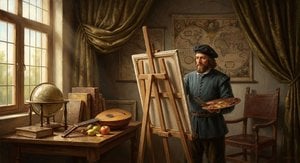
Illuminating Realism: Exploring the Dutch Golden Age of Painting (1600-1700)
Explore the Dutch Golden Age of painting (1600-1700) with ArtsDot. Discover Rembrandt, Vermeer & other masters. Learn about techniques, history & find museum-quality reproductions.

Die 10 Meisterwerke des Goldenen Zeitalters der niederländischen Malerei |
Entdecken Sie die 10 Meisterwerke des Niederländischen Goldenen Zeitalters! Von Rembrandt bis Vermeer – erleben Sie Kunstgeschichte, Techniken & Emotionen. Hochwertige Gemäldereproduktionen für Ihr Zuhause auf .

Illuminating Innovation: Exploring the Dutch Golden Age of Painting
Explore the Dutch Golden Age of painting with ArtsDot. Discover Rembrandt, Vermeer & other Masters. Learn about key characteristics, iconic artworks, and lasting influence. Expert insights for collectors & enthusiasts.

Golden Age Reflections: Dutch Baroque Painting & Cultural Innovation
Explore the Dutch Golden Age of painting! Discover key artists like Vermeer & ter Borch, their innovative techniques, and the rich cultural context behind these Baroque masterpieces. Learn about collecting & appreciating this iconic art period.

Frans Hals: Innovation, Intimität und das Porträt der niederländischen Goldenen Ära
Entdecken Sie Frans Hals' revolutionäre Porträtmalerei des Goldenen Zeitalters! Erfahren Sie mehr über seine innovative Technik, die Darstellung bürgerlicher Würde und seinen Einfluss auf nachfolgende Künstler. Jetzt lesen!


