


Das Bild passt sich Ihren Auswahlmöglichkeiten an: , .
Beschreibung des Sammlerstücks
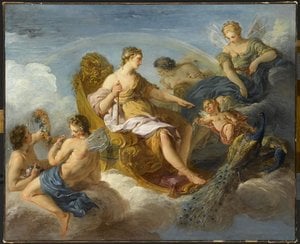
Admire François Lemoyne's masterpiece 'L'Olympe,' a stunning Rococo depiction of mythological figures bathed in ethereal light, inspired by Rubens and executed with meticulous detail.
 Weiterlesen
Künstlerbiografie
Entdecken Sie François Lemoyne (1688-1737), einen bedeutenden französischen Rokoko-Maler, berühmt für seine prachtvollen Deckenfresken & mythologischen Szenen! Erkunden Sie sein Erbe.
Handgefertigte Ölreproduktion
Handgemaltes Ölgemälde auf Leinwand in Ihrer Wunschgröße und mit Rahmen, auf Bestellung von unseren Künstlern angefertigt. ( Zum Druck wechseln Zum digitalen Bild wechseln)
Mehr über dieses Gemälde
 Vorschau anzeigen
 Versenden
 Teilen
 Details anzeigen
 Leitfaden

 Herunterladen
 Ähnliche Objekte
 Röntgenaufnahme
 Diashow
 Fragen & Antworten
 Statistiken
Bestellen Sie Ihr Gemälde in vier einfachen Schritten
Lassen Sie sich Zeit. Sie können jede Antwort jederzeit ändern; der Preis in Ihrem Warenkorb passt sich jeder Auswahl automatisch an.
1 Schritt eins von vier
Welche Größe möchten Sie wählen?
Diese Formate bewahren die Proportionen des Originalgemäldes. Die Zeichnung zeigt Ihre Auswahl an einer Wand, oberhalb eines zwei Meter breiten Sofas.
Oder geben Sie Ihre eigenen Maße an
Wählen Sie aus unseren vordefinierten Formaten, die den ursprünglichen Proportionen des Kunstwerks entsprechen.

Geben Sie die Breite und die Höhe an, die Sie für Ihren Rahmen oder Ihre Wand benötigen. Da dieses Werk handgemalt ist, kann der Künstler bei einer anderen Form etwas mehr um das Bild herum malen oder etwas abschneiden – Sie entscheiden. Wir senden Ihnen ein digitales Mockup zur Freigabe, bevor mit dem Malen begonnen wird. Das auf dieser Seite gezeigte Bild stellt nicht das tatsächliche Ergebnis dar – dies tut nur das Mockup.
2 Schritt zwei von vier
Wie soll es vorbereitet werden: gerollt, auf Keilrahmen gespannt oder gerahmt?
Die unten aufgeführten Preise beziehen sich auf die in Schritt eins gewählte Größe.
Wählen Sie die Kanten der Leinwand aus
Wählen Sie Ihren Rahmen

Weißer Rand €1

verlaufende Kanten €1

Umrandung €1

P118B €10

P118H €10

P118W €10

P438Z €10

P508JH €12

P508YH €12

P805H €10

P805Z €10

P919BZ €10

P919G €10

P919XJ €10

P959ZH €10

P968JZ €12

W106C €8

W218G €10

W218JH €8

W218Y €10

W307PJ €10

W316G €10

W316PJ €8

W316Y €10

W398PJ €8

W4111J €10

W500HY €15

W500JH €15

W692G €12

W849H €8

W940BG €15

W953PJ €8

H24-GOLD €30

H24-SILVER €30

H36-GOLD €45

H36-SILVER €45
Gerahmt
Profil: . Gesamtgröße mit Rahmen: .
3 Schritt drei von vier
Möchten Sie am Gemälde noch etwas ändern?
Die meisten Menschen antworten mit Nein. Da jedes Gemälde von Hand gefertigt wird, kann unser Künstler es jedoch auch individuell für Sie anpassen.
Nach der Bestellung wird das Team von ArtsDot.com den Kunden per E-Mail kontaktieren, um Anweisungen einzuholen und eine Vorschau des Entwurfs bereitzustellen
4 Schritt vier von vier
Einige Veredelungsmöglichkeiten
Alle Angaben sind optional. Für bereits ausgewählte Antworten entstehen keine zusätzlichen Kosten.
Wer hat es gemalt?
Weltweiter Versand () in nur 3 bis 4 Wochen statt der üblichen 5 Wochen. (4 November). Keine Kompromisse bei der Qualität.
Ein Namensschild, wie im Museum?
Details der gravierten Bronzetafel
This elegant plaque features the artist's name and the title of the artwork, finely engraved for a timeless presentation.
It is made from bronze with a refined, elegant finish. The text is precisely laser-engraved for a sharp and permanent result. Measuring 9x2 cm, the plaque is compact yet easy to read. It's built to be durable and scratch-resistant, offering a professional, museum-quality look. Mounting is simple thanks to the included adhesive backing.
Details zur Acrylglas-Plakette (transparent)
The plaque includes essential engraved details such as the artist's name, the title of the artwork, the date it was created, the type of media used-like oil on canvas or watercolor-a brief description of the piece, and a QR code that links to the complete artwork information.
It is crafted from clear acrylic, offering a sleek, modern appearance. The text is UV-engraved in black to ensure strong visual contrast. With a size of 10x15 cm, it ensures optimal readability. It comes equipped with two metal hooks for secure wall mounting. The plaque is designed to be weather-resistant, making it suitable for various environments, and it includes interactive features that work seamlessly with smartphone scanning.
Details zur schwarzen Acryltafel
This elegant plaque includes engraved information such as the artist's name, the title of the artwork, the date it was created, the type of media used (like oil on canvas or watercolor), a short description of the artwork, and a QR code for quick access to more information.
The plaque itself is made from refined black acrylic with a premium finish. The text is laser-engraved in white for high contrast and readability. Its size is 10x15 cm, designed to be easy to read. It comes with two metal hooks for professional mounting. The design is sleek and fits any interior style. It is also weather-resistant and durable, with built-in digital integration for mobile compatibility.
Ein Schutzlack?
Bis wann benötigen Sie es?
✓ Prüfen und bestellen
Ihr Gemälde, wie von Ihnen bestellt

L'Olympe
Art der Reproduktion
Format der Reproduktion
-

Erstklassige Meisterkünstler
Mehr Detailtiefe, Raffinesse und zusätzliche Produktionszeit
-

Rahmen für Reproduktionen
-
-
Bei Kunstwerken oder Reproduktionen, die an einer Seite größer als 105 cm (ca. 41 Zoll) sind, wird der Rahmen zerlegt als Bausatz geliefert. Diese Methode gewährleistet eine sichere Zustellung und verhindert Schäden während des Transports.
Professionelle Montage erforderlich – dies ist kein DIY-Produkt.
Der Bausatz muss von einem erfahrenen professionellen Rahmenmacher zusammengebaut und die Leinwand gespannt werden. Hierfür werden Holzleim (nicht im Lieferumfang enthalten), eine Leinwandspannzange sowie Klemmen benötigt, um die Keilleisten während des Trocknungsvorgangs rechtwinklig zu halten. Eine unsachgemäße Montage oder eine ungleichmäßige Spannung der Leinwand kann das Kunstwerk dauerhaft beschädigen und ist nicht durch unsere Garantie abgedeckt.
 Bei Kunstwerken oder Reproduktionen, die an einer Seite größer als 105 cm (ca. 41 Zoll) sind, wird der Rahmen zerlegt als Bausatz geliefert. Diese Methode gewährleistet eine sichere Zustellung und verhindert Schäden während des Transports.
Alle Vollholzkomponenten sind enthalten, präzise auf Maß zugeschnitten.
Der Zusammenbau erfolgt mit den mitgelieferten Schrauben sowie Holzkleber für die Eckverbindungen, der nicht im Lieferumfang enthalten ist und vom Rahmenbauer selbst beschafft werden muss.
Professionelles Werkzeug ist erforderlich und nicht im Lieferumfang enthalten: eine Keilrahmenzange (Spannwerkzeug) sowie Klammern, um die Leisten während der Trocknungszeit des Klebers rechtwinklig zu fixieren.
Wichtiger Hinweis:
Für die Eckverbindungen wird Holzleim benötigt, die Leisten müssen mit Zwingen fixiert werden, bis der Leim vollständig getrocknet ist, und das Spannen der Leinwand auf dem fertigen Rahmen erfordert eine Keilrahmen-Zange. Keines dieser Utensilien ist im Set enthalten. Bitte stellen Sie sicher, dass ein erfahrener Rahmenmacher zur Verfügung steht, bevor Sie diese Größe bestellen.

Beschriftung
-
-

Schutzlackierung
Glanzlack (verstärkt die Farben, schützt vor Licht und Feuchtigkeit)
-

Mein Kunstwerk personalisieren
Beispiele für Anpassungsmöglichkeiten: Gesicht durch Kundenfoto ersetzen; Haustier hinzufügen (z. B. Katze durch Hund ersetzen); Versteckte Nachricht im Hintergrund einfügen; Hintergrundlandschaft oder -elemente ändern.
-

Eilt sehr
Weltweiter Versand () in nur 3 bis 4 Wochen statt der üblichen 5 Wochen. (4 November). Keine Kompromisse bei der Qualität.
-
Expressversand
Weltweiter Versand () innerhalb von 5 Wochen. (11 November).
Inklusive Versand
Endpreis
€ 547
Die Glasoption ist nur für Größen unter 110 cm verfügbar.
In jeder Bestellung enthalten
- Kostenloser weltweiter Expressversand
- Hochwertige Leinenleinwand
- Umfassender Versicherungsschutz beim Versand
- Zollgebühren-Rückerstattungsgarantie
- Garantie für exakte Farbtreue
- 100 Tage Rückgaberecht (nur bei Mängeln)
- 100% Geld-zurück-Garantie
- Mengenrabatt verfügbar


L'Olympe: A Baroque Echo in Rococo Elegance
François Lemoyne’s “L’Olympe,” created around 1730, stands as a testament to the artistic fervor of Louis XV’s court and embodies the complex fusion of styles that characterized Rococo art. Unlike the monumental grandeur of Baroque predecessors championed by Bernini and Caravaggio, Lemoyne opted for a more intimate scale—a rectangular canvas measuring approximately 39.4 x 25.6 inches—yet he achieved an astonishing level of visual richness and emotional depth. This artwork isn’t merely decorative; it's a carefully crafted meditation on divine majesty filtered through the lens of humanist sensibilities, reflecting the prevailing intellectual currents of its time.Composition and Style: A Dynamic Dialogue Between Tradition and Innovation
The painting’s composition immediately draws the viewer into a swirling vortex of figures—a deliberate departure from the static hierarchies typical of earlier artistic conventions. Lemoyne skillfully employs asymmetrical balance, placing dominant groupings of nude or partially clothed deities in positions that command attention without resorting to rigid formality. The absence of a central focal point encourages contemplation and invites viewers to explore the intricate relationships between the characters depicted. This dynamic arrangement aligns with Baroque principles of movement and theatricality but is tempered by the delicate brushwork and pastel hues characteristic of Rococo, signaling Lemoyne’s embrace of a more refined aesthetic. Influenced profoundly by Rubens' dramatic chiaroscuro technique, Lemoyne nevertheless prioritized luminosity and ethereal beauty—a hallmark of his distinctive style.Color Palette and Technique: Light as Divine Inspiration
Lemoyne’s masterful manipulation of color contributes significantly to the artwork’s emotive power. The dominant palette consists of soft blues, creams, pinks, and golds—colors that coalesce into a luminous effect suggestive of divine radiance. These hues are layered with subtle variations in tone and shade, creating an illusion of depth and volume that transcends mere surface appearance. Delicate brushstrokes meticulously blend pigments to achieve seamless transitions between shades, enhancing the overall sense of fluidity and grace. Lemoyne’s technique involved applying thin glazes of oil paint—a painstaking process designed to maximize luminosity and capture the subtle nuances of light—demonstrating a dedication to mastering the highest standards of artistic craftsmanship.Symbolism and Emotional Resonance: Reflections of Celestial Glory
“L’Olympe” is replete with symbolic references to classical mythology, portraying scenes from Olympus—the abode of Zeus and his Olympian gods—that resonate with themes of power, beauty, and immortality. The figures themselves embody idealized forms of human perfection, reflecting the humanist ideals prevalent during Lemoyne's era. Their poses convey a sense of serenity and contemplation, inviting viewers to contemplate the sublime grandeur of creation. More than just an aesthetically pleasing spectacle, “L’Olympe” communicates profound emotional resonance—a feeling of awe and wonder at the majesty of divine presence—solidifying Lemoyne’s legacy as one of the foremost artists of his generation.Historical Context: The Courtly Embrace of Baroque Legacy
Created during Louis XV's reign, "L'Olympe" exemplifies the Rococo movement's ambition to recapture the grandeur and theatricality of Baroque art while simultaneously prioritizing elegance and refinement. Lemoyne’s work stands as a pivotal moment in artistic history—a harmonious blend of stylistic influences that cemented Rococo’s position as the dominant aesthetic sensibility of the French court. Its enduring appeal testifies to the timeless beauty of classical ideals combined with humanist sensibilities, ensuring “L'Olympe” continues to inspire admiration and contemplation centuries after its creation.Fragen & Antworten
Welche Farbtönung dominiert in "L'Olympe"?
Ein Ochre to Sepia Farbton durchzieht "L'Olympe" von François Lemoyne.
Unter welchen anderen Namen ist François Lemoyne bekannt?
Weitere unter denen François Lemoyne, Schöpfer von „L'Olympe“, bekannt ist, umfassen François Le Moine.
Welche Stellung nimmt „L'Olympe“ unter den wiederkehrenden Motiven von François Lemoyne ein?
"L'Olympe" stellt mythology, celestial figures, allegory, classical influence, religious symbolism, decorative art, baroque style dar, während die dokumentierten Themen von François Lemoyne inspired by rubens’ grandeur, religious allegory, divine grace, reflecting aristocratic taste, central to lemoyne’s legacy sind. Ein Vergleich der beiden zeigt, wie das Werk mit den üblichen Sujets des Künstlers in Verbindung steht.
Ähnliche Kunstwerke


François Lemoyne
1688 - 1737, Frankreich
Künstlerbiografie
François Lemoyne: Ein Leben im Rokoko
- Geboren: Paris, Frankreich (1688)
- Gestorben: 4. Juni 1737
François Lemoyne war ein bedeutender französischer Rokokomaler des frühen bis mittleren 18. Jahrhunderts. Er ist bekannt für seine großartigen allegorischen Deckenfresken und mythologischen Szenen und leistete damit einen wesentlichen Beitrag zur künstlerischen Landschaft unter der Herrschaft von Ludwig XV. Obwohl er oft im Schatten seiner Zeitgenossen wie Boucher und Watteau stand, bemühte sich Lemoyne, sich als Erbe Charles Le Bruns zu etablieren, einer führenden Figur in der französischen Kunstgeschichte.
Frühes Leben und Ausbildung
- Ausbildung: Lemoyne studierte zunächst bei seinem Stiefvater Robert le Vrac.
- Académie Royale: Er absolvierte von 1701 an eine formelle Ausbildung an der Académie Royale de peinture et de sculpture, wo er bei Louis Galloche und später unter der Leitung von Pierre-Jacques Cazes studierte. Der Einfluss von Cazes ist besonders in Lemoynes Farbgebung zu bemerken.
- Prix de Rome: 1711 erreichte er einen bedeutenden Meilenstein, indem er den Prix de Rome gewann, eine Auszeichnung, die typischerweise eine Reise nach Italien für künstlerische Studien gewährte. Aufgrund finanzieller Einschränkungen konnte er diese Gelegenheit jedoch nicht sofort nutzen.
Künstlerische Entwicklung und Einflüsse
- Italienischer Einfluss: Lemoynes spätere Reise nach Italien im Jahr 1723/24, begleitet von François Berger, erwies sich als entscheidend. Er studierte die Werke von Raphael, Correggio und Tizian und absorbierte italienische künstlerische Techniken und Ästhetik.
- Rubens' Einfluss: Ein starker Einfluss auf Lemoyne war das Werk von Peter Paul Rubens, insbesondere in seiner lebhaften Farbgebung und dynamischen Kompositionen deutlich erkennbar.
- Venetianische Schule: Die Auseinandersetzung mit der venezianischen Malerei, insbesondere innerhalb der Sammlung von Pierre Crozat, prägte seine künstlerische Stilrichtung weiter.
- Rokoko-Stil: Obwohl er von früheren Meistern beeinflusst war, gehörte Lemoynes Werk fest zur Rokoko-Periode, die durch Eleganz, Ornamentik und einen Fokus auf dekorative Schönheit gekennzeichnet ist.
Wichtige Werke und Errungenschaften
- Deckenfresken: Lemoyne ist am besten bekannt für seine monumentalen Deckenfresken, insbesondere L'Apothéose d'Hercule (Die Apotheose des Herkules) im Salon d’Hercule im Schloss Versailles. Diese Arbeit demonstrierte seine Meisterschaft in illusionistischen Techniken und wurde von Zeitgenossen wie Voltaire und Kardinal Fleury hoch gelobt.
- Religiöse Gemälde: Er schuf auch bedeutende religiöse Werke, wie Die Verklärung im Chor der Jacobin Kirche (heute Parish Church of St. Thomas d’Aquin) in Paris.
- Premier peintre du Roi: 1736 erreichte Lemoyne den Höhepunkt seiner Karriere, indem er zum Premier peintre du roi (Erster Maler des Königs) unter Ludwig XV ernannt wurde.
Historische Bedeutung und Vermächtnis
François Lemoyne spielte eine entscheidende Rolle bei der Gestaltung der französischen Rokoko-Malerei. Sein Ziel war es, die Tradition großformatiger allegorischer Deckenfresken wiederzubeleben, die aus dem Mode gekommen waren. Obwohl seine Karriere durch seinen Selbstmord im Jahr 1737 tragisch beendet wurde, hinterließ sein Werk einen bleibenden Eindruck auf nachfolgende Generationen von Künstlern.
- Einfluss auf Schüler: Lemoyne unterrichtete bedeutende Künstler wie Charles-Joseph Natoire und François Boucher und vermittelte so sein künstlerisches Wissen und beeinflusste ihre Entwicklung.
- Niedergang der Deckenmalerei: Sein Tod markierte das Ende einer Ära, die mit dem Rückgang der Beliebtheit großer allegorischer Deckenfresken zusammenfiel.
- Anerkennung heute: Obwohl er vielleicht nicht so bekannt ist wie einige seiner Zeitgenossen, werden Lemoynes Beiträge zur französischen Rokoko-Kunst zunehmend für seine technische Fertigkeit und künstlerische Ambition geschätzt.

Ähnliche Artikel

Simon Vouet: Vom italienischen Barock zum französischen Klassizismus – Eine künstlerische Reise
Entdecken Sie das Leben und Werk von Simon Vouet, dem Pionier des italienischen Barock in Frankreich! Erfahren Sie mehr über seinen künstlerischen Werdegang, seine wichtigsten Gemälde und seinen nachhaltigen Einfluss auf die französische Malerei. Jetzt lesen!

Rococo Meisterwerke: Die Top 10, die eine Epoche prägten |
Entdecken Sie die Top 10 Rokoko Meisterwerke von Watteau, Boucher & Fragonard! Erfahren Sie die Geschichten hinter diesen ikonischen Gemälden und lassen Sie sich für Ihre Inneneinrichtung inspirieren. Hochwertige Kunstdrucke auf .

The Rococo Aesthetic: Opulence, Rebellion & the Pursuit of Pleasure in 18th-Century Art
Explore the opulent world of Rococo art! Discover its origins, key artists like Watteau & Boucher, and lasting influence on design. Expert insights for collectors & enthusiasts.