


 Vorschau anzeigen
 Versenden
 Teilen
 Details anzeigen

 Herunterladen
 Ähnliche Objekte
 Röntgenaufnahme
 Diashow
 Statistiken
LADY BY THE WINDOW
 Other
Other 106.0 x 40.0 cm
 Weiterlesen
Handgefertigte Ölreproduktion
Handgemaltes Ölgemälde auf Leinwand in Ihrer Wunschgröße und mit Rahmen, auf Bestellung von unseren Künstlern angefertigt. ( Zu Druck wechseln Zum digitalen Bild wechseln)




P118B $10

P118H $10

P118W $10

P438Z $10

P508JH $12

P508YH $12

P805H $10

P805Z $10

P919BZ $10

P919G $10

P919XJ $10

P959ZH $10

P968JZ $12

W106C $8

W218G $10

W218JH $8

W218Y $10

W307PJ $10

W316G $10

W316PJ $8

W316Y $10

W398PJ $8

W4111J $10

W500HY $15

W500JH $15

W692G $12

W849H $8

W940BG $15

W953PJ $8




Wählen Sie aus unseren vordefinierten Formaten, die den ursprünglichen Proportionen des Kunstwerks entsprechen.

Sie können Ihre eigenen Maße eingeben, um einen bestimmten Rahmen oder Platz auszufüllen. Wenn die gewählte Größe nicht den Proportionen des Originalbildes entspricht, werden wir das Kunstwerk entweder beschneiden oder das Gemälde durch zusätzliche, handgemalte Elemente erweitern. Ein digitales Mockup wird Ihnen zur Genehmigung zugesandt, bevor die Produktion beginnt.
Bitte beachten Sie, dass die Bildschirmvorschau nicht die tatsächliche Beschneidung oder Erweiterung widerspiegelt. Nur das Mockup zeigt die endgültige Komposition exakt an.
Obwohl Sondermaße verfügbar sind, empfehlen wir, eine Größe aus der vordefinierten Liste zu wählen, um die ursprünglichen Proportionen beizubehalten.
Nach der Bestellung wird das ArtsDot.com-Team dem Kunden Anweisungen per E-Mail zusenden und eine Mockup-Vorschau bereitstellen.
Weltweiter Versand () in nur 3 bis 4 Wochen statt der üblichen 5 Wochen. (15 September). Keine Kompromisse bei der Qualität.

Kostenloser weltweiter Expressversand

Hochwertige Leinenleinwand

Umfassender Versicherungsschutz beim Versand

Zollgebühren-Rückerstattungsgarantie

Garantie für exakte Farbtreue

100-Tage-Rückgaberecht (nur bei Mängeln)

100% Geld-zurück-Garantie

Mengenrabatt verfügbar
 Die Glasoption ist nur für Größen unter 110 cm verfügbar.

LADY BY THE WINDOW
Art der Reproduktion
Format der Reproduktion
-


Gesamtpreis
$ 263
Ähnliche Kunstwerke


![Untitled [uwaki No Sō (the Fickle Onethe Fickle One)] — Kitagawa Utamaro, Impressionistic Style](/media/artworks/images-thumb/46/8e/468eafb3b6da18ad90b6e962513246d1.jpg)


Über den Künstler
Fei Danxu: A Master of Serene Beauty in 19th-Century China
Fei Danxu (費丹旭, 1801–1850), a name perhaps less familiar than some of his contemporaries, nevertheless stands as a significant figure in the vibrant world of Chinese painting during the Qing Dynasty. Born Zishao (子苕) and later adopting the artistic names Xiaolou (曉樓) and Huanxisheng (環溪生), he was a truly itinerant artist, traversing Zhejiang and Jiangsu provinces throughout his life, seeking inspiration and honing his craft. His legacy rests primarily on a remarkable body of work centered around exquisitely rendered portraits of women—a genre that reflects both the artistic trends of the time and Danxu’s own profound sensitivity to beauty and tranquility.
Danxu's early life in Wucheng (烏程), now part of Wuxing, Zhejiang, provided a foundation for his artistic development. He began painting at a remarkably young age, absorbing the techniques and aesthetics of his family—particularly his father, Fei Ju, another accomplished painter. This lineage instilled within him a deep appreciation for nature’s subtle harmonies and an understanding of traditional Chinese painting principles. However, unlike many artists who remained rooted in established styles, Danxu developed a distinctive approach, often referred to as the “Gai Fei” school alongside his fellow artist Gai Qi. This movement emphasized capturing the essence of beauty through delicate brushwork and evocative compositions—a departure from more rigid academic traditions.
The Art of the Lady: Portraiture and Symbolism
Danxu’s fame, and indeed much of his enduring appeal, stems almost entirely from his series of portraits depicting women. These are not merely likenesses; they are carefully constructed narratives imbued with symbolism and a profound sense of serenity. He frequently depicted these ladies in idyllic landscapes—a deliberate choice that elevates the subject beyond mere representation, transforming her into an embodiment of nature’s grace and harmony. The most celebrated example is undoubtedly “Lady by the Window” (畫一窗), a work that exemplifies his signature style.
The composition of "Lady by the Window" is remarkably restrained yet profoundly expressive. A woman sits pensively by a window, delicately unwrapping a cloth covering a qin (zither). The scene is bathed in soft light, suggesting a quiet moment of contemplation. Critics and scholars have noted Danxu’s masterful use of color—subtle washes of ink and delicate hues that evoke the atmosphere of a misty morning. The painting's influence can be traced back to Tang Yin (唐寅), a renowned Ming Dynasty painter known for his depictions of beautiful women in natural settings, suggesting an intentional homage to a master from centuries past.
Technique and Influences
Danxu’s technique was characterized by meticulous brushwork and a deep understanding of perspective. He employed a loose, flowing style—a hallmark of the “Gai Fei” school—that allowed for a sense of spontaneity and naturalism. His use of ink washes created a luminous quality that brought his subjects to life. While he drew inspiration from Tang Yin, Danxu’s work also reflects the influence of other masters, including Li Cheng (李成) and Zhao Mengfu (趙孟頫), demonstrating a sophisticated awareness of Chinese painting history.
Furthermore, Danxu's artistic journey was shaped by his itinerant lifestyle. He spent much of his adult life traveling and working as a freelance painter, often accepting commissions from wealthy patrons. This experience exposed him to diverse landscapes and cultures, enriching his artistic vision and contributing to the variety of subjects he depicted.
Legacy and Historical Significance
Despite his relatively modest fame during his lifetime, Fei Danxu’s work has gained increasing recognition in recent decades. His paintings are now housed in prestigious collections around the world, including the Shanghai Museum and the Freer Gallery of Art in Washington D.C. Danxu's legacy lies not only in his technical skill but also in his ability to capture a fleeting moment of beauty—a testament to the enduring power of Chinese art to evoke emotion and inspire contemplation.
His paintings offer a valuable window into the cultural values and aesthetic sensibilities of 19th-century China, reflecting a deep appreciation for nature, tranquility, and the idealized image of feminine grace. Fei Danxu’s work continues to resonate with viewers today, reminding us of the timeless beauty that can be found in the simplest of moments.

fei danxu
1802 - 1850
Kurzinfos
- Artistic Movement Or Style: Gai Fei School
- Artists Or Movements Influenced By This Artist: ["Fei's brother Dancheng"]
- Artists Who Influenced This Artist: ['Gai Qi']
- Date Of Birth: 1802
- Date Of Death: 1850
- Full Name: Fei Danxu
- Nationality: Chinese
- Notable Artworks:
- Lady by the Window
- Twelve Beauties of Jinling
- Playing Flute under the Moon
- Place Of Birth: Wucheng (Zhejiang)
Ähnliche Artikel

Reflections of an Era: Identity & Social Commentary in 19th-Century Portraiture
Explore the captivating world of 19th-century portraiture! Discover key artists, movements like Realism & Impressionism, and the powerful social commentary embedded within these iconic artworks. Expert insights at ArtsDot.
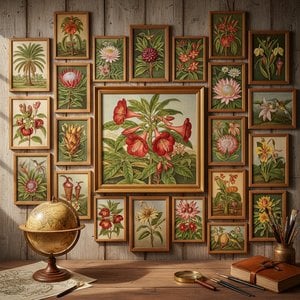
Marianne North: Die 25 schönsten Blumenmalereien der viktorianischen Reisenden | ArtsDot
Entdecken Sie die 25 schönsten Werke der viktorianischen Blumenmalerin Marianne North! Erleben Sie ihre exotischen Reisebilder & botanischen Illustrationen. Hochwertige Kunst Reproduktionen für Ihr Zuhause auf ArtsDot.com.

Meisterwerke des 19. Jahrhunderts: Kunst für Ihr Zuhause | ArtsDot
Entdecken Sie die 10 bedeutendsten Kunstwerke des 19. Jahrhunderts! Von Impressionismus bis Realismus – erleben Sie die Geschichten berühmter Maler und ihre Meisterwerke. Hochwertige Reproduktionen für Ihr Zuhause auf ArtsDot.com.

Meisterwerke des 18. & 19. Jahrhunderts: Kunst für Ihr Zuhause | ArtsDot
Entdecken Sie die 10 bedeutendsten Meisterwerke des 18. & 19. Jahrhunderts! Von Romantik bis Impressionismus – erfahren Sie die Geschichten berühmter Künstler und ihrer ikonischen Gemälde. Hochwertige Kunstdrucke auf ArtsDot.com.

Édouard Manet: Die 25 Meisterwerke des Impressionismus für Ihr Zuhause | ArtsDot
Entdecken Sie die 25 Meisterwerke von Édouard Manet! Tauchen Sie ein in Impressionismus, Pariser Leben & revolutionäre Kunst. Hochwertige Reproduktionen für Ihr Zuhause – jetzt auf ArtsDot.com!