 Druck bestellen Bild kaufen
 Versenden
 Teilen
 Details
 Zu Favoriten hinzufügen

 Herunterladen
 Ähnliche Objekte
 X-Ray
X-Ray
 Diashow anzeigen
Dodrecht
 Oil On Canvas
- WallArt
- Impressionism
 61.0 x 50.0 cm
 Regionale Galerie Liberec
Handgefertigte Öl-Reproduktion
Handgemaltes Ölgemälde auf Leinwand in Ihrer Wunschgröße und mit Rahmen, auf Bestellung von unseren Künstlern angefertigt.




P118B $10

P118H $10

P118W $10

P438Z $10

P508JH $12

P508YH $12

P805H $10

P805Z $10

P919BZ $10

P919G $10

P919XJ $10

P959ZH $10

P968JZ $12

W106C $8

W218G $10

W218JH $8

W218Y $10

W307PJ $10

W316G $10

W316PJ $8

W316Y $10

W398PJ $8

W4111J $10

W500HY $15

W500JH $15

W692G $12

W849H $8

W940BG $15

W953PJ $8




 Weiterlesen
Wählen Sie aus unseren vordefinierten Größen, die den ursprünglichen Proportionen des Kunstwerks entsprechen.

Sie können Ihre eigenen Maße eingeben, um einen bestimmten Rahmen oder Platz auszufüllen. Wenn die gewählte Größe nicht den Proportionen des Originalbildes entspricht, werden wir das Kunstwerk entweder beschneiden oder das Gemälde durch zusätzliche, handgemalte Elemente erweitern. Ein digitales Mockup wird Ihnen zur Genehmigung zugesandt, bevor die Produktion beginnt.
Bitte beachten Sie, dass die Bildschirmvorschau nicht die tatsächliche Beschneidung oder Erweiterung widerspiegelt. Nur das Mockup zeigt die endgültige Komposition exakt an.
Obwohl Sondermaße verfügbar sind, empfehlen wir, eine Größe aus der vordefinierten Liste zu wählen, um die ursprünglichen Proportionen beizubehalten.
Nach der Bestellung wird das ArtsDot.com-Team dem Kunden Anweisungen per E-Mail zusenden und eine Mockup-Vorschau bereitstellen.
Weltweiter Versand () in nur 3 bis 4 Wochen statt der üblichen 5 Wochen. (1 Juli). Keine Kompromisse bei der Qualität.

Kostenloser weltweiter Expressversand

Hochwertige Leinenleinwand

Umfassender Versicherungsschutz beim Versand

Zollsteuer-Rückerstattungsgarantie

Garantie für echte Farbtreue

60-Tage-Rückgaberecht (nur bei Mängeln)

100% Geld-zurück-Garantie

Mengenrabatt verfügbar
 Die Glasoption ist nur in Größen unter 110 cm verfügbar.

Dodrecht
Art der Reproduktion
Größe der Reproduktion
-


Endpreis aller Optionen
-
Beschreibung des Kunstwerks
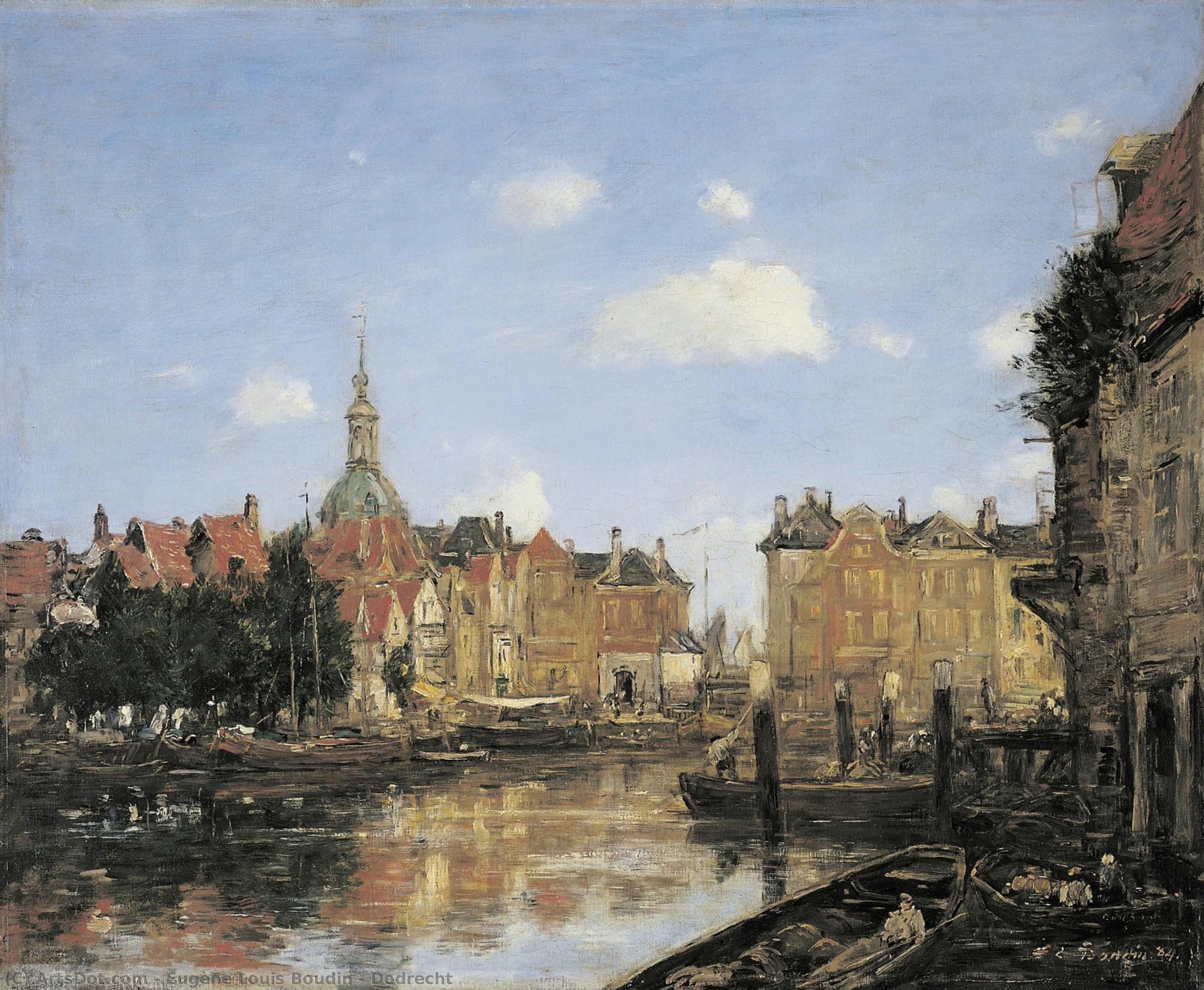
A Moment in Normandy: Eugène Boudin’s “Dodrecht”
Eugène Louis Boudin's "Dodrecht," painted circa 1874, isn’t merely a depiction of a canal scene; it’s an immersion into the very essence of late 19th-century French Impressionism. This evocative landscape captures a fleeting moment along the waterways of Dordrecht, a city nestled within the Netherlands, and speaks to Boudin's profound connection with light, atmosphere, and the transient beauty of everyday life. The painting immediately draws the viewer in with its soft, hazy palette—muted blues, greens, and ochres dominate, creating an almost dreamlike quality that belies the meticulous observation at play.
Boudin’s approach to capturing this scene is profoundly characteristic of his style. He eschews sharp detail in favor of a loose, broken brushstroke technique, applying paint in short, vibrant dashes that seem to dance across the canvas. This deliberate lack of precision isn't a flaw; rather, it’s the very heart of Impressionism – an attempt to convey not just what is seen, but how it *feels* to be present within that moment. The texture itself becomes a key element, with visible brushwork adding depth and dynamism to the scene. Notice how the reflections shimmer on the water's surface, created by these individual strokes, lending an almost palpable sense of movement.
The Painter’s Philosophy: Plein Air and the Capture of Light
Boudin was a pioneer in the practice of *plein air* painting – working directly outdoors. This commitment to observing nature firsthand profoundly shaped his artistic vision. He wasn't interested in creating photographic reproductions; instead, he sought to capture the ephemeral qualities of light and atmosphere as they shifted with each passing moment. “Dodrecht” exemplifies this philosophy perfectly. The artist meticulously studied how sunlight interacts with water, buildings, and vegetation, translating these observations onto canvas with remarkable sensitivity. His early exposure to Dutch masters like Jongkind, who championed painting outdoors, undoubtedly influenced his approach.
The historical context of the late 19th century is crucial to understanding Boudin’s work. France was undergoing rapid industrialization and urbanization, leading many artists to seek refuge in the countryside and to explore themes of rural life and natural beauty. Boudin's focus on these subjects resonated with a growing public yearning for connection with nature – a sentiment that would become central to the Impressionist movement. The painting subtly evokes the tranquility of a slower pace of life, a stark contrast to the bustling industrial centers of Europe.
Symbolism and Emotional Resonance
Beyond its technical brilliance, “Dodrecht” carries a quiet emotional resonance. The composition—with the canal as the dominant element—creates a sense of enclosure and intimacy, drawing the viewer into the scene. The church steeple rising above the rooftops provides a vertical anchor, grounding the image while simultaneously suggesting a connection to faith and tradition. The boats navigating the waterway hint at human activity and interaction, yet the overall mood remains one of peaceful contemplation.
The painting’s muted color palette contributes significantly to its emotional impact. The soft hues evoke feelings of serenity, nostalgia, and perhaps even melancholy—a subtle reminder of the passage of time. It's a scene that invites reflection on the beauty of the natural world and the simple pleasures of everyday life. “Dodrecht” isn’t just a landscape; it’s an invitation to slow down, observe, and appreciate the fleeting moments of grace that surround us.
A Reproduction Worthy of Display
Reproductions of Boudin's "Dodrecht" offer a remarkable opportunity to bring this evocative masterpiece into your home or office. The delicate balance between light, color, and brushwork is beautifully preserved in high-quality reproductions, allowing you to experience the artist’s vision firsthand. Whether displayed as a focal point on a wall or incorporated into a larger interior design scheme, “Dodrecht” will undoubtedly add a touch of timeless elegance and artistic depth to any space.
Ähnliche Kunstwerke


Biografie des Künstlers
Frühes Leben und Karriere
Eugène Louis Boudin wurde am 12. Juli 1824 in Honfleur, Frankreich, geboren. Er war der Sohn eines Hafenlotsen und entwickelte schon früh eine starke Verbundenheit zum Meer. Boudins künstlerische Reise begann mit seiner Tätigkeit auf einem Dampfer zwischen Le Havre und Honfleur im Alter von 10 Jahren.Künstlerischer Einfluss und Stil
Boudins Stil wurde stark von niederländischen Meistern des 17. Jahrhunderts beeinflusst, insbesondere nachdem er Johan Jongkind getroffen hatte, der ihn an das Malen en plein air (im Freien) heranführte. Dieser Ansatz ermöglichte es Boudin, das ständig wechselnde Licht und die Farben der Natur einzufangen. Seine Pastelle, die als zusammenfassend und wirtschaftlich beschrieben werden können, zogen große Aufmerksamkeit von Charles Baudelaire und Corot auf sich, der ihn als den "König der Himmel" bezeichnete.Wichtige Werke und Ausstellungen
- Stillleben mit Hummer auf weißem Tischtuch (Nature morte au homard sur un nappe blanche), das sich jetzt im High Museum of Art in Atlanta befindet, zeigt Boudins ernsten, aber edlen Ansatz bei Stilllebenmalereien.
- Boudins Teilnahme an der ersten Impressionisten-Ausstellung im Jahr 1873, zusammen mit Claude Monet und anderen jungen Künstlern, festigte seinen Einfluss auf die Kunstwelt.
- Seine Werke sind in verschiedenen Museen zu finden, darunter das Musée d'Orsay in Paris, das mehrere seiner Gemälde beherbergt, wie z.B. Landschaft mit Sonnenuntergang.
Entwicklung und Errungenschaften
Boudin entwickelte sich von einem frühen Interesse an der Darstellung maritimer Szenen zu einem Landschaftsmaler, der die Atmosphäre und das Licht des nordfranzösischen Küstenraums einfing. Er experimentierte mit Pastellfarben und Ölfarben und schuf Werke, die für ihre Leichtigkeit und ihren impressionistischen Charakter bekannt sind. Wichtige Errungenschaften umfassen:- Eine dritte Auszeichnung beim Pariser Salon von 1881.
- Eine Goldmedaille bei der Weltausstellung von 1889.
- Die Ernennung zum Ritter der Légion d'Honneur im Jahr 1892.
Historische Bedeutung und Vermächtnis
Eugène Louis Boudins Vermächtnis geht über seine eigenen Werke hinaus, da er eine entscheidende Rolle bei der Gestaltung der Karrieren junger Künstler wie Claude Monet spielte. Er gilt als einer der wichtigsten Vorläufer des Impressionismus und trug dazu bei, die Kunstwelt von traditionellen akademischen Konventionen zu befreien. Der Eugène Boudin Preis, der von der Société Nationale des Beaux-Arts verliehen wird, ist ein Beweis für seinen bleibenden Einfluss auf die Kunstwelt.- Weitere Werke von Boudin finden Sie unter https://ArtsDot.com/@/eugene-louis-boudin
- Erkunden Sie die Sammlung des Musée d'Orsay, das mehrere Gemälde von Boudin zeigt, unter https://ArtsDot.com/@@/a@d3aulp-discover-the-charm-of-musee-eugene-boudin-(france)-and-its-impressionist-ma..
- Erfahren Sie mehr über französische Kunst und ihre Geschichte unter https://en.wikipedia.org/wiki/french_art

Eugène Louis Boudin
1824 - 1898 , Frankreich
Kurzinfos
- Beeinflusste Künstler:
- Johan Jongkind
- Claude Monet
- Bemerkenswerte Werke:
- Stillleben mit Hummer
- Marina
- Fecamp, der Hafen
- Landschaft bei Sonnenuntergang
- Geburtsdatum: 12. Juli 1824
- Geburtsort: Honfleur, Frankreich
- Künstlerische Bewegung: Impressionismus
- Nationalität: Französisch
- Sterbedatum: 8. August 1898
- Vollständiger Name: Eugène Louis Boudin
- Von Künstlern Beeinflusst: ['Niederländische Meister (17. Jh.)']
Ähnliche Artikel

The Enduring Legacy of 18th & 19th Century Art: Movements, Masters & Societal Reflections
Explore the rich history of 18th & 19th-century art! Discover Romanticism, Realism, and iconic masters like Delacroix & Courbet. Expert insights & high-quality reproductions at ArtsDot.


Impressionistische Landschaften: Die 10 Meisterwerke, die eine Epoche prägten | ArtsDot
Entdecken Sie die 10 Meisterwerke des Impressionismus! Von Monet bis Renoir – erleben Sie die Geschichte, Technik und zeitlose Schönheit ikonischer Landschaftsbilder. Hochwertige Kunstdrucke auf ArtsDot.com. Jetzt entdecken!

John Frederick Lewis: Orientalismus, Detail und Genremalerei im 19. Jahrhundert der britischen Kunst
Entdecken Sie das faszinierende Werk von John Frederick Lewis! Wir analysieren seinen Orientalismus, Detailreichtum und seine Genremalerei im Kontext des 19. Jahrhunderts. Expertenwissen zur britischen Kunstgeschichte.

Fritz von Uhde: Bridging Realism & Symbolism in Late 19th-Century German Painting
Explore the captivating world of Fritz von Uhde, a pivotal German painter bridging Realism & Symbolism. Discover his plein-air techniques, religious themes, and influence on modern art. Learn about this fascinating artist at ArtsDot.

Thomas Baines: Pioneering Landscape Art & Visual Documentation of 19th-Century Southern Africa
Explore the life & art of Thomas Baines, a pioneering British explorer and artist who documented 19th-century Southern Africa & Australia. Discover his stunning landscapes, war paintings, and invaluable cartographic contributions.