


 Vorschau anzeigen
 Versenden
 Teilen
 Details anzeigen
 Leitfaden

 Herunterladen
 Ähnliche Objekte
 Röntgenaufnahme
 Diashow
 Statistiken
untitled (8363)

 Weiterlesen
Handgefertigte Ölreproduktion
Handgemaltes Ölgemälde auf Leinwand in Ihrer Wunschgröße und mit Rahmen, auf Bestellung von unseren Künstlern angefertigt. ( Zum Druck wechseln Zum digitalen Bild wechseln)




P118B €10

P118H €10

P118W €10

P438Z €10

P508JH €12

P508YH €12

P805H €10

P805Z €10

P919BZ €10

P919G €10

P919XJ €10

P959ZH €10

P968JZ €12

W106C €8

W218G €10

W218JH €8

W218Y €10

W307PJ €10

W316G €10

W316PJ €8

W316Y €10

W398PJ €8

W4111J €10

W500HY €15

W500JH €15

W692G €12

W849H €8

W940BG €15

W953PJ €8




Wählen Sie aus unseren vordefinierten Formaten, die den ursprünglichen Proportionen des Kunstwerks entsprechen.

Geben Sie die Breite und die Höhe an, die Sie für Ihren Rahmen oder Ihre Wand benötigen. Da dieses Werk handgemalt ist, kann der Künstler bei einer anderen Form etwas mehr um das Bild herum malen oder etwas abschneiden – Sie entscheiden. Wir senden Ihnen ein digitales Mockup zur Freigabe, bevor mit dem Malen begonnen wird. Das auf dieser Seite gezeigte Bild stellt nicht das tatsächliche Ergebnis dar – dies tut nur das Mockup.
Nach der Bestellung wird das ArtsDot.com-Team dem Kunden Anweisungen per E-Mail zusenden und eine Mockup-Vorschau bereitstellen.
Weltweiter Versand () in nur 3 bis 4 Wochen statt der üblichen 5 Wochen. (27 Oktober). Keine Kompromisse bei der Qualität.

Kostenloser weltweiter Expressversand

Hochwertige Leinenleinwand

Umfassender Versicherungsschutz beim Versand

Zollgebühren-Rückerstattungsgarantie

Garantie für exakte Farbtreue

100 Tage Rückgaberecht (nur bei Mängeln)

100% Geld-zurück-Garantie

Mengenrabatt verfügbar
 Die Glasoption ist nur für Größen unter 110 cm verfügbar.

untitled (8363)
Art der Reproduktion
Format der Reproduktion
-


Endpreis
€ 231
Egon Schiele’s ‘untitled (8363)’ – A Portrait of Existential Anguish
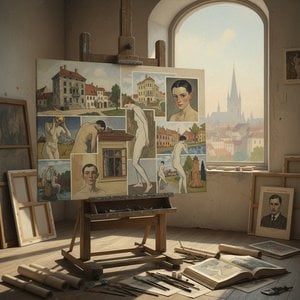
This arresting image, designated “untitled (8363),” offers a stark and profoundly unsettling glimpse into the artistic soul of Egon Schiele. Painted in 1918, just months before his untimely death at the age of 28, it stands as a quintessential example of Schiele’s expressionist style – a raw, unflinching exploration of human vulnerability and the specter of mortality. The subject, a woman draped in a scarf, is not presented with idealized beauty but rather captured in a moment of quiet contemplation, bordering on despair. Her posture, slightly slumped and her gaze averted, speaks volumes about the anxieties that permeated the era – an era marked by war, disease, and a growing sense of disillusionment.
- Subject & Composition: The painting’s power resides in its deceptively simple composition. The woman's isolation is emphasized through her placement within the frame, drawing the viewer into her private world.
- Technique – A Dance with Darkness: Schiele’s technique is characterized by a deliberate lack of polish. Thick, gestural brushstrokes dominate the canvas, creating a palpable sense of unease and urgency. The muted palette—dominated by browns, ochres, and hints of grey—further contributes to the painting's somber mood. He employed a subtractive layering method, building up color through multiple applications of paint, resulting in a textured surface that invites close inspection.
The Shadow of Vienna – Historical Context
Schiele’s work emerged from the vibrant yet turbulent artistic landscape of Vienna at the beginning of the 20th century. The city was a hotbed of innovation and experimentation, but also grappling with social unrest and intellectual ferment. Schiele's art reflects this duality; it is both intensely personal and deeply rooted in the anxieties of his time. The painting’s creation coincided with the final months of World War I, a conflict that ravaged Europe and shattered traditional values. This historical context profoundly influenced Schiele’s artistic vision, leading him to explore themes of death, suffering, and psychological distress.
- Expressionism's Roots: As an expressionist artist, Schiele sought to convey inner emotions rather than objective reality. His work is characterized by distortion, exaggeration, and a deliberate rejection of academic conventions.
- Vienna’s Artistic Scene: Schiele was part of a group of avant-garde artists in Vienna who challenged the established norms of the art world.
Symbolism & Emotional Resonance
The scarf itself is a potent symbol, likely representing concealment, protection, or perhaps even mourning. The woman’s averted gaze suggests a refusal to confront uncomfortable truths – a common theme in Schiele's oeuvre. Her posture and the overall atmosphere of the painting evoke a sense of profound loneliness and existential dread. It’s important to note that Schiele frequently depicted female figures in states of vulnerability, reflecting his own personal struggles with relationships and his preoccupation with themes of death and decay. The work resonates with a deep psychological intensity, inviting viewers to contemplate their own mortality and the fragility of human existence.
A Legacy of Intensity – Reproduction & Acquisition
This hand-painted reproduction captures not only the visual elements of Schiele’s masterpiece but also its emotional core. Each reproduction is meticulously crafted by skilled artisans, ensuring an authentic representation of the original artwork's texture and color depth. Whether adorning a private collection or enhancing a commercial space, ‘untitled (8363)’ offers a powerful statement – a testament to Schiele’s genius and his unflinching exploration of the human condition. Code: ART001
Fragen & Antworten
Wo finde ich Statistiken zu "untitled (8363)" von Egon Schiele?
Auf der Besucherzahlen-Seite des Kunstwerks finden Sie Statistiken zu "untitled (8363)" von Egon Schiele: monatliche Aufrufe des Kunstwerks, Aufrufe der Werke des Künstlers sowie eine Aufschlüsselung der jüngsten Besucher nach Land und Sprache.
Wo lässt sich eine Reproduktion von "untitled (8363)" von Egon Schiele am besten präsentieren?
Mit seinem Portrait-Format wird eine Reproduktion von „untitled (8363)“ für ein Living Room empfohlen.
Wie lässt sich die Stimmung von "untitled (8363)" von Egon Schiele beschreiben?
"untitled (8363)" von Egon Schiele wird in seiner Stimmung als Nostalgic beschrieben. Diese Klassifizierung kann dabei helfen, das Werk passend zu einem Ambiente auszuwählen.
Ähnliche Kunstwerke


Künstlerbiografie
Egon Schiele: Leben und Werk
Frühes Leben und Einflüsse
- Geboren am 12. Juni 1890 in Tulln an der Donau, Niederösterreich, erlebte Egon Schiele ein Kindheitsleben, das von künstlerischem Interesse und persönlicher Notlage geprägt war.
- Sein Vater, Adolf Schiele, war Stationsmeister und vermittelte seinem Sohn eine Faszination für Züge – ein Motiv, das sich später subtil in seiner Arbeit wiederfinden würde.
- Der frühe Tod seines Vaters durch Syphilis im Alter von 14 Jahren hatte einen tiefgreifenden Einfluss auf ihn und führte zu seiner Erziehung durch seinen Onkel mütterlicherseits, Leopold Czihaczek.
- Czihaczek bot Unterstützung, übte aber auch eine kontrollierende Einflüsse aus, die zur komplexen emotionalen Landschaft beitrugen, die in Schieles Kunstwerke reflektiert werden.
Künstlerische Reise und Entwicklung
- Schieles künstlerisches Ausbildung begann an der Kunstgewerbeschule (Kunstgewerbeschule) in Wien, aber er wechselte bald an die Akademie der bildenden Künste (Akademie der Bildenden Künste).
- Er wurde schnell disillusioned mit dem konservativen Ansatz der Akademie und fand ihn behindernd für seine ausdrucksstarke Vision. Er verließ schließlich die formale Ausbildung.
- Frühe Einflüsse waren Gustav Klimt, eine führende Figur der Wiener Secession, dessen dekorativer Stil und die Erforschung von Symbolik Schiele resonierten. Schiele entwickelte jedoch bald einen eigenständigen Stil.
- Seine frühen Werke zeigten oft verstörender Portraits und Selbstporträts, die durch verzerrte Figuren und intensive Emotionalität gekennzeichnet waren.
Wesentliche Merkmale und Themen
- Schieles Kunst ist bekannt für ihre Rohheit, Ehrlichkeit und psychologische Tiefe. Er erforschte mutig Themen wie Sexualität, Tod, Angst und Isolation.
- Sein unverwechselbarer Stil zeichnet sich durch verlängerte Figuren, verzerrte Posen und ausdrucksstarke Linien aus, die ein Gefühl von Verletzlichkeit und emotionalem Aufruhr vermitteln.
- Selbstporträts machen einen bedeutenden Teil seines Œuvres aus und bieten intime Einblicke in seine innere Welt.
- Er schuf auch zahlreiche Porträts anderer Personen, die oft mit unverblümender Realismus und psychologischem Verständnis dargestellt wurden.
- Landschaftsbildung spielte eine Rolle in seiner Arbeit und demonstrierte sein Können in Form und Farbe, obwohl sie weniger zentral war als seine figurativen Werke.
Wichtige Leistungen und Anerkennung
- Trotz Zensur und rechtlicher Herausforderungen (einschließlich einer kurzzeitigen Inhaftierung wegen angeblichen Korrupterns von Minderjährigen mit seiner Kunst) erlangte Schiele innerhalb der Wiener Avantgarde Anerkennung.
- Er gründete 1909 die Neues Wiener Kunstgruppe (Neue Wiener Künstlergruppe) und präsentierte seine Werke neben anderen progressiven Künstlern.
- Signifikante Werke sind unter anderem Selbstporträt mit Physalis, Paar Umarmend und Feldschlag (Kreuzberg bei Krumau).
- Bis zu seinem frühzeitigen Tod hatte sich Schiele als eine führende Figur des österreichischen Expressionismus etabliert.
Historische Bedeutung und Vermächtnis
- Egon Schiele starb 1918 während der Spanischen Grippeepidemie im Alter von 28 Jahren und beendete damit eine vielversprechende Karriere.
- Seine Arbeit beeinflusste nachfolgende Generationen von Künstlern, insbesondere diejenigen, die sich für die Erforschung psychologischer Themen und die Herausforderung konventioneller künstlerischer Normen interessierten.
- Schieles mutiger Ansatz in Bezug auf Form und Gegenstandsmaterial spiegelt sich bis heute wider und macht ihn zu einer der wichtigsten und einflussreichsten Figuren der frühen 20. Jahrhunderts Kunst.
- Seine Gemälde werden heute in wichtigen Museumsammlungen weltweit aufbewahrt, und Reproduktionen seiner Werke sind weit verbreitet, was sein künstlerisches Vermächtnis sicherstellt.

Egon Schiele
1890 - 1918 , kroatien
Kurzinfos
- Beeinflusste Künstler: ['Nachfolgende Generationen']
- Bemerkenswerte Werke:
- Selbstporträt mit Wucherblume
- Paar Umarmend
- Feldbild (Kreuzberg bei Krumau)
- Einflussreiche Künstler: ['Gustav Klimt']
- Geburtsdatum: 12. Juni 1890
- Geburtsort: Tulln, Österreich
- Künstlerische Richtung: Expressionismus
- Nationalität: Österreichisch
- Todatum: 1918
- Vollständiger Name: Egon Schiele
Ähnliche Artikel

Egon Schiele: Ausdrucksstil, Angst und die Moderne – Eine umfassende Betrachtung
Entdecken Sie die tiefgründige Welt von Egon Schiele! Unsere umfassende Analyse beleuchtet seinen expressiven Stil, die Darstellung von Angst und seinen Einfluss auf die Moderne. Jetzt lesen!

Giclée Prints: Archival Quality & Aesthetic Nuances for the Discerning Collector
Explore the world of giclée prints with ArtsDot. Learn about archival quality, aesthetic nuances & investment potential. Expert guidance for discerning art collectors seeking museum-quality reproductions and lasting value.
Egon Schiele: Die 25 Meisterwerke des Expressionismus für Ihr Zuhause | ArtsDot
Entdecken Sie die 25 bedeutendsten Gemälde von Egon Schiele! Tauchen Sie ein in die Welt des Expressionismus, erfahren Sie mehr über seine Technik und emotionale Tiefe. Hochwertige Kunstdrucke & Leinwandbilder auf ArtsDot.com.

Echoes of Time: Exploring the Enduring Appeal & Historical Context of Vintage Art Prints
Explore the captivating world of vintage art prints! Discover their history, collecting tips & enduring appeal. Expert insights on chromolithography and building a legacy collection with ArtsDot.

Expressionismus: Die 10 Meisterwerke, die eine Kunstepoche prägten | ArtsDot
Entdecken Sie die 10 prägendsten Meisterwerke des Expressionismus! Von Munchs Schrei bis Kandinskys Abstraktionen – erfahren Sie die Geschichten berühmter Maler und ihre emotionale Farbgebung. Kunstreproduktionen in Museumsqualiät auf ArtsDot.com.


