


 In echtem Maßstab anzeigen
 Versenden als Grußkarte
 Teilen
 Details anzeigen
 Leitfaden öffnen

 Herunterladen
 Ähnliche Objekte
 Röntgenaufnahme
 Diashow
 Besucherstatistiken
untitled (7591)

 Mehr anzeigen
Giclée / Kunstdruck
Giclée- oder Leinwanddruck in Museumsqualität mit schneller Produktion und flexiblen Veredelungsoptionen. ( Handgemalte Reproduktion kaufen Zum digitalen Bild wechseln)




P118B €10

P118H €10

P118W €10

P438Z €10

P508JH €12

P508YH €12

P805H €10

P805Z €10

P919BZ €10

P919G €10

P919XJ €10

P959ZH €10

P968JZ €12

W106C €8

W218G €10

W218JH €8

W218Y €10

W307PJ €10

W316G €10

W316PJ €8

W316Y €10

W398PJ €8

W4111J €10

W500HY €15

W500JH €15

W692G €12

W849H €8

W940BG €15

W953PJ €8




Wählen Sie aus unseren vordefinierten Formaten, die den ursprünglichen Proportionen des Kunstwerks entsprechen.

Geben Sie die Breite und die Höhe an, die Sie benötigen, damit der Druck perfekt in Ihren Rahmen oder an Ihre Wand passt. Ein Druck kann nur beschnitten werden und niemals größer als das Originalbild gemacht werden; daher verliert ein Format mit einer anderen Proportion einen Teil des Bildes. Wir senden Ihnen ein digitales Mockup zur Freigabe, bevor wir den Druck ausführen. Das auf dieser Seite gezeigte Bild zeigt nicht den tatsächlichen Beschnitt – dies ist nur im Mockup ersichtlich.
Weltweiter Versand () innerhalb von 2 Wochen statt der üblichen 4/5 Wochen. (21 Oktober)

Kostenloser weltweiter Expressversand

Hochwertige Leinenleinwand

Vollständiger Versicherungsschutz beim Versand

Zollgebühren-Rückerstattungsgarantie

Garantie für exakte Farbtreue

100-tägiges Rückgaberecht (nur bei Mängeln)

100% Geld-zurück-Garantie

Angebot für Mengenrabatt
 Die Glasoption ist nur für Größen unter 110 cm verfügbar.

untitled (7591)
Giclée / Kunstdruck
Format der Reproduktion
-


Gesamtpreis
€ 54
A Descent into Darkness: Exploring Egon Schiele’s “Untitled (7591)”
Egon Schiele’s “Untitled (7591),” a haunting depiction of a woman reclining on her side in bed, stands as a cornerstone of Expressionist art—a testament to Schiele's unflinching gaze into the depths of human emotion and mortality. Painted circa 1916-18 during his formative years amidst the turbulent backdrop of World War I, this artwork transcends mere visual representation; it’s an exploration of vulnerability, desire, and the inescapable confrontation with death.
- Subject Matter: The central figure is a woman rendered in a strikingly nude pose, her body partially obscured by layers of paint—a deliberate technique that underscores Schiele's preoccupation with physicality and psychological states. Her posture exudes both repose and palpable tension, hinting at an inner turmoil beneath the surface calmness.
- Style & Technique: Schiele’s signature style is characterized by angular lines, distorted figures, and a masterful use of impasto—thickly applied paint that creates textural surfaces—resulting in images brimming with dynamism and unsettling energy. The artist employs a palette dominated by muted browns and ochres, enhancing the painting's somber mood.
- Symbolism: Beyond its immediate visual impact, “Untitled (7591)” is laden with symbolic resonance. The woman’s nudity symbolizes vulnerability and exposure—a reflection of Schiele’s own anxieties about identity and existence. The birds circling above represent freedom yet also foreshadow impending doom, mirroring the pervasive sense of unease that permeates the composition.
- Historical Context: Created during the First World War, “Untitled (7591)” embodies the spirit of the era—a period marked by disillusionment and psychological strain. Schiele’s artistic output reflects the anxieties surrounding death and decay prevalent in Viennese society at the time, aligning with broader Expressionist concerns about confronting existential realities.
The Painter's Obsession: Schiele's Exploration of Mortality
Schiele’s relentless pursuit of portraying human suffering—particularly death—is evident throughout his oeuvre. “Untitled (7591)” isn’t merely a depiction of the female nude; it’s an embodiment of Schiele’s profound engagement with themes of mortality and decay. The artist's meticulous attention to detail—the subtle nuances of skin texture, the expressive lines delineating musculature—serve not only to capture physical form but also to convey psychological depth.
A Dialogue Between Form and Emotion: Schiele’s Innovative Approach
Schiele revolutionized painting technique by prioritizing emotional expression over realistic representation. His method involved layering paint thickly onto the canvas, creating palpable textures that mirrored the artist's inner turmoil. This approach distinguishes him from Klimt and other contemporaries who favored decorative elegance; Schiele sought to disturb viewers with unsettling images—a deliberate provocation intended to confront them with uncomfortable truths about human experience.
Beyond Representation: The Painting’s Psychological Impact
"Untitled (7591)" compels the viewer to contemplate profound questions about life, death, and sexuality. Schiele's masterful manipulation of line and color generates a visceral response—a feeling of unease and fascination that lingers long after viewing the artwork. It remains a powerful reminder of Schiele’s ability to distill complex psychological states into striking visual forms.
Fragen & Antworten
Unter welchen Pseudonymen oder Alternativnamen ist Egon Schiele bekannt?
Egon Schiele ist auch unter dem Namen Egon Leo Adolf Ludwig Schiele bekannt.
Wo kann ich eine handgemalte Reproduktion von "untitled (7591)" von Egon Schiele kaufen?
"untitled (7591)" ist als eine handgemalte Ölreproduktion auf Leinenleinwand erhältlich. Die Bestellung kann auf der Seite Handgemalte Reproduktion mit einer Auswahl an verschiedenen Größen vorgenommen werden.
Welche Größe und Ausrichtung werden für einen Druck von "untitled (7591)" von Egon Schiele empfohlen?
Format Large, Ausrichtung Landscape: Dies ist die empfohlene Druckeinstellung für "untitled (7591)" von Egon Schiele.
Ähnliche Kunstwerke


Biografie des Künstlers
Egon Schiele: Leben und Werk
Frühes Leben und Einflüsse
- Geboren am 12. Juni 1890 in Tulln an der Donau, Niederösterreich, erlebte Egon Schiele ein Kindheitsleben, das von künstlerischem Interesse und persönlicher Notlage geprägt war.
- Sein Vater, Adolf Schiele, war Stationsmeister und vermittelte seinem Sohn eine Faszination für Züge – ein Motiv, das sich später subtil in seiner Arbeit wiederfinden würde.
- Der frühe Tod seines Vaters durch Syphilis im Alter von 14 Jahren hatte einen tiefgreifenden Einfluss auf ihn und führte zu seiner Erziehung durch seinen Onkel mütterlicherseits, Leopold Czihaczek.
- Czihaczek bot Unterstützung, übte aber auch eine kontrollierende Einflüsse aus, die zur komplexen emotionalen Landschaft beitrugen, die in Schieles Kunstwerke reflektiert werden.
Künstlerische Reise und Entwicklung
- Schieles künstlerisches Ausbildung begann an der Kunstgewerbeschule (Kunstgewerbeschule) in Wien, aber er wechselte bald an die Akademie der bildenden Künste (Akademie der Bildenden Künste).
- Er wurde schnell disillusioned mit dem konservativen Ansatz der Akademie und fand ihn behindernd für seine ausdrucksstarke Vision. Er verließ schließlich die formale Ausbildung.
- Frühe Einflüsse waren Gustav Klimt, eine führende Figur der Wiener Secession, dessen dekorativer Stil und die Erforschung von Symbolik Schiele resonierten. Schiele entwickelte jedoch bald einen eigenständigen Stil.
- Seine frühen Werke zeigten oft verstörender Portraits und Selbstporträts, die durch verzerrte Figuren und intensive Emotionalität gekennzeichnet waren.
Wesentliche Merkmale und Themen
- Schieles Kunst ist bekannt für ihre Rohheit, Ehrlichkeit und psychologische Tiefe. Er erforschte mutig Themen wie Sexualität, Tod, Angst und Isolation.
- Sein unverwechselbarer Stil zeichnet sich durch verlängerte Figuren, verzerrte Posen und ausdrucksstarke Linien aus, die ein Gefühl von Verletzlichkeit und emotionalem Aufruhr vermitteln.
- Selbstporträts machen einen bedeutenden Teil seines Œuvres aus und bieten intime Einblicke in seine innere Welt.
- Er schuf auch zahlreiche Porträts anderer Personen, die oft mit unverblümender Realismus und psychologischem Verständnis dargestellt wurden.
- Landschaftsbildung spielte eine Rolle in seiner Arbeit und demonstrierte sein Können in Form und Farbe, obwohl sie weniger zentral war als seine figurativen Werke.
Wichtige Leistungen und Anerkennung
- Trotz Zensur und rechtlicher Herausforderungen (einschließlich einer kurzzeitigen Inhaftierung wegen angeblichen Korrupterns von Minderjährigen mit seiner Kunst) erlangte Schiele innerhalb der Wiener Avantgarde Anerkennung.
- Er gründete 1909 die Neues Wiener Kunstgruppe (Neue Wiener Künstlergruppe) und präsentierte seine Werke neben anderen progressiven Künstlern.
- Signifikante Werke sind unter anderem Selbstporträt mit Physalis, Paar Umarmend und Feldschlag (Kreuzberg bei Krumau).
- Bis zu seinem frühzeitigen Tod hatte sich Schiele als eine führende Figur des österreichischen Expressionismus etabliert.
Historische Bedeutung und Vermächtnis
- Egon Schiele starb 1918 während der Spanischen Grippeepidemie im Alter von 28 Jahren und beendete damit eine vielversprechende Karriere.
- Seine Arbeit beeinflusste nachfolgende Generationen von Künstlern, insbesondere diejenigen, die sich für die Erforschung psychologischer Themen und die Herausforderung konventioneller künstlerischer Normen interessierten.
- Schieles mutiger Ansatz in Bezug auf Form und Gegenstandsmaterial spiegelt sich bis heute wider und macht ihn zu einer der wichtigsten und einflussreichsten Figuren der frühen 20. Jahrhunderts Kunst.
- Seine Gemälde werden heute in wichtigen Museumsammlungen weltweit aufbewahrt, und Reproduktionen seiner Werke sind weit verbreitet, was sein künstlerisches Vermächtnis sicherstellt.

Egon Schiele
1890 - 1918 , kroatien
Eckdaten zum Künstler
- Beeinflusste Künstler: ['Nachfolgende Generationen']
- Bemerkenswerte Werke:
- Selbstporträt mit Wucherblume
- Paar Umarmend
- Feldbild (Kreuzberg bei Krumau)
- Einflussreiche Künstler: ['Gustav Klimt']
- Geburtsdatum: 12. Juni 1890
- Geburtsort: Tulln, Österreich
- Künstlerische Richtung: Expressionismus
- Nationalität: Österreichisch
- Todatum: 1918
- Vollständiger Name: Egon Schiele
Verwandte Artikel

The Enduring Allure of the Nude: A Historical & Artistic Exploration of the Human Form
Explore the captivating history of nude art! Discover iconic paintings & artists from classical to modern eras. Uncover symbolism, techniques & find museum-quality reproductions at ArtsDot.

Egon Schiele: Die 25 Meisterwerke des Expressionismus für Ihr Zuhause | ArtsDot
Entdecken Sie die 25 bedeutendsten Gemälde von Egon Schiele! Tauchen Sie ein in die Welt des Expressionismus, erfahren Sie mehr über seine Technik und emotionale Tiefe. Hochwertige Kunstdrucke & Leinwandbilder auf ArtsDot.com.

Egon Schiele: Ausdrucksstil, Angst und die Moderne – Eine umfassende Betrachtung
Entdecken Sie die tiefgründige Welt von Egon Schiele! Unsere umfassende Analyse beleuchtet seinen expressiven Stil, die Darstellung von Angst und seinen Einfluss auf die Moderne. Jetzt lesen!

Expressionismus: Die 10 Meisterwerke, die eine Kunstepoche prägten | ArtsDot
Entdecken Sie die 10 prägendsten Meisterwerke des Expressionismus! Von Munchs Schrei bis Kandinskys Abstraktionen – erfahren Sie die Geschichten berühmter Maler und ihre emotionale Farbgebung. Kunstreproduktionen in Museumsqualiät auf ArtsDot.com.
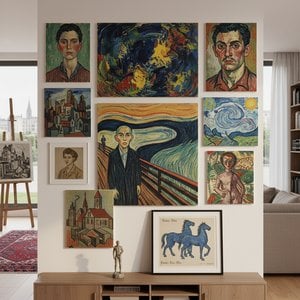
Expressionismus: Die 10 Meisterwerke, die eine Ära prägten – Kunst für Ihr Zuhause |
Entdecken Sie die 10 prägendsten Meisterwerke des Expressionismus! Von Munch bis Kandinsky – erfahren Sie die Geschichten hinter den berühmtesten Gemälde und Künstler. Hochwertige Kunstdrucke online bei kaufen & Ihr Zuhause mit Emotionen füllen.


