


 In echtem Maßstab anzeigen
 Versenden als Grußkarte
 Teilen
 Details anzeigen
 Leitfaden öffnen

 Herunterladen
 Ähnliche Objekte
 Röntgenaufnahme
 Diashow
 Besucherstatistiken
Lighthouse at Two Lights
 Oil On Canvas
- WallArt
- Contemporary Realism
 1929
1929- Modern
 109.0 x 74.0 cm
 Mehr anzeigen
Die auf dieser Seite dargestellten Kunstwerke sind urheberrechtlich geschützt, was bedeutet, dass wir keine identische Reproduktion rechtmäßig erstellen oder verkaufen dürfen. Dieser Schutz wird durch internationale Abkommen wie die Berner Übereinkunft und durch nationale Gesetze, einschließlich derer, die von den ... festgelegt wurden US-Urheberrecht – Titel 17.
Als respektvolle und rechtlich einwandfreie Alternative bieten wir individuelle, handgemalte Kunstwerke an, die vom Original inspiriert sind. Unsere geschickten und professionellen Künstler studieren sorgfältig den Stil, die Stimmung und das künstlerische Wesen des Originals, um ein neues, einzigartiges Werk zu schaffen, das dasselbe Gefühl hervorruft – während es zugleich eine eigenständige Originalschöpfung bleibt.
Diese Methode entspricht vollumfänglich den Urheberrechtsbestimmungen, da sie keine Kopie oder Vervielfältigung des geschützten Kunstwerks darstellt. Stattdessen handelt es sich um eine kreative Neuinterpretation – ein neues Gemälde, das vom Original inspiriert, aber nicht identisch mit ihm ist.
Handgefertigte Ölreproduktion
Handgemaltes Ölgemälde auf Leinwand in Ihrer Wunschgröße und mit Rahmen, auf Bestellung von unseren Künstlern angefertigt. ( Zum Druck wechseln Zum digitalen Bild wechseln)




P118B €10

P118H €10

P118W €10

P438Z €10

P508JH €12

P508YH €12

P805H €10

P805Z €10

P919BZ €10

P919G €10

P919XJ €10

P959ZH €10

P968JZ €12

W106C €8

W218G €10

W218JH €8

W218Y €10

W307PJ €10

W316G €10

W316PJ €8

W316Y €10

W398PJ €8

W4111J €10

W500HY €15

W500JH €15

W692G €12

W849H €8

W940BG €15

W953PJ €8




Wählen Sie aus unseren vordefinierten Formaten, die den ursprünglichen Proportionen des Kunstwerks entsprechen.

Sie können Ihre eigenen Maße eingeben, um einen bestimmten Rahmen oder Platz auszufüllen. Wenn die gewählte Größe nicht den Proportionen des Originalbildes entspricht, werden wir das Kunstwerk entweder beschneiden oder das Gemälde durch zusätzliche, handgemalte Elemente erweitern. Ein digitales Mockup wird Ihnen zur Genehmigung zugesandt, bevor die Produktion beginnt.
Bitte beachten Sie, dass die Bildschirmvorschau nicht die tatsächliche Beschneidung oder Erweiterung widerspiegelt. Nur das Mockup zeigt die endgültige Komposition exakt an.
Obwohl Sondermaße verfügbar sind, empfehlen wir, eine Größe aus der vordefinierten Liste zu wählen, um die ursprünglichen Proportionen beizubehalten.
Nach der Bestellung wird das ArtsDot.com-Team dem Kunden Anweisungen per E-Mail zusenden und eine Mockup-Vorschau bereitstellen.
Weltweiter Versand () in nur 3 bis 4 Wochen statt der üblichen 5 Wochen. (10 Oktober). Keine Kompromisse bei der Qualität.

Kostenloser weltweiter Expressversand

Hochwertige Leinenleinwand

Vollständiger Versicherungsschutz beim Versand

Zollgebühren-Rückerstattungsgarantie

Garantie für exakte Farbtreue

100-tägiges Rückgaberecht (nur bei Mängeln)

100% Geld-zurück-Garantie

Angebot für Mengenrabatt
 Die Glasoption ist nur für Größen unter 110 cm verfügbar.

Lighthouse at Two Lights
Reproduktionsmedium
Format der Reproduktion
-


Gesamtpreis
€ 226
Edward Hopper’s Lighthouse at Two Lights: A Study in Quietude and Observation
Edward Hopper's "Lighthouse at Two Lights," completed in 1929, stands as a quintessential emblem of American Modernism—a painting that transcends mere depiction to embody a profound meditation on solitude, perception, and the subtle beauty found within seemingly unremarkable landscapes. More than just capturing a coastal vista, Hopper meticulously crafted an image designed to provoke contemplation, mirroring the pervasive mood of introspection characteristic of his era. This artwork resides in the Art Institute of Chicago’s collection and exemplifies Hopper's signature style: precise realism blended with expressive tonal qualities that convey emotion without resorting to overt sentimentality.Composition and Technique – The Language of Light
Hopper’s masterful technique is immediately apparent upon viewing “Lighthouse at Two Lights.” Executed in oil on canvas, the painting utilizes a restrained palette dominated by muted blues and browns—colors that evoke the cool hues of twilight and the weathered textures of stone. Hopper's meticulous brushwork contributes to an atmosphere of stillness; short, deliberate strokes build up layers of pigment to create subtle gradations of tone, particularly noticeable in the lighthouse’s illumination and the shadowed recesses of the hillside. The artist skillfully employs chiaroscuro—the dramatic interplay between light and dark—to sculpt form and heighten visual impact, guiding the viewer's eye across the canvas with an understated grace. This technique isn’t merely about accurate representation; it’s about conveying a feeling – a sense of quiet contemplation and melancholy that resonates deeply within the viewer.Historical Context: The Jazz Age and Existential Uncertainty
“Lighthouse at Two Lights” emerged during the Jazz Age, a period marked by rapid urbanization, social upheaval, and a burgeoning fascination with modernity. Hopper’s artistic sensibilities aligned perfectly with the anxieties of this time—a preoccupation with isolation and alienation that found expression in his oeuvre. The painting reflects the broader cultural currents of its day, capturing the disillusionment felt by many Americans grappling with the complexities of industrial society and questioning traditional values. Furthermore, it speaks to a burgeoning interest in psychology and introspection, mirroring the philosophical explorations of thinkers like Sartre and Camus who wrestled with existential concerns about freedom and responsibility.Symbolism: Guiding Light Amidst Darkness
Beyond its formal qualities, “Lighthouse at Two Lights” is laden with symbolic significance. The lighthouse itself represents guidance—a beacon of hope amidst uncertainty—but also embodies a certain vulnerability; it stands alone against the vast expanse of the sea, highlighting the human condition’s inherent loneliness. The house nestled in the hillside provides a counterpoint to this solitude, suggesting domestic comfort and stability yet simultaneously emphasizing its detachment from the natural world. Even the solitary bird circling overhead contributes to the painting's overarching theme—a symbol of freedom and observation, mirroring Hopper’s own artistic gaze.Emotional Impact: A Moment Frozen in Time
Ultimately, “Lighthouse at Two Lights” succeeds in capturing a profound emotional resonance. It doesn’t offer grand narratives or dramatic gestures; instead, it invites the viewer to linger on its surface, absorbing its quiet beauty and contemplating its underlying melancholy. Hopper's ability to convey emotion through visual means—to distill complex psychological states into carefully constructed images—solidifies his place as one of America’s most enduring artists. The painting remains a powerful reminder that even in moments of apparent stillness, there exists an unspoken richness of experience – a testament to Hopper’s profound understanding of the human spirit and his unwavering commitment to portraying it with unflinching honesty.Fragen & Antworten
Wer hat "Lighthouse at Two Lights" erschaffen?
Der Künstler hinter „Lighthouse at Two Lights“ ist Edward Hopper. Das Werk ist unter dem Namen von Edward Hopper katalogisiert.
Wie ist "Lighthouse at Two Lights" historisch einzuordnen?
"Lighthouse at Two Lights" von Edward Hopper gehört der Contemporary Realism-Strömung innerhalb der Modern-Epoche an. Zusammen verleihen sie dem Werk seinen Platz in der Kunstgeschichte.
Welcher Strömung und welcher Epoche ist "Lighthouse at Two Lights" von Edward Hopper zuzuordnen?
"Lighthouse at Two Lights" von Edward Hopper lässt sich der Contemporary Realism-Strömung innerhalb der Moderne-Ära seines Schöpfers zuordnen.
In welchem Jahr wurde "Lighthouse at Two Lights" geschaffen?
"Lighthouse at Two Lights" von Edward Hopper entstand im Jahr 1929.
Wie lässt sich die Stimmung von "Lighthouse at Two Lights" von Edward Hopper beschreiben?
Die allgemeine Stimmung von "Lighthouse at Two Lights" von Edward Hopper ist Serene. Die Stimmung beschreibt die allgemeine Atmosphäre des Werkes.
Wo kann ich eine handgemalte Reproduktion von "Lighthouse at Two Lights" von Edward Hopper kaufen?
Handgemalte Repliken von "Lighthouse at Two Lights" von Edward Hopper sind auf diese Website erhältlich: eine handgemalte Ölreproduktion auf Leinenleinwand, bestellbar über diese Seite.
Welche Größe sollte ich für den Druck von "Lighthouse at Two Lights" für mein Zimmer wählen?
Für einen Living Room wird für „Lighthouse at Two Lights“ ein Druckformat von Large empfohlen.
Ähnliche Kunstwerke


Biografie des Künstlers
**frühes Leben und Einflüsse**
Edward Hopper, ein bedeutender amerikanischer Realist-Maler und Grafiker, wurde am 22. Juli 1882 in Upper Nyack, New York, geboren. Seine Familie, von hauptsächlich niederländischer Abstammung, bot eine komfortable Erziehung, die es Hopper ermöglichte, seine künstlerischen Neigungen schon im frühen Alter zu verfolgen. - **Inspirationen:** Hoppers Werk wurde von den Schriften von Ralph Waldo Emerson und den französischen Impressionisten-Meistern Édouard Manet und Edgar Degas beeinflusst. - **Frühzeitige Ausbildung:** Er begann mit Kunststudien durch einen Korrespondenzkurs im Jahr 1899, wechselte später an die New York School of Art and Design.**Künstlerischer Stil und Themen**
Edward Hopper's sparsame und präzise Darstellungen spiegelten seine persönliche Vision des modernen amerikanischen Lebens wider. Sein Werk lässt sich durch folgende Merkmale charakterisieren: - **Städtische und ländliche Szenen:** Beide Umgebungen wurden mit einer einzigartigen Mischung aus Realismus und emotionaler Tiefe dargestellt. - **Beleuchtung:** Eine Meisterschaft der Beleuchtung, oft eingesetzt, um Gefühle von Isolation oder Kontemplation hervorzurufen. - **Figuren:** Oft ohne Gesicht oder im Hintergrund platziert, wodurch die Umgebung gegenüber den Figuren betont wird.**Bekannte Werke und ihre Bedeutung**
- House by the Railroad (Museum of Modern Art, New York, United States), ein Beispiel für Hoppers Fähigkeit, durch eine einfache, aber wirkungsvolle Komposition einen Hauch von Melancholie hervorzurufen. - Reclining Nude (50 x 35 cm, New Realism, Watercolour), das seine Vielseitigkeit bei der Darstellung des menschlichen Körpers demonstriert.**Vermächtnis und Einfluss**
- **Einfluss auf zukünftige Künstler:** Hoppers einzigartiger Stil hat zahlreiche Künstler beeinflusst, darunter Pierre Sanford Ross, der für seine städtischen und ländlichen Szenen bekannt ist. - **dauernde Beliebtheit:** Seine Werke fesseln weiterhin das Publikum mit ihren zeitlosen Themen von Einsamkeit und dem menschlichen Dasein.**Erfahren Sie mehr bei ArtsDot**
- [https://ArtsDot.com/@/edward-hopper](Edward Hoppers Werke) - /de/art/show/art-8xyffg-de/Kaufen Sie Kunst inspiriert von den Meistern)- Erkunden Sie die Welt der Kunst mit der umfangreichen Kollektion von ArtsDot.
- Entdecken Sie, wie Hoppers Vermächtnis weiterhin Künstler und Kunstliebhaber inspiriert.
**Referenzen**
- [https://ArtsDot.com/@/edward-hopper](Wikipedia: Edward Hopper) - [https://en.wikipedia.org/wiki/edward_hopper](Wikipedia: Edward Hoppers Biografie)
Edward Hopper
1931 - 1967 , Vereinigte Staaten von Amerika
Eckdaten zum Künstler
- Beeinflusste Künstler: ['Pierre Sanford Ross']
- Bemerkenswerte Werke:
- House by the Railroad
- Nighthawks
- Gas
- Chop Suey
- Sommertime
- Einflüsse:
- Ralph Waldo Emerson
- Édouard Manet
- Edgar Degas
- Geburtsdatum: 22. Juli 1882
- Geburtsort: Upper Nyack, USA
- Künstlerischer Stil: Amerikanischer Realismus
- Nationalität: Amerikanisch
- Sterbedatum: 1967
- Vollständiger Name: Edward Hopper
Verwandte Artikel

Giclée Prints: Archival Quality & Aesthetic Nuances for the Discerning Collector
Explore the world of giclée prints with ArtsDot. Learn about archival quality, aesthetic nuances & investment potential. Expert guidance for discerning art collectors seeking museum-quality reproductions and lasting value.

The Enduring Legacy of Fine Art Prints: Technique, History & Aesthetic Impact
Explore the rich history & techniques of fine art prints. Discover investment potential, assess authenticity, and learn how to preserve your collection with expert guidance. Trusted insights for discerning collectors.

Edward Hopper: Die 25 Meisterwerke des amerikanischen Realismus | ArtsDot
Entdecken Sie die 25 Meisterwerke von Edward Hopper! Tauchen Sie ein in amerikanische Kunst, Realismus & Isolation. Hochwertige Reproduktionen & Inspiration für Ihr Zuhause bei ArtsDot.com.
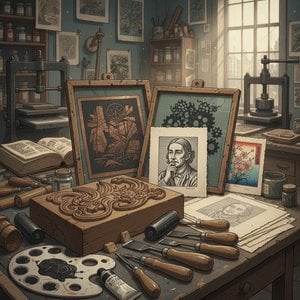
The Enduring Legacy of Printmaking: Techniques, Themes & Artistic Innovation Across Centuries
Explore the rich history of printmaking with ArtsDot. Discover techniques from intaglio to lithography, learn about collecting valuable prints & find museum-quality reproductions. Expert insights for art enthusiasts and collectors.

Echoes of Time: Exploring the Enduring Appeal & Historical Context of Vintage Art Prints
Explore the captivating world of vintage art prints! Discover their history, collecting tips & enduring appeal. Expert insights on chromolithography and building a legacy collection with ArtsDot.


