
- Startseite

- Auf Leinwand drucken
- Edward Hopper
- Five A.M.

 Gemälde kaufen Bild kaufen
 Versenden
 Teilen
 Details
 Zu Favoriten hinzufügen

 Herunterladen
 Ähnliche Objekte
 X-Ray
X-Ray
 Diashow anzeigen
Five A.M.
 Acrylic On Canvas
- WallArt
- New Realism
 1937
1937 51.0 x 91.0 cm
 Weiterlesen
Giclée / Kunstdruck
Giclée- oder Leinwanddruck in Museumsqualität mit schneller Produktion und flexiblen Veredelungsoptionen.




P118B $10

P118H $10

P118W $10

P438Z $10

P508JH $12

P508YH $12

P805H $10

P805Z $10

P919BZ $10

P919G $10

P919XJ $10

P959ZH $10

P968JZ $12

W106C $8

W218G $10

W218JH $8

W218Y $10

W307PJ $10

W316G $10

W316PJ $8

W316Y $10

W398PJ $8

W4111J $10

W500HY $15

W500JH $15

W692G $12

W849H $8

W940BG $15

W953PJ $8




Wählen Sie aus unseren vordefinierten Größen, die den ursprünglichen Proportionen des Kunstwerks entsprechen.

Sie können Ihre eigenen Maße eingeben, um ein bestimmtes Format oder einen speziellen Platz einzupassen. Wenn das von Ihnen gewählte Format nicht den Proportionen des Originalbildes entspricht, werden wir das Kunstwerk entweder beschneiden oder das Bild mit einem gespiegelten oder einfarbigen Rand erweitern. Ein digitaler Entwurf wird Ihnen zur Genehmigung zugesandt, bevor die Produktion beginnt.
Bitte beachten Sie, dass die Vorschau auf dem Bildschirm nicht den tatsächlichen Zuschnitt oder die Erweiterung widerspiegelt. Nur der Entwurf zeigt die endgültige Komposition präzise an.
Obwohl Sondermaße verfügbar sind, empfehlen wir die Auswahl eines Maßes aus der vordefinierten Liste, um die ursprünglichen Proportionen zu bewahren.
Weltweiter Versand () innerhalb von 2 Wochen statt der üblichen 4/5 Wochen. (2 Juli)

Kostenloser weltweiter Expressversand

Hochwertige Leinenleinwand

Umfassender Versicherungsschutz beim Versand

Zollsteuer-Rückerstattungsgarantie

Garantie für echte Farbtreue

60-Tage-Rückgaberecht (nur bei Mängeln)

100% Geld-zurück-Garantie

Mengenrabatt verfügbar
 Die Glasoption ist nur in Größen unter 110 cm verfügbar.

Five A.M.
Giclée / Kunstdruck
Größe der Reproduktion
-


Endpreis aller Optionen
-
Beschreibung des Sammlerstücks
A Moment Frozen in Time: Edward Hopper’s “Five A.M.”
Edward Hopper's "Five A.M." (1937) isn’t merely a depiction of a coastal scene; it’s a distilled essence of American solitude, a poignant snapshot of the quiet drama unfolding within the mundane. Painted during a period of profound social and economic change in the United States – the shadow of the Great Depression lingered heavily – the painting captures a sense of isolation and introspection that resonates deeply with viewers even today. Hopper, already establishing his signature style, masterfully employs light and shadow to create an atmosphere thick with unspoken narratives. The scene unfolds on a rocky coastline, dominated by a towering lighthouse standing sentinel against a cloudy sky. This iconic structure, a symbol of guidance and perhaps also confinement, anchors the composition while simultaneously drawing our gaze towards the distant, hazy horizon. The two small buildings nestled amongst the rocks – likely factory or industrial structures – hint at the relentless activity just beyond the frame, contrasting sharply with the stillness of the moment presented.The Language of Light and Color
Hopper’s technique is characterized by a remarkable restraint, a deliberate avoidance of overt sentimentality. He utilizes a predominantly muted palette—grays, blues, and browns—to evoke the cool, damp atmosphere of the coastal morning. The light isn't bright or dramatic; instead, it’s diffused and melancholic, filtering through the clouds to cast long shadows across the rocks and buildings. This subtle illumination is crucial to the painting’s emotional impact, suggesting a world veiled in quiet contemplation. Notice how Hopper builds up layers of paint – often with thin washes – creating a sense of depth and texture that mimics the ruggedness of the coastline. The brushstrokes are loose and expressive, contributing to the overall feeling of immediacy and capturing the fleeting quality of light. The careful rendering of the water’s surface, reflecting the sky above, adds another layer of complexity and visual interest.Symbolism and Narrative Resonance
Beyond its purely observational qualities, “Five A.M.” is rich in symbolic meaning. The lighthouse, a recurring motif in Hopper's work, often represents both hope and isolation – a beacon for lost souls searching for direction. The distant factory buildings speak to the industrialization of America and the displacement of rural life, themes that were increasingly prevalent during this era. The lone boat, positioned near the center-right, could be interpreted as a symbol of escape or perhaps simply a reminder of human presence within this vast, indifferent landscape. Hopper himself famously resisted providing definitive interpretations of his paintings, preferring to allow viewers to project their own experiences and emotions onto the scene. This ambiguity is precisely what makes “Five A.M.” so compelling – it invites us to contemplate our own sense of solitude and connection in a rapidly changing world.Historical Context and Hopper’s Vision
Created in 1937, "Five A.M." reflects the broader artistic trends of the time, particularly the rise of American Realism and Regionalism. Hopper was deeply influenced by artists like George Bellows and Robert Henri, who championed a direct and honest portrayal of American life. However, Hopper’s work transcends mere documentation; he imbues his scenes with a profound psychological depth. He wasn't simply painting what he saw but rather capturing the *feeling* of being alone in America – a feeling that resonated powerfully during the Depression and continued to shape the nation’s identity. The painting’s acquisition by the Wichita Art Museum marked an important step in recognizing Hopper as a significant voice within American art, solidifying his place as one of the most enduring figures of 20th-century realism.Bringing “Five A.M.” Home: High-Quality Reproductions
ArtsDot offers meticulously crafted hand-painted reproductions of Edward Hopper’s "Five A.M.," allowing you to experience the beauty and emotional resonance of this iconic painting in your own space. Our artists replicate Hopper's masterful use of light, color, and texture with exceptional detail, ensuring that every reproduction captures the essence of the original. Whether you are a seasoned art collector or simply seeking to add a touch of timeless elegance to your interior design, our reproductions provide an authentic and affordable way to own a piece of American art history. Explore our selection today and bring the quiet contemplation of “Five A.M.” into your home.Ähnliche Kunstwerke


Biografie des Künstlers
**frühes Leben und Einflüsse**
Edward Hopper, ein bedeutender amerikanischer Realist-Maler und Grafiker, wurde am 22. Juli 1882 in Upper Nyack, New York, geboren. Seine Familie, von hauptsächlich niederländischer Abstammung, bot eine komfortable Erziehung, die es Hopper ermöglichte, seine künstlerischen Neigungen schon im frühen Alter zu verfolgen. - **Inspirationen:** Hoppers Werk wurde von den Schriften von Ralph Waldo Emerson und den französischen Impressionisten-Meistern Édouard Manet und Edgar Degas beeinflusst. - **Frühzeitige Ausbildung:** Er begann mit Kunststudien durch einen Korrespondenzkurs im Jahr 1899, wechselte später an die New York School of Art and Design.**Künstlerischer Stil und Themen**
Edward Hopper's sparsame und präzise Darstellungen spiegelten seine persönliche Vision des modernen amerikanischen Lebens wider. Sein Werk lässt sich durch folgende Merkmale charakterisieren: - **Städtische und ländliche Szenen:** Beide Umgebungen wurden mit einer einzigartigen Mischung aus Realismus und emotionaler Tiefe dargestellt. - **Beleuchtung:** Eine Meisterschaft der Beleuchtung, oft eingesetzt, um Gefühle von Isolation oder Kontemplation hervorzurufen. - **Figuren:** Oft ohne Gesicht oder im Hintergrund platziert, wodurch die Umgebung gegenüber den Figuren betont wird.**Bekannte Werke und ihre Bedeutung**
- House by the Railroad (Museum of Modern Art, New York, United States), ein Beispiel für Hoppers Fähigkeit, durch eine einfache, aber wirkungsvolle Komposition einen Hauch von Melancholie hervorzurufen. - Reclining Nude (50 x 35 cm, New Realism, Watercolour), das seine Vielseitigkeit bei der Darstellung des menschlichen Körpers demonstriert.**Vermächtnis und Einfluss**
- **Einfluss auf zukünftige Künstler:** Hoppers einzigartiger Stil hat zahlreiche Künstler beeinflusst, darunter Pierre Sanford Ross, der für seine städtischen und ländlichen Szenen bekannt ist. - **dauernde Beliebtheit:** Seine Werke fesseln weiterhin das Publikum mit ihren zeitlosen Themen von Einsamkeit und dem menschlichen Dasein.**Erfahren Sie mehr bei ArtsDot**
- [https://ArtsDot.com/@/edward-hopper](Edward Hoppers Werke) - [https://ArtsDot.com/art.nsf/buy?open&ra=8xyffg](Kaufen Sie Kunst inspiriert von den Meistern)- Erkunden Sie die Welt der Kunst mit der umfangreichen Kollektion von ArtsDot.
- Entdecken Sie, wie Hoppers Vermächtnis weiterhin Künstler und Kunstliebhaber inspiriert.
**Referenzen**
- [https://ArtsDot.com/@/edward-hopper](Wikipedia: Edward Hopper) - [https://en.wikipedia.org/wiki/edward_hopper](Wikipedia: Edward Hoppers Biografie)
Edward Hopper
1931 - 1967 , Vereinigte Staaten von Amerika
Kurzinfos
- Beeinflusste Künstler: ['Pierre Sanford Ross']
- Bemerkenswerte Werke:
- House by the Railroad
- Nighthawks
- Gas
- Chop Suey
- Sommertime
- Einflüsse:
- Ralph Waldo Emerson
- Édouard Manet
- Edgar Degas
- Geburtsdatum: 22. Juli 1882
- Geburtsort: Upper Nyack, USA
- Künstlerischer Stil: Amerikanischer Realismus
- Nationalität: Amerikanisch
- Sterbedatum: 1967
- Vollständiger Name: Edward Hopper
Ähnliche Artikel
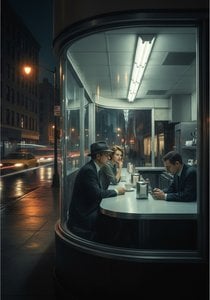
Edward Hopper: Amerikanischer Realismus und die Poetik der urbanen Einsamkeit
Entdecken Sie Edward Hoppers Meisterwerke und den Amerikanischen Realismus! Analysieren Sie ikonische Gemälde wie "Eleven AM" und erfahren Sie mehr über Licht, Schatten und die Poetik der urbanen Einsamkeit. Jetzt bei ArtsDot!

Abbott Handerson Thayer: Ethereal Realism & Spiritual Symbolism in American Art
Explore the captivating world of Abbott Handerson Thayer, a pioneer of American realism & Symbolism. Discover his ethereal angel paintings, innovative techniques, and lasting influence on art history. Learn about his scientific pursuits & Transcendentalist spirit.

Echoes of Isolation: Solitude in Western Art from Renaissance to Modernism
Explore the profound representation of solitude in Western art from the Renaissance to Modernism. Discover iconic paintings & artists like Goya, Friedrich, and Rossetti. Handmade oil reproductions available at ArtsDot.

American Realism: Social Commentary & Artistic Representation in Early 20th-Century Painting
Explore the powerful social commentary & artistic representation of American Realism. Discover key artists like Bellows & Sloan, and understand the movement's lasting impact on 20th-century art history.

Edward Hicks’ ‘Peaceable Kingdom’: American Folk Art & the Shaping of a National Identity
Explore the profound symbolism & historical context of Edward Hicks’ ‘Peaceable Kingdom.’ Discover how this iconic American folk art masterpiece reflects Quaker values and shaped a nation's identity. Learn more at ArtsDot.



