


 In echtem Maßstab anzeigen
 Versenden als Grußkarte
 Teilen
 Details anzeigen
 Leitfaden öffnen

 Herunterladen
 Ähnliche Objekte
 Röntgenaufnahme
 Diashow
 Besucherstatistiken
Eleven AM


 Mehr anzeigen
Die auf dieser Seite dargestellten Kunstwerke sind urheberrechtlich geschützt, was bedeutet, dass wir keine identische Reproduktion rechtmäßig erstellen oder verkaufen dürfen. Dieser Schutz wird durch internationale Abkommen wie die Berner Übereinkunft und durch nationale Gesetze, einschließlich derer, die von den ... festgelegt wurden US-Urheberrecht – Titel 17.
Diese Methode entspricht vollumfänglich den Urheberrechtsbestimmungen, da sie keine Kopie oder Vervielfältigung des geschützten Kunstwerks darstellt. Stattdessen handelt es sich um eine kreative Neuinterpretation – ein neues Gemälde, das vom Original inspiriert, aber nicht identisch mit ihm ist.
Giclée / Kunstdruck
Giclée- oder Leinwanddruck in Museumsqualität mit schneller Produktion und flexiblen Veredelungsoptionen. ( Handgemalte Reproduktion kaufen Zum digitalen Bild wechseln)




P118B €10

P118H €10

P118W €10

P438Z €10

P508JH €12

P508YH €12

P805H €10

P805Z €10

P919BZ €10

P919G €10

P919XJ €10

P959ZH €10

P968JZ €12

W106C €8

W218G €10

W218JH €8

W218Y €10

W307PJ €10

W316G €10

W316PJ €8

W316Y €10

W398PJ €8

W4111J €10

W500HY €15

W500JH €15

W692G €12

W849H €8

W940BG €15

W953PJ €8




Wählen Sie aus unseren vordefinierten Formaten, die den ursprünglichen Proportionen des Kunstwerks entsprechen.

Geben Sie die Breite und die Höhe an, die Sie benötigen, damit der Druck perfekt in Ihren Rahmen oder an Ihre Wand passt. Ein Druck kann nur beschnitten werden und niemals größer als das Originalbild gemacht werden; daher verliert ein Format mit einer anderen Proportion einen Teil des Bildes. Wir senden Ihnen ein digitales Mockup zur Freigabe, bevor wir den Druck ausführen. Das auf dieser Seite gezeigte Bild zeigt nicht den tatsächlichen Beschnitt – dies ist nur im Mockup ersichtlich.
Weltweiter Versand () innerhalb von 2 Wochen statt der üblichen 4/5 Wochen. (21 Oktober)

Kostenloser weltweiter Expressversand

Hochwertige Leinenleinwand

Vollständiger Versicherungsschutz beim Versand

Zollgebühren-Rückerstattungsgarantie

Garantie für exakte Farbtreue

100-tägiges Rückgaberecht (nur bei Mängeln)

100% Geld-zurück-Garantie

Angebot für Mengenrabatt
 Die Glasoption ist nur für Größen unter 110 cm verfügbar.

Eleven AM
Giclée / Kunstdruck
Format der Reproduktion
-


Gesamtpreis
€ 54
A Quiet Moment of Urban Solitude: Exploring Edward Hopper’s “Eleven AM”
Edward Hopper, a master of American realism, possessed an uncanny ability to distill the essence of modern life – its quiet desperation, its pervasive loneliness, and its fleeting moments of beauty – onto canvas. “Eleven A.M.”, painted in 1926, is a particularly poignant example of this skill. The painting depicts a solitary woman seated by a window, bathed in a soft yet revealing light that seems to simultaneously illuminate and isolate her. It’s not a scene of dramatic action, but rather one of profound stillness, inviting the viewer into an intimate contemplation of interiority and the human condition.
The composition is deceptively simple: a woman in a blue armchair, positioned near a window that offers a glimpse of the world outside. However, it’s within this simplicity that Hopper's genius resides. The room itself is modestly furnished – a dresser, a framed picture, and a lamp all contribute to a sense of everyday life, yet they also underscore the woman’s isolation. She isn’t actively engaged with her surroundings; instead, she appears lost in thought, her gaze directed outwards but seemingly unfocused. The careful arrangement of objects within the room doesn’t feel cluttered or busy, but rather deliberately sparse, emphasizing the emptiness that surrounds the figure. Hopper masterfully uses light and shadow to sculpt the form of the woman and define the space around her, creating a dramatic contrast that draws the eye and heightens the emotional impact.
The Language of Light and Shadow: Hopper’s Technical Brilliance
Hopper's technique in “Eleven A.M.” is characterized by a meticulous attention to detail and a masterful command of oil paint. His brushstrokes are relatively smooth, creating a realistic depiction of form and texture. The light streaming through the window isn’t merely illumination; it’s a character in itself, shaping the mood and revealing subtle nuances of emotion. Notice how the light catches on the woman's skin, highlighting her vulnerability, while simultaneously casting deep shadows that suggest a sense of melancholy or introspection. The color palette is restrained – blues, browns, and muted reds dominate the scene – further contributing to the painting’s somber atmosphere. This isn’t a vibrant, celebratory depiction of life; it’s a quiet, introspective study of human emotion.
Echoes of Modern Life: Context and Symbolism
To understand “Eleven A.M.” fully, it's essential to consider the historical context in which it was created. The 1920s were a period of rapid social change in America – urbanization, industrialization, and shifting societal norms all contributed to a sense of alienation and disillusionment. Hopper’s work often reflects these anxieties, capturing the loneliness and isolation that many people experienced in the modern world. The window in “Eleven A.M.” is particularly symbolic; it represents a connection to the outside world, yet the woman's position within the room suggests a barrier between her and that world. She is both present and absent, connected and disconnected. The painting invites us to consider the complexities of human experience – our longing for connection, our fear of isolation, and our search for meaning in a rapidly changing world.
Hopper's artistic influences are also apparent in “Eleven A.M.”. While he developed his own unique style, he was deeply influenced by French Impressionists like Édouard Manet and Edgar Degas, as well as American artists such as Robert Henri. Like these predecessors, Hopper sought to capture the realities of modern life with honesty and sensitivity. However, he went beyond mere representation; he imbued his paintings with a psychological depth that resonated with viewers on an emotional level. “Eleven A.M.” is not simply a depiction of a woman in a room; it’s a powerful exploration of the human condition – a timeless meditation on solitude, introspection, and the search for meaning.
A Masterpiece Revisited: Hopper's Enduring Legacy
Despite its apparent simplicity, “Eleven AM” remains one of Hopper’s most celebrated works. Its enduring appeal stems from Hopper’s ability to convey profound emotion through subtle visual cues—the muted colors, the carefully positioned light, and the woman’s contemplative gaze all contribute to a feeling of melancholy and contemplation. Critics have noted Hopper's masterful use of chiaroscuro (light and shadow), which creates dramatic contrasts that heighten the emotional impact of the scene.
The painting exemplifies Hopper’s signature style—realistic depictions of everyday life infused with psychological insight—and continues to inspire artists and viewers alike. It stands as a testament to Hopper's skill in capturing the essence of human experience, reminding us of the importance of quiet reflection and observation in confronting the complexities of modern existence.
Fragen & Antworten
Welchen kunsthistorischen Stellenwert nimmt "Eleven AM" von Edward Hopper ein?
Die kunsthistorische Einordnung von "Eleven AM" von Edward Hopper ist Contemporary Realism, aus der Epoche der Moderne.
Aus welcher Schaffensperiode von Edward Hopper stammt "Eleven AM"?
Innerhalb der Schaffensperiode von Edward Hopper lässt sich „Eleven AM“ der Mature Period zuordnen. Diese Phase ermöglicht einen Vergleich mit anderen Werken des Künstlers.
Wie hoch ist die Leuchtkraft von "Eleven AM" von Edward Hopper?
Die Farben von "Eleven AM" weisen eine Dunkel Luminanz auf.
Ähnliche Kunstwerke


Biografie des Künstlers
**frühes Leben und Einflüsse**
Edward Hopper, ein bedeutender amerikanischer Realist-Maler und Grafiker, wurde am 22. Juli 1882 in Upper Nyack, New York, geboren. Seine Familie, von hauptsächlich niederländischer Abstammung, bot eine komfortable Erziehung, die es Hopper ermöglichte, seine künstlerischen Neigungen schon im frühen Alter zu verfolgen. - **Inspirationen:** Hoppers Werk wurde von den Schriften von Ralph Waldo Emerson und den französischen Impressionisten-Meistern Édouard Manet und Edgar Degas beeinflusst. - **Frühzeitige Ausbildung:** Er begann mit Kunststudien durch einen Korrespondenzkurs im Jahr 1899, wechselte später an die New York School of Art and Design.**Künstlerischer Stil und Themen**
Edward Hopper's sparsame und präzise Darstellungen spiegelten seine persönliche Vision des modernen amerikanischen Lebens wider. Sein Werk lässt sich durch folgende Merkmale charakterisieren: - **Städtische und ländliche Szenen:** Beide Umgebungen wurden mit einer einzigartigen Mischung aus Realismus und emotionaler Tiefe dargestellt. - **Beleuchtung:** Eine Meisterschaft der Beleuchtung, oft eingesetzt, um Gefühle von Isolation oder Kontemplation hervorzurufen. - **Figuren:** Oft ohne Gesicht oder im Hintergrund platziert, wodurch die Umgebung gegenüber den Figuren betont wird.**Bekannte Werke und ihre Bedeutung**
- House by the Railroad (Museum of Modern Art, New York, United States), ein Beispiel für Hoppers Fähigkeit, durch eine einfache, aber wirkungsvolle Komposition einen Hauch von Melancholie hervorzurufen. - Reclining Nude (50 x 35 cm, New Realism, Watercolour), das seine Vielseitigkeit bei der Darstellung des menschlichen Körpers demonstriert.**Vermächtnis und Einfluss**
- **Einfluss auf zukünftige Künstler:** Hoppers einzigartiger Stil hat zahlreiche Künstler beeinflusst, darunter Pierre Sanford Ross, der für seine städtischen und ländlichen Szenen bekannt ist. - **dauernde Beliebtheit:** Seine Werke fesseln weiterhin das Publikum mit ihren zeitlosen Themen von Einsamkeit und dem menschlichen Dasein.**Erfahren Sie mehr bei ArtsDot**
- [https://ArtsDot.com/@/edward-hopper](Edward Hoppers Werke) - /de/art/show/art-8xyffg-de/Kaufen Sie Kunst inspiriert von den Meistern)- Erkunden Sie die Welt der Kunst mit der umfangreichen Kollektion von ArtsDot.
- Entdecken Sie, wie Hoppers Vermächtnis weiterhin Künstler und Kunstliebhaber inspiriert.
**Referenzen**
- [https://ArtsDot.com/@/edward-hopper](Wikipedia: Edward Hopper) - [https://en.wikipedia.org/wiki/edward_hopper](Wikipedia: Edward Hoppers Biografie)
Edward Hopper
1931 - 1967 , Vereinigte Staaten von Amerika
Eckdaten zum Künstler
- Beeinflusste Künstler: ['Pierre Sanford Ross']
- Bemerkenswerte Werke:
- House by the Railroad
- Nighthawks
- Gas
- Chop Suey
- Sommertime
- Einflüsse:
- Ralph Waldo Emerson
- Édouard Manet
- Edgar Degas
- Geburtsdatum: 22. Juli 1882
- Geburtsort: Upper Nyack, USA
- Künstlerischer Stil: Amerikanischer Realismus
- Nationalität: Amerikanisch
- Sterbedatum: 1967
- Vollständiger Name: Edward Hopper
Verwandte Artikel

Edward Hopper: Die 25 Meisterwerke des amerikanischen Realismus | ArtsDot
Entdecken Sie die 25 Meisterwerke von Edward Hopper! Tauchen Sie ein in amerikanische Kunst, Realismus & Isolation. Hochwertige Reproduktionen & Inspiration für Ihr Zuhause bei ArtsDot.com.

Amerikanischer Realismus: Die 10 Meisterwerke, die eine Ära prägten | ArtsDot
Entdecken Sie die 10 Meisterwerke des Amerikanischen Realismus! Von Edward Hopper bis Winslow Homer – erleben Sie die Geschichten, Techniken & zeitlose Schönheit. Hochwertige Kunstdrucke auf ArtsDot.com.

American Realism: Social Commentary & Artistic Representation in Early 20th-Century Painting
Explore the powerful social commentary & artistic representation of American Realism. Discover key artists like Bellows & Sloan, and understand the movement's lasting impact on 20th-century art history.

Grant Wood und der amerikanische Regionalismus: Identität, Mythos und die ländliche Landschaft
Entdecken Sie Grant Wood und den amerikanischen Regionalismus! Erfahren Sie mehr über 'American Gothic', Woods Leben, Einflüsse und sein Vermächtnis in der Kunstgeschichte. Expertenwissen & hochwertige Reproduktionen.
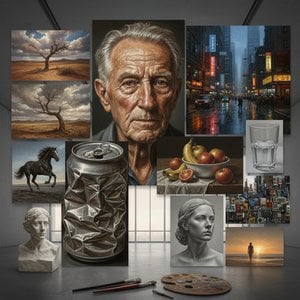
Top 10 Meisterwerke des Contemporary Realismus | Kunst & Wohndekor
Entdecken Sie die 10 Meisterwerke des Contemporary Realismus! Erfahren Sie die Geschichten hinter berühmten Gemälden & Künstlern. Hochwertige Kunstreproduktionen für Ihr Zuhause – jetzt bei entdecken!


