


 Vorschau anzeigen
 Versenden
 Teilen
 Details anzeigen
 Leitfaden

 Herunterladen
 Ähnliche Objekte
 Röntgenaufnahme
 Diashow
 Statistiken
Das kranke Kind


 Weiterlesen
Handgefertigte Ölreproduktion
Handgemaltes Ölgemälde auf Leinwand in Ihrer Wunschgröße und mit Rahmen, auf Bestellung von unseren Künstlern angefertigt. ( Zum Druck wechseln Zum digitalen Bild wechseln)




P118B €10

P118H €10

P118W €10

P438Z €10

P508JH €12

P508YH €12

P805H €10

P805Z €10

P919BZ €10

P919G €10

P919XJ €10

P959ZH €10

P968JZ €12

W106C €8

W218G €10

W218JH €8

W218Y €10

W307PJ €10

W316G €10

W316PJ €8

W316Y €10

W398PJ €8

W4111J €10

W500HY €15

W500JH €15

W692G €12

W849H €8

W940BG €15

W953PJ €8




Wählen Sie aus unseren vordefinierten Formaten, die den ursprünglichen Proportionen des Kunstwerks entsprechen.

Geben Sie die Breite und die Höhe an, die Sie für Ihren Rahmen oder Ihre Wand benötigen. Da dieses Werk handgemalt ist, kann der Künstler bei einer anderen Form etwas mehr um das Bild herum malen oder etwas abschneiden – Sie entscheiden. Wir senden Ihnen ein digitales Mockup zur Freigabe, bevor mit dem Malen begonnen wird. Das auf dieser Seite gezeigte Bild stellt nicht das tatsächliche Ergebnis dar – dies tut nur das Mockup.
Nach der Bestellung wird das ArtsDot.com-Team dem Kunden Anweisungen per E-Mail zusenden und eine Mockup-Vorschau bereitstellen.
Weltweiter Versand () in nur 3 bis 4 Wochen statt der üblichen 5 Wochen. (28 Oktober). Keine Kompromisse bei der Qualität.

Kostenloser weltweiter Expressversand

Hochwertige Leinenleinwand

Umfassender Versicherungsschutz beim Versand

Zollgebühren-Rückerstattungsgarantie

Garantie für exakte Farbtreue

100 Tage Rückgaberecht (nur bei Mängeln)

100% Geld-zurück-Garantie

Mengenrabatt verfügbar
 Die Glasoption ist nur für Größen unter 110 cm verfügbar.

Das kranke Kind
Art der Reproduktion
Format der Reproduktion
-


Endpreis
€ 232
A Window into Grief: Exploring Edvard Munch’s *The Sick Child* (1892)
Edvard Munch's *The Sick Child*, completed in 1892, stands as an unparalleled testament to the artist’s profound engagement with psychological turmoil and his pioneering exploration of human emotion. More than just a depiction of illness—though undeniably imbued with its palpable presence—the painting delves into the depths of grief, anxiety, and memory, cementing Munch's place as one of the foremost figures in Expressionism. Created amidst immense personal tragedy following the untimely deaths of his mother and sister, *The Sick Child* embodies Munch’s lifelong preoccupation with mortality and serves as a poignant reflection of his inner landscape.Subject & Narrative
This haunting grayscale portrait portrays Sophie Ulricsen Munch—Edvard's older sister—who succumbed to tuberculosis at the age of fifteen. Munch meticulously captured not merely her physical condition but also the *feeling* of impending loss, attempting to convey the pervasive dread and quiet suffering that characterized her final days. The composition subtly directs our gaze towards Sophie’s face – an enigmatic expression blending vulnerability with a haunting resignation—a gaze that speaks volumes about the isolation inherent in confronting mortality. Alongside Sophie lies Karen Ulricsen Munch, their aunt, rendered less distinctly, emphasizing the profound solitude experienced by the ailing child. The painting doesn't portray Sophie's death directly; instead, it encapsulates the emotional atmosphere preceding it, capturing the essence of grief and remembrance.Style & Technique: The Dawn of Expressionism
Munch’s artistic approach distinguishes itself from academic conventions of his time, prioritizing emotive intensity over precise realism. *The Sick Child* exemplifies this stylistic shift through loose brushstrokes and a deliberate focus on mood—a technique that foreshadowed Munch's later embrace of Expressionism. He employs a monochromatic palette – shades of gray – to amplify the somber atmosphere, creating an effect reminiscent of a dreamlike haze. The texture is thick and layered, achieved with expressive application of oil paint, possibly utilizing a palette knife to build up impasto—a technique that lends physicality to the artwork and underscores its emotional resonance. Lines are not employed for accurate representation but rather serve as conduits for conveying movement and defining form, contributing to the overall feeling of unrest.Historical Context & Artistic Influences
Born in 1863, Munch’s life was irrevocably shaped by familial loss—the deaths of his mother and sister profoundly impacting his artistic sensibilities. He rejected the prevailing stylistic norms of his era, influenced by Hans Jæger's nihilistic philosophy which championed artistic exploration of inner turmoil. While exhibiting traces of Impressionistic techniques – particularly in its subtle use of light – *The Sick Child* decisively marks Munch’s trajectory toward Expressionism, a movement that sought to convey subjective emotions rather than objective reality. Artists like Ernst Ludwig Kirchner and Emil Nolde would later draw inspiration from Munch's groundbreaking approach, recognizing the transformative power of portraying psychological states with unflinching honesty.Symbolism & Emotional Resonance
Despite its lack of overt symbolic elements, *The Sick Child* resonates deeply with viewers on an emotional level. Sophie’s contemplative gaze suggests introspection and melancholy—a gaze that invites contemplation about life's fragility. The blurred background contributes to a sense of confinement and isolation, mirroring the child’s physical and psychological state. The grayscale palette itself symbolizes grief, loss, and the fading of vitality. Munch’s intention wasn’t merely to depict sickness; he aimed to convey its pervasive influence on human experience—to capture the visceral sensation of confronting mortality and grappling with profound sorrow. This artwork compels us to confront our own vulnerabilities and acknowledges the enduring power of memory in shaping our understanding of life itself.- Artist: Edvard Munch
- Date: 1892
- Medium: Oil on Canvas
- Style: Expressionism
A Life Shrouded in Shadow: The World of Edvard Munch
Edvard Munch, born in 1863 amidst the stark landscapes of Norway, was an artist whose work became synonymous with the anxieties and emotional turmoil of the modern age. His life, deeply marked by tragedy from a young age—the deaths of his mother and sister—instilled a lifelong preoccupation with mortality, sickness, and the fragility of human existence. These experiences weren’t merely biographical details; they became the very core of his artistic vision, fueling a relentless exploration of the inner landscape of fear, grief, and longing. His father's strict religious beliefs and own struggles with mental illness further contributed to a sense of dread that permeated Munch’s world, shaping not only his personal life but also the symbolic language of his paintings. He wasn’t
Fragen & Antworten
Welche Stimmung vermittelt "Das kranke Kind" von Edvard Munch innerhalb der Expressionismus?
Innerhalb der Expressionismus-Strömung ist „Das kranke Kind“ mit einem Melancholisch Ton festgehalten.
In welcher Ausrichtung liegt "Das kranke Kind" von Edvard Munch vor?
Das Format von „Das kranke Kind“ ist Querformat. Dies ist hilfreich bei der Planung, wo eine Reproduktion platziert werden soll.
Ist "Das kranke Kind" von Edvard Munch gemeinfrei?
"Das kranke Kind" von Edvard Munch ist gemeinfrei – das Urheberrecht ist abgelaufen. Dieser Status bestimmt, wie das Bild des Werkes vervielfältigt werden darf.
Ähnliche Kunstwerke


Künstlerbiografie
Edvard Munch: Leben und Vermächtnis
Frühes Leben und Einflüsse (1863-1889)
Edvard Munch wurde am 12. Dezember 1863 in Ådalsbruk, Schweden, geboren, obwohl er den Großteil seines Lebens in Norwegen verbrachte. Seine Kindheit war von Tragödien und Instabilität geprägt. Der frühe Verlust seiner Mutter an Tuberkulose im Alter von fünf Jahren, gefolgt vom Tod seiner geliebten Schwester Sophie durch dieselbe Krankheit neun Jahre später, hinterließ einen unauslöschlichen Eindruck in Munchs Psyche. Er kämpfte auch sein Leben lang mit der Angst vor einer ererbten psychischen Erkrankung, die seinen Vater heimgesucht hatte. Diese Erfahrungen führten bei ihm zu einer tiefen Beschäftigung mit Tod, Krankheit und psychischem Leid – Themen, die seine künstlerische Produktion dominieren sollten.
Munchs frühe Ausbildung an der Königlichen Schule für Kunst und Design in Kristiania (jetzt Oslo) war von entscheidender Bedeutung. Dort begegnete er dem nihilistischen Philosophen Hans Jæger, der Munch ermutigte, seine innere Zerrissenheit zu erforschen und sie durch Kunst auszudrücken, konventionelle akademische Stile abzulehnen. Diese Mentorenschaft führte ihn zu einem subjektiveren und emotional aufgeladenen Ansatz in der Malerei.
Künstlerische Entwicklung und Pariser Einflüsse (1890-1900)
Die 1890er Jahre waren Zeugen von Munchs entscheidender künstlerischer Entwicklung, die maßgeblich von seinen Reisen nach Paris und Berlin geprägt war. In Paris wurde er der lebendigen Kunstszene ausgesetzt und nahm Einflüsse von Postimpressionisten wie Paul Gauguin, Vincent van Gogh und Henri de Toulouse-Lautrec auf. Er übernahm ihre bewusste Verwendung von Farbe, expressiven Pinselstrichen und Ablehnung der naturalistischen Darstellung. Van Goghs emotionale Intensität berührte Munchs eigene Kämpfe besonders.
Seine Zeit in Berlin brachte ihn mit dem schwedischen Dramatiker August Strindberg in Kontakt, eine Beziehung, die sowohl persönlich als auch künstlerisch anregend war. In dieser Zeit entstand auch der Entwurf seiner ambitionierten Serie “Das Leben in Schleier” – eine Sammlung von Gemälden, die Themen wie Liebe, Angst, Eifersucht, Verrat und Tod erforschen, alles mit intensiver Emotionalität und psychologischer Tiefe dargestellt.
Wichtige Werke und Künstlerischer Stil (1900-1920er)
Munchs künstlerischer Stil ist durch seine rohe Emotion, verzerrte Formen und den symbolischen Gebrauch von Farbe gekennzeichnet. Er ging über die realistische Darstellung hinaus und legte den Ausdruck innerer Gefühle gegenüber objektiver Repräsentation. Seine Werke erzeugen oft ein Gefühl der Beklemmung, Angst und existenziellen Verzweiflung.
- Der Schrei (1893-1910): Vielleicht sein ikonischstes Gemälde, das eine Figur darstellt, die von einer existentiellen Krise überwältigt wird, vor einem wirbelnden, feurigen Himmel. Es gibt mehrere Versionen in verschiedenen Medien.
- Die Jungfrau (1894-1895): Ein kontroverses und tief persönliches Werk, das Themen wie Sexualität, Mutterschaft und Tod erforscht.
- Das kranke Kind (verschiedene Versionen): Ein wiederkehrendes Motiv, das Munchs Kindheitstraumata und den Verlust geliebter Menschen widerspiegelt.
- Melancholie I (1891) & II (1892): Mächtige Darstellungen von tiefer Trauer und Isolation.
Späte Jahre, Anerkennung und Vermächtnis (1920er-1944)
Trotz zunehmender Berühmtheit und finanziellen Erfolgs in späteren Jahren blieb Munchs persönliches Leben turbulent. Ein schwerer psychischer Zusammenbruch im Jahr 1908 führte zu einer Krankenhauszeit und dem Verzicht auf Alkohol. In seinen späteren Jahren erlebte er jedoch eine kreative Wiedergeburt und Anerkennung, insbesondere in Kristiania (Oslo). Er erhielt zahlreiche Auszeichnungen und Ehrungen, die seine Reputation als einer der wichtigsten Künstler Norwegens festigten.
Munch starb am 23. Januar 1944 in Ekely, nahe Oslo. Sein Vermächtnis ist durch das Munch-Museum gesichert (gegründet im Jahr 1963), das eine umfangreiche Sammlung seiner Werke beherbergt, darunter zahlreiche Versionen von *Der Schrei*, sowie andere bedeutende Gemälde, Drucke und Zeichnungen.
Historische Bedeutung
Edvard Munchs Beitrag zur modernen Kunst ist unbestreitbar. Er gilt als eine Schlüsselgestalt der Entwicklung des Expressionismus und ebnete den Weg für Künstler, die sich dem Ausdruck subjektiver Emotionen und psychischer Zustände statt objektiver Realität verschrieben haben. Seine unerschrockene Auseinandersetzung mit universellen menschlichen Erfahrungen – Liebe, Verlust, Angst und Tod – hallt weiterhin bei Publikum auf der ganzen Welt wider und macht ihn zu einer der einflussreichsten und dauerhaftesten Figuren in der Kunstgeschichte. Sein Werk hatte einen tiefgreifenden Einfluss auf nachfolgende Generationen von Künstlern und trug zur Etablierung des Expressionismus in Deutschland und darüber hinaus bei, wodurch er seinen Platz als visionärer Künstler festigte, der sich wagt, die dunkleren Aspekte der menschlichen Natur zu konfrontieren.

Edvard Munch
1863 - 1944 , Schweden
Kurzinfos
- Beeinflusste Künstler:
- Paul Gauguin
- Vincent van Gogh
- Henri de Toulouse-Lautrec
- Bemerkenswerte Werke:
- Der Schrei
- Madonna
- Das kranke Kind
- Melancholie I & II
- Geburtsdatum: 12. Dezember 1863
- Geburtsort: Adelsbruk, Schweden
- Künstlerischer Stil: Expressionismus
- Nationalität: Norweger
- Todatum: 23. Januar 1944
- Vollständiger Name: Edvard Munch
- Von Ihm Beeinflusste Künstler: ['Expressionismus (Deutschland)']
Ähnliche Artikel

Edvard Munchs Meisterwerke: Die 25 ikonischsten Kunstwerke für Ihr Zuhause | ArtsDot
Entdecken Sie die 25 ikonischsten Kunstwerke von Edvard Munch! Tauchen Sie ein in seine Welt voller Expressionismus, Angst und Melancholie. Hochwertige Kunstdrucke & Reproduktionen auf ArtsDot.com – für Kunstliebhaber & stilvolles Zuhause.
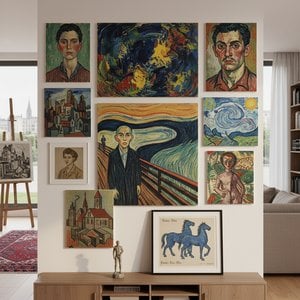
Expressionismus: Die 10 Meisterwerke, die eine Ära prägten – Kunst für Ihr Zuhause |
Entdecken Sie die 10 prägendsten Meisterwerke des Expressionismus! Von Munch bis Kandinsky – erfahren Sie die Geschichten hinter den berühmtesten Gemälde und Künstler. Hochwertige Kunstdrucke online bei kaufen & Ihr Zuhause mit Emotionen füllen.

Edvard Munch: Angst, Moderne und die Morgenröte des Expressionismus – Eine tiefgründige Analyse
Entdecken Sie Edvard Munch und den Expressionismus! Tiefgründige Analyse von 'Der Schrei', künstlerischen Einflüssen & der Bedeutung für die Moderne. Expertenwissen für Sammler und Kunstliebhaber.

Unlocking Emotion: A Beginner's Guide to the Raw Power of Symbolic Expressionism Art
Discover the raw emotion of Symbolic Expressionism. Our expert guide explores how masters like Munch use color and form to convey inner feelings, offering inspiration for collectors looking to bring powerful, soulful art into their modern homes.

The Raw Emotion of Expressionism: A Deep Dive into its History, Characteristics & Enduring Influence
Explore the raw emotion of Expressionism with ArtsDot. Discover its history, key artists like Kirchner & Munch, and lasting influence on modern art. Expert insights for collectors & enthusiasts.


