


 Vorschau anzeigen
 Versenden
 Teilen
 Details anzeigen

 Herunterladen
 Ähnliche Objekte
 Röntgenaufnahme
 Diashow
Apfelsträhnen


 Weiterlesen
Giclée / Kunstdruck
Giclée- oder Leinwanddruck in Museumsqualität mit schneller Produktion und flexiblen Veredelungsoptionen. ( Handgemalte Reproduktion bestellen Bild kaufen)




P118B $10

P118H $10

P118W $10

P438Z $10

P508JH $12

P508YH $12

P805H $10

P805Z $10

P919BZ $10

P919G $10

P919XJ $10

P959ZH $10

P968JZ $12

W106C $8

W218G $10

W218JH $8

W218Y $10

W307PJ $10

W316G $10

W316PJ $8

W316Y $10

W398PJ $8

W4111J $10

W500HY $15

W500JH $15

W692G $12

W849H $8

W940BG $15

W953PJ $8




Wählen Sie aus unseren vordefinierten Formaten, die den ursprünglichen Proportionen des Kunstwerks entsprechen.

Sie können Ihre eigenen Maße eingeben, um ein bestimmtes Format oder einen speziellen Platz einzupassen. Wenn das von Ihnen gewählte Format nicht den Proportionen des Originalbildes entspricht, werden wir das Kunstwerk entweder beschneiden oder das Bild mit einem gespiegelten oder einfarbigen Rand erweitern. Ein digitaler Entwurf wird Ihnen zur Genehmigung zugesandt, bevor die Produktion beginnt.
Bitte beachten Sie, dass die Vorschau auf dem Bildschirm nicht den tatsächlichen Zuschnitt oder die Erweiterung widerspiegelt. Nur der Entwurf zeigt die endgültige Komposition präzise an.
Obwohl Sondermaße verfügbar sind, empfehlen wir die Auswahl eines Maßes aus der vordefinierten Liste, um die ursprünglichen Proportionen zu bewahren.
Weltweiter Versand () innerhalb von 2 Wochen statt der üblichen 4/5 Wochen. (13 August)

Kostenloser weltweiter Expressversand

Hochwertige Leinenleinwand

Umfassender Versicherungsschutz beim Versand

Zollgebühren-Rückerstattungsgarantie

Garantie für exakte Farbtreue

60 Tage Rückgaberecht (nur bei Mängeln)

100% Geld-zurück-Garantie

Mengenrabatt verfügbar
 Die Glasoption ist nur für Größen unter 110 cm verfügbar.

Apfelsträhnen
Giclée / Kunstdruck
Format der Reproduktion
-


Gesamtpreis
$ 62
Sammlerstück-Beschreibung
Edouard Manet’s “Peaches”: A Moment of Quiet Brilliance
Édouard Manet's "Peaches" – painted in 1882 – is more than just a still life; it’s a carefully constructed tableau capturing a fleeting moment of domestic tranquility, imbued with the subtle complexities characteristic of the Impressionist movement. This seemingly simple depiction of three peaches resting on a table offers a profound glimpse into Manet's innovative approach to painting and his fascination with modern Parisian life. The work stands as a testament to his ability to elevate the ordinary – a bowl of fruit – into an object of artistic contemplation, mirroring the broader shifts occurring within the art world at the time.
Manet’s style in “Peaches” is immediately recognizable: loose brushstrokes create a sense of immediacy and movement, while he deliberately suppresses transitional tones, favoring bold contrasts of color. This technique, influenced by his admiration for Old Masters like Diego Velázquez – particularly Velázquez's masterful use of light and shadow – allows the peaches themselves to command attention. The artist’s simplification of detail is also key; Manet doesn’t meticulously render every curve or texture, instead focusing on capturing the essence of the subject with a confident, almost painterly touch. The background, a serene blue sky, provides a calming counterpoint to the vibrant hues of the fruit and adds depth to the composition.
Manet's Artistic Legacy: A Bridge Between Realism and Impressionism
To fully appreciate “Peaches,” it’s crucial to understand Manet’s pivotal role in bridging the gap between Realism and Impressionism. Following the influence of Gustave Courbet, who championed depicting everyday life without idealization, Manet began to paint scenes from contemporary Parisian society – cafes, theaters, and street life – often with a critical eye. However, he rejected the rigid academic conventions of the time, opting for a more direct and expressive approach. “Peaches” exemplifies this shift; it’s not a meticulously rendered study of fruit but rather an exploration of light, color, and atmosphere—elements central to Impressionist painting.
Manet's bold choices were revolutionary. He deliberately broke with traditional compositional rules, placing the peaches slightly off-center and employing a flattened perspective that challenged the illusionistic depth favored by earlier artists. This deliberate departure paved the way for future generations of Impressionists, including Claude Monet and Frédéric Bazille, who built upon Manet’s innovations to create their own distinctive styles. His work served as a catalyst for artistic experimentation, pushing the boundaries of what was considered acceptable in painting.
Still Life as Social Commentary
While “Peaches” appears deceptively straightforward, it's important to consider its broader context within Manet’s oeuvre and the social landscape of 19th-century Paris. Manet frequently depicted still life paintings featuring everyday objects – melons, almonds, currants – transforming these mundane subjects into powerful statements about modern life. These works often subtly critique societal norms and values, reflecting the changing role of women and the increasing commercialization of urban spaces.
The inclusion of three peaches, a symbol of abundance and prosperity, alongside the simple table setting suggests a quiet celebration of domesticity. However, Manet’s deliberate use of light and shadow also hints at an underlying sense of melancholy or transience – a reminder that beauty is fleeting. Furthermore, the painting's placement within the context of Manet’s other still life works—such as “Still Life with Melon and Peaches” housed in the National Gallery of Art and “Almonds, currants and peaches”—reveals a consistent exploration of form, color, and the relationship between objects and their surroundings.
A Reproduction for Your Space
ArtsDot offers meticulously hand-painted reproductions of Édouard Manet’s "Peaches," capturing the artist's unique style and emotional depth with unparalleled accuracy. Each reproduction is created using traditional oil painting techniques, ensuring a rich texture and vibrant color palette that faithfully replicates the original artwork. Whether you are an art enthusiast, collector, or simply seeking to add a touch of Impressionist elegance to your home or office, our “Peaches” reproduction provides a stunning and authentic representation of this iconic masterpiece. Experience the beauty and nuance of Manet’s vision – order your high-quality reproduction today.
Ähnliche Kunstwerke


Über den Künstler
frühes Leben und Karriere
Édouard Manet, ein französischer modernistischer Maler, wurde am 23. Januar 1832 in Paris geboren. Er widersetzte sich seinen bürgerlichen Wurzeln und einem vorgezeichneten Seekriegspfad und etablierte sich als mutiger französischer Modernist, dessen Leinwände die Lebendigkeit des 19. Jahrhunderts einfingen. Er wird weithin für seine Rolle bei der Pionierarbeit des Impressionismus gelobt, der die Kunst von der Malerei in unbekannte Gebiete lenkte.Bekannte Werke
Manets frühe Meisterwerke, Das Picknick auf der Wiese (Le déjeuner sur l'herbe) (1863) und Olympia (1865), waren radikal, stellten künstlerische Normen in Frage und lösten Empörung bei Traditionalisten aus. Diese provokanten Werke wurden von fortschrittlichen Kollegen anerkannt und säten die Saat des Impressionismus. * Das Picknick auf der Wiese (Le déjeuner sur l'herbe) (1863) - ein Gemälde, das sowohl bei Kritikern als auch bei der Kunstakademie für Kontroversen sorgte. * Olympia (1865) – ein Werk, das aufgrund seiner Darstellung einer nackten weißen Frau in Begleitung einer schwarzen Dienstmädchen große Aufregung auslöste.Museen und Sammlungen
Manets Werke befinden sich in verschiedenen Museen auf der ganzen Welt, darunter: * Musée d'Orsay (Paris, Frankreich) – beherbergt eine umfangreiche Sammlung von Manets Gemälden, darunter Olympia. * Museum of Fine Arts (Boston, USA) – zeigt Manets Porträt von Victorine Meurent, ein bemerkenswertes Werk seines Oeuvres.Vermächtnis und Einfluss
Manets innovativer Stil, der durch breite, schnelle Pinselstriche, Studiobeleuchtung und geringe Tiefenwirkung gekennzeichnet ist, hat zukünftige Maler maßgeblich beeinflusst. Sein Vermächtnis kann in den Werken zahlreicher Künstler gesehen werden, die auf seinen Füßen folgen.- Impressionismus: Seine Pionierarbeit in diesem Stil hat ihn zu einer bekannten Figur unter Kunstliebhabern gemacht.
- Realismus: Seine Ablehnung traditioneller realistischer Ansätze ebnete den Weg für eine neue Generation von Künstlern.
- Moderne Kunst: Manets Beiträge zur Entwicklung der modernen Kunst sind unbestreitbar und festigen seinen Platz in den Annalen der Kunstgeschichte.
Weitere Literatur und Erkundung
* Entdecken Sie mehr über das Leben und Werk von Édouard Manet auf ArtsDot. * Erkunden Sie die Musée d'Orsay Sammlung, die eine umfangreiche Auswahl von Manets Gemälden, darunter Olympia, auf ArtsDot’s Museum Seite bietet.
Édouard Manet
1832 - 1883 , Frankreich
Kurzinfos
- Beeinflusste Künstler:
- Claude Monet
- Pierre-Auguste Renoir
- Edgar Degas
- Bemerkenswerte Werke:
- Le Déjeuner sur l'herbe
- Olympia
- A Bar at the Folies-Bergère
- Einflussreiche Künstler:
- Caravaggio
- Diego Velázquez
- Gustave Courbet
- Geburtsdatum: 23. Januar 1832
- Geburtsort: Paris, Frankreich
- Künstlerische Richtung: Impressionismus, Realismus
- Nationalität: Französisch
- Todatum: 1883
- Vollständiger Name: Édouard Manet
Ähnliche Artikel

Édouard Manet: Die 25 Meisterwerke des Impressionismus für Ihr Zuhause | ArtsDot
Entdecken Sie die 25 Meisterwerke von Édouard Manet! Tauchen Sie ein in Impressionismus, Pariser Leben & revolutionäre Kunst. Hochwertige Reproduktionen für Ihr Zuhause – jetzt auf ArtsDot.com!

Die Top 10 Gemälde in Schattierungen von 'Slate Blue': Kunst für Ihr Zuhause
Entdecken Sie die Top 10 Gemälde in faszinierenden 'Slate Blue' Tönen! Von Monet bis Manet – erleben Sie Kunstgeschichte und lassen Sie sich von Meisterwerken inspirieren. Hochwertige Kunstdrucke auf

Paul Cézanne: Die 25 Meisterwerke des Impressionismus | ArtsDot
Entdecken Sie die 25 Meisterwerke von Paul Cézanne! Tauchen Sie ein in die Welt des Impressionismus und Postimpressionismus. Erfahren Sie mehr über seine Stillleben, Landschaften & berühmten Gemälde – jetzt hochwertige Kunstdrucke auf ArtsDot.com.
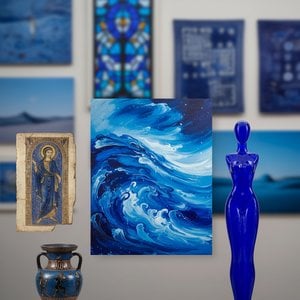
The Allure of Azure: Exploring the Symbolic & Aesthetic Depths of Blue in Art History
Explore the rich history of blue in art! Discover its symbolism, from ancient pigments to modern masterpieces by Kandinsky & Seurat. Uncover the psychological impact and cultural meanings behind this captivating hue.

Impressionismus Meisterwerke: Die Top 10 Kunstwerke für Ihr Zuhause | ArtsDot
Entdecken Sie die Top 10 Meisterwerke des Impressionismus! Von Monet bis Renoir – erfahren Sie die Geschichten hinter berühmten Gemälden, Techniken & Farben. Hochwertige Kunstdrucke auf ArtsDot.com.



