


 Vorschau anzeigen
 Versenden
 Teilen
 Details anzeigen
 Leitfaden

 Herunterladen
 Ähnliche Objekte
 Röntgenaufnahme
 Diashow
 Statistiken
Prophet Jeremiah


 Weiterlesen
Handgefertigte Ölreproduktion
Handgemaltes Ölgemälde auf Leinwand in Ihrer Wunschgröße und mit Rahmen, auf Bestellung von unseren Künstlern angefertigt. ( Zum Druck wechseln Zum digitalen Bild wechseln)




P118B €10

P118H €10

P118W €10

P438Z €10

P508JH €12

P508YH €12

P805H €10

P805Z €10

P919BZ €10

P919G €10

P919XJ €10

P959ZH €10

P968JZ €12

W106C €8

W218G €10

W218JH €8

W218Y €10

W307PJ €10

W316G €10

W316PJ €8

W316Y €10

W398PJ €8

W4111J €10

W500HY €15

W500JH €15

W692G €12

W849H €8

W940BG €15

W953PJ €8




Wählen Sie aus unseren vordefinierten Formaten, die den ursprünglichen Proportionen des Kunstwerks entsprechen.

Geben Sie die Breite und die Höhe an, die Sie für Ihren Rahmen oder Ihre Wand benötigen. Da dieses Werk handgemalt ist, kann der Künstler bei einer anderen Form etwas mehr um das Bild herum malen oder etwas abschneiden – Sie entscheiden. Wir senden Ihnen ein digitales Mockup zur Freigabe, bevor mit dem Malen begonnen wird. Das auf dieser Seite gezeigte Bild stellt nicht das tatsächliche Ergebnis dar – dies tut nur das Mockup.
Nach der Bestellung wird das ArtsDot.com-Team dem Kunden Anweisungen per E-Mail zusenden und eine Mockup-Vorschau bereitstellen.
Weltweiter Versand () in nur 3 bis 4 Wochen statt der üblichen 5 Wochen. (27 Oktober). Keine Kompromisse bei der Qualität.

Kostenloser weltweiter Expressversand

Hochwertige Leinenleinwand

Umfassender Versicherungsschutz beim Versand

Zollgebühren-Rückerstattungsgarantie

Garantie für exakte Farbtreue

100 Tage Rückgaberecht (nur bei Mängeln)

100% Geld-zurück-Garantie

Mengenrabatt verfügbar
 Die Glasoption ist nur für Größen unter 110 cm verfügbar.

Prophet Jeremiah
Art der Reproduktion
Format der Reproduktion
-


Endpreis
€ 231
Donatello’s Prophet Jeremiah: A Testament to Renaissance Faith
Donatello's "Prophet Jeremiah," sculpted in marble around 1423 during the Florentine Renaissance, stands as an enduring emblem of artistic innovation and spiritual contemplation. Commissioned by Lorenzo Medici for Santa Maria del Fiore Cathedral, this monumental figure transcends mere representation; it embodies a profound engagement with humanist ideals intertwined with biblical narrative—a hallmark of the era’s transformative cultural landscape.Sculptural Form and Technique: Embracing Classical Influence
The sculpture's design reflects Donatello’s masterful assimilation of classical sculptural principles. Unlike earlier depictions of prophets, Jeremiah is presented in a strikingly naturalistic pose, mirroring statues from antiquity – specifically those inspired by Greek models. This deliberate choice underscores the Renaissance fascination with reviving Greco-Roman aesthetics and demonstrating an understanding of anatomical accuracy. The sculptor skillfully employed techniques honed during his formative years studying under Filippo Brunelleschi, utilizing chisel and mallet to carve intricate details into the marble block. Note the careful drapery folds that convey movement and volume, mirroring the flowing robes characteristic of Roman sculptures. Donatello’s meticulous attention to surface texture contributes to the sculpture's palpable presence and enhances its visual impact.Historical Context: Florence Amidst Artistic Flourishing
Florence in the early 15th century was experiencing an unprecedented surge of artistic creativity—the Renaissance—fueled by patronage from wealthy families like the Medici. This period witnessed a revival of interest in classical art and philosophy, prompting artists to explore new approaches to portraying human form and emotion. Donatello’s “Prophet Jeremiah” exemplifies this spirit of experimentation, pushing boundaries established by Gothic sculpture traditions. The cathedral project itself served as a catalyst for artistic ambition, attracting talent from across Italy and establishing Santa Maria del Fiore as the epicenter of Renaissance art.Symbolism: Lamentation and Divine Revelation
Jeremiah’s posture—arms outstretched in supplication—immediately conveys sorrow and lamentation, reflecting the prophet's prophetic role as bearer of God’s word amidst impending doom. The scroll he clutches symbolizes divine revelation – Jeremiah’s prophecies concerning Judah’s destruction and eventual redemption. Donatello skillfully captures this emotional intensity through subtle facial expressions and nuanced musculature, demonstrating a deep understanding of human psychology. Furthermore, the sculpture’s placement within the cathedral underscores its spiritual significance—a visual reminder of faith and repentance amidst the grandeur of Florentine artistic achievement.Emotional Impact: A Moment Frozen in Time
“Prophet Jeremiah” continues to resonate with viewers centuries after its creation. Its serene yet melancholic countenance evokes empathy and invites contemplation on themes of suffering, resilience, and divine grace. Donatello’s masterful execution ensures that the sculpture retains an immediacy that transcends time—a testament to his artistic genius and a cornerstone of Florentine Renaissance art history. Hand-painted reproductions offer a captivating opportunity to experience this timeless masterpiece in your own home.Fragen & Antworten
Für welchen Raum wird "Prophet Jeremiah" von Donatello empfohlen?
Eine Reproduktion von „Prophet Jeremiah“ passt hervorragend in ein Living Room.
Welche Farben dominieren in "Prophet Jeremiah" von Donatello?
"Prophet Jeremiah" zeichnet sich durch eine Earthy-Palette aus, die von Espresso (#665148) dominiert wird.
Welche Farbpalette wird in "Prophet Jeremiah" verwendet?
Die Farbpalette von "Prophet Jeremiah" von Donatello wird als Earthy beschrieben. Es handelt sich um eine kompakte Beschreibung der Farben des Werkes.
Ähnliche Kunstwerke


Künstlerbiografie
Frühes Leben und Karriere
Donato di Niccolò di Betto Bardi, bekannt als Donatello, wurde um 1386 in Florenz, Italien geboren. Er studierte klassische Bildhauerei, was seine Entwicklung eines frühen Renaissance-Stils stark beeinflusste. Dieser neue Ansatz für Kunst und Kultur sollte schließlich zum Kennzeichen der florentinischen Renaissance werden.Schlüsselwerke und Innovationen
Donatellos berühmtestes Werk, David, war seit der Antike die erste freistehende nackte männliche Skulptur. Sie wurde von der Familie Medici in Auftrag gegeben und zeigte seinen innovativen Stil und seine technische Expertise. Zu den anderen bemerkenswerten Werken gehören:- St. Louis von Toulouse (jetzt im Museum der Basilika di Santa Croce), das einen klassischen Rahmen aufwies, der von Donatello entworfen wurde.
- Das Opfer des Isaak, geschaffen für den Campanile von Santa Maria del Fiore in Florenz, zeichnete sich durch starke Porträtdetails aus.
- Kreuzifix (1425) für Santa Croce, das Christus in einem Moment der Agonie darstellte.
Künstlerischer Stil und Vermächtnis
Donatellos Stil lässt sich in breite Phasen einteilen, beginnend mit der Entwicklung von Ausdruckskraft und klassischer Monumentalität. Seine Arbeit wurde nicht sofort von der Gemeinschaft akzeptiert, entwickelte sich aber schließlich zum beliebtesten und beeinflusste andere italienische Höfe und europäische Künstler. Wichtige Kunstbewegungen:Persönliches Leben und Arbeitsweise
Donatello war bekannt dafür, liebenswert und gutmütig zu sein, aber schlecht in der geschäftlichen Seite seiner Karriere. Er nahm oft mehr Aufträge an, als er bewältigen konnte, und vollendete Werke häufig verspätet oder übergab sie anderen Bildhauern. Bemerkenswerte Kunstwerke und Künstler:- Leonardo da Vinci: Ankündigung (Detail)
- Amico Aspertini: Statua di Pan/Leone che azzanna un cavallo
- Michelangelo Buonarroti: Tondo Pitt
Museen und Kunstsammlungen:
- Museo della Collegiata (Empoli, Italien): Ein verstecktes Juwel der Renaissance mit Werken von Francesco Botticini und Raffaello Botticini.
- Die frühe italienische Kunstbewegung der Renaissance

Donatello
1386 - 1466 , Italien
Kurzinfos
- Beeinflusste Künstler:
- Leonardo da Vinci
- Michelangelo Buonarroti
- Bemerkenswerte Werke:
- David
- St. Louis von Toulouse
- Das Opfer des Isaak
- Kreuzifix (1425)
- Geburtsdatum: ca. 1386
- Geburtsort: Florenz, Italien
- Künstlerische Bewegung:
- Frührenaissance
- Florentiner Renaissance
- Künstlerische Einflüsse: ['Antike Skulptur']
- Nationalität: Italiener
- Sterbedatum: 1466
- Vollständiger Name: Donatello (Donato di Niccolò)
Ähnliche Artikel

The Enduring Form: Sculpture Across History, Technique & Emotional Resonance
Explore the rich history of sculpture with ArtsDot. Discover key techniques, influential artists & investment potential for discerning collectors. Expert insights into valuing and collecting timeless masterpieces.

The Enduring Form: Exploring Themes & Techniques in Sculpture Across Historical Periods
Explore the rich history of sculpture from ancient masterpieces to contemporary innovations. Discover key techniques, influential artists & investment potential for discerning art collectors.

Bronze-Meisterwerke: Die 10 Skulpturen, die Kunstgeschichte schrieben | ArtsDot
Entdecken Sie die 10 legendärsten Bronze Skulpturen der Kunstgeschichte! Von Michelangelo bis Rodin – erfahren Sie die Geschichten hinter den Meisterwerken und lassen Sie sich von Wanddeko-Ideen inspirieren. Hochwertige Kunstdrucke auf ArtsDot.com.
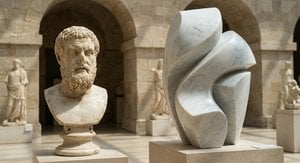
The Enduring Allure of Marble in Art History: From Classical Sculpture to Modern Abstraction
Explore the captivating history of marble sculpture from ancient Greece to modern art. Discover renowned artists like Canova & Michelangelo, carving techniques, and investment insights at ArtsDot.

Die 10 legendärsten Bronzestatuen: Meisterwerke, die Kunstgeschichte schrieben | ArtsDot
Entdecken Sie die 10 legendärsten Bronzestatuen der Kunstgeschichte! Von Rodin bis Michelangelo – erfahren Sie die Geschichten hinter ikonischen Skulpturen und finden Sie hochwertige Reproduktionen für Ihr Zuhause. Jetzt bei ArtsDot entdecken!


