

 Vorschau anzeigen
 Versenden
 Teilen
 Details anzeigen
 Leitfaden

 Herunterladen
 Ähnliche Objekte
 Röntgenaufnahme
 Diashow
 Fragen & Antworten
 Statistiken
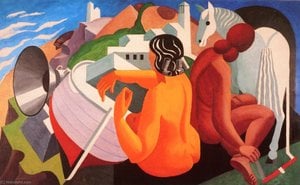
Nude with Calla Lilies

- 157.0 x 124.0 cm


 Weiterlesen
Die auf dieser Seite dargestellten Kunstwerke sind urheberrechtlich geschützt, was bedeutet, dass wir keine identische Reproduktion rechtmäßig erstellen oder verkaufen dürfen. Dieser Schutz wird durch internationale Abkommen wie die Berner Übereinkunft und durch nationale Gesetze, einschließlich derer, die von den US-Urheberrecht – Titel 17.
Diese Methode entspricht vollumfänglich den Urheberrechtsbestimmungen, da sie keine Kopie oder Vervielfältigung des geschützten Kunstwerks darstellt. Stattdessen handelt es sich um eine kreative Neuinterpretation – ein neues Gemälde, das vom Original inspiriert, aber nicht identisch mit ihm ist.
Giclée / Kunstdruck
Giclée- oder Leinwanddruck in Museumsqualität mit schneller Produktion und flexiblen Veredelungsoptionen. ( Handgemalte Reproduktion bestellen Zum digitalen Bild wechseln)




P118B €10

P118H €10

P118W €10

P438Z €10

P508JH €12

P508YH €12

P805H €10

P805Z €10

P919BZ €10

P919G €10

P919XJ €10

P959ZH €10

P968JZ €12

W106C €8

W218G €10

W218JH €8

W218Y €10

W307PJ €10

W316G €10

W316PJ €8

W316Y €10

W398PJ €8

W4111J €10

W500HY €15

W500JH €15

W692G €12

W849H €8

W940BG €15

W953PJ €8




Wählen Sie aus unseren vordefinierten Formaten, die den ursprünglichen Proportionen des Kunstwerks entsprechen.

Geben Sie die benötigte Breite und Höhe an, damit der Druck perfekt in Ihren Rahmen oder an Ihre Wand passt. Ein Druck kann nur beschnitten, aber niemals größer als das Originalbild angefertigt werden; daher verliert ein Format mit anderen Proportionen einen Teil des Bildes. Wir senden Ihnen ein digitales Mockup zur Freigabe, bevor wir den Druck ausführen. Das auf dieser Seite gezeigte Bild zeigt nicht den tatsächlichen Beschnitt – dies ist nur im Mockup ersichtlich.
Weltweiter Versand () innerhalb von 2 Wochen statt der üblichen 4/5 Wochen. (4 November)

Kostenloser weltweiter Expressversand

Hochwertige Leinenleinwand

Umfassender Versicherungsschutz beim Versand

Zollgebühren-Rückerstattungsgarantie

Garantie für exakte Farbtreue

100 Tage Rückgaberecht (nur bei Mängeln)

100% Geld-zurück-Garantie

Mengenrabatt verfügbar
 Die Glasoption ist nur für Größen unter 110 cm verfügbar.

Nude with Calla Lilies
Giclée / Kunstdruck
Format der Reproduktion
-


Endpreis
€ 56
Diego Rivera's Nude with Calla Lilies: A Study in Sensuality and Art Deco
Diego Rivera’s “Nude with Calla Lilies,” completed in 1944, is more than just a depiction of a reclining figure; it’s a potent distillation of the artist’s core aesthetic – a masterful blend of raw sensuality, profound connection to nature, and the elegant formalism of Art Deco. This painting, measuring 157 x 124 cm, immediately draws the viewer into a world where the vulnerability of the human form intertwines with the opulent beauty of the calla lilies, creating an image that resonates with both eroticism and quiet contemplation.
- Subject Matter: The central figure, rendered in a strikingly direct manner, is presented in a state of repose, her back turned to the observer. This deliberate choice invites intimacy, encouraging the viewer to become a silent participant in this private moment.
- Floral Symbolism: The overwhelming presence of calla lilies is crucial to understanding Rivera’s intent. As he frequently employed, these flowers served as potent symbols – particularly representing phallic symbolism and fertility. Their stark white petals amplify the painting's sensual undertones while simultaneously grounding the scene in a naturalistic setting.
- Art Deco Influence: The composition itself is firmly rooted in the principles of Art Deco. Clean lines, geometric forms subtly suggested within the arrangement of the lilies, and a restrained palette contribute to a sense of sophisticated order. This stylistic choice reflects Rivera’s engagement with contemporary design trends and his desire to create works that were both visually arresting and intellectually stimulating.
A Painter's Context: Rivera Within Mexico's Artistic Landscape
Rivera’s “Nude with Calla Lilies” emerged during a pivotal moment in Mexican art history, following the completion of his monumental murals at the National Institute of Cardiology and preceding his ambitious project, "Tenochtitlan." This period saw him refining his artistic voice, exploring themes of social justice and human connection while simultaneously embracing his fascination with classical beauty. Notably, Rivera shared a kinship with Frida Kahlo, another towering figure in Mexican art, both artists dedicated to depicting peasant life on smaller canvases, though their approaches differed significantly. Kahlo’s “Portrait of Dona Rosita Morillo” demonstrates a similar focus on sensuality and eroticism within a domestic setting, highlighting the shared artistic concerns that bound these two revolutionary figures.
Technique and Materials: Oil on Panel – A Legacy of Craft
The artwork is executed in oil on panel, a technique favored by Rivera for its ability to capture subtle nuances of light and shadow. The smooth application of paint creates a luminous effect, particularly evident in the delicate petals of the calla lilies. Rivera’s meticulous attention to detail – from the texture of the woman's skin to the arrangement of the flowers – speaks to his dedication to craft and his desire to create works that were both aesthetically pleasing and emotionally resonant. The panel support allowed for a level of control and precision essential to Rivera’s distinctive style.
Museum Connections & Historical Significance
The painting's evolution is intertwined with the legacy of Diego Rivera himself. Originally housed in the Museo Dolores Olmedo, its current location reflects Rivera’s commitment to preserving and sharing his artistic vision. The connection to the Frida Kahlo Museum (Casa Azul) underscores the shared cultural heritage and artistic dialogues that shaped Mexico’s vibrant art scene. “Nude with Calla Lilies” stands as a testament to Rivera's enduring influence, offering a compelling glimpse into his creative process and his profound engagement with themes of beauty, sexuality, and social commentary.
Fragen & Antworten
Wie lässt sich die Stimmung von "Nude with Calla Lilies" von Diego Rivera beschreiben?
Die allgemeine Stimmung von "Nude with Calla Lilies" von Diego Rivera ist Romantic. Diese Stimmung beschreibt die Atmosphäre des Werkes.
Ist "Nude with Calla Lilies" von Diego Rivera ein bekanntes Kunstwerk?
"Nude with Calla Lilies" von Diego Rivera weist ein Recognized Popularitätsniveau auf. Diese Klassifizierung spiegelt die weite Verbreitung und Bekanntheit des Werkes wider.
Wie schafft "Nude with Calla Lilies" das Gleichgewicht zwischen Hell und Dunkel?
Die aufgezeichneten Werte für "Nude with Calla Lilies" von Diego Rivera sind: balanced Helligkeit, Gentle Luminance Luminanz.
Ähnliche Kunstwerke




Künstlerbiografie
Frühes Leben und künstlerische Ausbildung
- Geboren: 8. Dezember 1886, Guanajuato, Mexiko
- Gestorben: 24. November 1957
- Diego Riveras künstlerischer Weg begann früh; er zeigte ab seinem dritten Lebensjahr Interesse an der Kunst.
- Er studierte an der Akademie von San Carlos in Mexiko-Stadt.
- Teodoro A. dehesa Méndez finanzierte sein Studium in Europa, beginnend 1907.
- Zunächst studierte er bei Eduardo Chicharro in Madrid, Spanien.
- Er zog nach Paris, Frankreich und wurde Teil der Montparnasse-Künstlergemeinschaft.
Europäische Einflüsse und künstlerische Entwicklung
- Frühe europäische Arbeiten waren vom Realismus beeinflusst.
- Die Auseinandersetzung mit dem Kubismus hatte ab 1912 einen bedeutenden Einfluss auf seinen Stil.
- Beeinflusst von Künstlern wie Pablo Picasso und Georges Seurat.
- Seine Gemälde dieser Zeit begannen, geometrische Formen und sich kreuzende Ebenen zu integrieren, was die kubistische Bewegung widerspiegelte.
Rückkehr nach Mexiko und die mexikanische Wandmalbewegung
- Rivera kehrte 1921 nach Mexiko zurück, ein entscheidender Moment in seiner Karriere.
- Er wurde eine führende Figur der mexikanischen Wandmalbewegung, mit dem Ziel, öffentlich zugängliche Kunst zu schaffen.
- Seine Wandgemälde stellten oft Szenen aus der mexikanischen Geschichte und sozialen Themen dar.
- Bemerkenswerte frühe Werke sind „Schöpfung“ (1922) und Wandgemälde im Secretaría de Educación Pública in Mexiko-Stadt.
Hauptwerke und künstlerischer Stil
- Schöpfung (1922): Sein erstes bedeutendes Wandgemälde, das die Enkaustiktechnik verwendete.
- Träume eines Sonntags im Alameda: Kontrovers wegen seiner Darstellung von Atheismus.
- Wandgemälde der Secretaría de Educación Pública: Zeigten seinen einzigartigen Stil mit großen, vereinfachten Figuren und kräftigen Farben, die vom aztekischen Kunst beeinflusst waren.
- Detroit Industry Wandgemälde (1933): In Auftrag gegeben für das Detroit Institute of Arts, darstellend industrielle Prozesse und Arbeiter.
- Riveras Stil: Charakterisiert durch monumentale Größe, vereinfachte Formen, lebendige Farben und einen Fokus auf soziale und historische Erzählungen. Er integrierte Elemente der mexikanischen Volkskunst und präkolumbianischer Ästhetik in seine Arbeit.
Vermächtnis und historische Bedeutung
- Diego Rivera gilt als einer der wichtigsten Künstler des 20. Jahrhunderts.
- Seine Wandgemälde sind bedeutende Beispiele für Sozialrealismus und öffentliche Kunst.
- Er spielte eine entscheidende Rolle bei der Etablierung des mexikanischen Muralismus als einflussreiche künstlerische Bewegung.
- Riveras Werk spiegelt seine politischen Überzeugungen wider, insbesondere seine marxistischen Ansichten.
- Sein Privatleben, einschließlich seiner Ehe mit Frida Kahlo, hat zu seinem bleibenden Ruhm und zur kulturellen Bedeutung beigetragen.

Diego Rivera
1886 - 1957 , Mexiko
Kurzinfos
- Beeinflusste Künstler:
- El Greco
- Francisco Goya
- Diego Velazquez
- Pablo Picasso
- Bemerkenswerte Werke:
- Schöpfung (1922)
- Sonntagstraum
- Detroit Industry
- Geburtsdatum: 8. Dezember 1886
- Geburtsort: Guanajuato, Mexiko
- Künstlerische Bewegung: Mexikanischer Muralismus
- Nationalität: Mexikaner
- Sterbedatum: 24. November 1957
- Vollständiger Name: Diego Rivera
Ähnliche Artikel

Revolution on Canvas: Exploring the Socio-Political Power & Artistic Legacy of Mexican Muralism
Explore the powerful world of Mexican muralism! Discover Diego Rivera, Frida Kahlo & Orozco's revolutionary art, social impact & lasting legacy. Expert insights & high-quality reproductions at ArtsDot.

The Gleaming Geometry of Desire: Exploring Art Deco's Enduring Influence on Visual Culture
Explore the captivating world of Art Deco! Discover its history, key characteristics, enduring influence on design & collecting with expert insights from ArtsDot.com.

The Enduring Allure of the Nude: A Historical & Artistic Exploration of the Human Form
Explore the captivating history of nude art! Discover iconic paintings & artists from classical to modern eras. Uncover symbolism, techniques & find museum-quality reproductions at ArtsDot.

Diego Rivera: Eine revolutionäre Vision mexikanischer Identität durch die Wandmalerei
Entdecken Sie die revolutionäre Wandmalerei Diego Riveras und ihre Bedeutung für die mexikanische Identität. Analysen, Hintergründe & Einblicke in das Werk des Muralismus-Pioniers.

The Gilded Age Reimagined: Exploring the Aesthetic Principles & Enduring Legacy of Art Deco
Explore the captivating world of Art Deco! Discover its origins, defining features, cultural impact & enduring legacy. Expert insights for collectors and design enthusiasts. Shop handmade reproductions at ArtsDot.


