Vorschau anzeigen
 Versenden
 Teilen
 Details anzeigen
 Leitfaden

 Herunterladen
 Ähnliche Objekte
 Röntgenaufnahme
 Diashow
 Fragen & Antworten
 Statistiken
The valrave

 Weiterlesen
Die auf dieser Seite dargestellten Kunstwerke sind urheberrechtlich geschützt, was bedeutet, dass wir keine identische Reproduktion rechtmäßig erstellen oder verkaufen dürfen. Dieser Schutz wird durch internationale Abkommen wie die Berner Übereinkunft und durch nationale Gesetze, einschließlich derer, die von den US-Urheberrecht – Titel 17.
Diese Methode entspricht vollumfänglich den Urheberrechtsbestimmungen, da sie keine Kopie oder Vervielfältigung des geschützten Kunstwerks darstellt. Stattdessen handelt es sich um eine kreative Neuinterpretation – ein neues Gemälde, das vom Original inspiriert, aber nicht identisch mit ihm ist.
Giclée / Kunstdruck
Giclée- oder Leinwanddruck in Museumsqualität mit schneller Produktion und flexiblen Veredelungsoptionen. ( Handgemalte Reproduktion bestellen Zum digitalen Bild wechseln)




P118B €10

P118H €10

P118W €10

P438Z €10

P508JH €12

P508YH €12

P805H €10

P805Z €10

P919BZ €10

P919G €10

P919XJ €10

P959ZH €10

P968JZ €12

W106C €8

W218G €10

W218JH €8

W218Y €10

W307PJ €10

W316G €10

W316PJ €8

W316Y €10

W398PJ €8

W4111J €10

W500HY €15

W500JH €15

W692G €12

W849H €8

W940BG €15

W953PJ €8




Wählen Sie aus unseren vordefinierten Formaten, die den ursprünglichen Proportionen des Kunstwerks entsprechen.

Geben Sie die benötigte Breite und Höhe an, damit der Druck perfekt in Ihren Rahmen oder an Ihre Wand passt. Ein Druck kann nur beschnitten, aber niemals größer als das Originalbild angefertigt werden; daher verliert ein Format mit anderen Proportionen einen Teil des Bildes. Wir senden Ihnen ein digitales Mockup zur Freigabe, bevor wir den Druck ausführen. Das auf dieser Seite gezeigte Bild zeigt nicht den tatsächlichen Beschnitt – dies ist nur im Mockup ersichtlich.
Weltweiter Versand () innerhalb von 2 Wochen statt der üblichen 4/5 Wochen. (4 November)

Kostenloser weltweiter Expressversand

Hochwertige Leinenleinwand

Umfassender Versicherungsschutz beim Versand

Zollgebühren-Rückerstattungsgarantie

Garantie für exakte Farbtreue

100 Tage Rückgaberecht (nur bei Mängeln)

100% Geld-zurück-Garantie

Mengenrabatt verfügbar
 Die Glasoption ist nur für Größen unter 110 cm verfügbar.

The valrave
Giclée / Kunstdruck
Format der Reproduktion
-


Endpreis
€ 56
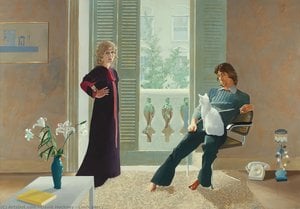
David Hockney’s “Nick Wilder”: A Celebration of Light and Landscape
David Hockney's "Nick Wilder," painted in 1976, stands as a testament to his unwavering fascination with capturing the essence of place and time. More than just a depiction of a Yorkshire landscape—a region deeply ingrained in Hockney’s personal history—the painting embodies his signature style: an optimistic embrace of color and perspective that defies conventional realism.
Style and Technique – Embracing Illusion
Hockney's technique is characterized by a deliberate simplification of form, prioritizing luminous color over meticulous detail. He employs a method he termed “joinery,” meticulously aligning rectangular blocks of pigment to create an illusion of depth and spatial coherence. This approach isn’t about accurately representing what the eye sees; rather, it’s about conveying feeling—a sense of serenity and wonder at the beauty of the natural world.
Historical Context – The Yorkshire Revival
Painted during a period of artistic renewal in Britain following the austerity of the postwar years, “Nick Wilder” reflects the burgeoning interest in plein air painting and Impressionistic influences. Hockney’s Yorkshire landscapes were particularly significant, marking a return to rural England after decades of urban migration. They tapped into a collective yearning for connection with nature and a desire to recapture the spirit of British summers.
Symbolism – Light as Revelation
The dominant color palette—dominated by yellows, oranges, and greens—is deliberately chosen to evoke feelings of warmth, vitality, and optimism. These hues aren’t merely decorative; they symbolize enlightenment and joy, mirroring Hockney's belief that art should illuminate the human experience. The stylized trees themselves represent resilience and enduring beauty, anchoring the painting within a broader meditation on the cyclical rhythms of life.
Emotional Impact – A Moment Frozen in Time
"Nick Wilder" succeeds in transporting viewers to a specific moment—a hazy afternoon bathed in golden light—capturing not just what is seen but also how it feels. It’s a painting that invites contemplation and encourages appreciation for the simple pleasures of observation. Like many of Hockney's works, it speaks to a fundamental human desire for beauty and tranquility, offering a timeless reminder of the transformative power of art.
- Artist: David Hockney
- Year Painted: 1976
- Medium: Acrylic on Canvas
- Location: Yorkshire Landscape, England
Experience the brilliance of Hockney’s vision with a stunning hand-painted reproduction. Bring “Nick Wilder” into your home and immerse yourself in its captivating atmosphere.
Fragen & Antworten
Welche Farbpalette wird in "The valrave" verwendet?
"The valrave" von David Hockney verwendet eine Dark-Farbpalette. Diese Palette bestimmt den gesamten farblichen Charakter des Werkes.
Wie hell ist "The valrave" insgesamt?
Die wahrgenommene Helligkeit von "The valrave" von David Hockney beträgt bright. Sie lässt sich optimal an das Licht des vorgesehenen Raumes anpassen.
Welchem Künstler wird "The valrave" zugeschrieben?
"The valrave" wird David Hockney zugeschrieben.
Ähnliche Kunstwerke


Künstlerbiografie
Frühe Jahre und Ausbildung
David Hockney, ein gefeierter englischer Maler, Zeichner, Grafiker, Bühnenbildner und Fotograf, wurde am 9. Juli 1937 in Bradford, England, geboren. Er war das vierte von fünf Kindern von Laura und Kenneth Hockney, wobei sein Vater während des Zweiten Weltkriegs Kriegsdienst verweigerte. Seine frühe Schulbildung erhielt er an der Wellington Primary School, gefolgt von der Bradford Grammar School und später am Bradford College of Art.Karriere und künstlerischer Beitrag
Hockneys künstlerische Karriere blühte in den 1960er Jahren auf und etablierte ihn als eine Schlüsselfigur der Pop-Art-Bewegung. Seine Werke zeichnen sich durch lebendige Farben, kräftige Linien und erkennbare Bildsprache aus, was ihn zu einem der einflussreichsten britischen Künstler des 20. Jahrhunderts machte.- A Bigger Splash (1966) ist ein Paradebeispiel für seine einzigartige Stilrichtung innerhalb der Pop Art.
- Seine Doppelporträts, wie beispielsweise American Collectors (Fred and Marcia Weisman), demonstrieren seine Fähigkeit, die Essenz seiner Motive einzufangen.
- Hockneys Auseinandersetzung mit gleichgeschlechtlicher Liebe in seinen Porträts, wie in We Two Boys Together Clinging (1961) zu sehen ist, zeugt von seiner Offenheit und Bereitschaft, gesellschaftliche Normen herauszufordern.
Entwicklung und Einflüsse
Hockneys künstlerische Entwicklung war geprägt von verschiedenen Einflüssen. Zunächst orientierte er sich an der britischen Kunsttradition, insbesondere an den Werken von Francis Bacon und Lucian Freud. Später entwickelte er seinen eigenen unverwechselbaren Stil, der durch eine Kombination aus realistischer Darstellung und expressiver Farbgebung gekennzeichnet ist. Seine Zeit in Kalifornien ab den 1970er Jahren beeinflusste seine Arbeit maßgeblich, was sich besonders in seinen berühmten Schwimmbeckenbildern widerspiegelt. Die Fotografie spielte ebenfalls eine wichtige Rolle in seiner künstlerischen Praxis, sowohl als Inspirationsquelle als auch als eigenständiges Medium.Auszeichnungen und Anerkennung
Im Laufe seiner Karriere hat David Hockney zahlreiche Auszeichnungen erhalten:- Er wurde 2018 zum Order of the Companion of Honour (CH) ernannt.
- 2003 wurde er zum Fellow of the Royal Society (FRS) gewählt.
- Im Jahr 2000 erhielt er den Praemium Imperiale für Malerei.
Bedeutung und Vermächtnis
David Hockneys Einfluss auf die Kunstwelt, insbesondere im Bereich der Pop Art, ist unbestreitbar. Seine innovativen Techniken, seine farbenfrohe Ästhetik und seine Bereitschaft, gesellschaftliche Konventionen zu hinterfragen, haben ihn zu einer Ikone des 20. Jahrhunderts gemacht. Seine Werke sind in bedeutenden Museen auf der ganzen Welt vertreten und werden von Sammlern hoch geschätzt. Hockneys Auseinandersetzung mit Themen wie Identität, Sexualität und Landschaft hat seine Kunst zeitlos und relevant gemacht.
David Hockney
1937 - , Vereinigtes Königreich
Kurzinfos
- Bekannte Werke:
- A Bigger Splash
- Pool 2 Figuren
- Ein größerer Einsank
- Landschaft im Gedächtnis
- Geburtsdatum: 09. Juli 1937
- Heimatort: Bradford, Vereinigtes Königreich
- Künstlerische Bewegung: Pop Art
- Nationalität: Britisch
- Vollständiger Name: David Hockney
Ähnliche Artikel

Romantische Landschaften: Die 10 Meisterwerke, die eine Epoche prägten | ArtsDot
Entdecken Sie die 10 Meisterwerke der Romantischen Landschaftsmalerei! Von Caspar David Friedrich bis Turner – erleben Sie die Kunst, Emotion & Natur. Hochwertige Reproduktionen auf ArtsDot.com

Evocations of Place: A Historical Journey Through Landscape Art
Explore the rich history of landscape art with ArtsDot. Discover renowned artists, movements like Impressionism & Romanticism, and expert guidance for collecting timeless pieces. Find your perfect serene escape today!

Die 25 besten Kunstwerke von John Constable: Meisterwerke der englischen Landschaft
Entdecken Sie die 25 besten Werke von John Constable. Erleben Sie englische Romantik auf ArtsDot.com. Jetzt Meisterwerke online entdecken!

Arboreal Echoes: A Historical & Artistic Exploration of Trees in Painting
Explore the rich history of trees in painting! Discover symbolism, Romantic masterpieces by Caspar David Friedrich & beyond. A curated journey for art enthusiasts.

Arboreal Echoes: A Historical & Artistic Exploration of Trees in Painting
Explore the rich history of trees in painting! Discover symbolism, Romantic masterpieces by Caspar David Friedrich & beyond. A curated journey for art enthusiasts.