

 Vorschau anzeigen
 Versenden
 Teilen
 Details anzeigen

 Herunterladen
 Ähnliche Objekte
 Röntgenaufnahme
 Diashow
Ovidius
 Etching
- Contemporary Realism
 1970
1970- Modern
 58.0 x 48.0 cm
 USC Fisher Museum of Art
 Weiterlesen
Erwerben Sie ein hochauflösendes, optimiertes digitales Bild, das der Online-Vorschau weit überlegen ist.
Jede Datei wird von unseren hauseigenen Spezialisten mit modernsten Werkzeugen und fachmännischer manueller Retusche sorgfältig vorbereitet. Wir stellen sicher, dass jedes Bild eine außergewöhnliche Klarheit, präzise Farbgenauigkeit und feinste Details aufweist.
Die endgültige Datei wird innerhalb von 72 Stunden per E-Mail zugestellt und ist für den sofortigen Einsatz in professionellen, redaktionellen und Druckumgebungen optimiert. Es handelt sich um dieselbe Qualität, der führende Designstudios, Verlage und Galerien vertrauen.
Digitales Bild
Laden Sie eine hochauflösende Datei für die persönliche Präsentation, den Druck und kreative Projekte herunter. ( Druck kaufen Handgemaltes Gemälde kaufen)
In jeder Bestellung digitaler Bilder enthalten
Professionelle digitale Bereitstellung, garantiert
Wenn Sie sich für ArtsDot.com entscheiden, erhalten Sie nicht nur ein Bild – Sie erhalten ein professionell aufbereitetes digitales Kunstwerk, das mit höchster Präzision erstellt und durch eine Zufriedenheitsgarantie abgesichert wird. Hier ist alles, was automatisch mit Ihrer Bestellung geliefert wird:

Schnelle E-Mail-Zustellung
Ihre hochauflösende digitale Bilddatei wird Ihnen innerhalb von 72 Stunden nach der Bestellung per E-Mail zugestellt – bereit zur sofortigen Verwendung.

KI-optimierte digitale Datei
Ihre Kunstwerke werden professionell mithilfe fortschrittlicher KI-Tools und manueller Bearbeitung optimiert, um maximale Detailtreue, Klarheit und Farbgenauigkeit zu gewährleisten.

Lebenslanger kostenloser Neudruckservice
Datei versehentlich gelöscht oder verloren? Keine Sorge – wir senden sie Ihnen jederzeit kostenlos erneut zu.

Keine Einfuhrgebühren – jemals
Genießen Sie Ihr Kunstwerk sofort ohne Zollgebühren, Einfuhrabgaben oder Versandkosten – digitale Downloads sind immer steuerfrei.

Garantierte Farbtreue
Wir garantieren, dass Ihr digitales Bild mithilfe professioneller Werkzeuge und Farbmanagement die Originalfarben so präzise wie möglich wiedergibt.

60-Tage-Zufriedenheitsgarantie
Sollten Sie mit Ihrem digitalen Bild nicht zufrieden sein, werden wir es überarbeiten oder Ihnen innerhalb von 60 Tagen 100% erstatten – ohne Wenn und Aber.

100% Geld-zurück-Garantie
Nicht zufrieden? Erhalten Sie innerhalb von 60 Tagen nach Erhalt Ihrer digitalen Datei eine vollständige Rückerstattung – ohne Angabe von Gründen.

Rabatte bei Großbestellungen
3 Bilder kaufen, 10% sparen – 5 Bilder kaufen, 15% sparen – Ab 10 Bildern 20% sparen. Ideal für kreative Projekte, Galerien und Agenturen.
Details zum Sammlerstück
A Monument of Mystery: The Etched World of Csaba Rékassy
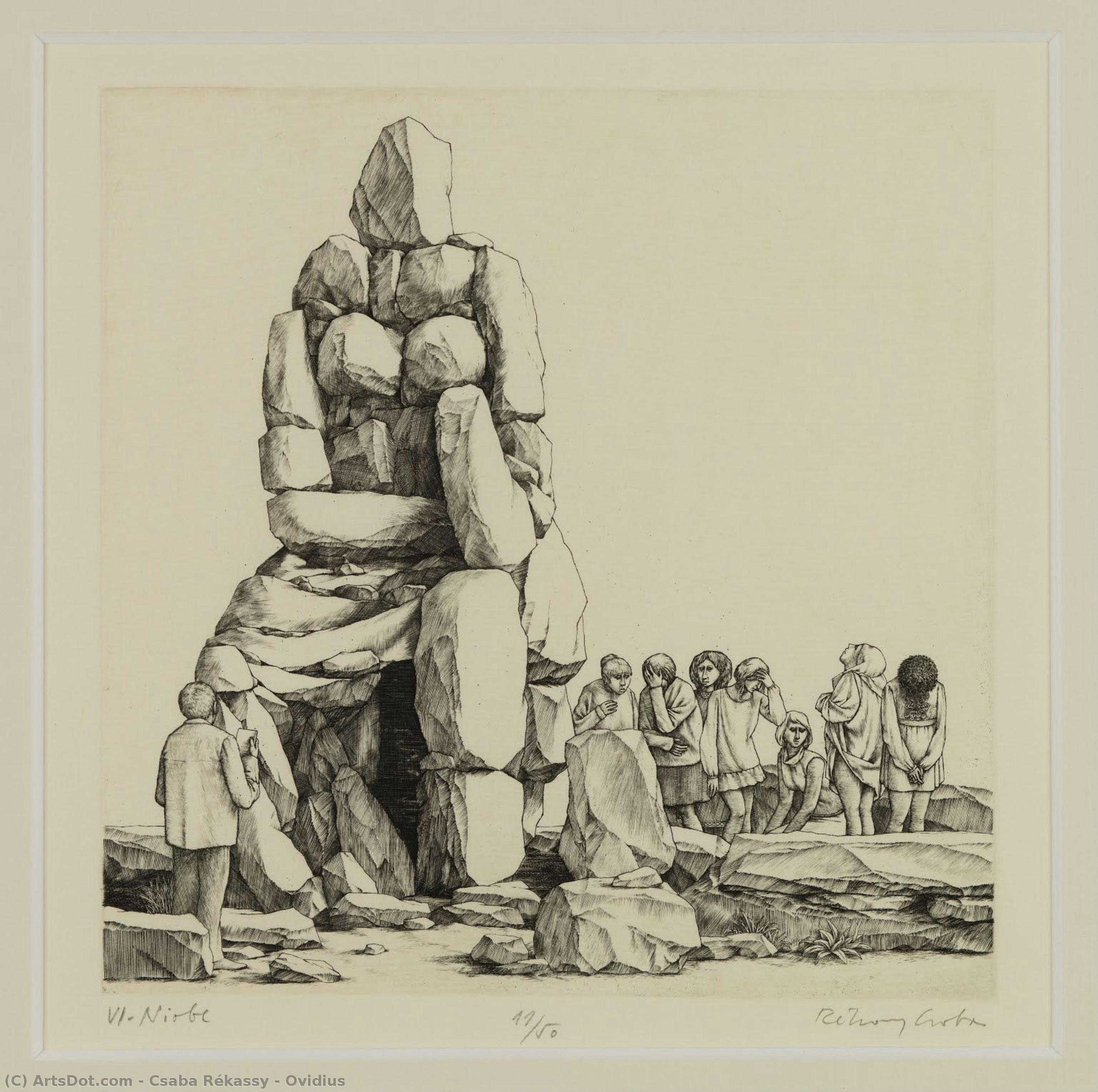
In the quiet, evocative depths of Csaba Rékassy’s 1970 etching, Ovidius, we are transported to a realm where history and myth converge. This masterful work of printmaking does not merely depict a scene; it invites the viewer into a profound moment of human discovery. At the heart of the composition stands an imposing, monolithic rock formation, reminiscent of an ancient Egyptian obelisk or a forgotten monument from a lost civilization. As a group of figures gathers around this colossal structure, their presence serves as a scale for the monumental task of understanding the past. The scene is thick with a sense of curiosity and reverence, capturing that fleeting, breathless instant when humanity encounters the sublime mysteries of antiquity.
The technical brilliance of Rékassy lies in his command over the etching medium, a technique that allows for an unparalleled level of textural detail. Through the meticulous application of fine lines, hatching, and cross-hatching, the artist breathes life into the cold stone and the soft fabrics of the onlookers. The monochromatic palette—a sophisticated dance of black, white, and infinite shades of gray—strips away the distraction of color to focus our attention on form, light, and shadow. This deliberate restraint emphasizes the rugged, angular textures of the central monument, contrasting them against the more rounded, organic forms of the human figures. The result is a composition that feels both physically grounded and spiritually ethereal.
Symbolism and the Echoes of Ovid
The title Ovidius suggests a deep connection to the classical poet Ovid, whose Metamorphoses explored the fluid boundaries between the human and the divine. In this etching, the rock formation acts as a powerful symbol of permanence, power, and the enduring weight of history. It stands as an unyielding witness to the passage of time, much like the legends recorded by Ovid. The figures, caught in various states of contemplation and wonder, represent the eternal human impulse to explore, to decode, and to find meaning within the remnants of what came before us. There is a palpable tension between the ephemeral nature of the people and the eternal presence of the stone.
For the discerning collector or interior designer, this piece offers more than just visual beauty; it provides an intellectual and emotional anchor for a space. The diffused, atmospheric lighting creates a soft, contemplative mood that is perfect for libraries, studies, or sophisticated living areas where one seeks to foster thought and reflection. As a high-quality reproduction, Ovidius brings the somber elegance of Hungarian printmaking tradition into the modern home, offering a window into a world of mystery and a tribute to the timeless beauty of classical inspiration.
Ähnliche Kunstwerke


Biografie des Künstlers
A Master of Hungarian Etching Tradition
Csaba Rékassy (1937 – 1989) stands as a singular figure in Hungarian art history, recognized for his unwavering dedication to the etching technique and his ability to distill classical artistic ideals into strikingly complex compositions. Born in Hungary during a period of significant cultural upheaval, Rékassy’s artistic journey unfolded largely independently, fueled by an innate talent and a profound respect for the heritage of Hungarian painting. Despite limited formal training—he was primarily self-taught—his output demonstrates an astonishing command of printmaking, cementing his place among Hungary's most accomplished artists. Early Life & Artistic Beginnings: Details about Rékassy’s formative years are scarce, reflecting the challenges faced by artists operating outside established academic circles during that era. He emerged from Budapest’s artistic milieu—a vibrant community grappling with the complexities of Soviet influence—and cultivated his skills through observation and experimentation rather than prescribed curricula. This autodidactic approach fostered a unique perspective on artistic expression, prioritizing conceptual depth over stylistic convention. Rékassy’s Artistic Style: His distinctive style is immediately recognizable by its meticulous attention to detail and its masterful manipulation of texture. He eschewed grand narratives or overtly expressive gestures, instead favoring scenes imbued with quiet contemplation and symbolic resonance. The artist deliberately avoided dramatic poses or flamboyant colors—preferring subdued palettes and understated compositions—believing that true artistic power resided in subtlety and nuance. This stylistic preference aligns closely with the humanist ideals prevalent during his time, emphasizing intellectual engagement alongside aesthetic beauty. Notable Works & Artistic Influences: “Ovidius” remains Rékassy’s most celebrated achievement. This monumental etching portrays a scene from Ovid’s Metamorphoses, capturing the poet’s dramatic narrative with breathtaking precision and conveying an emotional depth that transcends mere visual representation. Beyond classical influences, Rékassy absorbed inspiration from Hungarian folk art traditions, subtly incorporating elements of Hungarian ornamentation into his compositions. He was particularly drawn to the expressive power of chiaroscuro—the interplay between light and shadow—a technique perfected by Rembrandt and Caravaggio—artists he greatly admired. His meticulous craftsmanship served as an exemplar for younger generations of Hungarian printmakers, ensuring that Rékassy's distinctive style would endure. The artist’s technique involved layering multiple plates with intricate lines and hatching, achieving astonishing tonal gradations and creating surfaces that appear to shimmer with subtle variations in color—a testament to his mastery of printmaking. Recognition & Legacy: Rékassy’s work garnered considerable acclaim during his lifetime, earning him numerous awards and accolades from prestigious institutions both domestically and internationally. He was honored as Merited Artist of the Hungarian People's Republic and Great Artist of the Hungarian People's Republic—recognitions that underscored the profound impact of his artistic vision on Hungarian culture. Today, Rékassy’s prints are housed in collections across Europe and North America—including those at the USC Fisher Museum of Art in Los Angeles and the Zichy Museum Zala in Hungary—where they continue to inspire viewers with their beauty and intellectual depth. His enduring legacy resides not only in his artistic output but also in his unwavering commitment to preserving and advancing the etching technique as a medium for conveying profound ideas.
Csaba Rékassy
1937 - 1989 , Ungarn
Kurzinfos
- Artistic Movement Or Style: Etching
- Date Of Birth: 1937
- Date Of Death: 1989
- Full Name: csaba rékassy
- Nationality: ungarisch
- Notable Artworks: ['Ovidius']
- Place Of Birth: Budapest, Ungarn

