


 In echtem Maßstab anzeigen
 Versenden als Grußkarte
 Teilen
 Details anzeigen
 Leitfaden öffnen

 Herunterladen
 Ähnliche Objekte
 Röntgenaufnahme
 Diashow
 Besucherstatistiken
Melancholy
 Oil On Canvas
- WallArt
- Neoclassical Painting
 1801
1801 130.0 x 165.0 cm
 Musée de Picardie
 Mehr anzeigen
Handgefertigte Ölreproduktion
Handgemaltes Ölgemälde auf Leinwand in Ihrer Wunschgröße und mit Rahmen, auf Bestellung von unseren Künstlern angefertigt. ( Zum Druck wechseln Zum digitalen Bild wechseln)




P118B €10

P118H €10

P118W €10

P438Z €10

P508JH €12

P508YH €12

P805H €10

P805Z €10

P919BZ €10

P919G €10

P919XJ €10

P959ZH €10

P968JZ €12

W106C €8

W218G €10

W218JH €8

W218Y €10

W307PJ €10

W316G €10

W316PJ €8

W316Y €10

W398PJ €8

W4111J €10

W500HY €15

W500JH €15

W692G €12

W849H €8

W940BG €15

W953PJ €8




Wählen Sie aus unseren vordefinierten Formaten, die den ursprünglichen Proportionen des Kunstwerks entsprechen.

Geben Sie die Breite und die Höhe an, die Sie für Ihren Rahmen oder Ihre Wand benötigen. Da dieses Werk handgemalt ist, kann der Künstler bei einer anderen Form etwas mehr um das Bild herum malen oder etwas abschneiden – Sie entscheiden. Wir senden Ihnen ein digitales Mockup zur Freigabe, bevor mit dem Malen begonnen wird. Das auf dieser Seite gezeigte Bild stellt nicht das tatsächliche Ergebnis dar – dies tut nur das Mockup.
Nach der Bestellung wird das ArtsDot.com-Team dem Kunden Anweisungen per E-Mail zusenden und eine Mockup-Vorschau bereitstellen.
Weltweiter Versand () in nur 3 bis 4 Wochen statt der üblichen 5 Wochen. (25 Oktober). Keine Kompromisse bei der Qualität.

Kostenloser weltweiter Expressversand

Hochwertige Leinenleinwand

Vollständiger Versicherungsschutz beim Versand

Zollgebühren-Rückerstattungsgarantie

Garantie für exakte Farbtreue

100-tägiges Rückgaberecht (nur bei Mängeln)

100% Geld-zurück-Garantie

Angebot für Mengenrabatt
 Die Glasoption ist nur für Größen unter 110 cm verfügbar.

Melancholy
Reproduktionsmedium
Format der Reproduktion
-


Gesamtpreis
€ 231
Melancholy by Constance Charpentier: A Portrait of Quietude
Constance Charpentier’s “Melancholy,” painted in 1801, is more than just a depiction of a seated woman; it's an exquisitely rendered meditation on solitude and the lingering grief of a generation. This oil-on-canvas masterpiece, currently residing within the hallowed halls of the Musée de Picardie in Amiens, France, offers a poignant glimpse into the artistic sensibilities of early 19th-century Europe – a period grappling with the aftermath of revolution and war.
The painting immediately draws the viewer’s eye to its central figure: a young woman lost in contemplative thought. Her posture is subtly slumped, her gaze fixed downwards, suggesting an inward journey of sorrow. The setting—a darkened landscape punctuated by indistinct trees—amplifies this sense of isolation and reinforces the theme of melancholy. Notice how Charpentier masterfully employs chiaroscuro, utilizing dramatic contrasts between light and shadow to sculpt the figure’s form and create a palpable atmosphere of quiet sadness. The muted palette – primarily creams, whites, and grays – further contributes to the painting's somber mood, while subtle variations within these tones hint at depth and texture.
Neoclassical Elegance: Style and Technique
“Melancholy” is a quintessential example of Neoclassicism, an artistic movement that sought inspiration from the art and ideals of ancient Greece and Rome. Charpentier’s work embodies this style through its emphasis on order, clarity, and balanced composition. The meticulous brushwork—evident in the delicate rendering of the fabric draped across the woman's body and the subtle modeling of her features—demonstrates a remarkable level of technical skill. The use of clean lines and defined edges is characteristic of Neoclassicism, lending the painting an air of formality and restraint.
Technically, Charpentier’s approach leans towards a restrained emotional palette, prioritizing form and structure over overt sentimentality. However, she skillfully captures the nuances of human emotion through her masterful use of light and shadow, creating a powerful sense of introspection within the subject's gaze. The painting’s shallow perspective further focuses attention on the figure, immersing the viewer in her internal world.
A Window into an Era: Historical Context
To fully appreciate “Melancholy,” it’s crucial to understand the historical context in which it was created. Following the tumultuous years of the French Revolution and Napoleonic Wars, France was a nation grappling with profound social and emotional upheaval. The loss of countless young men had left an indelible mark on society, particularly on women who often bore the brunt of responsibility and grief. Charpentier’s painting reflects this collective sorrow, offering a visual representation of the quiet despair that permeated French society at the time.
The Musée de Picardie, where “Melancholy” is housed, provides further context by showcasing other works from the same period, including pieces by Pierre Puvis de Chavannes and Frans Hals. These artists, like Charpentier, were deeply influenced by Neoclassicism and sought to capture the beauty and dignity of human experience through their art.
Symbolism and Emotional Resonance
Beyond its technical brilliance, “Melancholy” is rich in symbolism. The woman’s contemplative pose and downward gaze evoke a sense of introspection and sorrow, while the darkened landscape suggests a world shrouded in grief. The classical drapery—a hallmark of Neoclassicism—references ancient virtues and ideals, subtly hinting at a longing for a lost past or a more harmonious future. The painting's overall effect is profoundly moving, inviting viewers to contemplate the complexities of human emotion and the enduring power of melancholy.
Reproductions of “Melancholy” offer an accessible way to experience the beauty and emotional depth of this remarkable artwork. Whether displayed in a private residence or a public space, it serves as a timeless reminder of the capacity for art to capture and convey the most profound human experiences.
Fragen & Antworten
Wo sollte eine Reproduktion von "Melancholy" von Constance Charpentier aufgehängt werden?
Format (Landscape) und der empfohlene Raum (Living Room) sind die zwei festgehaltenen Platzierungsdetails für "Melancholy" von Constance Charpentier.
Welche Farbsättigung weist "Melancholy" von Constance Charpentier auf?
Die Farbpalette von "Melancholy" weist eine Sättigung von Muted auf.
Welches Gefühl wird mit "Melancholy" assoziiert?
"Melancholy" von Constance Charpentier vermittelt eine Melancholic emotionale Stimmung.
Ähnliche Kunstwerke


Biografie des Künstlers
Constance Charpentier: Ein Leben in der Porträtmalerei
Frühes Leben und Ausbildung
Constance Marie Charpentier wurde am 4. April 1767 in Paris, Frankreich, geboren und starb im Jahr 1849. Ihr frühes Leben ist bis heute teilweise ein Rätsel, insbesondere was ihre formale künstlerische Ausbildung betrifft. Die Aufzeichnungen sind unklar, aber es wird allgemein angenommen, dass sie unter mehreren bedeutenden Künstlern ihrer Zeit studierte.
- Sie wird oft mit Jacques-Louis David, einer führenden Figur der Neoklassik, in Verbindung gebracht, obwohl dies umstritten bleibt.
- Weitere potenzielle Lehrer waren François Gérard, Pierre Bouillon, Louis Lafitte, und Mitglieder der Familie Wille – Johann Georg Wille oder sein Sohn, Pierre-Alexandre Wille.
Künstlerische Entwicklung und Stil
Charpentier spezialisierte sich auf Genreszenen und Porträts, mit einem besonderen Fokus auf die Darstellung von Frauen und Kindern. Ihr Stil spiegelt den Einfluss der Neoklassik wider, die durch Klarheit, Präzision und eine zurückhaltende emotionale Farbpalette gekennzeichnet ist. Sie ließ ihre Arbeit jedoch auch mit einer Sensibilität für Charakter und einer intimen Darstellung des häuslichen Lebens einfließen.
- Ihre Gemälde fangen oft Momente der stillen Kontemplation oder alltäglicher Aktivitäten ein.
- Sie bewies Geschicklichkeit bei der Wiedergabe von Texturen und Details, insbesondere bei Stoffen und Gesichtsausdrücken.
Karriere und Anerkennung
Charpentier begann ab 1795 bis 1819 mit der Ausstellung ihrer Werke auf den Salons – renommierten Kunstausstellungen. Während dieser Zeit präsentierte sie etwa dreißig Gemälde der Öffentlichkeit.
- Im Jahr 1814 erhielt sie bei der Pariser Salon eine Goldmedaille, was eine bedeutende Leistung in ihrer Karriere war.
- Sie wurde auch bei der Salon in Douai im Jahr 1821 mit einer Silbermedaille ausgezeichnet.
Herausforderungen und Fehlattributionen
Das künstlerische Erbe von Charpentier ist durch Fälle von Fehlattributionen kompliziert worden. Einige ihrer Werke wurden zunächst ihrem Lehrer Jacques-Louis David zugeschrieben.
- So wurde beispielsweise das Gemälde Jungfrau, die zeichnet (1801) zunächst David zugeschrieben, dann Charpentier, wird aber heute als Werk von Marie-Denise Villers angesehen.
- Dies verdeutlicht die Herausforderungen, vor denen weibliche Künstler in dieser Zeit standen, und die Tendenz, ihre Beiträge zu übersehen oder in den Schatten zu stellen.
Vermächtnis und historische Bedeutung
Trotz dieser Herausforderungen wird Constance Charpentier heute als eine der feinsten Porträtmalerin ihrer Zeit anerkannt. Basierend auf den überlebenden Werken, die zweifelsfrei als ihre zugeschrieben werden, hat sie ein bemerkenswertes Talent bewiesen, um die Mimik und Persönlichkeiten ihrer Sujets einzufangen.
- Ihre Gemälde bieten wertvolle Einblicke in das Leben von Frauen und Kindern im späten 18. und frühen 19. Jahrhundert Frankreichs.
- Sie stellt eine wichtige Figur in der Geschichte der französischen Kunst dar, die Geschicklichkeit und Kreativität weiblicher Künstler demonstriert, als ihre Möglichkeiten begrenzt waren.

Constance Charpentier
1767 - 1849 , Frankreich
Eckdaten zum Künstler
- Artistic Movement Or Style: Neoklassizismus, Genre
- Artists Or Movements Influenced By This Artist:
- David
- Neoklassik
- Artists Who Influenced This Artist:
- David
- Gérard
- Bouillon
- Date Of Birth: 4. April 1767
- Date Of Death: 3. August 1849
- Full Name: Constance Marie Charpentier
- Nationality: Französisch
- Notable Artworks:
- Melancholie
- Junge Frau
- Place Of Birth: Paris, Frankreich
Verwandte Artikel

The Enduring Power of Painting: A Historical & Contemporary Exploration of Form and Emotion
Explore the rich history & enduring techniques of oil painting with ArtsDot. Discover masterpieces, learn about art collecting, and find authentic handmade reproductions crafted by skilled artists.

Das bleibende Erbe der Ölmalerei: Technik, Geschichte und zeitgenössische Praxis
Entdecken Sie die faszinierende Geschichte der Ölmalerei – von den frühen Techniken bis zur modernen Kunst. Expertenwissen, detaillierte Analysen und Inspiration für Sammler & Kunstliebhaber.

The Enduring Legacy of Oil on Canvas: Technique, History & Aesthetic Impact
Explore the rich history & techniques of oil painting – from Renaissance masters to Impressionism. Discover pigments, layering methods, and why this timeless medium endures. Expert insights for artists & art enthusiasts.

Öl auf Leinwand: Eine historische und technische Erkundung eines zeitlosen künstlerischen Mediums
Entdecken Sie die faszinierende Welt der Ölmalerei! Von historischen Techniken bis zur modernen Anwendung – wir bieten Expertenwissen, Restaurierungstipps und hochwertige Reproduktionen. Jetzt informieren!
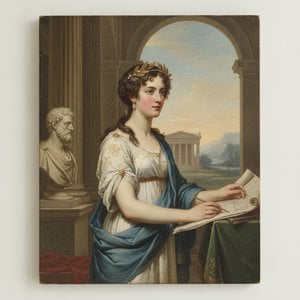
The Revival of Antiquity: Exploring Ideals of Beauty & Power in Neoclassical Portraiture
Explore the captivating world of Neoclassical portraiture! Discover the power & ideals behind masterpieces by David, Girodet & more. Expert analysis, custom reproductions & art appraisal at ArtsDot.