

 Vorschau anzeigen
 Versenden
 Teilen
 Details anzeigen
 Leitfaden

 Herunterladen
 Ähnliche Objekte
 Röntgenaufnahme
 Diashow
 Q&A
Q&A Statistiken
Crucifix

- 350.0 x 690.0 cm


 Weiterlesen
Giclée / Kunstdruck
Giclée- oder Leinwanddruck in Museumsqualität mit schneller Produktion und flexiblen Veredelungsoptionen. ( Handgemalte Reproduktion bestellen Zum digitalen Bild wechseln)




P118B €10

P118H €10

P118W €10

P438Z €10

P508JH €12

P508YH €12

P805H €10

P805Z €10

P919BZ €10

P919G €10

P919XJ €10

P959ZH €10

P968JZ €12

W106C €8

W218G €10

W218JH €8

W218Y €10

W307PJ €10

W316G €10

W316PJ €8

W316Y €10

W398PJ €8

W4111J €10

W500HY €15

W500JH €15

W692G €12

W849H €8

W940BG €15

W953PJ €8




Wählen Sie aus unseren vordefinierten Formaten, die den ursprünglichen Proportionen des Kunstwerks entsprechen.

Geben Sie die benötigte Breite und Höhe an, damit der Druck perfekt in Ihren Rahmen oder an Ihre Wand passt. Ein Druck kann nur beschnitten, aber niemals größer als das Originalbild angefertigt werden; daher verliert ein Format mit anderen Proportionen einen Teil des Bildes. Wir senden Ihnen ein digitales Mockup zur Freigabe, bevor wir den Druck ausführen. Das auf dieser Seite gezeigte Bild zeigt nicht den tatsächlichen Beschnitt – dies ist nur im Mockup ersichtlich.
Weltweiter Versand () innerhalb von 2 Wochen statt der üblichen 4/5 Wochen. (2 November)

Kostenloser weltweiter Expressversand

Hochwertige Leinenleinwand

Umfassender Versicherungsschutz beim Versand

Zollgebühren-Rückerstattungsgarantie

Garantie für exakte Farbtreue

100 Tage Rückgaberecht (nur bei Mängeln)

100% Geld-zurück-Garantie

Mengenrabatt verfügbar
 Die Glasoption ist nur für Größen unter 110 cm verfügbar.

Crucifix
Giclée / Kunstdruck
Format der Reproduktion
-


Endpreis
€ 55
A Bridge Between Worlds: Cimabue’s ‘Crucifix’
Cimabue's “Crucifix,” painted around 1283 in Florence, stands as a pivotal work not merely for its artistic merit but for its profound role in marking the transition from the rigid formality of Byzantine art to the burgeoning naturalism that would define the Italian Renaissance. More than just a depiction of Christ’s suffering, this painting embodies a courageous shift—a subtle yet decisive challenge to established conventions, laying the groundwork for the revolutionary changes that were about to reshape Western art. Born Cenni di Pepo around 1240 in Florence, Cimabue wasn't simply a painter; he was an innovator who dared to experiment with form and expression, a figure whose legacy resonates powerfully even today.
The painting immediately draws the eye with its monumental scale – measuring over three by two meters – reflecting the Byzantine tradition of imposing religious imagery. Yet, Cimabue’s genius lies in his ability to infuse this grandeur with a nascent sense of humanity. The Christ figure, rendered in tempera and gold on wood, is undeniably rooted in the iconography of the East: he is depicted as *Christus patiens*, or deceased, flanked by the Virgin Mary and St. John the Evangelist, both figures enveloped in sorrowful contemplation. However, subtle innovations distinguish Cimabue’s work from its Byzantine predecessors. The Christ's pose, while still conveying a sense of stillness, possesses a greater physicality—a suggestion of weight and vulnerability that hints at the human drama unfolding before us.
The Language of Symbolism
Beyond the immediate depiction of the crucifixion, “Crucifix” is rich in symbolic meaning. The inscription "HIC EST IESUS NAZARENUS REX IUDEORUM" – “Here is Jesus Christ, King of the Jews” – anchors the scene within its religious context, asserting both his divinity and his earthly sacrifice. The carefully chosen details—the draped cloth, the outstretched limbs, the sorrowful faces of the witnesses—all contribute to a powerful narrative of suffering, redemption, and hope. The use of gold leaf, particularly in highlighting Christ’s figure, further elevates the scene, connecting it to the opulent traditions of Byzantine mosaics and illuminating the divine nature of the subject.
Technique and Innovation
Cimabue's mastery is evident in his skillful manipulation of tempera paint. He employs a technique known as *distemper*, mixing pigments with a binding medium, creating rich colors and subtle gradations of tone. The painting’s monumental scale demanded careful planning and execution; the panel itself was constructed from five timber boards, meticulously joined to create a stable support for the vibrant imagery. Notably, Cimabue moved away from the purely abstract representation favored in Byzantine art, introducing a greater degree of naturalism into his depiction of Christ's body—a subtle shift that would become increasingly pronounced in the work of his successors, particularly Giotto.
A Legacy Forged in Florence
“Crucifix”’s journey through history is inextricably linked to the artistic landscape of Florence. Originally intended for “Santa Croce II,” a significant church project, it eventually found its home within the Basilica di Santa Croce, where it has remained a treasured masterpiece. The painting's survival—despite being partially damaged during the devastating 1966 flood that ravaged Florence – is itself a testament to its enduring value and the dedication of those who have preserved it. Today, this powerful image continues to inspire awe and reflection, serving as a poignant reminder of faith, sacrifice, and the transformative power of art.
Fragen & Antworten
Für welchen Ort und welchen Zweck wird "Crucifix" empfohlen?
"Crucifix" wird für Statement empfohlen; der ideale Ort dafür ist ein Living Room.
Wie gesättigt ist die Farbpalette von "Crucifix"?
Die Farben von "Crucifix" von Cimabue weisen eine Clear Color Presence Sättigung auf. Die Sättigung beschreibt, wie lebhaft oder gedämpft die Farben sind.
Welches Gefühl vermittelt "Crucifix" von Cimabue?
Die festgehaltene Stimmung von "Crucifix" von Cimabue ist Dramatic, und ihr emotionaler Tonfall ist Melancholic.
Ähnliche Kunstwerke


Künstlerbiografie
das Brechen des italo-byzantinischen Stils
Cimabue, geboren um 1240 und gestorben im Jahr 1302, war ein einflussreicher italienischer Maler und Mosaikdesigner aus Florenz, auch bekannt als Cenni di Pepo. Als Pionier des Brechens mit dem italo-byzantinischen Stil wird Cimabue für die Einführung von realistischeren Proportionen und Schattierung in seiner Arbeit gefeiert, was einen bedeutenden Übergang zum Realismus in der mittelalterlichen Kunst markierte.Frühes Leben und Ausbildung
Über Cimabues frühes Leben ist wenig bekannt. Eine Quelle, die über seine Karriere berichtet, ist Giorgio Vasaris Lives of the Most Excellent Painters, Sculptors and Architects, deren Genauigkeit jedoch ungewiss ist. Er wurde in Florenz geboren und starb in Pisa. Laut Kunsthistoriker Pietro Tosca ist Cimabues früheste zugeschriebene Arbeit, die Kreuzigung in der Kirche San Domenico in Arezzo, aus dem Jahr 1270 und zeigt eine Abweichung vom byzantinischen Stil.Bekannte Werke
* Maestà (ursprünglich in der Kirche San Francesco in Pisa ausgestellt, jetzt im Louvre): Dieses Werk etablierte einen Stil, der von zahlreichen Künstlern fortgesetzt wurde, darunter Duccio di Buoninsegna in seiner Ruccellai Madonna (früher fälschlicherweise Cimabue zugeschrieben). * Flagellation (Frick Collection): Ein Werkstattgemälde, das möglicherweise einer späteren Periode zuzuordnen ist. * Mosaike für die Florenzer Baptisterium (jetzt weitgehend restauriert): Im schlechten Zustand aufgrund der Oxidation der helleren Farben.Einfluss und Vermächtnis
Cimabues Kunst spielte eine entscheidende Rolle bei der Übergang von byzantinischen zu realistischeren Darstellungen in der italienischen Malerei, und sein Einfluss auf nachfolgende Künstler war tiefgreifend. Seine Werke, die durch einen Zusammenschnitt traditioneller und innovativer Techniken gekennzeichnet sind, markieren ein wichtiges Kapitel in der Kunstgeschichte, das den Übergang zwischen mittelalterlichen und Renaissance-Stilen überspannte.- Betrachten Sie Cimabues Werke unter https://ArtsDot.com/@/cimabue
- Erfahren Sie mehr über die Trecento-Kunstbewegung unter https://ArtsDot.com/@@/a@d3cpph
- Lesen Sie Cimabues Biografie auf Wikipedia unter https://en.wikipedia.org/wiki/cimabue

Cimabue
1240 - 1302 , Italien
Kurzinfos
- Beeinflusste Künstler: ['Giotto di Bondone']
- Bemerkenswerte Werke:
- Maestà
- Kreuzigung (Arezzo)
- Flagellation Christi
- Geburtsdatum: ca. 1240
- Geburtsort: Florenz, Italien
- Künstlerische Bewegung: Italo-byzantinisch, Frührenaissance
- Nationalität: Italienisch
- Todestag: 1302
- Vollständiger Name: Cimabue
- Von Künstlern Beeinflusst: ['Byzantinische Kunst']
Ähnliche Artikel

Kunst, die mit Ihnen lebt: Emotionale Kraft individueller Innenraumfresken
Entdecken Sie die emotionale Kraft individueller Innenraumfresken! Expertenberatung & hochwertige Wandmalerei für Hotels, Wohnräume & mehr. – Ihr Partner für einzigartige Kunst.

The Enduring Legacy of Fresco: Technique, History & Artistic Expression Across Cultures
Explore the rich history & enduring legacy of fresco painting! Discover ancient techniques, Giotto's masterpieces, and modern applications. Expert insights for art lovers & professionals.

Die bleibende Pracht der Freskomalerei: Technik, Geschichte und künstlerischer Ausdruck
Entdecken Sie die faszinierende Welt der Freskomalerei! Von den Ursprüngen bis zur Renaissance – wir beleuchten Technik, Geschichte und künstlerischen Ausdruck dieser einzigartigen Kunstform. Expertenwissen für Sammler & Liebhaber.
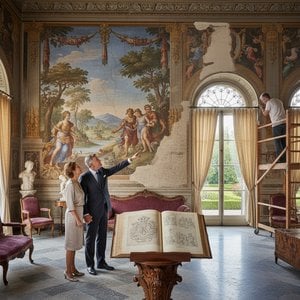
Das Familienerbe an die Wand bringen: Wandgemälde als Generationenschatz
Verwandeln Sie Ihre Familiengeschichte in ein beeindruckendes Wandgemälde! Expertenrat & hochwertige Handwerkskunst für einzigartige Kunstwerke, die Generationen verbinden. Entdecken Sie jetzt!

The Enduring Legacy of Fresco Painting: Techniques, History & Contemporary Relevance
Explore the rich history & enduring artistry of fresco painting – from Giotto to Michelangelo! Discover techniques, conservation efforts, & modern applications. Learn how ArtsDot brings this timeless art form to your home.


