

- 24.0 x 24.0 cm


Das Bild passt sich Ihren Auswahlmöglichkeiten an: , .
Beschreibung des Sammlerstücks
A dynamic black rabbit captured in motion through Bill Traylor's expressive 1940 watercolor style on textured paperboard, offering a rare glimpse into American folk art history that you can bring to your collection.
 Weiterlesen
Künstlerbiografie
Entdecken Sie Bill Traylor: Ein autodidaktischer afroamerikanischer Künstler, dessen eindrucksvolle Zeichnungen Folklore, Gewalt und das tägliche Leben darstellen. Erkunden Sie seine einzigartige Vision!
Handgefertigte Ölreproduktion
Handgemaltes Ölgemälde auf Leinwand in Ihrer Wunschgröße und mit Rahmen, auf Bestellung von unseren Künstlern angefertigt. ( Zum Druck wechseln Zum digitalen Bild wechseln)
Mehr über dieses Gemälde
 Vorschau anzeigen
 Versenden
 Teilen
 Details anzeigen
 Leitfaden

 Herunterladen
 Ähnliche Objekte
 Röntgenaufnahme
 Diashow
 Fragen & Antworten
 Statistiken
Bestellen Sie Ihr Gemälde in vier einfachen Schritten
Lassen Sie sich Zeit. Sie können jede Antwort jederzeit ändern; der Preis in Ihrem Warenkorb passt sich jeder Auswahl automatisch an.
1 Schritt eins von vier
Welche Größe möchten Sie wählen?
Diese Formate bewahren die Proportionen des Originalgemäldes. Die Zeichnung zeigt Ihre Auswahl an einer Wand, oberhalb eines zwei Meter breiten Sofas.
Oder geben Sie Ihre eigenen Maße an
Wählen Sie aus unseren vordefinierten Formaten, die den ursprünglichen Proportionen des Kunstwerks entsprechen.

Geben Sie die Breite und die Höhe an, die Sie für Ihren Rahmen oder Ihre Wand benötigen. Da dieses Werk handgemalt ist, kann der Künstler bei einer anderen Form etwas mehr um das Bild herum malen oder etwas abschneiden – Sie entscheiden. Wir senden Ihnen ein digitales Mockup zur Freigabe, bevor mit dem Malen begonnen wird. Das auf dieser Seite gezeigte Bild stellt nicht das tatsächliche Ergebnis dar – dies tut nur das Mockup.
2 Schritt zwei von vier
Wie soll es vorbereitet werden: gerollt, auf Keilrahmen gespannt oder gerahmt?
Die unten aufgeführten Preise beziehen sich auf die in Schritt eins gewählte Größe.
Wählen Sie die Kanten der Leinwand aus
Wählen Sie Ihren Rahmen

Weißer Rand €1

verlaufende Kanten €1

Umrandung €1

P118B €10

P118H €10

P118W €10

P438Z €10

P508JH €12

P508YH €12

P805H €10

P805Z €10

P919BZ €10

P919G €10

P919XJ €10

P959ZH €10

P968JZ €12

W106C €8

W218G €10

W218JH €8

W218Y €10

W307PJ €10

W316G €10

W316PJ €8

W316Y €10

W398PJ €8

W4111J €10

W500HY €15

W500JH €15

W692G €12

W849H €8

W940BG €15

W953PJ €8

H24-GOLD €30

H24-SILVER €30

H36-GOLD €45

H36-SILVER €45
Gerahmt
Profil: . Gesamtgröße mit Rahmen: .
3 Schritt drei von vier
Möchten Sie am Gemälde noch etwas ändern?
Die meisten Menschen antworten mit Nein. Da jedes Gemälde von Hand gefertigt wird, kann unser Künstler es jedoch auch individuell für Sie anpassen.
Nach der Bestellung wird das Team von ArtsDot.com den Kunden per E-Mail kontaktieren, um Anweisungen einzuholen und eine Vorschau des Entwurfs bereitzustellen
4 Schritt vier von vier
Einige Veredelungsmöglichkeiten
Alle Angaben sind optional. Für bereits ausgewählte Antworten entstehen keine zusätzlichen Kosten.
Wer hat es gemalt?
Weltweiter Versand () in nur 3 bis 4 Wochen statt der üblichen 5 Wochen. (7 November). Keine Kompromisse bei der Qualität.
Ein Namensschild, wie im Museum?
Details der gravierten Bronzetafel
This elegant plaque features the artist's name and the title of the artwork, finely engraved for a timeless presentation.
It is made from bronze with a refined, elegant finish. The text is precisely laser-engraved for a sharp and permanent result. Measuring 9x2 cm, the plaque is compact yet easy to read. It's built to be durable and scratch-resistant, offering a professional, museum-quality look. Mounting is simple thanks to the included adhesive backing.
Details zur Acrylglas-Plakette (transparent)
The plaque includes essential engraved details such as the artist's name, the title of the artwork, the date it was created, the type of media used-like oil on canvas or watercolor-a brief description of the piece, and a QR code that links to the complete artwork information.
It is crafted from clear acrylic, offering a sleek, modern appearance. The text is UV-engraved in black to ensure strong visual contrast. With a size of 10x15 cm, it ensures optimal readability. It comes equipped with two metal hooks for secure wall mounting. The plaque is designed to be weather-resistant, making it suitable for various environments, and it includes interactive features that work seamlessly with smartphone scanning.
Details zur schwarzen Acryltafel
This elegant plaque includes engraved information such as the artist's name, the title of the artwork, the date it was created, the type of media used (like oil on canvas or watercolor), a short description of the artwork, and a QR code for quick access to more information.
The plaque itself is made from refined black acrylic with a premium finish. The text is laser-engraved in white for high contrast and readability. Its size is 10x15 cm, designed to be easy to read. It comes with two metal hooks for professional mounting. The design is sleek and fits any interior style. It is also weather-resistant and durable, with built-in digital integration for mobile compatibility.
Ein Schutzlack?
Bis wann benötigen Sie es?
✓ Prüfen und bestellen
Ihr Gemälde, wie von Ihnen bestellt

Untitled (Rabbit)
Art der Reproduktion
Format der Reproduktion
-

Erstklassige Meisterkünstler
Mehr Detailtiefe, Raffinesse und zusätzliche Produktionszeit
-

Rahmen für Reproduktionen
-
-
Bei Kunstwerken oder Reproduktionen, die an einer Seite größer als 105 cm (ca. 41 Zoll) sind, wird der Rahmen zerlegt als Bausatz geliefert. Diese Methode gewährleistet eine sichere Zustellung und verhindert Schäden während des Transports.
Professionelle Montage erforderlich – dies ist kein DIY-Produkt.
Der Bausatz muss von einem erfahrenen professionellen Rahmenmacher zusammengebaut und die Leinwand gespannt werden. Hierfür werden Holzleim (nicht im Lieferumfang enthalten), eine Leinwandspannzange sowie Klemmen benötigt, um die Keilleisten während des Trocknungsvorgangs rechtwinklig zu halten. Eine unsachgemäße Montage oder eine ungleichmäßige Spannung der Leinwand kann das Kunstwerk dauerhaft beschädigen und ist nicht durch unsere Garantie abgedeckt.
 Bei Kunstwerken oder Reproduktionen, die an einer Seite größer als 105 cm (ca. 41 Zoll) sind, wird der Rahmen zerlegt als Bausatz geliefert. Diese Methode gewährleistet eine sichere Zustellung und verhindert Schäden während des Transports.
Alle Vollholzkomponenten sind enthalten, präzise auf Maß zugeschnitten.
Der Zusammenbau erfolgt mit den mitgelieferten Schrauben sowie Holzkleber für die Eckverbindungen, der nicht im Lieferumfang enthalten ist und vom Rahmenbauer selbst beschafft werden muss.
Professionelles Werkzeug ist erforderlich und nicht im Lieferumfang enthalten: eine Keilrahmenzange (Spannwerkzeug) sowie Klammern, um die Leisten während der Trocknungszeit des Klebers rechtwinklig zu fixieren.
Wichtiger Hinweis:
Für die Eckverbindungen wird Holzleim benötigt, die Leisten müssen mit Zwingen fixiert werden, bis der Leim vollständig getrocknet ist, und das Spannen der Leinwand auf dem fertigen Rahmen erfordert eine Keilrahmen-Zange. Keines dieser Utensilien ist im Set enthalten. Bitte stellen Sie sicher, dass ein erfahrener Rahmenmacher zur Verfügung steht, bevor Sie diese Größe bestellen.

Beschriftung
-
-

Schutzlackierung
Glanzlack (verstärkt die Farben, schützt vor Licht und Feuchtigkeit)
-

Mein Kunstwerk personalisieren
Beispiele für Anpassungsmöglichkeiten: Gesicht durch Kundenfoto ersetzen; Haustier hinzufügen (z. B. Katze durch Hund ersetzen); Versteckte Nachricht im Hintergrund einfügen; Hintergrundlandschaft oder -elemente ändern.
-

Eilt sehr
Weltweiter Versand () in nur 3 bis 4 Wochen statt der üblichen 5 Wochen. (7 November). Keine Kompromisse bei der Qualität.
-
Expressversand
Weltweiter Versand () innerhalb von 5 Wochen. (14 November).
Inklusive Versand
Endpreis
€ 235
Die Glasoption ist nur für Größen unter 110 cm verfügbar.
In jeder Bestellung enthalten
- Kostenloser weltweiter Expressversand
- Hochwertige Leinenleinwand
- Umfassender Versicherungsschutz beim Versand
- Zollgebühren-Rückerstattungsgarantie
- Garantie für exakte Farbtreue
- 100 Tage Rückgaberecht (nur bei Mängeln)
- 100% Geld-zurück-Garantie
- Mengenrabatt verfügbar


A Moment Frozen in Motion: The Spirit of Bill Traylor
In the quiet, textured expanse of a weathered paperboard, a singular figure emerges with startling vitality. Untitled (Rabbit), created in 1940 by the legendary self-taught master Bill Traylor, is far more than a simple depiction of wildlife; it is a rhythmic dance of form and movement captured on the edge of history. The painting presents a black rabbit, its long ears alert and its body stretched in a dynamic stride across the frame. There is an unmistakable sense of urgency in the creature's posture, as if the viewer has caught a fleeting glimpse of a wild spirit darting through the Alabama brush. The watercolor medium lends a soft, vintage translucency to the silhouette, allowing the dark form of the rabbit to interact intimately with the organic, earthen tones of the background.
The beauty of this piece lies in its profound simplicity and the masterful use of texture. Traylor, who began his prolific artistic journey late in life, possessed an uncanny ability to transform humble materials into windows of deep emotional resonance. The brown, grainy surface of the paperboard serves not merely as a canvas but as an active participant in the composition, providing a tactile depth that grounds the ethereal movement of the rabbit. This interplay between the stark, dark ink and the warm, aged substrate creates a nostalgic atmosphere, evoking the essence of folk memory and the rugged landscapes of the American South.
Historical Resonance and Artistic Legacy
To look upon Untitled (Rabbit) is to engage with the complex tapestry of African American history in the early twentieth century. Born into slavery, Traylor’s perspective was shaped by a lifetime of labor and the profound social shifts of the Great Depression era. His work serves as a vital cultural archive, translating the folklore, rhythms, and everyday observations of rural Alabama into a visual language that transcends time. While often categorized under the umbrella of "outsider art," Traylor’s precision and compositional balance command the respect of the modern fine art world, earning his place in prestigious institutions like the Smithsonian American Art Museum.
For the discerning collector or interior designer, this reproduction offers a sophisticated touch of historical gravity and organic warmth. The piece functions beautifully as a focal point in spaces that value authenticity and storytelling. Its minimalist aesthetic and earthy palette allow it to integrate seamlessly into contemporary, rustic, or mid-century modern decors, providing a conversation piece that invites contemplation. Owning a tribute to Traylor’s vision means bringing into one's home a fragment of a resilient spirit—a celebration of life, movement, and the enduring power of the creative impulse.
Fragen & Antworten
Wie alt war Bill Traylor, als „Untitled (Rabbit)“ im Jahr 1940 geschaffen wurde?
Bill Traylor war 86 Jahre alt, als Untitled (Rabbit) im Jahr 1940 geschaffen wurde. Das Alter berechnet sich aus dem Geburtsjahr des Künstlers, 1854.
Wie stark ist der Kontrast in "Untitled (Rabbit)" von Bill Traylor?
"Untitled (Rabbit)" von Bill Traylor zeigt einen Bold Kontrast zwischen hellen und dunklen Bereichen.
Ist "Untitled (Rabbit)" gemeinfrei?
Was das Urheberrecht betrifft, so ist "Untitled (Rabbit)" gemeinfrei – das Urheberrecht ist abgelaufen.
Ähnliche Kunstwerke

![Untitled [man Carrying Dog On Object] — Bill Traylor](/media/artworks/images-thumb/4f/59/4f59e841a39991547f30e490eefe642c.jpg)


Bill Traylor
1854 - 1949, USA
Künstlerbiografie
Die Stimme der Alabama-Folklore
William „Bill“ Traylor bleibt eines der tiefgründigsten Rätsel in den Annalen der amerikanischen Kunstgeschichte – ein autodidaktischer afroamerikanischer Visionär, dessen eindrucksvolle Zeichnungen aus der stillen Vergessenheit des ländlichen Alabama während der Großen Depression hervorgingen. Sein Werk, das durch eine eindringlich schöne Schlichtheit besticht, dient als Fenster in eine Welt, die von den Komplexitäten des Jim-Crow-Südens geprägt war. Während frühe Kritiker seine Kompositionen oft als bloße „primitive“ oder „Outsider“-Skizzen abtaten, hat die moderne Forschung eine dramatische Neubewertung erfahren und Traylor als einen Meister der Moderne anerkannt, dessen rhythmische Linien und symbolische Figuren einen festen Platz im globalen Kanon der bildenden Kunst beanspruchen. Diese Wiederentdeckung wurde durch den unermüdlichen Einsatz von Charles Shannon katalysiert, der 1940 auf Traylors fesselnde Vision stieß und seine einzigartige Perspektive so einem breiteren, wertschätzenderen Publikum zugänglich machte.
Geboren in die harten Realitäten der Sklaverei auf der Plantage von George Hartful Traylor, war Bills frühes Leben durch die tiefgreifenden sozialen Umbrüche des neunzehnten Jahrhunderts geprägt. Seine Eltern, Sally und Bill Calloway, mussten die immensen Härten der Ära nach der Emanzipation bewältigen und pflanzten in ihm einen Sinn für Resilienz ein, der später sein gesamtes kreatives Schaffen durchdringen sollte. Trotz der systemischen Diskriminierung und der wirtschaftlichen Kämpfe des Pachtsystems in Alabama baute Traylor ein Leben von bemerkenswerter familiärer Hingabe auf und wurde Vater von etwa zwanzig Kindern. Sein Weg von der Knechtschaft der Sklaverei über die Ära des Wiederaufbaus bis hin zum Lebensabend in Montgomery ist ein Zeugnis menschlicher Ausdauer – ein erzählerischer Bogen, der eine schwere, seelenvolle Kulisse für jene Bilder bildet, die er schließlich auf Papier festhielt.
Eine visuelle Sprache der Resilienz und Bewegung
Traylors künstlerische Karriere begann unerwartet spät in seinem Leben, nach seinem Umzug nach Montgomery im Jahr 1939. Angetrieben von einem plötzlichen Schöpfungsimpuls nutzte er die Materialien, die ihm zur Verfügung standen – oft Bleistift, Buntstift oder Tinte auf weggeworfenem Papier –, um das Wesen seiner Umgebung einzufangen. Sein Werk ist nicht bloß eine Sammlung von Figuren; es ist ein dynamisches Lexikon aus Bewegung und Erinnerung. In Stücken wie Untitled (Dog Fight with Writing) kann man die rohe Energie und die kinetische Spannung zweier im Kampf verwickelter Hunde miterleben – eine Komposition, welche die viszerale Intensität des Volkslebens durch scharfe, entschlossene Striche einfängt. Seine Fähigkeit, komplexe Emotionen in minimalistische Formen zu destillieren, lässt seine Motive – von Nutztieren wie Schweinen bis hin zu menschlichen Figuren, die in tägliche Arbeit oder plötzliche Gewalt verstrickt sind – mit einer fast übernatürlichen Lebendigkeit vibrieren.
Die Symbolik in Traylors Repertoire ist sowohl subtil als auch tiefgründig und verbindet oft das Alltägliche mit dem Mythischen. Seine Darstellungen von Tieren und Menschen bewegen sich häufig in einem Raum, der sich gleichzeitig in der Realität der Alabama-Folklore verwurzelt und durch eine traumartige Abstraktion erhoben anfühlt. Dieser einzigartige stilistische Ansatz ermöglicht es ihm, Themen zu erkunden wie:
- Die Rhythmen des ländlichen Lebens: Das Einfangen des stetigen, oft mühsamen Tempos der landwirtschaftlichen Existenz.
- Soziale Spannungen: Die Nutzung fragmentierter Figuren, um die zerbrochene soziale Landschaft des segregierten Südens widerzuspiegeln.
- Narrative Bewegung: Der Einsatz eines Gefühls von „Schwebem“ oder losgelösten Gliedmaßen, um Handlung und Transformation anzudeuten.
Vermächtnis und historische Bedeutung
Die historische Bedeutung von Bill Traylor kann nicht hoch genug eingeschätzt werden. Er fungiert als Brücke zwischen den oralen Traditionen der afroamerikanischen Erfahrung und der formalen Sprache der modernen Kunst. Sein Werk dokumentiert nicht nur Geschichte; es interpretiert die psychologische Landschaft einer Ära, die sowohl durch extreme Unterdrückung als auch durch unglaubliches kreatives Überleben gekennzeichnet war. Indem er die Fragmente des Alltags in dauerhafte Artefakte der Schönheit verwandelte, forderte Traylor die Grenzen dessen heraus, was als „schöne Kunst“ gilt, und zwang die Kunstwelt dazu, am Rande nach wahrer Innovation zu suchen.
Heute hallt sein Vermächtnis in Museen und Galerien weltweit nach und dient als Eckpfeiler für das Studium autodidaktischer Künstler. Seine Fähigkeit, das Universelle durch das zutiefst Persönliche zu kommunizieren, stellt sicher, dass seine Vision heute ebenso lebendig und provokant bleibt wie zu jener Zeit, als er begann, in den Straßen von Montgomery zu zeichnen. Durch Bleistift und Papier erreichte Traylor eine Form der Unsterblichkeit und stellte sicher, dass die Stimmen der Landschaft Alabamas niemals verstummen würden.
Ähnliche Artikel

Flüchtige Visionen: Die Geschichte und emotionale Resonanz der Aquarellmalerei
Entdecken Sie die faszinierende Welt der Aquarellmalerei! Von historischen Ursprüngen bis zu modernen Techniken – wir bieten Expertenwissen, Inspiration und Tipps für Anfänger & Fortgeschrittene.

Die 10 legendärsten Aquarellwerke der Kunstgeschichte – Meisterwerke für Ihr Zuhause
Entdecken Sie die 10 legendärsten Aquarellwerke der Kunstgeschichte! Von Turner bis Monet – erleben Sie die Geschichten, Techniken & Farben dieser Meisterwerke. Finden Sie hochwertige Kunstdrucke auf ArtsDot.com und gestalten Sie Ihr Zuhause mit zeitloser Eleganz.
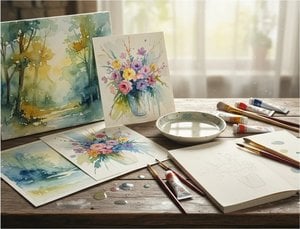
Ephemeral Visions: Exploring the Artistic Legacy & Nuances of Watercolor Painting
Explore the captivating world of watercolor painting! Discover its rich history, essential techniques, influential artists & collecting tips from art experts. A comprehensive guide for enthusiasts.