


 Vorschau anzeigen
 Versenden
 Teilen
 Details anzeigen

 Herunterladen
 Ähnliche Objekte
 Röntgenaufnahme
 Diashow
Landscape
 1935
1935 19.0 x 24.0 cm
 Weiterlesen
Erwerben Sie ein hochauflösendes, optimiertes digitales Bild, das der Online-Vorschau weit überlegen ist.
Jede Datei wird von unseren hauseigenen Spezialisten mit modernsten Werkzeugen und fachmännischer manueller Retusche sorgfältig vorbereitet. Wir stellen sicher, dass jedes Bild eine außergewöhnliche Klarheit, präzise Farbgenauigkeit und feinste Details aufweist.
Die endgültige Datei wird innerhalb von 72 Stunden per E-Mail zugestellt und ist für den sofortigen Einsatz in professionellen, redaktionellen und Druckumgebungen optimiert. Es handelt sich um dieselbe Qualität, der führende Designstudios, Verlage und Galerien vertrauen.
Digitales Bild
Laden Sie eine hochauflösende Datei für die persönliche Präsentation, den Druck und kreative Projekte herunter. ( Zum Druck wechseln Zur handgemalten Reproduktion wechseln)
In jeder Bestellung digitaler Bilder enthalten
Professionelle digitale Bereitstellung, garantiert
Wenn Sie sich für ArtsDot.com entscheiden, erhalten Sie nicht nur ein Bild – Sie erhalten ein professionell aufbereitetes digitales Kunstwerk, das mit höchster Präzision erstellt und durch eine Zufriedenheitsgarantie abgesichert wird. Hier ist alles, was automatisch mit Ihrer Bestellung geliefert wird:

Schnelle E-Mail-Zustellung
Ihre hochauflösende digitale Bilddatei wird Ihnen innerhalb von 72 Stunden nach der Bestellung per E-Mail zugestellt – bereit zur sofortigen Verwendung.

KI-optimierte digitale Datei
Ihre Kunstwerke werden professionell mithilfe fortschrittlicher KI-Tools und manueller Bearbeitung optimiert, um maximale Detailtreue, Klarheit und Farbgenauigkeit zu gewährleisten.

Lebenslanger kostenloser Neudruckservice
Datei versehentlich gelöscht oder verloren? Keine Sorge – wir senden sie Ihnen jederzeit kostenlos erneut zu.

Keine Einfuhrgebühren – jemals
Genießen Sie Ihr Kunstwerk sofort ohne Zollgebühren, Einfuhrabgaben oder Versandkosten – digitale Downloads sind immer steuerfrei.

Garantierte Farbtreue
Wir garantieren, dass Ihr digitales Bild mithilfe professioneller Werkzeuge und Farbmanagement die Originalfarben so präzise wie möglich wiedergibt.

60-Tage-Zufriedenheitsgarantie
Sollten Sie mit Ihrem digitalen Bild nicht zufrieden sein, werden wir es überarbeiten oder Ihnen innerhalb von 60 Tagen 100% erstatten – ohne Wenn und Aber.

100% Geld-zurück-Garantie
Nicht zufrieden? Erhalten Sie innerhalb von 60 Tagen nach Erhalt Ihrer digitalen Datei eine vollständige Rückerstattung – ohne Angabe von Gründen.

Rabatte bei Großbestellungen
3 Bilder kaufen, 10% sparen – 5 Bilder kaufen, 15% sparen – Ab 10 Bildern 20% sparen. Ideal für kreative Projekte, Galerien und Agenturen.
Biografie des Künstlers
A Vision of Wales: The Life and Art of Benjamin Archibald Lewis
Benjamin Archibald Lewis, born in 1857, remains a captivating figure within the pantheon of 19th-century Welsh landscape painters. Though not as widely celebrated as some of his contemporaries, Lewis’s work offers a particularly poignant and intimate glimpse into the rural beauty of Carmarthenshire and the surrounding Welsh coastline. His paintings are more than mere depictions; they are imbued with a deep affection for the land and a keen sensitivity to its changing moods. While biographical details remain somewhat sparse, the body of his artwork speaks volumes about a life dedicated to capturing the essence of Wales during a period of significant social and industrial change. He wasn’t simply recording what he saw, but translating an emotional connection with the Welsh countryside onto canvas, offering viewers a window into a world increasingly threatened by modernization.Early Influences and Artistic Development
The precise details of Lewis's artistic training are largely unknown, however, it is reasonable to assume that he benefited from the burgeoning art scene in Wales during his formative years. The mid-19th century witnessed a growing interest in landscape painting, fueled by Romantic ideals and a desire to celebrate national identity. Artists like David Cox and John Constable, with their emphasis on direct observation and atmospheric effects, undoubtedly influenced Lewis’s approach. His early works demonstrate a meticulous attention to detail, reminiscent of the topographical painters popular at the time. However, he quickly moved beyond mere replication, developing a distinctive style characterized by soft washes of color, delicate brushwork, and a subtle play of light and shadow. He favored watercolor as his primary medium, allowing him to capture the ephemeral qualities of the Welsh weather – the mist rolling over the hills, the shimmering reflections on the rivers, and the dramatic skies that define the region.Carmarthenshire: A Landscape Embraced
Lewis’s artistic focus centered almost exclusively on Carmarthenshire, a county he clearly held dear. His paintings depict scenes around the town of Carmarthen – bustling quaysides teeming with activity, tranquil stretches of the River Towy winding through verdant meadows, and panoramic views of the surrounding hills and valleys. The Quay at Carmarthen, one of his most recognizable works, exemplifies his ability to capture both the energy and the serenity of rural life. The painting is not simply a record of commerce; it’s a vibrant tableau of everyday existence, filled with figures engaged in their daily routines. He also frequently depicted coastal scenes, capturing the rugged beauty of the Welsh shoreline and the ever-present power of the sea. His work provides invaluable documentation of these locations during this period, offering insights into the architecture, transportation, and social life of 19th-century Wales.Technique and Artistic Style
Lewis’s technique is marked by a masterful use of watercolor. He employed a layering approach, building up tones and textures through successive washes of color. This allowed him to create a sense of depth and atmosphere that is particularly striking in his landscape paintings.- His brushwork is typically loose and fluid, conveying a sense of spontaneity and immediacy.
- He was adept at capturing the subtle nuances of light and shadow, creating a realistic yet evocative depiction of the Welsh countryside.
- A key characteristic of his style is his use of muted colors – soft greens, browns, blues, and grays – which reflect the natural palette of Wales.
Legacy and Historical Significance
Benjamin Archibald Lewis died in 1946, leaving behind a significant body of work that continues to resonate with art lovers today. While he may not be a household name, his paintings offer a unique and valuable perspective on 19th-century Wales. His work is particularly important for its documentation of Carmarthenshire during a period of rapid change. He captured scenes that have since disappeared, preserving them for posterity. More importantly, Lewis’s paintings embody a deep love for the Welsh countryside – a sentiment that continues to inspire and captivate viewers. His legacy lies in his ability to translate an emotional connection with the land onto canvas, offering a timeless vision of Wales's enduring beauty. He stands as a testament to the power of art to capture not just what is seen, but also what is felt—the spirit of a place and the soul of a nation.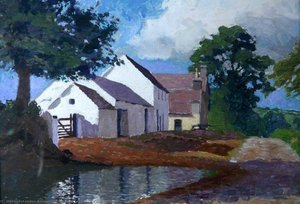
benjamin archibald lewis
1857 - 1946
Kurzinfos
- Artistic Movement Or Style: Post-Impressionism
- Artists Or Movements Influenced By This Artist: ['Landscape Painting']
- Artists Who Influenced This Artist:
- Jean-François Millet
- William Morris
- Date Of Birth: 1857
- Date Of Death: 1946
- Full Name: Benjamin Archibald Lewis
- Nationality: Welsh
- Notable Artworks:
- Carmarthen Quay
- Tenby Harbour
- Place Of Birth: Carmarthenshire, Wales

