


 In echtem Maßstab anzeigen
 Versenden als Grußkarte
 Teilen
 Details anzeigen
 Leitfaden

 Herunterladen
 Ähnliche Objekte
 Röntgenaufnahme
 Diashow
 Besucherstatistiken
Boy with a Dog
 Oil On Canvas
- WallArt
- Baroque
 1650
1650- Early Modern
 78.0 x 62.0 cm
 Mehr anzeigen
Handgefertigte Ölreproduktion
Handgemaltes Ölgemälde auf Leinwand in Ihrer Wunschgröße und mit Rahmen, auf Bestellung von unseren Künstlern angefertigt. ( Zum Druck wechseln Zum digitalen Bild wechseln)




P118B $10

P118H $10

P118W $10

P438Z $10

P508JH $12

P508YH $12

P805H $10

P805Z $10

P919BZ $10

P919G $10

P919XJ $10

P959ZH $10

P968JZ $12

W106C $8

W218G $10

W218JH $8

W218Y $10

W307PJ $10

W316G $10

W316PJ $8

W316Y $10

W398PJ $8

W4111J $10

W500HY $15

W500JH $15

W692G $12

W849H $8

W940BG $15

W953PJ $8




Wählen Sie aus unseren vordefinierten Formaten, die den ursprünglichen Proportionen des Kunstwerks entsprechen.

Sie können Ihre eigenen Maße eingeben, um einen bestimmten Rahmen oder Platz auszufüllen. Wenn die gewählte Größe nicht den Proportionen des Originalbildes entspricht, werden wir das Kunstwerk entweder beschneiden oder das Gemälde durch zusätzliche, handgemalte Elemente erweitern. Ein digitales Mockup wird Ihnen zur Genehmigung zugesandt, bevor die Produktion beginnt.
Bitte beachten Sie, dass die Bildschirmvorschau nicht die tatsächliche Beschneidung oder Erweiterung widerspiegelt. Nur das Mockup zeigt die endgültige Komposition exakt an.
Obwohl Sondermaße verfügbar sind, empfehlen wir, eine Größe aus der vordefinierten Liste zu wählen, um die ursprünglichen Proportionen beizubehalten.
Nach der Bestellung wird das ArtsDot.com-Team dem Kunden Anweisungen per E-Mail zusenden und eine Mockup-Vorschau bereitstellen.
Weltweiter Versand () in nur 3 bis 4 Wochen statt der üblichen 5 Wochen. (21 September). Keine Kompromisse bei der Qualität.

Kostenloser weltweiter Expressversand

Hochwertige Leinenleinwand

Vollständiger Versicherungsschutz beim Versand

Zollgebühren-Rückerstattungsgarantie

Garantie für exakte Farbtreue

100-tägiges Rückgaberecht (nur bei Mängeln)

100% Geld-zurück-Garantie

Angebot für Mengenrabatt
 Die Glasoption ist nur für Größen unter 110 cm verfügbar.

Boy with a Dog
Reproduktionsmedium
Format der Reproduktion
-


Gesamtpreis
$ 263
A Moment Captured in Golden Light
In the heart of the Spanish Baroque era, few artists possessed the ability to transform the mundane into the magnificent quite like Bartolomé Esteban Murillo. His masterpiece, Boy with a Dog, serves as a breathtaking window into the soul of 17th-century Seville. The painting presents us with an intimate encounter: a young boy, his face alight with a gentle, infectious smile, interacts with his canine companions amidst a scene of rustic simplicity. As he reaches toward a basket, there is a palpable sense of innocence and unhurried joy that transcends the centuries. This is not merely a portrait of a child; it is an evocative study of life’s quietest, most tender moments, rendered with a warmth that feels as though it could radiate heat from the canvas itself.
The composition is a masterclass in the chiaroscuro techniques perfected during the Golden Age. Murillo utilizes a soft, atmospheric light that seems to emerge from within the scene, bathing the boy’s features and the textures of his brown vest in a luminous glow. The presence of the two dogs—one nestled near the bottom corner and another watching from the side—adds a layer of companionship and domestic harmony to the work. Every brushstroke contributes to a sense of depth and tactile reality, from the rough weave of the basket to the subtle sheen on the bottle resting in the lower foreground. For the discerning collector or interior designer, this piece offers a profound sense of grounded elegance, making it an ideal centerpiece for spaces that value classical sophistication and emotional warmth.
The Soul of Seville and Baroque Mastery
To understand the depth of this work, one must look to the streets of Seville where Murillo lived and breathed. The artist had a unique gift for "genre painting"—the depiction of everyday life—elevating common subjects to a level of spiritual and aesthetic dignity. In Boy with a Dog, we see the hallmark of his style: an idealized yet deeply humanistic approach. While the setting is humble, the technique is grand. The artist employs a fluid, painterly touch that allows colors to blend seamlessly, creating a soft-focus effect that directs the viewer's eye toward the boy's expressive face and the tender interaction between man and animal.
Symbolically, the painting speaks to themes of loyalty, innocence, and the beauty of the natural world. The dogs act as silent witnesses to the child's purity, representing a bond that is both primal and profound. For those looking to adorn a home with a high-quality reproduction, this artwork provides more than just decoration; it brings an atmosphere of timeless tranquility and historical richness. It is a piece that invites contemplation, encouraging anyone who gazes upon it to pause and find beauty in the simple, fleeting joys of existence.
Ähnliche Kunstwerke


Biografie des Künstlers
Frühes Leben und Ausbildung
Bartolomé Esteban Murillo, ein bedeutender spanischer Barockmaler, wurde Ende Dezember 1617 in Sevilla, Spanien, geboren und am 1. Januar 1618 getauft. Er war der jüngste von vierzehn Kindern von Gaspar Esteban und María Pérez. Nach dem Tod seiner Eltern im Jahr 1627 bzw. 1628 geriet Murillo unter die Obhut seines Schwagers, Juan Agustín Lagares. Seine künstlerische Ausbildung begann in Sevilla bei Juan del Castillo, einem Verwandten seiner Mutter, der ebenfalls Künstler war. Seine frühen Werke waren von dem stark realistischen Ansatz Zurbaráns, Jusepe de Ribera und Alonzo Canos beeinflusst.Künstlerischer Werdegang und Stil
Murillos künstlerischer Stil entwickelte sich im Laufe der Zeit weiter. Anfangs wurde er vom flämischen Malen und der "Abhandlung über heilige Bilder" Molanus' beeinflusst. Mit zunehmendem Reifegrad entwickelte seine Arbeit einen polierten Stil, der den bürgerlichen und aristokratischen Geschmäckern der Zeit entsprach, insbesondere in seinen religiösen Werken. Ein junger Mann mit einem Obstkorb oder Personifikation des Sommers (ca. 1640-50) zeigt seinen frühen, realistischen Ansatz. Der junge Bettler (ca. 1645, Musée du Louvre, Paris, Frankreich) demonstriert den Einfluss Velázquez's. St. Hieronymus (ca. 1650-52) veranschaulicht seinen reifen, weich leuchtenden Stil.Wichtige Werke und Themen
Murillo widmete sich hauptsächlich religiösen Themen, insbesondere Darstellungen der Jungfrau Maria mit dem Jesuskind. Diese Bilder zeichnen sich durch ihre zarte Schönheit, ihren idealisierten Charakter und eine warme, einladende Atmosphäre aus. Neben religiösen Werken schuf er auch Genreszenen, die das alltägliche Leben in Sevilla widerspiegeln, darunter Darstellungen von Blumenmädchen, Straßenköpfen und Bettlern. Diese Werke bieten einen faszinierenden Einblick in die Gesellschaft seiner Zeit. Seine Fähigkeit, Licht und Schatten einzusetzen, verlieh seinen Gemälden eine besondere Tiefe und Lebendigkeit.Einfluss und Vermächtnis
Murillo hatte zahlreiche Schüler und Anhänger, was seine Reputation in Spanien und seinen Ruhm in ganz Europa sicherstellte. Sein Stil beeinflusste Künstler wie Gainsborough und Greuze. Er gilt als einer der wichtigsten Vertreter des spanischen Barock und trug maßgeblich zur Entwicklung der religiösen Malerei des 17. Jahrhunderts bei. Seine Werke werden bis heute für ihre Schönheit, Anmut und ihren Ausdruck von Glauben und Mitgefühl geschätzt.Museen und Sammlungen
Murillos Gemälde sind in verschiedenen Museen auf der ganzen Welt zu finden, darunter:- Das Museo del Prado (Madrid, Spanien)
- Die Eremitage (Sankt Petersburg, Russland)
- Die Wallace Collection (London)
- Das Timken Museum of Art (San Diego, mit Christus am Kreuz)
- Das Krannert Art Museum (Champaign, Illinois, mit Christus nach der Geißelung)

Bartolomé Esteban Murillo
1618 - 1682 , Spanien
Eckdaten zum Künstler
- Beeinflusste Künstler:
- Gainsborough
- Greuze
- Bemerkenswerte Werke:
- Junger Mann mit Obstkorb
- Der junge Bettler
- St. Hieronymus
- Anbetung der Hirten
- Geburtsdatum: Spätes Dezember 1617
- Geburtsort: Sevilla, Spanien
- Künstlerische Einflüsse:
- Zurbarán
- Jusepe de Ribera
- Alonzo Cano
- Velázquez
- Künstlerischer Stil: Spanischer Barock
- Nationalität: Spanisch
- Todatum: 3. April 1682
- Vollständiger Name: Bartolomé Esteban Murillo
Verwandte Artikel

The Dramatic Flourish: Exploring the Baroque Movement's Enduring Legacy in Art History
Explore the dramatic world of Baroque art! Discover iconic artists like Caravaggio & Rubens, defining techniques, and its lasting impact on art history. Expert insights for collectors & enthusiasts at ArtsDot.

Barock Meisterwerke: Die 10 prägendsten Kunstwerke für Ihr Zuhause |
Entdecken Sie die 10 prägendsten Meisterwerke des Barock! Caravaggio, Rembrandt & Co. – Erfahren Sie die Geschichten hinter ikonischen Gemälde und finden Sie hochwertige Kunst Reproduktionen für Ihr Zuhause auf .

Barocke Pracht: Wie Sie Opulenz und Emotionen in zeitgenössische Innenräume bringen
Entdecken Sie die Pracht des Barock! Expertenratgeber für luxuriöse Innenräume mit barocken Elementen. Inspiration, Tipps & hochwertige Kunst bei .

The Golden Age Reforged: Dramatic Realism & Religious Zeal in Spanish Baroque Art
Explore the dramatic world of Spanish Baroque art! Discover masters like Zurbarán & the powerful influence of religious zeal on painting techniques – a guide for collectors and enthusiasts.
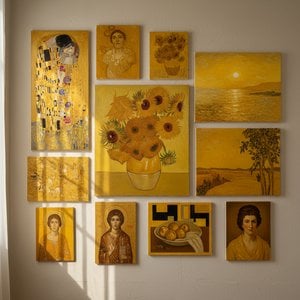
Die Top 10 berühmter Gemälde im Gelbocherton – Kunst für Ihr Zuhause |
Entdecken Sie die Top 10 berühmter Gemälde, dominiert von warmen Gelbochtönen! Von Van Gogh bis Monet – erfahren Sie die Geschichten hinter den Meisterwerken und lassen Sie sich für Ihre Wohnraumgestaltung inspirieren. Hochwertige Kunstdrucke auf


