Vorschau anzeigen
 Versenden
 Teilen
 Details anzeigen
 Leitfaden

 Herunterladen
 Ähnliche Objekte
 Röntgenaufnahme
 Diashow
 Fragen & Antworten
 Statistiken
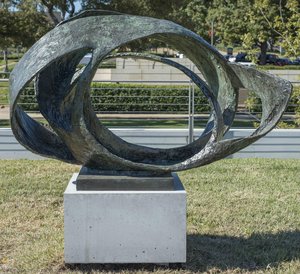
Desert Forms

- 81.0 x 58.0 cm


 Weiterlesen
Die auf dieser Seite dargestellten Kunstwerke sind urheberrechtlich geschützt, was bedeutet, dass wir keine identische Reproduktion rechtmäßig erstellen oder verkaufen dürfen. Dieser Schutz wird durch internationale Abkommen wie die Berner Übereinkunft und durch nationale Gesetze, einschließlich derer, die von den US-Urheberrecht – Titel 17.
Diese Methode entspricht vollumfänglich den Urheberrechtsbestimmungen, da sie keine Kopie oder Vervielfältigung des geschützten Kunstwerks darstellt. Stattdessen handelt es sich um eine kreative Neuinterpretation – ein neues Gemälde, das vom Original inspiriert, aber nicht identisch mit ihm ist.
Giclée / Kunstdruck
Giclée- oder Leinwanddruck in Museumsqualität mit schneller Produktion und flexiblen Veredelungsoptionen. ( Handgemalte Reproduktion bestellen Zum digitalen Bild wechseln)




P118B €10

P118H €10

P118W €10

P438Z €10

P508JH €12

P508YH €12

P805H €10

P805Z €10

P919BZ €10

P919G €10

P919XJ €10

P959ZH €10

P968JZ €12

W106C €8

W218G €10

W218JH €8

W218Y €10

W307PJ €10

W316G €10

W316PJ €8

W316Y €10

W398PJ €8

W4111J €10

W500HY €15

W500JH €15

W692G €12

W849H €8

W940BG €15

W953PJ €8




Wählen Sie aus unseren vordefinierten Formaten, die den ursprünglichen Proportionen des Kunstwerks entsprechen.

Geben Sie die benötigte Breite und Höhe an, damit der Druck perfekt in Ihren Rahmen oder an Ihre Wand passt. Ein Druck kann nur beschnitten, aber niemals größer als das Originalbild angefertigt werden; daher verliert ein Format mit anderen Proportionen einen Teil des Bildes. Wir senden Ihnen ein digitales Mockup zur Freigabe, bevor wir den Druck ausführen. Das auf dieser Seite gezeigte Bild zeigt nicht den tatsächlichen Beschnitt – dies ist nur im Mockup ersichtlich.
Weltweiter Versand () innerhalb von 2 Wochen statt der üblichen 4/5 Wochen. (5 November)

Kostenloser weltweiter Expressversand

Hochwertige Leinenleinwand

Umfassender Versicherungsschutz beim Versand

Zollgebühren-Rückerstattungsgarantie

Garantie für exakte Farbtreue

100 Tage Rückgaberecht (nur bei Mängeln)

100% Geld-zurück-Garantie

Mengenrabatt verfügbar
 Die Glasoption ist nur für Größen unter 110 cm verfügbar.

Desert Forms
Giclée / Kunstdruck
Format der Reproduktion
-


Endpreis
€ 56
Barbara Hepworth: Desert Forms – A Sculptural Exploration of Minimalism
Dame Barbara Hepworth (1903–1975) stands as an icon of British modernism, particularly the sculptural movement that emerged in the mid-20th century. Her work transcends mere representation; it delves into fundamental geometric forms—circles and squares—to convey profound emotional resonance and philosophical contemplation. “Desert Forms,” created in 1971, exemplifies Hepworth’s unwavering commitment to abstraction and her masterful manipulation of material and space.
The artwork itself is a striking monochrome piece executed in bronze. Hepworth meticulously crafted two white circles—one larger than the other—upon a textured yellow background. This seemingly simple composition belies its complexity, reflecting Hepworth’s fascination with exploring the relationship between solid form and negative space. The subtle variations in surface texture contribute to an ethereal quality, mimicking the undulating contours of desert dunes.
Hepworth's approach to sculpture was deeply rooted in her belief that forms should communicate directly with the viewer’s subconscious mind. Influenced by Surrealism and Expressionism, she sought to liberate art from descriptive accuracy, prioritizing instead the conveyance of feeling and intuition. Her method involved carving away material from a block of stone—a process she termed “subtraction”—allowing the inherent form of the stone to guide her artistic vision.
“Desert Forms” speaks powerfully to themes of stillness, contemplation, and resilience. The circular shapes evoke notions of wholeness and cyclical time, mirroring the natural rhythms of the desert landscape. Simultaneously, the textured surface suggests an underlying dynamism—a hidden energy that contrasts with the apparent serenity of the piece. It’s a testament to Hepworth's ability to distill complex ideas into elegant visual forms.
The artwork resides within Tate Britain’s Prints and Drawings Room, offering visitors the opportunity to experience Hepworth’s artistic legacy firsthand. Its enduring appeal lies in its timeless beauty and its capacity to provoke introspection—a reflection of Hepworth's profound engagement with the human condition and her unwavering pursuit of artistic innovation.
Fragen & Antworten
Was für ein Kunstwerk ist "Desert Forms"?
"Desert Forms" ist ein Werk der Gattung WallArt.
Welche Atmosphäre verleiht "Desert Forms" von Barbara Hepworth einem Raum?
Mit seiner Calm Stimmung wird „Desert Forms“ für ein Living Room empfohlen.
Wie intensiv sind die Farben von "Desert Forms" von Barbara Hepworth?
Die Farbsättigung von „Desert Forms“ ist Balanced. Die Intensität beschreibt, wie kräftig die Farben wirken.
Ähnliche Kunstwerke


Künstlerbiografie
Frühes Leben und Ausbildung
Dame Barbara Hepworth, eine renommierte englische Künstlerin und Bildhauerin, wurde am 10. Januar 1903 in Wakefield geboren. Ihr Vater, Herbert Hepworth, war Bezirksvermessungsingenieur des West Riding County Council und später Alderman. Als Mädchen begleitete sie ihn auf den Autofahrten, die er im Zuge seiner Arbeit durch das West Riding von Yorkshire unternahm. Sie besuchte die Wakefield Girls' High School und erhielt 1915 ein Musikstipendium. 1917 gewann sie einen Schulterscholarship. Die Sommerferien verbrachte sie in Robin Hood's Bay, nahe Whitby, North Yorkshire. Von 1920 bis 1921 besuchte sie die Leeds School of Art, wo sie eine lebenslange Freundschaft mit dem Kommilitonen Henry Moore pflegte. Anschließend erhielt sie ein County-Stipendium für ein Studium an der Royal College of Art in London von 1921 bis 1924.Künstlerische Karriere
- Dame Barbara Hepworth's Werk verkörpert den Modernismus, insbesondere die moderne Bildhauerei. Sie war eine der wenigen Künstlerinnen, die internationale Anerkennung erlangte.
- 1933 gründete sie gemeinsam mit Ben Nicholson, Paul Nash und anderen die Unit One Kunstbewegung, um Surrealismus und Abstraktion in der britischen Kunst zu vereinen.
- Hepworths frühe Arbeit war durch Abstraktion und ihre Beteiligung an der in Paris ansässigen Kunstbewegung Abstraction-Création gekennzeichnet.
Wichtige Werke und Ausstellungen
- Oval Form (Trezion), eine Bronzeskulptur, ist Teil der Sammlung des Kimbell Art Museum in Fort Worth, Vereinigte Staaten. (siehe auf ArtsDot)
- Two Forms, eine Skulptur, wird im Hepworth Wakefield in Wakefield, Großbritannien, ausgestellt. (siehe auf ArtsDot)
- Totem, eine Marmor Skulptur, ist ebenfalls Teil der Sammlung im Hepworth Wakefield. (siehe auf ArtsDot)
Einflüsse und Entwicklung
Hepworths künstlerische Entwicklung war von verschiedenen Einflüssen geprägt. Ihre frühen Werke zeigten noch vereinfachte, naturalistische Formen, doch sie konzentrierte sich zunehmend auf formale Aspekte. Die Begegnung mit Künstlern wie Brancusi und Arp in Paris trug maßgeblich zu ihrer Hinwendung zur Abstraktion bei. Sie experimentierte mit Collage, Fotogrammen und Drucken und entwickelte eine einzigartige Sensibilität für ihre Materialien. Ihre Arbeit wurde von der direkten Bearbeitung des Materials geprägt, wobei sie oft Fäden, Drähte und farbiges Pigment in ihre Skulpturen integrierte.
Vermächtnis und Bedeutung
Barbara Hepworths Werk hat einen bleibenden Eindruck in der Kunstwelt hinterlassen. Sie gilt als eine Pionierin der modernen britischen Bildhauerei und beeinflusste Generationen von Künstlern. Ihre Skulpturen sind Teil bedeutender Museumskollektionen weltweit, und das Hepworth Wakefield ist ein Denkmal für ihr Leben und Werk. Ihr Beitrag zur Entwicklung der abstrakten Bildhauerei wird weiterhin geschätzt und gefeiert. Mehr über Barbara Hepworth auf Wikipedia
Barbara Hepworth
1903 - 1975 , Vereinigtes Königreich
Kurzinfos
- Beeinflusste Künstler: ['Henry Moore']
- Bemerkenswerte Werke:
- Oval Form (Trezion)
- Two Forms
- Totem
- Geburtsdatum: 10. Januar 1903
- Geburtsort: Wakefield, Vereinigtes Königreich
- Künstlerische Richtung: Moderne Skulptur
- Nationalität: Britisch
- Todatum: 1975
- Vollständiger Name: Barbara Hepworth
- Von Künstlern Beeinflusst:
- Brancusi
- Arp
Ähnliche Artikel

Meister der Abstraktion: Die 25 ikonischsten Werke von Wassily Kandinsky
Entdecken Sie die 25 Meisterwerke Kandinskys und die Magie der Abstraktion. Erleben Sie die volle Sammlung auf ArtsDot.com.

Die 25 besten Kunstwerke von Fernand Léger: Meister des Maschinenzeitalters
Entdecken Sie die 25 besten Werke von Fernand Léger und den Tubismus. Erleben Sie Meisterwerke auf ArtsDot.com.

Barbara Hepworth: Skulpturale Dialoge mit Form, Raum und menschlicher Existenz
Entdecken Sie das Werk von Barbara Hepworth – einer Meisterin der abstrakten Skulptur. Erfahren Sie mehr über ihre einzigartige Formensprache, Materialien und ihren Einfluss auf die moderne Kunst. Wertvolle Einblicke für Sammler und Kenner.

Geometrische Abstraktion: Die 10 Meisterwerke, die Kunstgeschichte prägten | ArtsDot.com
Entdecken Sie die 10 Meisterwerke der geometrischen Abstraktion! Von Kandinsky bis Mondrian – erleben Sie die Geschichte, Farben & Formen dieser revolutionären Kunstrichtung. Hochwertige Kunstreproduktionen auf ArtsDot.com

Weiße Meisterwerke: Die Top 10 berühmtesten Gemälde und ihre zeitlose Eleganz
Entdecken Sie die Top 10 berühmter Gemälde, dominiert von Weiß! Von Malewitsch bis Rothko – erfahren Sie Geschichten hinter ikonischen Kunstwerke und lassen Sie sich für Ihre Wohnraumgestaltung inspirieren. Kunstreproduktionen in Museumsqualiät auf