


 In echtem Maßstab anzeigen
 Versenden als Grußkarte
 Teilen
 Details anzeigen
 Leitfaden öffnen

 Herunterladen
 Ähnliche Objekte
 Röntgenaufnahme
 Diashow
 Besucherstatistiken
Bénédictine
 Lithography
- WallArt
- Art Nouveau
 1898
1898- 19th Century
 206.0 x 77.0 cm
 Mehr anzeigen
Handgefertigte Ölreproduktion
Handgemaltes Ölgemälde auf Leinwand in Ihrer Wunschgröße und mit Rahmen, auf Bestellung von unseren Künstlern angefertigt. ( Zum Druck wechseln Zum digitalen Bild wechseln)




P118B €10

P118H €10

P118W €10

P438Z €10

P508JH €12

P508YH €12

P805H €10

P805Z €10

P919BZ €10

P919G €10

P919XJ €10

P959ZH €10

P968JZ €12

W106C €8

W218G €10

W218JH €8

W218Y €10

W307PJ €10

W316G €10

W316PJ €8

W316Y €10

W398PJ €8

W4111J €10

W500HY €15

W500JH €15

W692G €12

W849H €8

W940BG €15

W953PJ €8




Wählen Sie aus unseren vordefinierten Formaten, die den ursprünglichen Proportionen des Kunstwerks entsprechen.

Geben Sie die Breite und die Höhe an, die Sie für Ihren Rahmen oder Ihre Wand benötigen. Da dieses Werk handgemalt ist, kann der Künstler bei einer anderen Form etwas mehr um das Bild herum malen oder etwas abschneiden – Sie entscheiden. Wir senden Ihnen ein digitales Mockup zur Freigabe, bevor mit dem Malen begonnen wird. Das auf dieser Seite gezeigte Bild stellt nicht das tatsächliche Ergebnis dar – dies tut nur das Mockup.
Nach der Bestellung wird das ArtsDot.com-Team dem Kunden Anweisungen per E-Mail zusenden und eine Mockup-Vorschau bereitstellen.
Weltweiter Versand () in nur 3 bis 4 Wochen statt der üblichen 5 Wochen. (25 Oktober). Keine Kompromisse bei der Qualität.

Kostenloser weltweiter Expressversand

Hochwertige Leinenleinwand

Vollständiger Versicherungsschutz beim Versand

Zollgebühren-Rückerstattungsgarantie

Garantie für exakte Farbtreue

100-tägiges Rückgaberecht (nur bei Mängeln)

100% Geld-zurück-Garantie

Angebot für Mengenrabatt
 Die Glasoption ist nur für Größen unter 110 cm verfügbar.

Bénédictine
Reproduktionsmedium
Format der Reproduktion
-


Gesamtpreis
€ 253
A Symphony of Floral Grace: The Enchanting Vision of Bénédictine
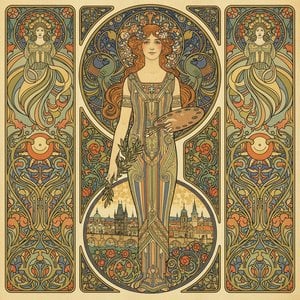
At the turn of the twentieth century, as the industrial world began to grapple with the rigid geometries of mechanical progress, a new aesthetic emerged to whisper of nature’s untamed rhythms. This was the era of Art Nouveau, and no artist captured its soul quite like Alphonse Mucha. His iconic lithograph for Bénédictine is far more than a mere commercial advertisement for a famed liqueur; it is a breathtaking portal into the Belle Époque, where elegance, sensility, and spiritual harmony converge. When one gazes upon this masterpiece, they are not simply looking at a poster, but are instead invited into a dreamscape of flowing lines and ethereal beauty that continues to captivate the modern eye.
The composition is a masterclass in Mucha’s signature style, characterized by an irresistible sense of movement. Dominating the visual field are swirling floral motifs—delicate roses, lilies, and winding vines—rendered in a palette of vibrant golds and deep, soulful blues. These organic elements do not merely sit upon the surface; they dance across it, mirroring the sinuous curls of the women’s hair and the fluid drapery of their garments. This deliberate rejection of straight lines reflects the movement's core philosophy: to find divinity in the undulating, natural world. For the collector or interior designer, this piece offers a rhythmic vitality that can breathe life and sophisticated motion into any curated space.
Idealized Femininity and Symbolic Depth
At the heart of this luminous work reside two female figures, positioned with a captivating, off-center balance that draws the viewer into their serene orbit. Clad in flowing robes of pale lavender and cream, these women embody the idealized feminine archetype of the era—a symbol of purity, grace, and quiet sophistication. Mucha employs the technique of drapery with extraordinary skill, using the soft folds and creases of fabric to sculpt form and imbue the figures with an almost celestial quality. Their expressions, tranquil and contemplative, suggest a higher state of being, elevating the subject matter from the mundane to the monumental.
Every element within the frame serves a symbolic purpose. The lush botanical decorations are not merely ornamental; they represent fertility, growth, and the abundance of life itself. Even the placement of the Bénédictine bottle at the top center acts as a focal point that anchors the swirling energy of the composition, linking the luxury of the product to the divine beauty of the natural world. The soft, diffused lighting creates a gentle glow across the figures' faces, eliminating harsh shadows and contributing to an overall atmosphere of peace and indulgence.
A Timeless Addition to the Refined Interior
For those seeking to adorn a home or gallery with works that evoke emotion and prestige, a high-quality reproduction of Bénédictine offers unparalleled inspiration. The artwork’s rich color palette—a harmonious blend of cool blues, warm golds, and earthy tones—allows it to integrate seamlessly into diverse decor styles, from classical European elegance to contemporary chic. It serves as a conversation piece that speaks of history, craftsmanship, and the enduring allure of the Art Nouveau movement.
Owning such a piece is an invitation to surround oneself with the beauty of the past. The lithographic precision of Mucha’s original vision, captured through meticulous reproduction, ensures that the tactile richness of the flowing fabrics and the delicate textures of the blossoms are preserved. Whether placed in a sunlit study or a grand salon, this artwork remains a testament to a time when art sought to transcend the everyday, offering a permanent sense of luxury and a timeless connection to the grace of the natural world.
Fragen & Antworten
Wo kann ich eine Vorschau von „Bénédictine“ sehen?
Eine Vorschau von "Bénédictine" von Alphonse Maria Mucha ist auf der Vorschau-Seite des Kunstwerks verfügbar.
Was ist das Entstehungsdatum von "Bénédictine" von Alphonse Maria Mucha?
Die Entstehung von "Bénédictine" von Alphonse Maria Mucha wird auf 1898 datiert.
Worum geht es in "Bénédictine" und welche Atmosphäre vermittelt es?
"Bénédictine" von Alphonse Maria Mucha verbindet floral motifs, female figures, benedictine liqueur, decorative border, elegant composition, art nouveau style, pastel colors mit einer Elegant Atmosphäre.
Ähnliche Kunstwerke


Biografie des Künstlers
Frühes Leben und Ausbildung
- Geboren: 15. Juli 1860 in Ivanačice, Mähren (heute Teil der Tschechischen Republik)
- Zeigte schon in jungen Jahren künstlerisches Talent.
- Studierte an der Akademie der Schönen Künste in Prag, war aber von traditionellen Ansätzen enttäuscht.
- Zog 1887 nach Paris, um seinen eigenen Stil zu verfolgen.
Künstlerischer Stil und bemerkenswerte Werke
- Bekannt für seinen unverwechselbaren Jugendstil, der sich durch fließende Linien, organische Formen und eine Bewegungsempfindung auszeichnet.
- Beeinflusst von Künstlern wie Pierre-Auguste Renoir und Gustave Moreau.
- Bemerkenswerte Werke:
- Der slawische Aufstand – Zeigt die Verbindung traditioneller tschechischer Motive mit modernen Jugendstilelementen.
- Salon des Cent
- Gemälde, inspiriert von Werken wie Die Töchter des Tespio von Gustave Moreau und La Ribambelle des Gobelins von Piero Dorazio.
- Illustrationen basierend auf Junge Landwirte ernten Leinen von Sir Hubert von Herkomer.
- Stellte häufig idealisierte Frauen in fließenden Gewändern inmitten üppiger Blumen dar.
Karrierehöhepunkte und wichtige Aufträge
- Zusammenarbeit mit Sarah Bernhardt: Erschuf Plakate und Designs für die Schauspielerin Sarah Bernhardt, beginnend mit dem Plakat für Gismonda (1894), das seine Karriere startete.
- Weltausstellung in Paris (1900): Sein Jugendstil erlangte bei dieser Ausstellung internationale Anerkennung. Er dekorierte den Pavillon von Bosnien und Herzegowina und arbeitete an der Gestaltung des österreichischen Pavillons mit.
- Förderung durch Charles Richard Crane: Erhielt Unterstützung von Charles Richard Crane, die es ihm ermöglichte, die monumentale Serie Der slawische Epos (1912-30) zu schaffen.
- Unabhängiges Tschechoslowakei: Entwarf Briefmarken, Banknoten und Regierungsdokumente für das neu unabhängige Tschechoslowakei.
Einflüsse und Vermächtnis
- Beeinflusst von tschechischen künstlerischen Traditionen und modernen europäischen Kunstbewegungen.
- Sein einzigartiger Stil ebnete den Weg für zukünftige Generationen von Künstlern im Jugendstil und der Sezession.
- Inspirierte andere Künstler wie Eva Prokopcová.
- Sein Vermächtnis erstreckt sich über seine Kunstwerke hinaus und beeinflusst Design und Ästhetik.
Späteres Leben und Tod
- Vermählte sich 1906 mit Maruska (Marie/Maria) Chytilová.
- Besuchte von 1906 bis 1910 die Vereinigten Staaten, wo ihre Tochter Jaroslava geboren wurde.
- Starb am 14. Juli 1939 in Prag, Tschechoslowakei.

Alphonse Maria Mucha
1860 - 1939 , Tschechien
Eckdaten zum Künstler
- Beeinflusste Künstler:
- Pierre-Auguste Renoir
- Gustave Moreau
- Bemerkenswerte Werke:
- Slavonic Uprising
- Salon des Cent
- The Slav Epic
- Geburtsdatum: 15. Juli 1860
- Geburtsort: Brno, Tschechien
- Künstlerische Richtung: Art Nouveau
- Nationalität: Tschechisch
- Todatum: 14. Juli 1939
- Vollständiger Name: Alphonse Maria Mucha
- Von Künstlern Beeinflusst: ['Eva Prokopcová']
Verwandte Artikel

Blossoms of Time: A Historical & Aesthetic Exploration of Floral Painting Across Cultures
Explore the rich history of floral painting! Discover symbolism, techniques & masterpieces from Van Huysum to O'Keeffe. Expert insights for art lovers & collectors at ArtsDot.

Art Nouveau Meisterwerke: Die 10 prägendsten Kunstwerke für Ihr Zuhause |
Entdecken Sie die 10 prägendsten Art Nouveau Meisterwerke! Von Mucha bis Klimt – erfahren Sie die Geschichten hinter ikonischen Gemälde & dekorativer Kunst. Hochwertige Kunstdrucke online kaufen auf

Raphael Kirchner: Eine poetische Vision der Gesellschaft der Belle Époque durch Art-Nouveau-Lithographie
Entdecken Sie das faszinierende Werk von Raphael Kirchner, einem Meister des Art Nouveau! Erfahren Sie mehr über seine ikonischen Lithographien, die Schönheit der Belle Époque und seinen Einfluss auf die moderne Kunst. Jetzt lesen!
Alphonse Mucha: Meister des Jugendstils und seine zeitlose Ästhetik
Entdecken Sie das Leben und Werk von Alphonse Mucha, dem Meister des Jugendstils! Erfahren Sie mehr über seine ikonischen Plakate, Illustrationen und den bleibenden Einfluss seiner Kunst auf die moderne Welt. Jetzt lesen!

The Flowing Line & Flourishing Form: Exploring Art Nouveau's Aesthetic Legacy
Explore the captivating world of Art Nouveau! Discover its origins, key artists like Horta & Mucha, regional styles, innovative techniques, and lasting influence on architecture & design. A comprehensive guide for art enthusiasts.


