

- 46.0 x 147.0 cm


Das Bild passt sich Ihren Auswahlmöglichkeiten an: , .
Beschreibung des Sammlerstücks
Discover 'Blossoms' by Albert Joseph Moore (1881). A stunning Pre-Raphaelite oil painting of a woman amidst white flowers, showcasing intricate detail & serene beauty.
 Weiterlesen
Künstlerbiografie
Entdecken Sie die ätherischen Gemälde von Albert Joseph Moore (1841-1893), einem führenden Künstler der Ästhetikbewegung! Languide Frauenfiguren, neoklassische Draperien & florale Motive erwarten Sie.
Handgefertigte Ölreproduktion
Handgemaltes Ölgemälde auf Leinwand in Ihrer Wunschgröße und mit Rahmen, auf Bestellung von unseren Künstlern angefertigt. ( Zum Druck wechseln Zum digitalen Bild wechseln)
Mehr über dieses Gemälde
 Vorschau anzeigen
 Versenden
 Teilen
 Details anzeigen
 Leitfaden

 Herunterladen
 Ähnliche Objekte
 Röntgenaufnahme
 Diashow
 Fragen & Antworten
 Statistiken
Bestellen Sie Ihr Gemälde in vier einfachen Schritten
Lassen Sie sich Zeit. Sie können jede Antwort jederzeit ändern; der Preis in Ihrem Warenkorb passt sich jeder Auswahl automatisch an.
1 Schritt eins von vier
Welche Größe möchten Sie wählen?
Diese Formate bewahren die Proportionen des Originalgemäldes. Die Zeichnung zeigt Ihre Auswahl an einer Wand, oberhalb eines zwei Meter breiten Sofas.
Oder geben Sie Ihre eigenen Maße an
Wählen Sie aus unseren vordefinierten Formaten, die den ursprünglichen Proportionen des Kunstwerks entsprechen.

Geben Sie die Breite und die Höhe an, die Sie für Ihren Rahmen oder Ihre Wand benötigen. Da dieses Werk handgemalt ist, kann der Künstler bei einer anderen Form etwas mehr um das Bild herum malen oder etwas abschneiden – Sie entscheiden. Wir senden Ihnen ein digitales Mockup zur Freigabe, bevor mit dem Malen begonnen wird. Das auf dieser Seite gezeigte Bild stellt nicht das tatsächliche Ergebnis dar – dies tut nur das Mockup.
2 Schritt zwei von vier
Wie soll es vorbereitet werden: gerollt, auf Keilrahmen gespannt oder gerahmt?
Die unten aufgeführten Preise beziehen sich auf die in Schritt eins gewählte Größe.
Wählen Sie die Kanten der Leinwand aus
Wählen Sie Ihren Rahmen

Weißer Rand €1

verlaufende Kanten €1

Umrandung €1

P118B €10

P118H €10

P118W €10

P438Z €10

P508JH €12

P508YH €12

P805H €10

P805Z €10

P919BZ €10

P919G €10

P919XJ €10

P959ZH €10

P968JZ €12

W106C €8

W218G €10

W218JH €8

W218Y €10

W307PJ €10

W316G €10

W316PJ €8

W316Y €10

W398PJ €8

W4111J €10

W500HY €15

W500JH €15

W692G €12

W849H €8

W940BG €15

W953PJ €8

H24-GOLD €30

H24-SILVER €30

H36-GOLD €45

H36-SILVER €45
Gerahmt
Profil: . Gesamtgröße mit Rahmen: .
3 Schritt drei von vier
Möchten Sie am Gemälde noch etwas ändern?
Die meisten Menschen antworten mit Nein. Da jedes Gemälde von Hand gefertigt wird, kann unser Künstler es jedoch auch individuell für Sie anpassen.
Nach der Bestellung wird das Team von ArtsDot.com den Kunden per E-Mail kontaktieren, um Anweisungen einzuholen und eine Vorschau des Entwurfs bereitzustellen
4 Schritt vier von vier
Einige Veredelungsmöglichkeiten
Alle Angaben sind optional. Für bereits ausgewählte Antworten entstehen keine zusätzlichen Kosten.
Wer hat es gemalt?
Weltweiter Versand () in nur 3 bis 4 Wochen statt der üblichen 5 Wochen. (7 November). Keine Kompromisse bei der Qualität.
Ein Namensschild, wie im Museum?
Details der gravierten Bronzetafel
This elegant plaque features the artist's name and the title of the artwork, finely engraved for a timeless presentation.
It is made from bronze with a refined, elegant finish. The text is precisely laser-engraved for a sharp and permanent result. Measuring 9x2 cm, the plaque is compact yet easy to read. It's built to be durable and scratch-resistant, offering a professional, museum-quality look. Mounting is simple thanks to the included adhesive backing.
Details zur Acrylglas-Plakette (transparent)
The plaque includes essential engraved details such as the artist's name, the title of the artwork, the date it was created, the type of media used-like oil on canvas or watercolor-a brief description of the piece, and a QR code that links to the complete artwork information.
It is crafted from clear acrylic, offering a sleek, modern appearance. The text is UV-engraved in black to ensure strong visual contrast. With a size of 10x15 cm, it ensures optimal readability. It comes equipped with two metal hooks for secure wall mounting. The plaque is designed to be weather-resistant, making it suitable for various environments, and it includes interactive features that work seamlessly with smartphone scanning.
Details zur schwarzen Acryltafel
This elegant plaque includes engraved information such as the artist's name, the title of the artwork, the date it was created, the type of media used (like oil on canvas or watercolor), a short description of the artwork, and a QR code for quick access to more information.
The plaque itself is made from refined black acrylic with a premium finish. The text is laser-engraved in white for high contrast and readability. Its size is 10x15 cm, designed to be easy to read. It comes with two metal hooks for professional mounting. The design is sleek and fits any interior style. It is also weather-resistant and durable, with built-in digital integration for mobile compatibility.
Ein Schutzlack?
Bis wann benötigen Sie es?
✓ Prüfen und bestellen
Ihr Gemälde, wie von Ihnen bestellt

Blossoms
Art der Reproduktion
Format der Reproduktion
-

Erstklassige Meisterkünstler
Mehr Detailtiefe, Raffinesse und zusätzliche Produktionszeit
-

Rahmen für Reproduktionen
-
-
Bei Kunstwerken oder Reproduktionen, die an einer Seite größer als 105 cm (ca. 41 Zoll) sind, wird der Rahmen zerlegt als Bausatz geliefert. Diese Methode gewährleistet eine sichere Zustellung und verhindert Schäden während des Transports.
Professionelle Montage erforderlich – dies ist kein DIY-Produkt.
Der Bausatz muss von einem erfahrenen professionellen Rahmenmacher zusammengebaut und die Leinwand gespannt werden. Hierfür werden Holzleim (nicht im Lieferumfang enthalten), eine Leinwandspannzange sowie Klemmen benötigt, um die Keilleisten während des Trocknungsvorgangs rechtwinklig zu halten. Eine unsachgemäße Montage oder eine ungleichmäßige Spannung der Leinwand kann das Kunstwerk dauerhaft beschädigen und ist nicht durch unsere Garantie abgedeckt.
 Bei Kunstwerken oder Reproduktionen, die an einer Seite größer als 105 cm (ca. 41 Zoll) sind, wird der Rahmen zerlegt als Bausatz geliefert. Diese Methode gewährleistet eine sichere Zustellung und verhindert Schäden während des Transports.
Alle Vollholzkomponenten sind enthalten, präzise auf Maß zugeschnitten.
Der Zusammenbau erfolgt mit den mitgelieferten Schrauben sowie Holzkleber für die Eckverbindungen, der nicht im Lieferumfang enthalten ist und vom Rahmenbauer selbst beschafft werden muss.
Professionelles Werkzeug ist erforderlich und nicht im Lieferumfang enthalten: eine Keilrahmenzange (Spannwerkzeug) sowie Klammern, um die Leisten während der Trocknungszeit des Klebers rechtwinklig zu fixieren.
Wichtiger Hinweis:
Für die Eckverbindungen wird Holzleim benötigt, die Leisten müssen mit Zwingen fixiert werden, bis der Leim vollständig getrocknet ist, und das Spannen der Leinwand auf dem fertigen Rahmen erfordert eine Keilrahmen-Zange. Keines dieser Utensilien ist im Set enthalten. Bitte stellen Sie sicher, dass ein erfahrener Rahmenmacher zur Verfügung steht, bevor Sie diese Größe bestellen.

Beschriftung
-
-

Schutzlackierung
Glanzlack (verstärkt die Farben, schützt vor Licht und Feuchtigkeit)
-

Mein Kunstwerk personalisieren
Beispiele für Anpassungsmöglichkeiten: Gesicht durch Kundenfoto ersetzen; Haustier hinzufügen (z. B. Katze durch Hund ersetzen); Versteckte Nachricht im Hintergrund einfügen; Hintergrundlandschaft oder -elemente ändern.
-

Eilt sehr
Weltweiter Versand () in nur 3 bis 4 Wochen statt der üblichen 5 Wochen. (7 November). Keine Kompromisse bei der Qualität.
-
Expressversand
Weltweiter Versand () innerhalb von 5 Wochen. (14 November).
Inklusive Versand
Endpreis
€ 235
Die Glasoption ist nur für Größen unter 110 cm verfügbar.
In jeder Bestellung enthalten
- Kostenloser weltweiter Expressversand
- Hochwertige Leinenleinwand
- Umfassender Versicherungsschutz beim Versand
- Zollgebühren-Rückerstattungsgarantie
- Garantie für exakte Farbtreue
- 100 Tage Rückgaberecht (nur bei Mängeln)
- 100% Geld-zurück-Garantie
- Mengenrabatt verfügbar


A Moment Frozen in Time: Exploring Albert Moore’s ‘Blossoms’
Albert Joseph Moore's “Blossoms,” completed in 1881, stands as a quintessential example of Pre-Raphaelite Romanticism—a testament to meticulous observation and an unwavering devotion to beauty. More than just a depiction of flowers, it embodies a profound meditation on femininity, stillness, and the delicate interplay between nature and artifice. This captivating oil painting resides within the Tate Gallery’s collection, offering viewers a glimpse into the artistic sensibilities of Victorian England.The Composition: A Symphony of Lines and Shapes
Moore skillfully employs geometric principles to orchestrate his scene. The vertical format dominates the canvas, emphasizing height and conveying a sense of grandeur—a deliberate echo of classical sculpture. Within this framework, a woman occupies the central position, draped in flowing pink robes that cascade downwards like petals themselves. Her posture exudes serenity, mirroring the tranquil beauty of the surrounding blossoms. Lines are smooth and curving, particularly evident in the drapery and flower stems, creating an organic flow that guides the eye across the composition. Shapes are predominantly curvilinear—the woman’s form, the floral arrangement, and the folds of fabric—reflecting the influence of Japanese prints, a burgeoning trend during Moore's time which championed subtle coloration and decorative patterns.Technique: Impasto and Detail – Capturing Essence
Moore’s technique is characterized by impasto—thickly applied paint—which lends textural richness to the artwork. This deliberate layering builds depth and simulates the tactile qualities of real blossoms, inviting viewers to imagine the velvety softness of petals and the delicate fragrance of flowers. The artist's meticulous brushwork captures every nuance of light and shadow, enhancing the sense of realism while simultaneously elevating the painting beyond mere representation. Careful attention is paid to detail—the intricate folds of fabric, the subtle variations in color within the blossoms—demonstrating Moore’s unwavering commitment to capturing the essence of his subject matter.Symbolism: White Flowers and Crimson Curtain – Layers of Meaning
The choice of white flowers as a backdrop speaks volumes about purity and remembrance—themes frequently explored by Pre-Raphaelite artists. They symbolize innocence, virtue, and spiritual contemplation, aligning perfectly with Moore’s artistic vision. Conversely, the crimson curtain introduces an element of drama and passion, hinting at hidden emotions or perhaps suggesting a secret rendezvous. This juxtaposition reinforces the painting's contemplative mood while simultaneously stimulating intellectual curiosity. The artist’s use of color is restrained yet purposeful—primarily pinks and reds—creating a harmonious palette that complements the floral motif and enhances its visual impact.Historical Context: Japonisme and Victorian Aestheticism
“Blossoms” emerged during the height of Japonisme—the fascination with Japanese art and culture among Western European artists—a movement fueled by Commodore Perry’s opening of Japan to trade in 1853. Moore embraced these aesthetic principles, prioritizing decorative design and subtle coloration over literal realism. This aligns seamlessly with Victorian Aestheticism, which championed beauty for its own sake and rejected didactic narratives. The painting exemplifies the Pre-Raphaelites' desire to recapture the spirit of medieval art—characterized by idealized forms and luminous colors—a reaction against the prevailing academic conventions of the era. Moore’s masterpiece continues to inspire admiration for its exquisite craftsmanship and profound artistic vision, securing its place as a cornerstone of Victorian Romanticism.Fragen & Antworten
Welche Form und welche Maße hat "Blossoms" von Albert Joseph Moore?
Das Format von „Blossoms“ ist Tall und das Original hat die Maße 46 x 147 cm. Beides ist bei der Planung einer Reproduktion hilfreich.
Welche Größe wird für "Blossoms" in einem Living Room empfohlen?
Für einen Living Room wird für „Blossoms“ ein Druckformat von Large empfohlen.
In welcher Technik wurde "Blossoms" von Albert Joseph Moore ausgeführt?
Albert Joseph Moore verwendete die Technik der Oil On Canvas für „Blossoms“. Die Technik bestimmt die materielle Beschaffenheit des Originalwerks.
Ähnliche Kunstwerke


Albert Joseph Moore
1841 - 1893, Vereinigtes Königreich
Künstlerbiografie
Frühes Leben und Ausbildung
Albert Joseph Moore, ein renommierter englischer Maler, wurde am 4. September 1841 in York, im Vereinigten Königreich, geboren. Er war der dreizehnte Sohn und vierzehnte Kind des bekannten Porträtmalers William Moore und seiner zweiten Frau, Sarah Collingham. Mehrere seiner zahlreichen Brüder wurden als Künstler ausgebildet, darunter Henry Moore, R.A., ein bemerkenswerter Seemaler. Albert Moore erhielt seine Ausbildung an der Archbishop Holgate's School und der St. Peter's School in York, wo er auch von seinem Vater Mal- und Zeichenunterricht erhielt.Künstlerische Karriere
Moores frühe Werke zeigen den Einfluss von Ruskin, und bereits 1857 hatte er sich an der Royal Academy ausgestellt und einen Goldfinken und einen Hasen gezeigt. Sein künstlerischer Stil entwickelte sich im Laufe der Zeit weiter, wobei in den 1860er Jahren ein ausgeprägter neoklassizistischer Charakter auftrat. In dieser Zeit entwarf Moore Fliesen, Tapeten und Buntglasfenster für Morris, Marshall, Faulkner and Co. sowie arbeitete als Kirchen- und Wandmaler für private Auftraggeber.Bekannte Werke und Stil
Moores Gemälde zeigen typischerweise einzelne weibliche Figuren mit formalisierten Proportionen, neoklassizistischem Stoffkleid und floralen Accessoires, was einen wichtigen Strang der Aesthetic Movement begründete. Zu seinen bekanntesten Werken gehören:- The Marble Seat (1865), eine lange Reihe von rein dekorativen Bildern
- Elijah's Sacrifice (1863), das den Einfluss von Ford Madox Brown und Edward Armitage zeigt
- The Loves of the Seasons and the Winds, eines seiner aufwendigsten und sorgfältigsten Werke, gemalt für Herrn McCulloch
Museen und Sammlungen
Moores Werk befindet sich in verschiedenen Museen, darunter:- York Museums Trust (York, Großbritannien), mit Gemälden wie Kingcups
- Die Royal Academy (London, Großbritannien), wo Moore häufig ausstellte
Vermächtnis und Späteres Leben
Moore verließ sich ausschließlich auf sein eigenes Urteil in sozialen und künstlerischen Fragen, was manchmal ein Hindernis für seinen Eintritt in die Reihen der Royal Academy darstellte. Trotz einer schmerzhaften und unheilbaren Krankheit arbeitete Moore bis zu seinem Tod am 25. September 1893 weiter.- Weitere Werke von Albert Joseph Moore finden Sie unter https://ArtsDot.com/@/albertjosephmoore
- Erkunden Sie die Sammlung des York Museums Trust unter https://ArtsDot.com/@@/as844t-albert-joseph-moore-kingcups
- Erfahren Sie mehr über die Aesthetic Movement und ihre bemerkenswerten Künstler unter https://en.wikipedia.org/wiki/aesthetic_movement
- Albert Joseph Moores Biographie auf Wikipedia: https://en.wikipedia.org/wiki/albert_joseph_moore
- Erkunden Sie die Sammlung des York Museums Trust unter https://ArtsDot.com/@@/as844t-albert-joseph-moore-kingcups
Ähnliche Artikel

Sir John Everett Millais: Präraffaelitische Revolution und viktorianische Erzählkunst
Entdecken Sie das Leben und Werk von Sir John Everett Millais, einem Pionier der Präraffaeliten! Detaillierte Analysen seiner Gemälde, Einblicke in die viktorianische Kunstszene und seine bleibende Bedeutung. Jetzt lesen!
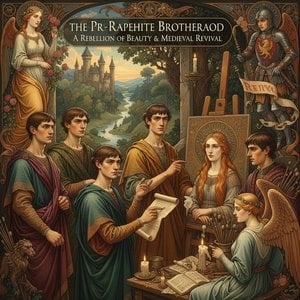
The Pre-Raphaelite Brotherhood: A Rebellion of Beauty & Medieval Revival
Explore the captivating world of the Pre-Raphaelite Brotherhood! Discover their rebellion against academic art, iconic masterpieces, and lasting influence on Victorian aesthetics. Learn about Rossetti, Burne-Jones & more.

The Pre-Raphaelite Brotherhood: Rebellion, Romance & Medieval Revival
Explore the captivating world of the Pre-Raphaelite Brotherhood! Discover their rebellious spirit, iconic masterpieces & lasting influence on art history. Learn about Rossetti, Millais & more.