


 In echtem Maßstab anzeigen
 Versenden als Grußkarte
 Teilen
 Details anzeigen

 Herunterladen
 Ähnliche Objekte
 Röntgenaufnahme
 Diashow
 Besucherstatistiken
Two Peasants
 Oil On Panel
- Baroque
 22.0 x 18.0 cm
 Ashmolean Museum of Art and Archaeology
 Mehr anzeigen
Handgefertigte Ölreproduktion
Handgemaltes Ölgemälde auf Leinwand in Ihrer Wunschgröße und mit Rahmen, auf Bestellung von unseren Künstlern angefertigt. ( Zum Druck wechseln Zum digitalen Bild wechseln)




P118B $10

P118H $10

P118W $10

P438Z $10

P508JH $12

P508YH $12

P805H $10

P805Z $10

P919BZ $10

P919G $10

P919XJ $10

P959ZH $10

P968JZ $12

W106C $8

W218G $10

W218JH $8

W218Y $10

W307PJ $10

W316G $10

W316PJ $8

W316Y $10

W398PJ $8

W4111J $10

W500HY $15

W500JH $15

W692G $12

W849H $8

W940BG $15

W953PJ $8




Wählen Sie aus unseren vordefinierten Formaten, die den ursprünglichen Proportionen des Kunstwerks entsprechen.

Sie können Ihre eigenen Maße eingeben, um einen bestimmten Rahmen oder Platz auszufüllen. Wenn die gewählte Größe nicht den Proportionen des Originalbildes entspricht, werden wir das Kunstwerk entweder beschneiden oder das Gemälde durch zusätzliche, handgemalte Elemente erweitern. Ein digitales Mockup wird Ihnen zur Genehmigung zugesandt, bevor die Produktion beginnt.
Bitte beachten Sie, dass die Bildschirmvorschau nicht die tatsächliche Beschneidung oder Erweiterung widerspiegelt. Nur das Mockup zeigt die endgültige Komposition exakt an.
Obwohl Sondermaße verfügbar sind, empfehlen wir, eine Größe aus der vordefinierten Liste zu wählen, um die ursprünglichen Proportionen beizubehalten.
Nach der Bestellung wird das ArtsDot.com-Team dem Kunden Anweisungen per E-Mail zusenden und eine Mockup-Vorschau bereitstellen.
Weltweiter Versand () in nur 3 bis 4 Wochen statt der üblichen 5 Wochen. (16 September). Keine Kompromisse bei der Qualität.

Kostenloser weltweiter Expressversand

Hochwertige Leinenleinwand

Vollständiger Versicherungsschutz beim Versand

Zollgebühren-Rückerstattungsgarantie

Garantie für exakte Farbtreue

100-tägiges Rückgaberecht (nur bei Mängeln)

100% Geld-zurück-Garantie

Angebot für Mengenrabatt
 Die Glasoption ist nur für Größen unter 110 cm verfügbar.

Two Peasants
Reproduktionsmedium
Format der Reproduktion
-


Gesamtpreis
$ 263
A Snapshot of Rural Life: Adriaen Brouwer’s “Two Peasants”
Adriaen Brouwer's "Two Peasants," painted between 1630 and 1639, isn’t merely a depiction of two men; it’s a vibrant distillation of Flemish life in the early 17th century – a moment frozen in time, brimming with quiet observation and subtle drama. The painting, now housed within the Ashmolean Museum in Oxford, offers a rare glimpse into the everyday routines and social dynamics of rural communities during a period of significant transition. Brouwer, tragically cut short at the age of thirty-six, left behind a remarkably prolific body of work, largely focused on genre scenes – depictions of ordinary people engaged in their daily activities. “Two Peasants” exemplifies his mastery of capturing fleeting moments of human interaction with remarkable immediacy and psychological depth.The Scene Unfolds: Composition and Narrative
The composition is deceptively simple yet profoundly effective. Two men occupy the foreground, seated on a weathered barrel – a ubiquitous feature of Flemish tavern interiors. One, clad in a dark cloak and partially obscured by a cloth covering his head, appears contemplative, perhaps lost in thought or enjoying a moment of quiet respite. His posture suggests a certain weariness, while his gaze is directed downwards, hinting at a past filled with hardship. The second peasant, standing beside him, leans slightly forward, seemingly examining something held in his hand – a pipe, a tool, or perhaps simply a reflection on the scene before him. The background, rendered with a looser brushstroke than the foreground figures, establishes an outdoor setting, likely a village square or a roadside inn, complete with a simple wooden chair and a suggestion of distant buildings. Brouwer masterfully uses light and shadow to create depth and atmosphere, drawing the viewer’s eye into the heart of the scene.Technique and Style: A Masterclass in Genre Painting
Brouwer's style is distinctly characterized by its dynamism and realism. He eschewed the idealized forms favored by many of his contemporaries, opting instead for a more earthy and unvarnished portrayal of human subjects. His brushwork is loose and expressive, capturing the texture of clothing, the roughness of wood, and the subtle nuances of facial expression. The painting’s oil-on-panel medium lends itself beautifully to this technique, allowing for rich colors and layered details. Brouwer's approach aligns closely with the burgeoning genre of tronies – single-image portraits designed to capture a range of emotions and expressions. “Two Peasants” embodies this spirit, inviting viewers to interpret the men’s moods and intentions through subtle gestures and facial cues. The painting is not about grand narratives; it’s about capturing the essence of human experience in its most immediate form.Symbolism and Context: Peasant Life in a Changing World
The scene transcends mere representation, offering a window into the social realities of 17th-century Flanders. Peasants occupied a precarious position within society – often struggling with poverty and hardship while simultaneously contributing significantly to the region’s economy. Brouwer's choice to depict two men engaged in quiet contemplation speaks volumes about the burdens and complexities of rural life. The barrel, a common fixture in taverns, symbolizes both social gathering and respite from labor. The painting was created during a period of economic upheaval, marked by the influx of cheaper grain from abroad, which threatened the livelihoods of local farmers. Brouwer’s work reflects this anxiety, capturing a moment of quiet resilience amidst uncertainty.Emotional Impact
Despite its seemingly simple subject matter, “Two Peasants” evokes a powerful sense of melancholy and introspection. The men's subdued expressions invite viewers to contemplate the challenges they face and the quiet dignity with which they endure them. Brouwer’s masterful use of light and shadow creates an atmosphere of intimacy, drawing us into their world and prompting reflection on the universal themes of human existence – labor, community, and the passage of time. Reproductions of this work offer a tangible connection to a bygone era, allowing us to appreciate the artistry and insight of one of Flanders’ most important genre painters.Ähnliche Kunstwerke


Biografie des Künstlers
Frühes Leben und Hintergrund
- Geboren: Oudenaarde, Belgien (1605/1635)
- Gestorben: 1638
- Sein Vater war ein Wandteppichdesigner.
- Adriaen Brouwer erlebte früh im Leben Härten; der Tod seines Vaters im Alter von 15 Jahren zwang ihn, das Elternhaus zu verlassen.
Künstlerische Entwicklung und Genremalerei
- Brouwer wurde bekannt für seine lebendigen Darstellungen des Alltagslebens, insbesondere Szenen mit Bauern, Soldaten und einfachen Leuten.
- Er war ein wichtiger Innovator in der Genremalerei – Kunst, die Szenen aus dem gewöhnlichen Leben darstellt.
- Seine Gemälde zeigten oft Trinken, Rauchen, Kartenspielen und andere Aktivitäten der unteren Schichten.
- Bemerkenswerte Werke sind "Arme Leute beim Trinken in einer Taverne", "Kleinbauern beim Kartenspiel", "Der Raucher", "Das Schlachtfest", "Die Schlägerei", "Mondlichtlandschaft", "Betrunkener Bauer in einer Taverne", "Bauern beim Kartenspielen" und "Trinker im Hof".
Einflüsse und künstlerischer Stil
- Flandrische Primitive: Brouwers Werk wurde vom detaillierten Realismus der flämischen Primitiven beeinflusst.
- Barockkunst: Seine Gemälde enthielten oft dramatische Beleuchtung und intensive Emotionen, die für die Barockkunst typisch sind.
- Sein Stil verband Realismus mit einem Sinn für Humor und lebendiger Beobachtung.
Vermächtnis und Einfluss
- Brouwers Werk beeinflusste nachfolgende Generationen flämischer und niederländischer Maler maßgeblich.
- Er trug dazu bei, die Genremalerei als eine wichtige Kraft in der Kunst des 17. Jahrhunderts zu etablieren.
- David Teniers der Jüngere war einer der Künstler, der sich von Brouwers innovativem Ansatz zur Darstellung des Alltagslebens inspirieren ließ.
Historische Bedeutung
- Brouwers Gemälde bieten wertvolle Einblicke in die sozialen Bräuche und täglichen Routinen Flanderns und der Niederländischen Republik im 17. Jahrhundert.
- Sein Fokus auf gewöhnliche Menschen hob die Genremalerei hervor und trug zu ihrer wachsenden Popularität und Bedeutung in der Kunstwelt bei.
- Seine Werke befinden sich in Museen wie dem Koninklijk Museum voor Schone Kunsten in Antwerpen, Belgien.

Adriaen Brouwer
1635 - 1638 , Belgien
Eckdaten zum Künstler
- Beeinflusste Künstler: ['David Teniers der Jüngere']
- Bemerkenswerte Werke:
- Arme Leute im Gasthaus
- Bauern beim Kartenspiel
- Der Raucher
- Die Schlachtfestivität
- Schlägerei
- Mondlichtlandschaft
- Betrunkener Bauer
- Bauern beim Kartenspiel
- Trinker im Hof
- Geburtsdatum: 1605/1635 (ungefähr)
- Geburtsort: Oudenarde, Belgien
- Künstlerische Einflüsse: ['Flandrische Primitive']
- Künstlerische Richtung: Barock, Genremalerei
- Nationalität: Flämisch
- Todestag: 1638
- Vollständiger Name: Adriaen Brouwer
Verwandte Artikel

Jacob Jordaens: Barocke Dynamik und Genre-Innovation der Antwerpener Schule
Entdecken Sie das faszinierende Werk von Jacob Jordaens, einem Meister der Barockmalerei! Erfahren Sie mehr über seine Genre-Szenen, religiösen Gemälde und seinen Einfluss auf die Antwerpener Schule. Jetzt lesen!
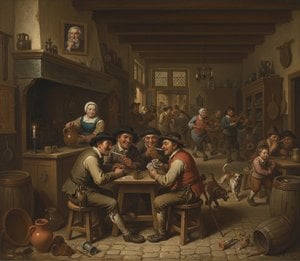
David Teniers II: Master of Flemish Genre & Social Commentary
Explore the captivating world of David Teniers II, a leading Flemish Baroque painter renowned for his lively genre scenes & insightful social commentary. Discover his masterpieces and legacy with ArtsDot.

Öl auf Leinwand: Eine historische und technische Erkundung eines zeitlosen künstlerischen Mediums
Entdecken Sie die faszinierende Welt der Ölmalerei! Von historischen Techniken bis zur modernen Anwendung – wir bieten Expertenwissen, Restaurierungstipps und hochwertige Reproduktionen. Jetzt informieren!

Adriaen Brouwer: Capturing Dutch Life & Social Commentary Through Genre Painting
Explore the captivating world of Adriaen Brouwer, a master of Dutch Golden Age genre painting. Discover his vivid depictions of peasant life, social commentary, and lasting influence on art history. Learn more at ArtsDot.
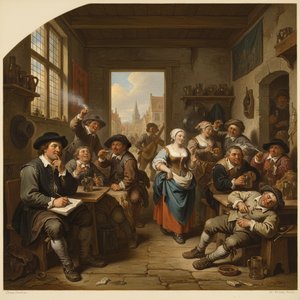
David Teniers der Jüngere: Genremalerei und Gesellschaftskritik im Barock-Flandern
Entdecken Sie das Werk von David Teniers der Jüngere! Erfahren Sie mehr über den Meister des flämischen Barock, seine Genremalerei und die subtile Gesellschaftskritik in seinen Bildern. Expertenwissen auf ArtsDot.
