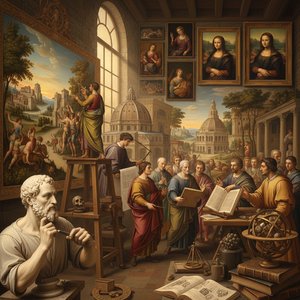
Palazzo Quirinale: A Breath of Italian History
The Palazzo Quirinale stands as a monumental testament to centuries of Italian artistic evolution—a palace that doesn’t merely house masterpieces but embodies them, breathing with the spirit of papal grandeur and royal ambition. Rising majestically upon Monte Cavallo, Rome's highest hill, it’s more than just stone and mortar; it’s a living chronicle etched in frescoes, sculptures, and gardens, inviting visitors to step back in time and witness the unfolding drama of Italian history.
-
Origins & Founding Myth:
Legend recounts Romulus and Remus—sons of Mars—abandoned as infants and nurtured by a she-wolf—establishing Rome around 753 BC. This myth underscores the city’s enduring connection to divine patronage and its roots in Etruscan traditions, shaping its early identity.
-
The Kingdom Era:
The earliest rulers were Etruscans who oversaw significant urban development and established Rome as a dominant force in central Italy. Subsequent kings—Tarquinian monarchs—brought Roman law and governance into prominence, marking the beginning of Rome’s ascent to imperial power.
-
The Republic & Artistic Flourishing:
From 509 BC onwards, Rome transitioned into a republic governed by elected magistrates, fostering intellectual debate and artistic innovation. The Etruscan influence blended with Greek ideals, resulting in architectural styles characterized by symmetry and grandeur—evident in temples like the Temple of Jupiter Optimus Maximus.
-
Imperial Splendor:
Augustus inaugurated the Pax Romana, ushering in an era of unprecedented stability and prosperity that fueled monumental building projects. Architects like Michelangelo Buonarroti and Gian Lorenzo Bernini transformed Rome into a baroque masterpiece, adorning churches and palaces with opulent decorations and dramatic sculptures.
-
The Quirinale Today:
Since 1946, Palazzo Quirinale has served as the official residence of Italy’s President—a symbol of continuity amidst turbulent political landscapes—and continues to host exhibitions showcasing both historical treasures and contemporary art, reaffirming its role as a vibrant center for cultural dialogue.
Architectural Marvel & Baroque Legacy
Domenico Fontana initiated construction in 1574, employing innovative engineering techniques to create a palace that defied the limitations of its time—a feat celebrated by Carlo Maderno and Gian Lorenzo Bernini who elevated it to unparalleled heights of artistic achievement. The Loggia delle Benedizioni, adorned with sculptures by Bernini, exemplifies Baroque grandeur—a deliberate theatricality designed to inspire awe and convey divine majesty.
Notable Exhibitions & Artistic Highlights
Palazzo Quirinale’s collections encompass Roman antiquities, Renaissance paintings, and Baroque sculptures—including masterpieces by Caravaggio and Raphael—reflecting the diverse artistic currents that shaped Italian culture throughout history. The palace's ongoing exhibitions offer visitors a unique opportunity to engage with these treasures and explore their narratives within the broader context of Italian art history.
-
The Hall of Mirrors:
A dazzling display of ornamentation and historical significance, reflecting the opulent tastes of papal rulers and commemorating pivotal moments in Italian history.
-
Frescoes by Raphael & Michelangelo Buonarroti:
These monumental artworks depict biblical scenes and mythological narratives—demonstrating the mastery of Renaissance artists and celebrating humanist ideals.
-
Sculptures by Bernini & Alessandro Falconetto:
Sculptors like Gian Lorenzo Bernini and Alessandro Falconetto crafted dynamic sculptures that embody Baroque theatricality—capturing movement and emotion with breathtaking realism.
Gardens of Tranquility & Panoramic Views
The palace’s expansive gardens offer a respite from the bustling city below—a meticulously landscaped oasis featuring geometric flowerbeds, rare tree species, and enchanting pergolas—providing visitors with stunning panoramic vistas of Rome's iconic landmarks. The Fontana dell'Organo—a remarkable fountain incorporating a functioning mechanical organ—adds a whimsical element to this serene setting—a testament to Roman ingenuity and artistic vision.
A Living Legacy
Palazzo Quirinale stands as an enduring symbol of Italy’s cultural heritage—a palace that continues to inspire admiration for its architectural grandeur, artistic treasures, and historical significance—inviting visitors to immerse themselves in the captivating story of Rome's past and present.