A Living Testament to Italian Modernity
Nestled within the vibrant heart of Rome, the Galleria Nazionale d’Arte Moderna e Contemporanea (GNAM) stands as far more than a mere repository for silent masterpieces; it is a breathing, evolving chronicle of Italy’s profound engagement with the transformative movements of the late 19th and early 20th centuries. Founded in 1883 by Prince Alessandro Torlonia, the institution was born from an ambitious vision to foster a continuous dialogue between Italian genius and the broader European avant-garde. This mission remains its beating heart today, offering a sanctuary where the echoes of historical rebellion meet the quiet contemplation of contemporary innovation. To walk through its halls is to witness the very moment when tradition began to fracture, giving way to the exhilarating abstractions of the modern age.
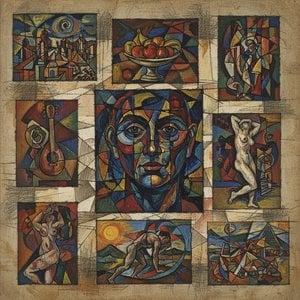
The collection itself serves as an unparalleled assemblage of Italian Masters, capturing the pulse of stylistic revolutions such as Futurism, Cubism, Surrealism, and Minimalism. Visitors find themselves immersed in the kinetic energy of Giacomo Balla and Umberto Boccioni, whose works push the boundaries of movement and form, or the haunting, metaphysical landscapes of Giorgio de Chirico. The museum’s strength lies in its ability to weave these national triumphs into a larger international tapestry. Alongside the profound explorations of emotion found in Amedeo Modigliani and the delicate, meditative compositions of Giorgio Morandi, one encounters the global icons of art history. From the rhythmic textures of Pollock and the light-drenched impressions of Monet to the structural inquiries of Cézanne and Braque, GNAM offers a panoramic view of the creative struggles that defined an era.
Architectural Narrative and Artistic Legacy
The physical journey through GNAM is as much a part of the experience as the canvases themselves. The museum’s architectural narrative mirrors its artistic evolution, housed in a magnificent structure designed by Cesare Bazzani between 1911 and 1915. Originally conceived as a venue for international exhibitions—a strategic move to propel Italian art onto the global stage—the building has undergone thoughtful expansions under the guidance of Luigi Cosenza in 1934 and 1988. This architectural growth reflects the museum's expanding role as Italy’s premier institution for contemporary expression, providing a grand yet intimate setting where the weight of history meets the lightness of modern thought.
What truly distinguishes GNAM from its contemporaries is its holistic and multifaceted approach to the art experience. It does not merely present paintings in isolation; rather, it integrates various sites dedicated to decorative arts, sculpture, and experimental media. This creates a rich, layered environment where an interior designer might find inspiration in the interplay of form and texture, and an art historian can trace the socio-cultural threads that fueled the modernist movement. Through groundbreaking exhibitions—ranging from massive retrospectives of Picasso and Matisse to thematic explorations like The Artist’s Studio —the museum continues to push boundaries, stimulating intellectual curiosity and inviting every visitor to contemplate the enduring legacy of a world in constant flux.