New to Gothic? Start here

34 Famous Gothic Kunstnere You Should Know

If you remember one Gothic kunstner, make it Duccio (1255–1319), the name behind Rucellai Madonna og Majestæ. After that come Simone Martini, Gentile Da Fabriano, Pisanello og Stephan Lochner. Our 34 picks go from Mester Mateo (born 1161) to Jan Baegert (born 1465), from 8 countries.

How we picked them. We list the artists our catalogue links to Gothic, from the most famous down. Artists born after 1955 that we cannot yet check on Wikidata are left out. The Wikipedia number shows in how many of our 32 languages Wikipedia writes about them.

  1. Rucellai Madonna af Duccio1Duccio
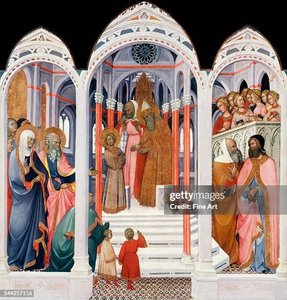
  2. Kristus fundet i templet af Simone Martini2Simone Martini
  3. Adoration of the Magi Altarpiece, left hand predella panel depicting the Nativity af Gentile Da Fabriano3Gentile Da Fabriano

Quick facts

Gothic in a nutshell

  • 34Kunstnere
  • 1161–1465Fødselsår
  • 8Fødselslande
  • 0Kvinder
  • 1.535Værker i vores katalog
Byer med flest fødsler
Firenze (5), Siena (3), Nijmegen (2), Fabriano (1)

Meet them one by one

The 34 famous Gothic kunstnere, from most famous down

1of 34

Duccio

Italiensk From Siena Sienesskolen, Trecento-gotik On Wikipedia in 31 of 32 languages

Duccio

Født i Siena, Italien, omkring 1255, levede Duccio Di Buoninsegna et liv, der var dybt sammenvævet med Toscanas religiøse og borgerlige puls. The Virgin and Child with Saints Dominic and Aurea (1312). Født i Siena, Italien, omkring 1255 eller 1256, trådte Duccio Di Buoninsegna frem fra en slægt, der formede selve hans identitet.

Works to know · Their 100 best-known works · Duccio reproductions

2of 34

Simone Martini

Italiensk From Siena International gotik On Wikipedia in 28 of 32 languages

Simone Martini

I 1319 færdiggjorde han Sankt Catharina af Alexandria Polyptych i Pisa. Saint Louis of Toulouse Crowning His Brother Robert of Anjou, 1317. Saint Louis of Toulouse Crowning His Brother Robert of Anjou, 1317.

Taught Lippo Memmi #9

Works to know · Their 100 best-known works · Simone Martini reproductions

3of 34

Gentile Da Fabriano

Italien From Fabriano International Gothic On Wikipedia in 23 of 32 languages

Gentile Da Fabriano

Hans tidlige liv forbliver noget af et mysterium; vi ved hans mor døde før 1380 og at hans far, Niccolò di Giovanni Massi, søgte trøst i klosteret allerede i 1385 – begivenheder der sandsynligvis formåede den unge Gentile’s formative år.

Works to know · Their 100 best-known works · Gentile Da Fabriano reproductions

4of 34

Pisanello

Italiensk From Pisa International Gotisk og Tidig Renæssance On Wikipedia in 28 of 32 languages

Pisanello

Født som Antonio di Puccio Pisano i Pisa omkring 1395, trådte Pisanello frem som en skelsættende skikkelse i overgangen fra den internationale gotik til den spirende renæssance. Selve hans navn – nogle gange gengivet som Vittore Pisano, en fejlagtig tilskrivning af Giorgio Vasari – antyder den vedvarende mystik, der omgiver hans liv og virke. Omkring 1415-1420 begyndte et afgørende læretid hos Gentile da Fabriano, hvilket cementerede Pisanellos kunstneriske bane.

Works to know · Their 100 best-known works · Pisanello reproductions

5of 34

Stephan Lochner

Tysk From Meersburg Sengotik, International gotik On Wikipedia in 19 of 32 languages

Stephan Lochner

Født omkring 1410 i den maleriske tyske by Meersburg – et sted gennemsyret af legender og indlejret ved den smukke Bodensø – blev Stephan Lochners liv tragisk afbrudt i Köln omkring 1451.

Works to know · Their 100 best-known works · Stephan Lochner reproductions

6of 34

Agnolo Gaddi

Italiensk From Firenze Ghibellino og Tidig Renässans On Wikipedia in 20 of 32 languages

Agnolo Gaddi

Agnolo Gaddi (c. 1350 – October 10, 1396) stands as a cornerstone in the narrative of Florentine art—a figure whose legacy reverberates through the Early Renaissance, marking the final significant link to Giotto di Bondone’s revolutionary style. Agnolo Gaddi’s magnum opus resides within the Basilica di Santa Croce—Florence’s sacred cathedral, which houses an unparalleled ensemble of frescoes depicting scenes from The Legend of the True Cross.

Works to know · Their 100 best-known works · Agnolo Gaddi reproductions

7of 34

Limbourg-Brødrene

Hollandsk From Nijmegen International Gothic On Wikipedia in 21 of 32 languages

Limbourg-Brødrene

Herman, Paul og Jean de Limbourg, kendt kollektivt som Limbourg-brødrene, var ikke blot malere, men arkitekter af miniatureverdener. Født ind i en slægt af dygtige håndværkere blev deres tidlige liv formet af de levende kunstneriske strømninger, der flød mellem Nederlandene, Frankrig og Burgund. Selvom deres liv var tragisk korte – alle tre gik bort omkring 1416 – forbliver deres værkers indflydelse en evig grundsten i den internationale gotiske stil.

Works to know · Their 100 best-known works · Limbourg-Brødrene reproductions

8of 34

Paolo Veneziano

From Venedig On Wikipedia in 15 of 32 languages

Paolo Veneziano

Paolo Veneziano (ca. 1333 – 1358) står som en monumental skikkelse i den venetianske kunsthistorie, universelt anerkendt som det fjortende århundredes vigtigste venetianske maler. Født ind i en kunstnerisk slægt i selve Venedig – hans far var selv en berømt kunstner – faldt Venezianos korte, men brillante karriere sammen med en transformativ periode i europæisk malerkunst.

Works to know · Their 100 best-known works · Paolo Veneziano reproductions

9of 34

Lippo Memmi

From Siena On Wikipedia in 17 of 32 languages

Lippo Memmi

Lippo Memmi, født omkring 1291 i hjertet af Siena, Italien, står som en central figur i overgangen fra den byzantinsk-rodede tradition inden for middelalderlig malerkunst til den spirende elegance i den Internationale Gotiks stil.

Learned from Simone Martini #2

Works to know · Their 100 best-known works · Lippo Memmi reproductions

10of 34

Spinello Aretino

Italiensk From Arezzo Forbindelse mellem Giotto og den sienesiske skole On Wikipedia in 16 of 32 languages

Spinello Aretino

Født ind i en familie af florentinske guldsmede var hans sande navn Spinello Di Luca Spinelli, men han blev kendt i historien under øgenavnet "Aretino", hvilket signalerede hans tilknytning til Arezzo. I hans tidlige år arbejdede han i de travle værksteder i Firenze, hvor han bidrog til monumentale værker som fresker i kirkerne Carmine og Santa Maria Novella.

Works to know · Their 100 best-known works · Spinello Aretino reproductions

11of 34

Bernardo Daddi

Italiensk From Firenze Ungrenæssance On Wikipedia in 17 of 32 languages

Bernardo Daddi

Bernardo Daddi, født i Firenze omkring 1290 og bortgangen i 1348, står som en skelsættende skikkelse i overgangen fra den sene gotik til den spirende italienske renæssance. Ligeledes bemærkelsesværdig er "Sankt Stefanis martyrdød", der findes i Pinacoteca Vaticana – en predella bestående af otte paneler malet omkring 1345.

Works to know · Their 100 best-known works · Bernardo Daddi reproductions

12of 34

Andrea Pisano

Italiensk From Pontecorvo Gotik

Andrea Pisano

Andrea Pisano (ca. 1290 – 1348 Orvieto) står som en monumental skikkelse i den italienske renæssances skulpturkunst, men hans kunstneriske arv er uadskilleligt forbundet med den foregående gotiske æra og dybt formet af den revolutionerende indflydelse fra Giotto di Bondone.

Works to know · Their 100 best-known works · Andrea Pisano reproductions

13of 34

Mester Mateo

Spansk Romanesk skulptur

Mester Mateo

Mester Mateo, en billedhugger hvis navn forbliver indhyllet i mystik på trods af hans monumentale bidrag til Katedralen i Santiago de Compostela, står som en af de mest ærede skikkelser inden for romansk kunst i Spanien. Han blev født omkring 1161 i Galicien, og selvom de præcise detaljer om hans liv er knappe, hviler Mester Mateos eftermæle primært på hans uovertrufne bedrift: Portico de la Gloria.

Works to know · Their 100 best-known works · Mester Mateo reproductions

14of 34

Jan Maelwael

Nederlandsk (hollandsk) From Nijmegen International Gothic On Wikipedia in 16 of 32 languages

Jan Maelwael

Han blev født omkring 1375 i Nijmegen, en by der dengang var en del af Hertugdømmet Geldern, og hans liv udfoldede sig mod en baggrund af voksende kunstnerisk mæcenatvirksomhed og skiftende kulturelle strømninger. Malouels karriere tog sin første betydningsfulde drejning i 1396-97, da han befandt sig i Paris med opgaven at male heraldiske dekorationer til Isabeau af Bayern, dronningen af Frankrig.

Works to know · Their 100 best-known works · Jan Maelwael reproductions

15of 34

Tilman Riemenschneider

Tysk From Heiligenstadt Sen gotisk og renæssance

Tilman Riemenschneider

Hans liv udspandt sig mod baggrunden af politiske omvæltninger og kunstnerisk transformation – født omkring 1460 i Heiligenstadt im Eichsfeld, var hans barndom præget af flygtigheden, da hans fars involvering i den blodige Mainzer Stiftsfejde tvang familien til at søge tilflugt i Osterode.

Works to know · Their 100 best-known works · Tilman Riemenschneider reproductions

16of 34

Meister Francke

Hollandsk From Lower Rhine Gotisk renæssance On Wikipedia in 14 of 32 languages

Meister Francke

Johannes Francke, known as Frater Francke, stands as a pivotal figure in the burgeoning artistic landscape of 15th-century Germany – specifically within the vibrant Gothic tradition of Hamburg. Early Life and Training: Precise information regarding Francke's formative years is scarce.

Works to know · Their 100 best-known works · Meister Francke reproductions

17of 34

Claus Sluter

Hollandsk From Haarlem Nordlig realisme

Claus Sluter

Claus Sluter (ca. 1350-1406) står som en af sin tids mest indflydelsesrige billedhuggere og markerede et afgørende vendepunkt mellem de gotiske og renæssancemæssige kunsttraditioner i Nordeuropa. Indskriften af hans navn i Bruxelles' stenhuggerværkstedregister omkring 1379/1380 bekræfter hans professionelle virke og understreger håndværkets betydning i den middelalderlige kunstkultur.

Works to know · Their 100 best-known works · Claus Sluter reproductions

18of 34

Jacopo di Cione

Italian From Florence Gothic On Wikipedia in 7 of 32 languages

Jacopo di Cione

Born in Florence sometime between 1320 and 1330, he emerged from a family deeply rooted in artistic tradition—his three elder brothers, Andrea di Cione (Orcagna), Nardo di Cione, and Matteo di Cione—were themselves accomplished painters, establishing a lineage of creative excellence.

Works to know · Their 100 best-known works · Jacopo di Cione reproductions

19of 34

Jaime Huguet

Catalan From Valls Late Gothic, Flemish influence On Wikipedia in 10 of 32 languages

Jaime Huguet

Between 1440 and 1445, his hand reached into the workshops of Zaragoza and Tarragona, where he encountered the influential Flemish style brought by Luis Dalmau. His ability to command both scale and detail is evident in his diverse body of work: The Archangel St Michael: A celestial sentinel rendered with heroic posture, framed by stylized foliage and a radiant, textured gold leaf that seems to emanate an inner light.

Works to know · Their 100 best-known works · Jaime Huguet reproductions

20of 34

Lucas Moser

German From Weil der Stadt Late Gothic Art On Wikipedia in 10 of 32 languages

Lucas Moser

Lukas Moser, a name perhaps unfamiliar to many outside the circles of art history, represents a pivotal figure in the transition from the International Gothic style to the burgeoning realism that would characterize early Renaissance painting.

Works to know · Their 100 best-known works · Lucas Moser reproductions

21of 34

Master Bertram

German From Minden International Gothic On Wikipedia in 13 of 32 languages

Master Bertram

Born in Minden, Germany, around 1345 and passing away in Hamburg circa 1415, Master Bertram remains a captivating figure within the history of European art. Often referred to as Meister Bertram or Master of Minden, he stands as a pivotal artist bridging the International Gothic style with the nascent trends of the early Renaissance in Northern Europe.

Works to know · Their 100 best-known works · Master Bertram reproductions

22of 34

Pere Serra

Spanish Gothic-Italian

Pere Serra

Pere Serra, also known as Jaume Serra, stands as a compelling figure in the transition from the International Gothic style to the burgeoning Renaissance aesthetic within Catalonia. Born around 1357 and passing away in 1406, his life coincided with a period of significant artistic and cultural change across Europe, yet he maintained a distinctly Catalan sensibility throughout his career.

Works to know · Their 100 best-known works · Pere Serra reproductions

23of 34

Paolo Di Giovanni Fei

Italiensk From San Quirico d'Orcia Naturalisme, Proto-renæssance On Wikipedia in 10 of 32 languages

Paolo Di Giovanni Fei

Pietro Lorenzetti, født omkring 1280 og tragisk bortgået i 1348 under den ødelæggende sorte død, står tilbage som en skelsættende skikkelse i det italienske maleris evolution. Hans liv, selvom det var tragisk kort, vidnede om et dramatisk skift i de kunstneriske sanseligheder i Siena, drevet af hans samarbejde med sin yngre bror, Ambrogio Lorenzetti, og deres engagement i de innovative teknikker fra mestre som Giotto og Giovanni Pisano.

Works to know · Their 100 best-known works · Paolo Di Giovanni Fei reproductions

24of 34

Giovannino De' Grassi

Italian From Milan Gothic Illuminations

Giovannino De' Grassi

Giovannino de’ Grassi remains one of the most captivating enigmas of the late medieval period, a figure whose brushstrokes breathed life into the prestigious Visconti court of Milan. He operated in an era where the transition from the rigid structures of the Middle Ages to the burgeoning naturalism of the early Renaissance was beginning to stir, and de’ Grassim stood at the very heart of this aesthetic evolution.

Works to know · Their 100 best-known works · Giovannino De' Grassi reproductions

25of 34

Lluís Borrassà

Catalan From Girona International Gothic On Wikipedia in 8 of 32 languages

Lluís Borrassà

A pioneer who fundamentally reshaped the visual language of Catalonia, Borrassà emerged from the historic streets of Girona to become a master of the International Gothic style. The foundations of Borrassá’s mastery were laid in his youth, likely under the guidance of his father, Honorat Borrassà, a fellow painter.

Works to know · Their 100 best-known works · Lluís Borrassà reproductions

26of 34

Michele Giambono

Italian From Venice International Gothic On Wikipedia in 10 of 32 languages

Michele Giambono

In the heart of fifteenth-century Venice, a city defined by its shimmering lagoons and unparalleled maritime wealth, the artistry of Michele Giambono emerged as a luminous bridge between the medieval past and the dawning Renaissance. As a follower of luminaries such as Jacobello del Fiore and Gentile da Fabriano, Giambono inherited a fascination with delicate line work and the use of precious materials to evoke the celestial realm.

Works to know · Their 100 best-known works · Michele Giambono reproductions

27of 34

Giovanni dal Ponte

Italiener From Firenze Sen-Gotisk/Renaissance On Wikipedia in 7 of 32 languages

Giovanni dal Ponte

Giovanni di Marco, bedre kendt som Giovanni dal Ponte eller da Ponte, var en fremtrædende italiensk maler, der opererede i Toscana i det første halve århundrede af 1400-tallet. Han blev født omkring 1385 i hjertet af Firenze og døde omkring 1437, og hans arbejde giver et unikt indblik i den florentinske samfunds livsstil og kunstneriske praksis på det tidspunkt.

Works to know · Their 100 best-known works · Giovanni dal Ponte reproductions

28of 34

Theodoric Af Prag

Tjekkisk From Italien Gotik On Wikipedia in 16 of 32 languages

Theodoric Af Prag

Han var aktiv fra omkring 1360 til 1380, en periode hvor hans tilstedeværelse ved det bøhmiske hof er veldokumenteret. Mellem 1359 og 1367 virkede han som den førende hofmaler i Prag og på Karlštejn Slot, hvor kejserens gunst var tydelig i den måde, han blev tiltalt på; han blev omtalt som Pictor noster et familiaris – vores egen og fortrolige maler.

Works to know · Their 100 best-known works

29of 34

Niccolò Di Pietro Gerini

Italiensk From Firenze Sengotik On Wikipedia in 6 of 32 languages

Niccolò Di Pietro Gerini

Gerini blev født omkring 1368 i Firenze og gik bort omkring 1415, og hans karriere udfoldede sig mod en baggrund af kunstnerisk opbrud, hvor tradition og eksperimenteren dansede en delikat balance. Hans far, Pietro Geri, var selv medlem af Sankt Lukas-lavet, hvilket tyder på en opvækst dybt forankret i det kunstneriske håndværk – en familiær arv, der fortsatte med Niccolløs søn, Bindo, som også blev maler.

Works to know · Their 100 best-known works · Niccolò Di Pietro Gerini reproductions

30of 34

Pacino Di Bonaguida

Italiensk From Firenze Gotisk kunst On Wikipedia in 4 of 32 languages

Pacino Di Bonaguida

Pacinos liv, som primært var aktivt i Firenze mellem cirka 1303 og 1347, forbliver indhyllet i mystik – en skæbne, der var almindelig for mange kunstnere i hans æra. Han optræder første gang i optegnelserne i 1303, hvor han opløser et partnerskab med Tambo di Serraglio, og beskrives på det tidspunkt som en ‘publicus artifex in arte pictorum’ – en offentlig kunstner inden for malerkunsten.

Works to know · Their 100 best-known works · Pacino Di Bonaguida reproductions

31of 34

Master Of The Life Of The Virgin

German Late Gothic On Wikipedia in 11 of 32 languages

Master Of The Life Of The Virgin

The earliest evidence of his workshop dates back to around 1463, with the completion of a series of eight panels for the Ursulakirche (Ursuline Church) in Cologne. These scenes – including the Annunciation, Visitation, Nativity, Presentation in the Temple, Flight into Egypt, and various episodes from Mary’s childhood and later life – quickly established his reputation.

Works to know · Their 100 best-known works

32of 34

Jan Baegert

From Wesel Late Gothic On Wikipedia in 3 of 32 languages

Jan Baegert

By 1492, Jan Baegert was recognized as a master in Kalkar, a significant milestone that confirmed his ability to manage large-scale commissions independently. Following the death of his father in 1502, Jan Baegert took over the family business in Wesel.

See them at Tracing the physical remains of Jan Baegert’s output requires looking toward the Westphalian and Lower Rhine regions.

Works to know · Their 100 best-known works · Jan Baegert reproductions

33of 34

Master Of The Osservanza

Italian Late Gothic On Wikipedia in 8 of 32 languages

Master Of The Osservanza

He was born around 1405 in Siena, likely into a family involved in the production of dyes—a profession reflected in his surname, “ di Pietro ” (of Peter).

Works to know · Their 100 best-known works

34of 34

Master of Heiligenkreuz Abbey

Austrian International Gothic On Wikipedia in 5 of 32 languages

Master of Heiligenkreuz Abbey

The earliest known works attributed to the Master are diptychs – two-panel paintings – discovered at the Cistercian Abbey of Heiligenkreuz in southeastern Austria. The left panel depicts the Annunciation, showcasing the Virgin Mary receiving the news of her divine conception, while the reverse portrays the Madonna and Child – a tender scene brimming with serenity.

Works to know · Their 100 best-known works

Pictures worth knowing

Famous Gothic works to recognise

  1. Rucellai Madonna af Duccio

    Rucellai Madonna

    Duccio

    1285 · Galleria degli Uffizi, Firenze

  2. Kristus fundet i templet af Simone Martini

    Kristus fundet i templet

    Simone Martini

    1342 · Walker Art Gallery, Liverpool

  3. Adoration of the Magi Altarpiece, left hand predella panel depicting the Nativity af Gentile Da Fabriano

    Adoration of the Magi Altarpiece, left hand predella panel depicting the Nativity

    Gentile Da Fabriano

    1423 · Galleria degli Uffizi, Firenze

  4. Sigismondo Pandolfo Malatesta, Lord of Rimini af Pisanello

    Sigismondo Pandolfo Malatesta, Lord of Rimini

    Pisanello

    1445 · Calouste Gulbenkian Foundation, Lissabon

  5. Madonna of the Rose Bush af Stephan Lochner

    Madonna of the Rose Bush

    Stephan Lochner

    1440 · Wallraf-Richartz-Museum, Köln

  6. The Last Supper af Agnolo Gaddi

    The Last Supper

    Agnolo Gaddi

    1395 · Lindenau-Museum, Altengau

  7. Les très riches heures du Duc de Berry: Avril (April) af Limbourg-Brødrene

    Les très riches heures du Duc de Berry: Avril (April)

    Limbourg-Brødrene

    1412 · Musée Condé, Chantilly

  8. Rediscovery of the Relics of St Mark af Paolo Veneziano

    Rediscovery of the Relics of St Mark

    Paolo Veneziano

    1345 · Basilica di San Marco, Venedig

When it happened

Gothic, step by step

  1. 1285
  2. 1320
  3. 1333
  4. 1334
  5. 1336
  6. 1342
  7. 1375
  8. 1383
  9. 1390
  10. 1394
  11. 1395
  12. 1395
  13. 1395
  14. 1410

Fun figures

The numbers behind the list

Just the names

List of 34 famous Gothic kunstnere to know

  1. 1DuccioDuccioItaliensk · 1255–1319
  2. 2Simone MartiniSimone MartiniItaliensk · 1284–1344
  3. 3Gentile Da FabrianoGentile Da FabrianoItalien · 1370–1427
  4. 4PisanelloPisanelloItaliensk · 1395–1455
  5. 5Stephan LochnerStephan LochnerTysk · 1410–1451
  6. 6Agnolo GaddiAgnolo GaddiItaliensk · 1350–1396
  7. 7Limbourg-BrødreneLimbourg-BrødreneHollandsk · 1385–1416
  8. 8Paolo VenezianoPaolo Veneziano1333–1358
  9. 9Lippo MemmiLippo Memmi1291–1356
  10. 10Spinello AretinoSpinello AretinoItaliensk · 1350–1410
  11. 11Bernardo DaddiBernardo DaddiItaliensk · 1290–1348
  12. 12Andrea PisanoAndrea PisanoItaliensk · 1290–1348
  13. 13Mester MateoMester MateoSpansk · 1161–1217
  14. 14Jan MaelwaelJan MaelwaelNederlandsk (hollandsk) · 1370–1415
  15. 15Tilman RiemenschneiderTilman RiemenschneiderTysk · 1460–1531
  16. 16Meister FranckeMeister FranckeHollandsk · 1380–1435
  17. 17Claus SluterClaus SluterHollandsk · 1355–1406
  18. 18Jacopo di CioneJacopo di CioneItalian · 1325–1399
  19. 19Jaime HuguetJaime HuguetCatalan · 1445–1492
  20. 20Lucas MoserLucas MoserGerman · 1390–1443
  21. 21Master BertramMaster BertramGerman · 1345–1415
  22. 22Pere SerraPere SerraSpanish · 1357–1406
  23. 23Paolo Di Giovanni FeiPaolo Di Giovanni FeiItaliensk · 1345–1411
  24. 24Giovannino De' GrassiGiovannino De' GrassiItalian · 1350–1398
  25. 25Lluís BorrassàLluís BorrassàCatalan · 1360–1425
  26. 26Michele GiambonoMichele GiambonoItalian · 1400–1462
  27. 27Giovanni dal PonteGiovanni dal PonteItaliener · 1385–1438
  28. 28Theodoric Af PragTheodoric Af PragTjekkisk ·
  29. 29Niccolò Di Pietro GeriniNiccolò Di Pietro GeriniItaliensk · 1368–1415
  30. 30Pacino Di BonaguidaPacino Di BonaguidaItaliensk · 1280–1340
  31. 31Master Of The Life Of The VirginMaster Of The Life Of The VirginGerman ·
  32. 32Jan BaegertJan Baegert1465–1535
  33. 33Master Of The OsservanzaMaster Of The OsservanzaItalian ·
  34. 34Master of Heiligenkreuz AbbeyMaster of Heiligenkreuz AbbeyAustrian ·

Good questions

What people ask about Gothic

  • Who is the most famous Gothic kunstner?

    Duccio (#1) is first in this ranking, followed by Simone Martini (#2) and Gentile Da Fabriano (#3).

  • Who are the 5 most famous Gothic kunstnere?

  • What techniques did Gothic kunstnere use?

    “For at opnå farvernes lysende kvalitet stolede Martini på tempera-teknikken.” — from our biography of Simone Martini (#2).

  • Which Gothic masters trained other famous kunstnere?

    Simone Martini (#2) taught Lippo Memmi (#9).

  • Which country produced the most Gothic kunstnere?

    Italien: 15 of the 34 kunstnere in this list were born there, then Germany (4) og Tyskland (3).

  • Where are the great works of Gothic art today?

    The museums holding the most key works of this list are Metropolitan Museum of Art (7), Galleria degli Uffizi (4) og National Gallery (3).

  • Who was the first Gothic kunstner?

    The earliest-born kunstner in this list is Mester Mateo (#13), born in 1161.

  • Who are the great Gothic kunstnere of Italien?

    The highest-ranked kunstnere born in Italien are Duccio (#1), Simone Martini (#2), Gentile Da Fabriano (#3), Pisanello (#4) og Agnolo Gaddi (#6).

  • Which city produced the most Gothic kunstnere?

    Firenze: 5 of the kunstnere in this list were born there.

  • When were most Gothic kunstnere born?

    Most kunstnere in this list were born in the 14th århundrede (18 of 34), between 1161 and 1465 overall.

  • Can I order a painting by a famous Gothic kunstner?

    Our catalogue holds 1,535 works by these kunstnere. Each one can be ordered as a hand-painted oil reproduction or a print.

Read more

More stories on ArtsDot.com

Other styles

Famous artists of other styles

Other eras

Famous artists of other eras

Keep exploring

Where to go next