


1


Opdateret oktober 2026 · rangeret efter vores popularitetsscore (søgninger, besøg og ordrer for hvert værk) · 7 værker af Richard Wright i vores katalog
Kort sagt
Det mest kendte maleri af Richard Wright er The Fishery (1764), som du kan se på Yale Center for British Art i New Haven. Lige efter følger The Battle of Quiberon Bay, 21 November 1759 The Day After (1760) og A Man of War in a Harbour (1770). Ud af 7 værker af Richard Wright i vores katalog er disse 7 de mest kendte. Hvert værk er ledsaget af årstal, museum og en kort note om, hvad der gør det bemærkelsesværdigt.


De 5 museer, der rummer flest af malerierne på denne side.
| Museum | By | Værker af Richard Wright | Malerier fra denne liste |
|---|---|---|---|
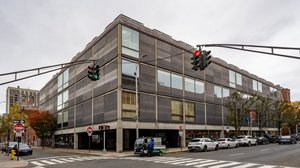 Yale Center for British Art |
New Haven | 1 | The Fishery |
 National Maritime Museum |
London | 1 | The Battle of Quiberon Bay, 21 November 1759 The Day After |
 Walker Art Gallery |
Liverpool | 1 | A Man of War in a Harbour |
 British Council Collection |
London | 1 | Not Titled (31.03.04) |
 Kendal Town Hall |
Kendal | 1 | William Willison, Mayor of Kendal (1878–1879) |
2004 er det år, hvor alle daterede værker af Richard Wright på denne side blev skabt. Her er de, med de mest berømte først.
Vælg et årstal for at se værkerne fra det år.
Øverst på listen er The Fishery (1764), Yale Center for British Art, New Haven. Lige efter kommer: The Battle of Quiberon Bay, 21 November 1759 The Day After (1760) og A Man of War in a Harbour (1770).
Vi har 7 værker af Richard Wright i vores katalog.
Du finder de fleste af dem i Yale Center for British Art (New Haven), National Maritime Museum (London) og Walker Art Gallery (Liverpool). Listen over museer ovenfor giver en fuldstændig oversigt.
In the realm of contemporary British art, few names evoke as much mystery and luminous wonder as Richard Wright. An artist who defies the traditional boundaries of the canvas, Wright has carved out a singular niche through his practice of architectural painting—a method that transforms gallery walls into breathing, shimmering tapestries of light. Born in London around 1960, his early years were shaped by the rugged landscapes of Scotland, where his family relocated during his childhood. This formative exposure to the textured, atmospheric beauty of the Scottish terrain likely planted the seeds for a lifelong fascination with how light interacts with surface and form.
Wright’s academic journey provided the rigorous foundation necessary for his experimental later works. He studied at the Edinburgh College of Art from 1978 to 1982, before returning to the prestigious Glasgow School of Art for postgraduate studies between 1993 and 1995, where he earned his Master of Fine Art. These years of formal training allowed him to master the classical principles of composition and materiality, which he would eventually deconstruct to create something entirely new: a style that blends the precision of geometric abstraction with the ephemeral nature of site-specific installation.
To encounter a Richard Wright installation is to witness a delicate dance between permanence and decay. His work is famously characterized by intricate, repeating geometric patterns that seem to pulse with an internal energy. However, it is his use of gold leaf that truly elevates his practice into the realm of the transcendent. By overlaying these meticulous designs with shimmering precious metal, Wright creates surfaces that capture and refract light in ever-shifting ways, making each piece feel as though it is caught in a state of constant metamorphosis.
This technique has led critics to describe him through the lens of historical art forms. The Guardian journalist Jonathan Jones famously referred to him as a "modern fresco painter," drawing a parallel between Wright’s wall-based works and the ancient tradition of applying pigment to wet plaster. Much like the frescoes of the Renaissance, Wright’s art is deeply integrated into the architecture it inhabits. His approach rejects the idea of the painting as a portable commodity; instead, he treats the very bones of a building as his medium, injecting complex, vibrant life into often overlooked or mundane architectural spaces.
Perhaps the most poignant aspect of Wright’s career is his embrace of transience. For much of his career, his paintings were intentionally short-lived, existing only for the duration of a specific exhibition before being painted over at the conclusion of the show. This radical rejection of the permanent object creates a profound psychological tension for the viewer. There is a heightened sense of presence in knowing that the shimmering gold and complex lines currently before your eyes may never be seen again in quite the same light, or perhaps ever again.
This philosophy of the ephemeral has earned him significant accolades within the international art community:
Through his mastery of light, geometry, and the very concept of time, Richard Wright remains a visionary force. He reminds us that art is not merely an object to be owned, but an experience to be inhabited—a fleeting moment of brilliance captured in gold and shadow.