Portræt af Monogrammist IS

Monogrammist ISs mest berømte malerier: Alle 10, rangeret

Opdateret november 2026 · rangeret efter vores popularitetsscore (søgninger, besøg og ordrer for hvert værk) · 10 værker af Monogrammist IS i vores katalog

Kort sagt

Det mest kendte maleri af Monogrammist IS er Portrait of an old woman (1651), som du kan se på Kunsthistorisches Museum i Wien. Lige efter følger Portrait of a Man (1621) og A young scholar (1633). Ud af 10 værker af Monogrammist IS i vores katalog er disse 10 de mest kendte. Hvert værk er ledsaget af årstal, museum og en kort note om, hvad der gør det bemærkelsesværdigt.

Flest værker: Nationalmuseum

Monogrammist ISs top 10: de værker alle kender

1
Portrait of an old woman (1651) af Monogrammist IS

Portrait of an old woman

1651 · Oil On Panel · Kunsthistorisches Museum, Wien

The portrait presents a bust-length view of an elderly woman, positioned in a three-quarter profile facing toward the left. Her head is wrapped in a coarse, light-colored headscarf that contrasts with the dark, indeterminate background. A fur collar rests against her shoulders, its texture rendered with soft, organic strokes. The subject's skin is marked by a network of fine lines and deep creases, particularly around the eyes and mouth, documenting…

Håndmalet oliereproduktion fra $175 28 × 36 cm Samme størrelse som originalen $186 33 × 41 cm Bestil i original størrelse →
Få den håndmalet Læs historien bag

Hvor du kan se Monogrammist IS's malerier

De 8 museer, der rummer flest af malerierne på denne side.

Museum By Værker af Monogrammist IS Malerier fra denne liste
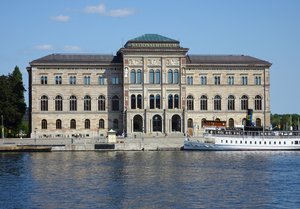
Nationalmuseum, StockholmNationalmuseum Stockholm 3 Portrait of an Old Lady, Old Man with a Growth on his Nose, Old Woman, possibly an Abbess, Reading a Letter
Kunsthistorisches Museum, WienKunsthistorisches Museum Wien 1 Portrait of an old woman
Metropolitan Museum of Art, New YorkMetropolitan Museum of Art New York 1 Portrait of a Man
Bavarian State Painting Collections, MünchenBavarian State Painting Collections München 1 A young scholar
National Gallery of Ireland, DublinNational Gallery of Ireland Dublin 1 A Dutch Kitchen Interior
Museum Catharijneconvent, UtrechtMuseum Catharijneconvent Utrecht 1 Baptism of the Eunuch
Herzog Anton Ulrich Museum, BraunschweigHerzog Anton Ulrich Museum Braunschweig 1 Old Man Beside a Table with Books
Museum Kunstpalast, DüsseldorfMuseum Kunstpalast Düsseldorf 1 Portrait of a scholar in oriental dress

Et berømt værk af Monogrammist IS for hvert årti

Værker per årti

Vælg et årti for at se dets mest fremtrædende værk.

Monogrammist IS malerier: det, folk gerne vil vide

Hvilket maleri er Monogrammist IS bedst kendt for?Se svaret

Øverst på listen er Portrait of an old woman (1651), Kunsthistorisches Museum, Wien. Lige efter kommer: Portrait of a Man (1621) og A young scholar (1633).

Hvilke 10 malerier af Monogrammist IS er de mest berømte?Se svaret

Portrait of an old woman, Portrait of a Man, A young scholar, A Dutch Kitchen Interior, Baptism of the Eunuch, Portrait of an Old Lady, Old Man with a Growth on his Nose, Old Man Beside a Table with Books, Portrait of a scholar in oriental dress og Old Woman, possibly an Abbess, Reading a Letter. Du finder årstallet og museet for hver af dem i listen ovenfor.

Hvor mange værker af Monogrammist IS er der?Se svaret

Vi har 10 værker af Monogrammist IS i vores katalog, dateret fra 1621 til 1658.

Hvilke museer har Monogrammist ISs mest kendte malerier?Se svaret

Du finder de fleste af dem i Nationalmuseum (Stockholm), Kunsthistorisches Museum (Wien) og Metropolitan Museum of Art (New York). Listen over museer ovenfor giver en fuldstændig oversigt.

Hvornår blev Monogrammist ISs mest berømte værker malet?Se svaret

I 1640s, mere end på andre tidspunkter: 6 af de 10 værker på denne side stammer fra dengang, herunder A Dutch Kitchen Interior.

Hvad er de ældste og nyeste berømte malerier af Monogrammist IS?Se svaret

Det tidligste værk her er Portrait of a Man (1621); det nyeste er Old Woman, possibly an Abbess, Reading a Letter (1658).

Hvad kan du se af Monogrammist IS på Nationalmuseum?Se svaret

Du kan se 3 af værkerne på denne side på Nationalmuseum, Stockholm, herunder Portrait of an Old Lady, Old Man with a Growth on his Nose og Old Woman, possibly an Abbess, Reading a Letter.

Kan jeg bestille en Monogrammist IS reproduktion til mit hjem?Se svaret

Ja. Hvert maleri på denne side er tilgængeligt som en håndmalet oliereproduktion eller som et print i den størrelse, der passer dig. Åbn blot maleriets side for at bestille.

Mød Monogrammist IS

The Shadow of the Monogram

In the quiet corners of the seventeenth century, a hand moved across canvas with such precision that it left behind only two letters: I.S. This elusive painter, known to history only by this small mark, lived through an era of profound change in the Netherlands. While the name of the person behind the brush remains lost to time, their presence is felt in every stroke of oil and every carefully rendered face. Some scholars suggest a Dutch origin, while others whisper of German or Baltic roots, yet there is no doubt that this artist found a home in Leiden during the 1630s.

The identity of this creator was first brought to light in 1904, when a collection of works bearing the same monogram were recognized as the output of a single, skilled hand. It is a curious thing to study an artist whose very existence is a puzzle. We see their work, we feel the weight of their subjects, but we cannot look them in the eye. They worked within the orbit of great names, perhaps even walking the same streets as Rembrandt, yet they chose—or were destined—to remain a mystery.

A Study of Human Truth

The work of Monogrammist IS does not seek the grand or the theatrical. Instead, it finds its strength in the quiet observation of a single soul. The artist specialized in tronies—those expressive head studies that capture a specific character or emotion—and honest portraits. There is a scientific realism in these paintings, a way of looking at a wrinkle, a growth on a nose, or the weathered skin of an elderly woman with an unblinking eye. Each figure is presented with a refined and articulated brushwork that suggests a deep respect for the physical world.

In these compositions, one finds a fascination with the textures of life. The paint often appears liquid and rich, flowing over the features of the subjects to create a sense of tangible reality. Whether depicting a man with a peculiar ailment or the solemn face of an aged woman, the artist avoids any attempt to beautify the subject beyond its natural state. This commitment to truth brings a certain gravity to the work. The figures do not perform for us; they simply exist within the frame.

Legacy in the Shadows

Though the artist's personal life remains obscured, their influence traveled far beyond the borders of Leiden. There are traces of a wider path, with suggestions that they may have moved through Scandinavia or even Eastern Europe. This movement is reflected in the way their works found their way into the hands of great collectors, from the Swedish nobility to the Hapsburg governors in Flanders. The provenance of these paintings tells a story of prestige and enduring interest that the artist's own biography cannot.

Today, the pieces attributed to this monogrammed hand reside in significant collections, such as the Kunsthistorisches Museum in Vienna and the Nationalmuseum in Stockholm. These works continue to invite scrutiny and wonder. Even as historians debate whether the painter was a contemporary of Rembrandt or a student of the Leiden Fijnschilder tradition, the art itself remains the primary voice. The mystery of the person only serves to focus our attention on the remarkable skill found within those two simple letters.