


1


Opdateret november 2026 · rangeret efter vores popularitetsscore (søgninger, besøg og ordrer for hvert værk) · 10 værker af Mark Roscoe i vores katalog
Kort sagt
Mark Roscoes mest kendte værk er Sandy (1998). Næste på listen er Frances Anne Cairncross (b.1944) (2008) og Andre Felix de Breyne (1901–1997), Honorary Fellow (1970–1997). Vi har 10 værker af Mark Roscoe i vores katalog; denne guide udvælger de 10 mest kendte, inklusiv årstal, museum og historien bag hvert værk.


De fire motiver, der optræder hyppigst i disse værker, hver med sit mest kendte eksempel.
De 6 museer, der rummer flest af malerierne på denne side.
| Museum | By | Værker af Mark Roscoe | Malerier fra denne liste |
|---|---|---|---|
 Oxford College Anon i |
Oxford | 1 | Frances Anne Cairncross (b.1944) |
 Royal College of Physicians of Edinburgh |
Edinburgh | 1 | Sir Neil Douglas, FRCP |
 Robinson College |
Cambridge | 1 | Professor David Yates |
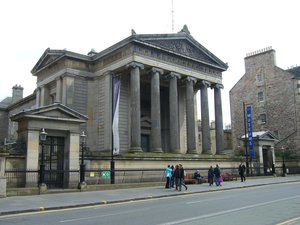 The Royal College of Surgeons of Edinburgh |
Edinburgh | 1 | John Douglas Orr, FRCSEd (1975), PRCSEd (2006–2009) |
 Royal College of Psychiatrists |
London | 1 | Professor Dinesh Bhugra, President of the Royal College of Psychiatrists (2008–2011) |
 Aberystwyth University School of Art Museum And Galleries |
Aberystwyth | 1 | Professor Noel G. Lloyd (b.1946), Vice Chancellor (2004–2011) |
Vælg et årti for at se dets mest fremtrædende værk.
Øverst på listen er Sandy (1998). Lige efter følger Frances Anne Cairncross (b.1944) (2008) og Andre Felix de Breyne (1901–1997), Honorary Fellow (1970–1997).
24 år gammel. Mark Roscoe blev født i 1974, og Sandy er fra 1998.
Sandy, Frances Anne Cairncross (b.1944), Andre Felix de Breyne (1901–1997), Honorary Fellow (1970–1997), Sir Neil Douglas, FRCP, Averil Cameron, 11th Warden (1994–2010), Professor David Yates, John Douglas Orr, FRCSEd (1975), PRCSEd (2006–2009), Professor Sir Deian Hopkin (b.1944), Former Vice Chancellor of London South Bank University, Professor Dinesh Bhugra, President of the Royal College of Psychiatrists (2008–2011) og Professor Noel G. Lloyd (b.1946), Vice Chancellor (2004–2011). Du finder årstallet og museet for hver af dem i listen ovenfor.
Vi har 10 værker af Mark Roscoe i vores katalog, dateret fra 1998 til 2011.
Du finder de fleste af dem i Oxford College Anon i (Oxford), Royal College of Physicians of Edinburgh (Edinburgh) og Robinson College (Cambridge). Listen over museer ovenfor giver en fuldstændig oversigt.
I 2000s, mere end på andre tidspunkter: 4 af de 10 værker på denne side stammer fra dengang, herunder Frances Anne Cairncross (b.1944).
Det tidligste værk her er Sandy (1998); det nyeste er Professor Dinesh Bhugra, President of the Royal College of Psychiatrists (2008–2011) (2011).
Portrait (3), Elderly woman (2) og Detail (2) ud af i alt 10 værker på denne side.
Contemporary realism, som du kan se i værkerne på denne side.
Mark Roscoe, a name increasingly recognized within the contemporary British art scene, is an artist whose work quietly commands attention. Born in 1974, he’s not a figure who shouts for recognition; rather, his strength lies in the meticulous observation and profound understanding of light that imbues every canvas with a remarkable sense of realism and emotional depth. Roscoe's journey as an artist is intertwined with a deep appreciation for the classical tradition, yet he consistently injects it with a distinctly modern sensibility, creating paintings that feel both familiar and utterly fresh.
Roscoe’s early influences are rooted in the academic art training he received at the University of Cambridge. This foundation provided him with an unparalleled understanding of anatomy, perspective, and color theory – elements he skillfully employs to render his subjects with astonishing accuracy. However, it wasn't simply a return to the past that shaped his artistic vision; Roscoe’s work is also profoundly influenced by the Impressionists and Post-Impressionists, particularly their exploration of light and atmosphere. He shares their fascination with capturing fleeting moments and conveying the subjective experience of seeing, but he does so with a level of technical precision rarely seen in contemporary painting.
At the heart of Roscoe’s artistic practice lies an almost obsessive attention to detail. His technique is characterized by layers upon layers of thin glazes applied over time, building up surfaces that shimmer with reflected light. This painstaking process allows him to achieve a remarkable luminosity – a quality that seems to emanate from within each painting. He rarely employs broad brushstrokes; instead, he favors delicate, controlled marks that suggest the subtle nuances of texture and form.
Roscoe’s portraits are particularly noteworthy for their ability to capture not just likeness but also personality and mood. He doesn't simply paint a face; he paints a story. His subjects – often individuals from diverse backgrounds – are rendered with an intimacy that invites the viewer to connect with them on a deeply personal level. The use of color is equally deliberate, carefully chosen to evoke specific emotions and enhance the overall impact of the work. His landscapes, too, are imbued with this same sensitivity, capturing the essence of a place through subtle shifts in light and shadow.
Roscoe’s career has been marked by a steady progression of artistic development. Early works demonstrated a clear debt to the Old Masters, but as he matured as an artist, his style began to evolve, incorporating elements of modernism while retaining his commitment to classical principles. A pivotal piece in his trajectory is undoubtedly ‘Frances Anne Cairncross’ (2008), a stunning oil portrait that showcases his mastery of light and texture. The painting's quiet dignity and intimate portrayal of an elderly woman are testament to Roscoe’s ability to capture the essence of human experience.
‘Sandy’ (1998), a monumental seascape, further solidified his reputation as a major talent. This work demonstrates his capacity for capturing dramatic weather conditions and conveying the raw power of nature. More recently, portraits like ‘Sir Neil Douglas, FRCP’ (2015) have continued to showcase his technical skill and emotional intelligence. These works highlight his ability to portray complex individuals with sensitivity and nuance.
Roscoe's work has been exhibited in prestigious galleries across the United Kingdom, including the Mark Masons’ Hall in London, a venue that celebrates British art history. His paintings are also featured in museums such as University of St Mark - st John (Marjon) in Plymouth, showcasing his ability to engage with diverse artistic and cultural contexts. His influence extends beyond the confines of the gallery; Roscoe's meticulous approach to painting has inspired a new generation of artists who appreciate the value of traditional techniques combined with contemporary sensibilities.
The Basilica di San Marco in Venice, Italy, serves as an enduring reminder of the power of artistic legacy. Roscoe’s work, like that of countless masters before him, builds upon centuries of tradition while forging its own unique path forward. He is a testament to the enduring appeal of painting – a medium capable of capturing not just appearances but also the very soul of human experience.
