Tidligt liv og uddannelse
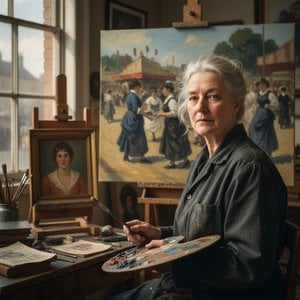
- Dame Laura Knight (1877-1970) blev født som Laura Johnson den 4. august 1877 i Long Eaton, Derbyshire, England, som den yngste af tre døtre.
- Hendes far, Charles Johnson, forlod familien kort efter hendes fødsel, hvilket efterlod hendes mor, Charlotte Johnson, med ansvaret for at opfostre børnene midt i økonomiske svårigheder.
- Knights bedstefar ejede en kniplingsfabrik, som gik konkurs på grund af teknologiske fremskridt, hvilket påvirkede familiens stabilitet dybt.
- I 1889 blev hun sendt til det nordlige Frankrig hos slægtninge, der var involveret i kniplingsbranchen, men hun måtte vende hjem efter deres konkurs.
- Hun påbegyndte sin kunstneriske uddannelse som 'håndværkerstuderende' ved Nottingham School of Art som blot 13-årig, takket være sin mors utrættelige indsats.
- Som femtendeårig overtog Knight sin mors undervisningsopgaver, da Charlotte blev alvorligt syg af kræft.
- Hun vandt et legat og guldmedaljen i en national studenterkonkurrence arrangeret af South Kensington Museum.
Tidlig karriere & Newlyn-skolen
- I 1894 besøgte Knight Staithes, en fiskerlandsby på Yorkshire-kysten, hvilket fik en gennemgribende indflydelse på hendes tidlige værker. Her skildrede hun de lokale landsbyboeres liv og strabadser i dæmpede toner.
- Hun blev gift med Harold Knight, som også var kunstner, i 1903, og de delte et stærkt kunstnerisk partnerskab gennem hele deres liv.
- Parret flyttede til Cornwall i 1907, hvor de slog sig ned i Lamorna og blev centrale skikkelser i Newlyn-skolen sammen med kunstnere som Lamorna Birch og Alfred Munnings.
- I Newlyn udviklede Knight sine færdigheder inden for figurmaleri og brugte ofte lokale børn som modeller.
- Hendes tidlige værker fra denne periode afspejler en realistisk tradition med en særlig interesse for at skildre arbejderklassens liv.
Impressionisme & anerkendelse
- Knights rejser til Holland (1904, 1905 og 1906) eksponerede dem for Haag-skolen, hvilket påvirkede Knights stil mod en mere impressionistisk tilgang.
- Hendes maleri "Beach", som blev udstillet på Royal Academy i 1909, markerede et skift mod lysere farver og en løsere penselføring.
- Knight blev kendt for sine plein-air kompositioner med kvinder i udendørs omgivelser, undertiden med nøgenmodeller, hvilket vakte både hyldest og lokal kontrovers.
- Værker som ”Daughters of the Sun” (1911) blev oprindeligt godt modtaget, men blev senere beskadiget og ødelagt.
Krigskunstner & senere bedrifter
- Under Anden Verdenskrig tjente Knight som officiel krigskunstner, hvor hun dokumenterede betydningsfult begivenheder, herunder bombningen af Coventry og Nürnberg-processerne (1946). Hun var den eneste britiske kunstner, der blev bestilt til at dække retssagerne.
- I 1929 blev hun slået til Dame, en betydelig bedrift for en kvinde i datidens mandsdominerede kunstverden.
- Hun blev den første kvinde, der blev valgt til fuldt medlemskab af Royal Academy i 1936.
- En stor retrospektiv udstilling på Royal Academy i 1965 markerede hendes lange og succesfulde karriere og var den første af sin art for en kvinde.
Stil & eftermæle
- Dame Laura Knights kunstneriske stil udviklede sig fra realisme til at omfavne elementer af impressionismen.
- Hun var kendt for sin evne til at indfange bevægelse og atmosfære, især i sine skildringer af teater-, ballet- og cirkusoptrædende.
- Hendes arbejde fokuserede ofte på marginaliserede samfund, herunder romaer og cirkusfolk, hvilket bragte opmærksomhed til deres liv og erfaringer.
- Knights succes banede vejen for større anerkendelse og status for kvindelige kunstnere inden for det britiske kunstetablissement.
- Hun efterlod sig en enorm produktion omfattende olier, akvareller, raderinger, kobberstik og koldnålsraderinger, hvilket cementerede hendes plads som en af Storbritanniens mest fejrede kunstnere.
Spørgsmål & svar
Hvor er Laura Knights kunstværker grupperet efter farvepalette?
Siden Efter farvepalet grupperer Laura Knights kunstværker efter deres farvepaletter.
Hvilke stemninger udtrykker Laura Knights kunstværker?
Stemningsrum for Laura Knight er en side, der arrangerer kunstnerens værker efter stemning.
Hvor kan jeg finde statistik om Laura Knights værker?
Der findes en Statistikker-side for Laura Knight, som præsenterer statistikker om kunstnerens værker på denne hjemmeside.