Franz Bischoffs lysende eftermæle
Franz Albert Bischoff står som en stille, men indflydelsesrig skikkelse i amerikansk kunsthistorie – en maler, hvis pensel fangede lysets flygtige essens og det californiske landskabs fredfyldte sjæl. Han blev født i 1864 i Steinschönau am Inn, Østrig, og hans tidlige liv var gennemsyret af det østrig-ungarske imperiums rige dekorative traditioner. Denne grundlæggende træning i anvendt design, akvarel og keramisk dekoration indgydede en omhyggelig sans for detaljen og en dyb respekt for farveharmoni i ham. Da han emigrerede til USA som femtenårig, medbragte han en stemning fra den gamle verden, som senere smeltede sammen med den spirende optimisme i det amerikanske vesten og skabte en stil, der var både teknisk præcis og følelsesmæssigt resonant.
Som hans karriere udfoldede sig gennem de industrielle landskaber i New York, Ohio og Michigan, opnåede Bischoff først betydelig anerkendelse gennem den delikate kunst at male på porcelæn. Denne disciplin krævede en ekstraordinær beherskelse af farveblanding og fine detaljer – færdigheder, der senere skulle blive kendetegnet ved hans landskabskompositioner. Hans evne til at manipulere subtile glasurer og vaskede lag gjorde det muligt for ham at puste liv i porcelænet, hvilket var en forløber for de æteriske kvaliteter, man finder i hans senere oliemalerier. Det var netop dette unikke krydsfelt mellem dekorativ præcision og atmosfærisk følsomhed, der definerede hans kunstneriske identitet, da han bevægede sig fra keramikken nøje detaljerede verden til de ekspansive vidder ved den amerikanske grænse.
Impressionisme og det californiske lys
Den sande metamorfose af Bischoffs kunstneriske virke fandt sted ved hans ankomst til Californien, hvor den dramatiske topografi og de unikke atmosfæriske forhold bød på en ny muse. Ved at omfavne impressionismens principper søgte han at indfange de flygtige øjeblikke af lys, der definerer regionen. Hans teknik blev en sofistikeret dialog mellem delikate akvarelvask og subtile olieglasurer, hvilket resulterede i lærreder, der synes at gløde indefra. Han besad en sjælden evne til at destillere komplekse visuelle indtryk til harmoniske kompositioner, uanset om han skildrede bjergkædernes rå majestæt eller de bløde kysttåger ved Stillehavet.
Hans værk fungerer som en levende registrering af naturen i en transformativ æra i amerikansk historie. Gennem hans øjne oplever vi følgende:
- Cloud Shadows: Et mesterværk fra 1912, hvor dramatiske bjerge og livlige træer vækkes til live gennem et impressionistisk prisme, hvilket tilbyder et fredfyldt glimt af naturens kræfter.
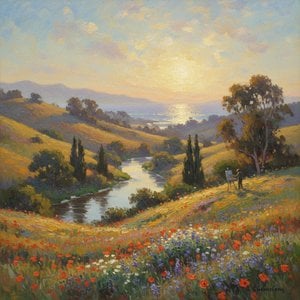
- Pasadena Foothills: Et imponerende oliemaleri fra 1917, der indfanger det essensielle i det amerikanske landskab og fremviser hans evne til at gengive lyset over det bølgende terræn.
- Mist-Veiled Days, Monterey: En stemningsfuld udforskning af kystatmosfæren, hvor samspillet mellem tåge og hav demonstrerer hans mesterskab i tonal subtilitet.
Et varigt indtryk på kunsthistorien
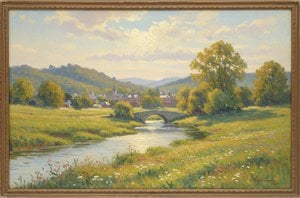
Udover den rene skildring af landskaber inkarnerer Bischoffs arbejde en følelse af nostalgi og ærefrygt for det uberørte landskabs skønhed. Hans malerier, såsom det mesterlige Landscape at Saint Valery-sur-Somme, demonstrerer en evne til at bygge bro mellem hans europæiske rødder og hans amerikanske oplevelser ved at forene den strukturerede elegance fra hans uddannelse med den vilde, spontane energi fra den californiske kyst. Han malede ikke blot det, han så; han malede, hvordan lyset føltes, og besjælede sine motiver med en følelse af fred og bestandighed.
Den historiske betydning af Franz Bischoff ligger i hans rolle som en brobygger mellem dekorativ kunst og landskabsmaleri i finere kunst. Ved at bringe omhyggeligheden fra porcelænsmaleriet til impressionismens storslåede oliemalerier, skabte han en niche, der var helt hans egen. I dag værdsættes hans værker stadig for deres evne til at transportere beskueren til en svunden æra af opdagelse og naturlig pragt, som en påmindelse om den vedvarende kraft i et delikat penselstrøg og et lysende blik.
Spørgsmål og svar
Hvor kan jeg finde statistik om Franz A. Bischoffs værker?
Siden Statistik for Franz A. Bischoff præsenterer statistikker beregnet ud fra kunstnerens værker, som er listet på denne hjemmeside.
Findes der en kronologisk gennemgang af Franz A. Bischoff?
Kronologi for Franz A. Bischoff er en rullevenlig tidslinje, der præsenterer kunstnerens værker i kronologisk rækkefølge, opdelt i kapitler efter karriereperioder.
Hvordan finder jeg værker af Franz A. Bischoff inden for et specifikt tema?
For at finde værker af Franz A. Bischoff inden for et specifikt tema kan du bruge kunstnerens Efter nøgleord-side, som grupperer værkerne efter nøgleord.