

The Enduring Legacy of Classicism: Harmony, Reason & Ideal Form in Western Art
Indholdsfortegnelse
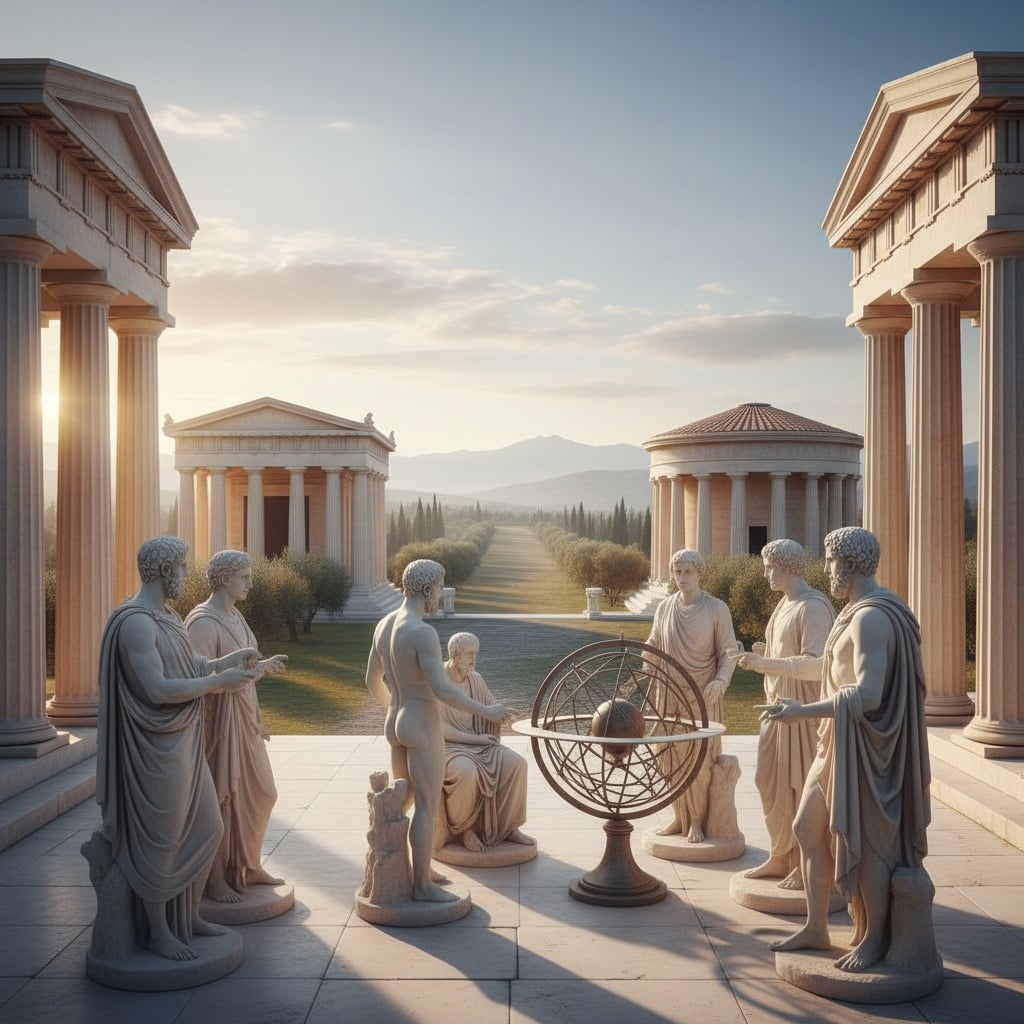
The Foundations of Classical Aesthetics: Greece & Rome
Classicism, in the arts, refers generally to a high regard for a classical period, classical antiquity in the Western tradition, as setting standards for taste which the classicists seek to emulate. In its purest form, classicism is an aesthetic atti...
The very notion of “classicism” evokes a world steeped in order, proportion, and an idealized vision of humanity – a legacy born from the civilizations of ancient Greece and Rome. But to understand its enduring power, we must move beyond simple imitation and delve into the philosophical underpinnings that shaped this aesthetic sensibility. For the Greeks, beauty wasn’t merely a visual experience; it was inextricably linked to concepts of truth and goodness, embodied in mathematical harmony and balanced forms. Sculptors like Phidias sought not just realistic representation but an elevation of the human form, reflecting divine perfection. This pursuit of *kalos kagathos* – the unity of beauty and moral excellence – became a cornerstone of Western artistic thought. The Romans, while inheriting much from their Greek predecessors, infused classicism with a sense of civic duty and grandeur. Their architecture, exemplified by structures like the Pantheon and the Colosseum, prioritized functionality alongside aesthetic splendor, demonstrating power and stability through monumental scale and precise engineering. The rediscovery of classical texts and artifacts during the Renaissance would ignite a fervent desire to recapture this lost world, but it was a world already subtly transformed through centuries of interpretation.
Renaissance Revival: Reclaiming Antiquity's Legacy
The Renaissance (UK: rin-AY-sənss, US: REN-ə-sahnss) is a period of history and a European cultural movement covering the 15th and 16th centuries. It marked the transition from the Middle Ages to modernity and was characterized by an effort to rev...
The Italian Renaissance witnessed not simply a revival of classical forms, but a profound re-engagement with the intellectual and artistic spirit of antiquity. Driven by humanism – a philosophical stance emphasizing human potential and achievement – artists and scholars turned to ancient Greece and Rome as models for a new era. Figures like Leonardo da Vinci embodied this spirit, seamlessly blending scientific observation with artistic mastery. However, it was in painting that the Renaissance truly blossomed. Artists such as Sandro Botticelli, in his iconic “The Birth of Venus,” didn’t merely copy classical mythology; they reinterpreted it through a distinctly Renaissance lens, imbuing their works with a newfound sensuality and psychological depth. This wasn't about replicating the past but *transforming* it, using classical motifs to explore contemporary themes and ideals. The rediscovery of lost texts by Pliny the Elder and Vitruvius provided crucial insights into ancient techniques and architectural principles, fueling innovations in perspective, anatomy, and composition. This period laid the groundwork for a renewed emphasis on order, clarity, and balance that would define subsequent artistic movements.
Neoclassicism’s Moral Vision: Art as Ethical Exemplar
 The Death of Socrates
Jacques-Louis David's 'The Death of Socrates' embodies Neoclassicism’s moral virtue ideals with masterful chiaroscuro and symbolic detail—a poignant reflection on mortality & knowledge during the French Revolution.
By the mid-18th century, a reaction against the perceived frivolity of Rococo led to the emergence of Neoclassicism. This movement wasn't merely stylistic; it was deeply intertwined with Enlightenment ideals of reason, civic virtue, and moral responsibility. Artists turned away from ornate decoration in favor of simplicity, clarity, and restraint – qualities they associated with ancient Greece and Rome. Jacques-Louis David’s “The Death of Socrates” exemplifies this shift perfectly. The painting isn't simply a depiction of a historical event; it’s a powerful statement about intellectual integrity and the pursuit of truth, even in the face of death. David meticulously researched classical attire and settings to create an atmosphere of authenticity, but his primary goal was to convey a moral message – Socrates’ unwavering commitment to his principles. This emphasis on didacticism—the intention to teach or instruct—became central to Neoclassical art. The movement also found expression in architecture, with figures like Robert Adam reviving classical motifs to create buildings that embodied order and elegance.
Key Masters and Masterpieces of the Classical Tradition
The classical tradition boasts a constellation of exceptional artists whose works continue to inspire awe and admiration. Beyond David and Botticelli, consider William-Adolphe Bouguereau, whose paintings, while often criticized for their sentimentality, demonstrate an unparalleled mastery of academic technique and idealized form. His “The Birth of Venus” is a testament to his skill in capturing beauty and grace. Niccolò Amastini, a master of 18th-century Italian neoclassicism, excelled in cameo art, creating serene and exquisitely detailed works like ‘Education of Bacchus.’ Fabio Cipolla, blending Renaissance influences with Neoclassical sensibilities, captured the elegance of Roman life in his genre scenes and landscapes. These artists, each in their own way, contributed to a lineage that prioritized technical skill, harmonious composition, and a reverence for classical ideals. The enduring appeal of these masterpieces lies not only in their aesthetic beauty but also in their ability to evoke profound emotions and philosophical contemplation.
Beyond Imitation: The Enduring Influence on Modern Art
The influence of classicism extends far beyond the Renaissance and Neoclassical periods. While modern art often rejected traditional forms, it frequently did so *in relation* to them. Even movements like Romanticism, which emphasized emotion and individualism, were shaped by a conscious dialogue with classical principles. The search for ideal form, though expressed in different ways, continued to resonate throughout the 19th and 20th centuries. Artists such as Ingres, despite embracing a more personal style, remained deeply rooted in classical technique and composition. Furthermore, the emphasis on clarity, structure, and balance found echoes in movements like Cubism and Minimalism. The very act of breaking with tradition often required a thorough understanding of it. Classicism provided a foundational framework for artistic innovation, serving as both inspiration and point of departure for generations of artists.
Collecting Classicism: Building a Timeless Portfolio
Investing in classical art is not merely acquiring beautiful objects; it’s owning a piece of history—a tangible connection to the enduring values of Western civilization. When building a collection, consider the artist's place within the broader tradition, the historical context of the work, and its aesthetic quality. Original oil paintings by masters like Bouguereau or Amastini represent significant investments, but high-quality reproductions offer an accessible entry point for aspiring collectors. ArtsDot, with its commitment to handmade craftsmanship and museum-quality prints, provides a trusted platform for acquiring exceptional artworks. Whether you’re drawn to the grandeur of Neoclassical history painting or the serene beauty of Renaissance portraits, carefully curated pieces will enrich your life and stand as testaments to the timeless power of classical aesthetics. Remember that provenance—the documented history of ownership—is crucial when evaluating authenticity and value. Consulting with art experts can provide invaluable guidance in navigating the complexities of the art market and building a portfolio that reflects your discerning taste.
Relaterede artikler
The Enduring Legacy of Classical Style: Form, Narrative & Influence in Art
Explore the enduring legacy of classical art – from ancient Greece & Rome to Neoclassicism. Discover key artists, philosophical roots & build a timeless collection with ArtsDot's expert guidance.


