

Chromatic Absence: Exploring the Aesthetic Power of Black & White Art
Indholdsfortegnelse
The Historical Roots of Monochrome: From Ancient Practices to Modern Rebellion
The allure of monochrome – art reduced to its essential elements, a single hue exploring the depths of tone and texture – is often perceived as a distinctly modern phenomenon. Yet, its origins are surprisingly ancient. Long before Kazimir Malevich’s revolutionary “Black Square,” civilizations across the globe were captivated by the power of limited palettes. Early Greek pottery frequently employed black-figure techniques, where silhouettes were rendered in stark contrast against terracotta backgrounds, narrating myths and daily life with a striking simplicity. Similarly, Chinese ink wash paintings (sumi-e) dating back to the Tang dynasty demonstrated an extraordinary mastery of nuance within shades of black, prioritizing brushwork and composition to convey landscapes and philosophical concepts. These weren’t merely stylistic choices; they were deeply embedded in cultural symbolism and spiritual practice.
The Renaissance witnessed a different approach to monochrome – not as an end in itself, but as a preparatory stage. Artists like Leonardo da Vinci utilized grisaille, a technique employing gray tones to simulate sculpture, often as underpainting for more elaborate works or as independent studies of light and shadow. This practice honed their understanding of chiaroscuro, the dramatic interplay between light and dark that would become a hallmark of Baroque painting. While not strictly monochrome in its final form, it laid the groundwork for appreciating tonal variation and depth – skills crucial to later monochromatic explorations. The seeds of rebellion against representational norms were also subtly sown during this period, with artists questioning the necessity of color to convey meaning.
Chiaroscuro & Beyond: Mastering Light, Shadow, and Texture in Black and White
In art, chiaroscuro (English: kee-AR-ə-SKOOR-oh, -SKURE-, Italian: [ˌkjaroˈskuːro]; lit. 'light-dark') is the use of strong contrasts between light and dark, usually bold contrasts affecting a whole composition. It is also a technical term used by ...
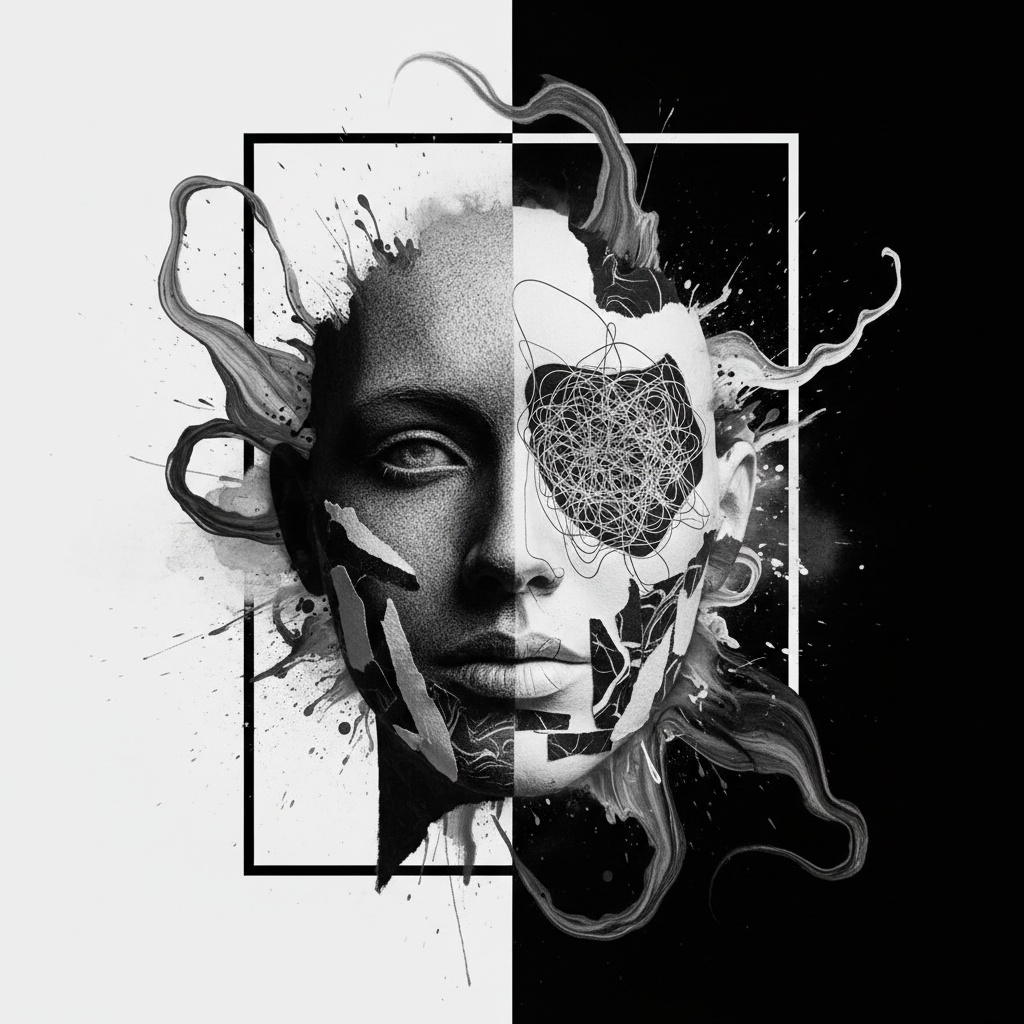
The power of monochrome resides not in what is *absent* – the vibrant spectrum of color – but in what remains. It forces a heightened awareness of form, texture, and, most crucially, light and shadow. Chiaroscuro, originating in Renaissance painting, becomes paramount. Artists must meticulously sculpt their compositions using gradations of tone, creating an illusion of three-dimensionality where color cannot provide assistance. This isn’t simply about depicting darkness; it's about revealing form *through* darkness. The subtle shifts in value become the language of the artwork, conveying volume, depth, and emotional weight.
Beyond chiaroscuro, texture takes on an unprecedented importance. The absence of color compels artists to explore the physical properties of their medium – the impasto of thick paint strokes, the delicate washes of ink, the rough grain of paper. These tactile qualities become integral to the artwork’s expressive power. Consider the works of contemporary charcoal artists who build layers upon layers, creating surfaces that are both visually and physically compelling. The interplay between light and texture creates a dynamic surface that draws the viewer in, inviting close inspection and contemplation. The very act of applying the medium – the direction of brushstrokes, the pressure applied to the paper – becomes a visible record of the artist’s hand, adding another layer of meaning.
Malevich, Klein & the Avant-Garde: Pioneering Artists of Monochromatic Expression
Monochromatic painting has played a significant role in modern and contemporary Western visual art, originating with the early 20th-century European avant-gardes. Artists have explored the non-representational potential of a single color, investigati...
The 20th century marked a turning point for monochrome painting. Kazimir Malevich's “Black Square” (1915) wasn’t merely a painting; it was a manifesto – a radical rejection of representational art and an assertion of pure abstraction. By stripping away all recognizable forms, Malevich sought to access the ‘zero degree’ of painting, focusing solely on color and shape as fundamental elements of artistic expression. This act, initially shocking, opened up entirely new avenues for exploration.
Yves Klein took this exploration further with his signature International Klein Blue (IKB), a pigment he patented and believed possessed spiritual qualities. For Klein, the monochrome wasn’t simply an aesthetic choice; it was a pathway to transcendence. His vast blue canvases aimed to evoke a sense of infinite space and emotional resonance. These artists weren't merely reducing color; they were attempting to redefine the very nature of art itself. Their work challenged conventional notions of beauty, representation, and meaning, paving the way for subsequent generations of abstract painters.
Psychological Impact: The Emotional Resonance of a Limited Palette
The emotional impact of monochrome art is often surprisingly profound. By removing the distraction of color, artists force viewers to engage with the artwork on a deeper level – focusing on form, texture, and the subtle nuances of tone. This can evoke a sense of introspection, contemplation, and even melancholy. The uniformity of hue creates a psychological consistency that allows for a more focused emotional experience.
Different colors carry unique symbolic weight. Black is often associated with mystery, void, and the unknown; white evokes purity, infinity, and spiritual enlightenment; blue suggests tranquility, depth, and introspection. However, the power of monochrome lies not just in the color itself but in its *absence* – the suggestion of infinite possibilities contained within a single hue. A grayscale photograph, for example, can trigger powerful memories and emotions precisely because it lacks the specificity of color, allowing viewers to project their own experiences onto the image.
Black and White in Contemporary Art: A Continuing Dialogue
Monochrome painting continues to thrive in contemporary art, demonstrating its enduring relevance. Artists today are exploring a wide range of techniques and materials – from large-scale abstract canvases to intricate charcoal drawings and digital installations. The dialogue initiated by Malevich and Klein remains ongoing, with artists questioning the boundaries of representation, materiality, and perception.
The appeal of monochrome lies in its ability to distill art down to its essential elements, forcing a heightened awareness of form, texture, and emotional resonance. It’s a testament to the power of simplicity – a reminder that sometimes, less is truly more. Whether seeking a statement piece for a modern interior or a work that invites quiet contemplation, monochrome art offers a unique and compelling aesthetic experience.
Selecting Monochrome for Your Space: Achieving Harmony and Impact
Incorporating monochrome artwork into your living space can create a sense of sophistication, tranquility, and visual harmony. Consider the overall color palette of the room – a black-and-white piece can serve as a striking contrast or seamlessly blend with existing tones. The size and scale of the artwork are also crucial; a large-scale abstract canvas can become a focal point, while smaller works can add subtle elegance to more intimate spaces.
At ArtsDot.com, we offer a curated selection of handmade oil paintings and museum-quality prints in monochrome styles, allowing you to bring the timeless beauty of this art form into your home. Our expert consultants are available to provide personalized guidance on style advice, size recommendations, and framing options. Explore our collection today and discover the transformative power of chromatic absence.
Relaterede artikler

The Nuances of Gray: Exploring Emotional Depth & Artistic Innovation in Grayscale Works
Explore the captivating world of grayscale art! Discover iconic paintings, master techniques like chiaroscuro, & the psychology of tone. Find museum-quality reproductions to elevate your home décor at ArtsDot.


Evoking Atmosphere: Mood, Space & Emotional Resonance in Artistic Representations
Explore the captivating history of atmospheric perspective & tenebrism! Discover how masters like Tintoretto & Caravaggio used light, shadow & color to evoke emotion and create dramatic impact. Learn more at ArtsDot.

Monochrome Visions: Exploring the Aesthetic & Historical Significance of Black & White Photography
Explore the rich history & artistic power of black and white photography. From early techniques to iconic masters like Ansel Adams, discover why monochrome continues to captivate art lovers today. Expert insights for collectors.

Remixing Renaissance: Contemporary Appropriations and Digital Reimaginations of Old Master Paintings
Explore the fascinating world of Renaissance art reimagined! Discover how contemporary artists are transforming Old Master paintings with digital tools & insightful critique. Expert analysis and a deep dive into art history.

Evoking Atmosphere: Mood, Space & Emotional Resonance in Artistic Representations
Explore the captivating history of atmospheric perspective & tenebrism in art! Discover how masters like Tintoretto & Caravaggio used light, shadow & color to evoke emotion and create dramatic impact. Learn more at ArtsDot.

