


 Se i fuld skala
 Del
Del Del
Del
 Detaljer

 Download
 Lignende værker
 Røntgenundersøgelse
 Diasshow
Ludwig van Beethoven
 Akryl på lærred
- Vægkunst
- Romantic Landscape Painting
 1875
1875 19.0 x 13.0 cm
 Beethoven-Haus Bonn
 Se mere
Håndlavet oliereproduktion
Håndmalet olie på lærred i din valgte størrelse og ramme, udført efter bestilling af vores kunstnere. ( Køb print Køb billede)




P118B $10

P118H $10

P118W $10

P438Z $10

P508JH $12

P508YH $12

P805H $10

P805Z $10

P919BZ $10

P919G $10

P919XJ $10

P959ZH $10

P968JZ $12

W106C $8

W218G $10

W218JH $8

W218Y $10

W307PJ $10

W316G $10

W316PJ $8

W316Y $10

W398PJ $8

W4111J $10

W500HY $15

W500JH $15

W692G $12

W849H $8

W940BG $15

W953PJ $8




Vælg mellem vores forudindstillede størrelser, der matcher kunstværkets originale proportioner.

Du kan indtaste dine egne mål for at passe til en bestemt ramme eller plads. Hvis den valgte størrelse ikke stemmer overens med det originale billedes proportioner, vil vi enten beskære kunstværket eller udvide maleriet med yderligere håndmalede elementer. En digital skitse sendes til din godkendelse, før produktionen påbegyndes.
Bemærk venligst, at forhåndsvisningen på skærmen ikke afspejler den faktiske beskæring eller udvidelse. Kun skitsen vil nøjagtigt vise den endelige komposition.
Selvom specialmål er mulige, anbefaler vi at vælge en dimension fra den foruddefinerede liste for at bevare de originale proportioner.
Efter bestilling vil ArtsDot.com team sende en e-mail til kunden for at få instruktioner og levere et udkast til en skitse.
Levering i hele verden () på 3/4 uger i stedet for de standard 5 uger. (7 september). Ingen kompromiser med kvaliteten.

Gratis ekspresforsendelse til hele verden

Lærred af linned i høj kvalitet

Fuld transportforsikring

Garanti for refusion af told og importafgifter

Garanti for præcis farvegengivelse

100 dages returret (kun ved fejl og mangler)

100% Tilfredshedsgaranti

Mængderabat tilgængelig
 Glasmulighed er kun tilgængelig i størrelser under 110 cm

Ludwig van Beethoven
Reproduktionsmetode
Størrelse på reproduktion
-


Samlet pris
$ 263
Ludwig van Beethoven – Et Portræt af en Musikers Ånd
Denne håndmalede reproduktion af Ludwig van Beethovens portræt, udført af Ludwig Ferdinand Schnorr von Carolsfeld i 1875, er mere end blot et billede; det er et øjebliksbillede fanget af en kunstner og præsenteres for kunstelskere og designere med stor respekt. Schnorr von Carolsfelds stil indenfor pitoresk kunst og landskabsmaleri var særdeles populær i sin tid, hvilket manifesterer sig tydeligt i dette detaljerede værk.
- Kunstnerens Baggrund: Ludwig Ferdinand Schnorr von Carolsfeld (1788-1853) var en dansk kunstner, hvis arbejde blev præget af romantikken og hans fokus på menneskelige følelser og atmosfære. Han var blandt andet kendt for sine landskabsbilleder og portrætter af prominente personer.
- Kunsthistorisk Kontext: Schnorr von Carolsfelds kunstperiode fandt sted i en tid præget af stor kulturel udvikling og interesse for klassiske temaer. Beethovens musik var allerede et ikon, hvilket gjorde hans portræt til et naturligt valg for kunstnere som Schnorr von Carolsfeld, der ønskede at fange essensen af både komponistens personlighed og hans kunstneriske geni.
- Teknik og Stil: Reproduktionen er udført i olie på lærred og viser en præcis gengivelse af Beethovens ansigtsudtryk og klædedragt. Schnorr von Carolsfelds teknik var kendetegnet ved brug af lys og farve til at skabe dybe perspektiver og atmosfæriske effekter, hvilket er tydeligt i dette arbejde.
Det sorte og hvide billede fremhæver Beethovens strenge udtryk og koncentration – et ansigt præget af både styrke og følsomhed. Schnorr von Carolsfeld har formået at indfange musikeren som en kompleks figur, hvor både fysisk udseende og psykologisk profil er vigtige elementer i kunstværket. Reproduktionen er perfekt til at dekorere et hjem eller kontor og bringe inspiration fra klassisk kunst frem.
Kunstværket kan findes på Beethoven-Haus Bonn og repræsenterer en betydningsfuld del af musikhistoriens arv. Dette reproduktion sikrer kvaliteten af kunsthistorien og giver mulighed for at nyde Beethovens ikoniske portræt i høj opløsning.
Lignende kunstværker


Kunstnerens biografi
Thomas Gainsborough: A Master of Light and Landscape
Thomas Gainsborough, a name synonymous with the quintessential English countryside and the subtle grace of portraiture, was born in Sudbury, Suffolk, on May 14th, 1727. His early life, steeped in the traditions of a cloth-merchant family, seemed destined for a predictable path – an apprenticeship in silversmithing. However, a youthful fascination with drawing and a fortuitous encounter with Hubert Gravelot, a French book illustrator working in London, irrevocably altered his trajectory. This introduction to the world of printmaking ignited a passion that would define his artistic career, leading him away from the confines of the workshop and towards the captivating landscapes and discerning portraits that would secure his enduring legacy. Gainsborough’s journey wasn't one of immediate success; it was a gradual cultivation of skill and vision, marked by periods of struggle and relentless dedication to his craft.Early Years and Artistic Training
Gainsborough’s initial training as a silversmith provided him with valuable technical skills – an understanding of line, form, and the manipulation of metal. Yet, it was Gravelot who truly nurtured his artistic sensibilities. The older artist recognized Gainsborough's innate talent and took him on as an apprentice, exposing him to the intricacies of engraving and printmaking. This period proved crucial in developing Gainsborough’s observational skills and fostering a deep appreciation for detail. Crucially, Gravelot encouraged Gainsborough to study nature directly – a practice that would become central to his artistic philosophy. Following his apprenticeship, Gainsborough established his own studio in London, initially focusing on producing decorative prints and engravings. These early works demonstrated a burgeoning talent for capturing the nuances of light and shadow, hinting at the landscapes he would later master. It was during this time that he began experimenting with oil painting, laying the groundwork for his future success as a portraitist.The Rise to Prominence: Portraiture and Landscape
By the 1760s, Gainsborough’s reputation as a portrait painter began to flourish. He possessed an uncanny ability to capture not just physical likenesses but also the character and personality of his subjects. His portraits were characterized by a remarkable naturalism – a willingness to depict sitters in contemporary dress and with relaxed poses, eschewing the stiff formality prevalent in many aristocratic commissions. He cultivated a network of wealthy patrons, including members of the royal family, who sought his services for capturing their likenesses. Simultaneously, Gainsborough never abandoned his passion for landscape painting. He viewed these scenes not merely as decorative backgrounds but as integral to his artistic vision. His landscapes were imbued with a sense of atmosphere and light—a masterful use of color and brushwork that captured the fleeting beauty of the English countryside. This dual focus – portraiture and landscape – became a defining characteristic of his oeuvre, allowing him to explore both the human subject and the natural world with equal depth and sensitivity.Technique and Influences
Gainsborough’s artistic style evolved significantly throughout his career. His early works were influenced by Gravelot's meticulous attention to detail and the Rococo aesthetic, characterized by delicate brushwork and pastel colors. However, as he matured, his technique became looser and more expressive, embracing a brighter palette and a greater emphasis on capturing the essence of his subjects. He developed a distinctive ‘broken’ brushstroke—a technique that created a sense of shimmering light and atmospheric depth. His use of color was particularly remarkable; he employed subtle gradations to create a luminous effect, as if bathed in sunlight. Gainsborough's work also reflects the influence of Dutch Masters like Rembrandt and Constable, whose mastery of light and shadow he deeply admired. He studied their techniques meticulously, incorporating them into his own practice. Furthermore, he drew inspiration from the picturesque tradition—a movement that emphasized the beauty of unspoiled nature and the romanticization of rural life.Legacy and Historical Significance
Thomas Gainsborough died in London on August 2nd, 1788, leaving behind a remarkable body of work that continues to captivate audiences today. He is considered one of the most important British artists of the late 18th century, alongside Sir Joshua Reynolds. While Reynolds championed classical ideals and formal techniques, Gainsborough embraced a more naturalistic approach, prioritizing observation and capturing the spirit of his subjects and landscapes. His portraits are celebrated for their psychological depth and emotional resonance, while his landscapes evoke a profound sense of tranquility and beauty. Gainsborough’s influence on subsequent generations of British artists is undeniable. He helped to establish a distinctly English style of painting—one that was rooted in observation, sensitivity, and a deep appreciation for the natural world. His work remains an enduring testament to the power of art to capture the essence of human experience and the sublime beauty of the English countryside. Notably, recent scholarship has uncovered uncomfortable connections between Gainsborough’s success and the institution of slavery, highlighting the complex ethical considerations inherent in examining the lives and legacies of historical figures.
ludwig ferdinand schnorr von carolsfeld
1788 - 1853 , Germany
Kort om kunstneren
- Artistic Movement Or Style: Picturesque, Landscape
- Artists Or Movements Influenced By This Artist:
- Rococo
- British School
- Artists Who Influenced This Artist: ['Hubert Gravelot']
- Date Of Birth: May 14, 1727
- Date Of Death: August 2, 1788
- Full Name: Thomas Gainsborough
- Nationality: British
- Notable Artworks:
- Musidora
- The Baillie Family
- Lady Rufford
- Place Of Birth: Sudbury, Suffolk
Relaterede artikler

Romantic Realism's Finest: 10 Masterpieces for Your Home | ArtsDot
Explore 10 defining masterpieces of Romantic Realism! Discover Courbet, Millet & Daumier's powerful paintings—capturing emotion and social realities. Find museum-quality reproductions for your home at ArtsDot.com.

Neo-klassicismens Mestre: Top 10 Kunstværker der Definerede en Epoke | ArtsDot.dk
Oplev neo-klassicismens storhedstid! Udforsk 10 ikoniske kunstværker af David, Ingres & Canova. Lær historierne bag disse mesterværker og find inspiration til din boligindretning med museumskvalitets reproduktioner på ArtsDot.com
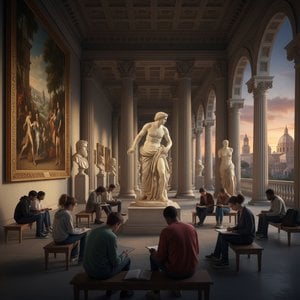
The Enduring Legacy of Classicism: Principles, Evolution & Influence in Western Art
Explore the enduring legacy of Classicism in Western art! Discover its historical context, key principles, iconic masterpieces & lasting influence. Learn about Renaissance and Neoclassical movements with ArtsDot.

Timeless Resonance: Exploring Classic Vibe in Art – A Historical & Aesthetic Analysis
Explore the rich history & enduring aesthetic of Classicism art! Discover key movements, iconic artists like Raphael & David, and its lasting influence on Western art. Deepen your appreciation today.

Eugen von Blaas: Capturing Alpine Life & Sentiment in 19th-Century Austrian Painting
Discover the captivating world of Eugen von Blaas! Explore his exquisite 19th-century paintings capturing Venetian life & Alpine beauty. Learn about his Academic Classicism style and find museum-quality reproductions at ArtsDot.
