


 Se i rummet
 Send
Send Del
Del
 Detaljer
 Studieguide til kunstværker

 Download
 Lignende værker
 Røntgenundersøgelse
 Se diasshow
 Statistik
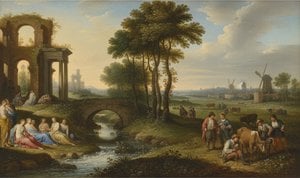
Italian Landscape with Roman Warriors
 Oil On Canvas
- WallArt
- Baroque Landscape
 1650
1650 154.0 x 174.0 cm
 Hermitage Museum
 Læs mere
Håndlavet oliereproduktion
Håndmalet olie på lærred i din valgte størrelse og ramme, udført efter bestilling af vores kunstnere. ( Skift til printversion Skift til digitalt billede)




P118B Dkr10

P118H Dkr10

P118W Dkr10

P438Z Dkr10

P508JH Dkr12

P508YH Dkr12

P805H Dkr10

P805Z Dkr10

P919BZ Dkr10

P919G Dkr10

P919XJ Dkr10

P959ZH Dkr10

P968JZ Dkr12

W106C Dkr8

W218G Dkr10

W218JH Dkr8

W218Y Dkr10

W307PJ Dkr10

W316G Dkr10

W316PJ Dkr8

W316Y Dkr10

W398PJ Dkr8

W4111J Dkr10

W500HY Dkr15

W500JH Dkr15

W692G Dkr12

W849H Dkr8

W940BG Dkr15

W953PJ Dkr8




Vælg mellem vores forudindstillede størrelser, der matcher kunstværkets originale proportioner.

Indtast den bredde og højde, du har brug for, så det passer til din ramme eller din væg. Da dette er håndmalet, kan kunstneren ved en anden form på størrelsen male lidt mere rundt om billedet eller skære lidt væk — det er op til dig. Vi sender dig et digitalt mockup til godkendelse, før maleriet påbegyndes. Billedet, der vises på denne side, viser ikke det endelige resultat — det er kun mockuppet, der gør.
Efter bestilling vil ArtsDot.com team sende en e-mail til kunden for at indhente instruktioner og fremsende et udkast til gennemgang.
Levering i hele verden () på 3-4 uger i stedet for de standard 5 uger. (24 oktober). Ingen kompromiser med kvaliteten.

Gratis ekspresforsendelse til hele verden

Lærred af linned i høj kvalitet

Komplet transportforsikring

Garanti for refusion af told og importafgifter

Garanti for autentisk farvegengivelse

100 dages returret ved fabrikationsfejl

100% fuld returret

Mængderabat ved flere køb
 Glasmulighed er kun tilgængelig i størrelser under 110 cm

Italian Landscape with Roman Warriors
Reproduktionsmateriale
Reproduktionsstørrelse
-


Samlet pris
Dkr 1729
The Vision of Jan Both: A Mediterranean Masterpiece
Jan Dirksz Both’s “Italian Landscape with Roman Warriors,” painted around 1650, isn't merely a depiction of a picturesque Italian vista; it’s an immersive experience. Born in Utrecht and trained within the traditions of Flemish painting, Both embarked on a transformative journey to Rome, a pivotal moment that fundamentally altered his artistic trajectory. This work stands as a testament to that shift – a vibrant synthesis of Northern realism and Southern light, capturing not just a scene but a mood, an atmosphere steeped in the grandeur and drama of the Italian Renaissance.
The painting immediately draws the eye with its expansive composition. A sweeping river dominates the foreground, reflecting the azure sky above, while rolling hills cascade into the distance, culminating in hazy mountains that seem to bleed into the horizon. Yet, it’s not simply a topographical rendering; Both masterfully employs atmospheric perspective – a technique borrowed from Claude Lorrain and other Italian landscape masters – to create an illusion of depth and vastness. The colors become softer, cooler, and less saturated as they recede, drawing the viewer's eye into the heart of the scene.
The Language of Light: A Baroque Revelation
Both’s signature style is characterized by a luminous quality that elevates the landscape beyond mere representation. He was deeply influenced by the Baroque tradition, particularly its emphasis on dramatic lighting and theatrical effects. Notice how the sunlight, seemingly originating from an unseen source, bathes the scene in a golden glow, highlighting specific elements – the shimmering water, the textured foliage, and the confident postures of the Roman warriors. This isn’t a flat, even illumination; it's a dynamic interplay of light and shadow that imbues the painting with a sense of vitality and movement.
The use of color is equally deliberate. Rich ochres, deep greens, and vibrant blues are juxtaposed to create visual interest and depth. The earthy tones of the landscape contrast sharply with the gleaming armor of the soldiers, further emphasizing their power and authority. The subtle variations in hue – a hint of purple in the distant mountains, a touch of pink in the clouds – contribute to the overall sense of realism and atmospheric detail.
Symbolism and Power: The Roman Presence
Beyond its purely aesthetic qualities, “Italian Landscape with Roman Warriors” is laden with symbolic meaning. The presence of the Roman soldiers, clad in their imposing armor and wielding spears, speaks to themes of power, conquest, and military might. They are not simply figures within a landscape; they are active participants, shaping the scene and asserting dominance over it. The bandits leading prisoners further reinforces this narrative, suggesting a world of conflict and political intrigue.
However, the painting isn’t solely focused on warfare. The inclusion of a river, trees, and a sense of leisure hints at a more complex vision – one that acknowledges both the beauty and the brutality of the Italian landscape. The figures are engaged in activities that suggest a harmonious coexistence between humanity and nature, albeit within a framework of power and control.
A Legacy of Light: Both’s Enduring Influence
Jan Dirksz Both's “Italian Landscape with Roman Warriors” represents a pivotal moment in the development of Dutch landscape painting. It showcases his mastery of technique, his deep understanding of color and light, and his ability to synthesize diverse artistic influences. His work continues to captivate viewers today, offering a glimpse into a world of beauty, drama, and timeless symbolism. Reproductions of this stunning artwork capture the essence of Both’s vision, allowing us to experience its luminous quality and evocative power firsthand.
Spørgsmål & svar
Hvilket rum foreslås "Italian Landscape with Roman Warriors" vist i, når man tager dens farvepalette i betragtning?
Med sin Earthy farvepalette anbefales "Italian Landscape with Roman Warriors" af Jan Both til et Living Room. Farverne er en del af årsagen til denne anbefaling.
Hvad deler "Italian Landscape with Roman Warriors" med resten af Jan Boths produktion?
I Jan Boths værk placerer "Italian Landscape with Roman Warriors" sig i Baroque Landscape-stilen, sammen med temaerne omkring mediterranean light, roman ideals, classical landscape, heroic figures, religious allegory, moral themes, baroque drama, emotional depth.
Hvilke farver bruger "Italian Landscape with Roman Warriors"?
Farverne i "Italian Landscape with Roman Warriors" udgør en Earthy palet. Denne klassificering beskriver de dominerende farvefamilier.
Lignende kunstværker


Om kunstneren
Jan Both (1610-1652): Mesteren af det middelhavsinspirerede lys
Jan Dirksz Both var en hollandsk maler, tegner og rader, der trådte frem som en af de mest betydningsfulde skikkelser i den spirende "italiensk-inspirerede" landskabsbevægelse under den hollandske guldalder. Han blev født omkring 1615/1618 i Utrecht og var yngre bror til Andries Both. Deres far, Dirck Both, som arbejdede som glasmaler, indgydede tidligt i deres liv en dyb respekt for kunstnerisk håndværk. Selvom de biografiske detaljer er relativt sparsomme, tyder forskningen på, at Jans uddannelse omfattede undervisning fra mestre som Abraham Bloemaert og Gerrit van Honthorst, hvilket placerede ham blandt sin tids mest indflydelsesrige kunstnere.- Tidligt liv og uddannelse: Boths formative år blev tilbragt i Utrecht, hvor han forfinede sine færdigheder side om side med sin bror Andries. Her opsugede han teknikker fra deres fars glarmestervirksomhed – et håndværk dybt forankret i flamske traditioner.
- Romersk indflydelse: Omkring 1638 begav Jan og Andries sig ud på en transformativ rejse til Rom via Frankrig. Her blev de opslugt af den kunstneriske glød ved det pavelige hof og mødte lysende skikkelser som Bloemaert og Gerrit van Honthorst, hvilket satte et uudsletteligt præg på deres stilistiske sans.
Den romerske stil og samarbejdet med Lorrain
Rom viste sig at være selve smeltediglen for Boths kunstneriske udvikling. Mens Andries fokuserede på genremalerier i Pieter van Laers stil, dedikerede Jan sig primært til landskabsmaleriet – en stil der stod i stor gæld til Claude Lorrain. Han formåede at indfange den æteriske skønhed i Middelhavsregionen med en uovertruffen mestring af lys og farve. Særligt bemærkelsesværdigt var hans tætte samarbejde med Herman van Swanevelt om et monumentalt projekt til Buen Retiro-paladset i Madrid, hvilket demonstrerede både hans ambitioner og hans kunstneriske formåen inden for de højeste europæiske mæcenat-kredse. Dette partnerskab cementerede Boths ry som en førende innovator inden for landskabskunsten.Bemærkelsesværdige værker og kunstneriske kendetegn
Boths samlede værk er karakteriseret ved vidstrakte, fantasifulde landskaber badet i et lysende gyldent skær – et kendetegn ved Lorrains stil og et tegn på de bredere kunstneriske strømninger, der bevægede sig gennem Europa. Hans mesterværk, ”Landskab med røvere, der fører fanger af sted” (Museum of Fine Arts, Boston), er et lysende eksempel på denne æstetiske genialitet. Den diagonale vej leder beskuerens øje ind i scenen og skaber en kontrast mellem realistiske figurer og en baggrund af idylliske vidder fyldt med minutiøst gengivet vegetation. Gentagne motiver inkluderer religiøse eller mytologiske figurer – som set i ”Pariss dom” (London, National Gallery) – ofte udført i samarbejde med andre Utrecht-kunstnere som Cornelis van Poelenburch, hvilket understreger Boths engagement i humanistiske idealer og kunstneriske konventioner.Eftermæle og indflydelse
Det var en tragedie, da Jans bror, Andries, bukket under for sygdom i Venedig på deres hjemrejse fra Rom. På trods af et kort liv etablerede Andries sig som en respekteret kunstner med speciale i bondescener – en genre, der spejlede tidens sociale realiteter. Jan Boths kunstneriske arv rækker dog langt ud over de enkelte malerier; han fungerede som lærer for talentfulde elever som Barend Bispinck og Willem de Heusch, hvilket sikrede, at hans stilistiske nyskabelser fortsat ville inspirere kommende generationer. Hans arbejde fejres stadig i dag for sin stemningsfulde atmosfære, sin tekniske overlegenhed og sit bidrag til udviklingen af det hollandske landskabsmaleri – et vidnesbyrd om Boths vedvarende indflydelse på den europæiske kunsthistorie.Samlinger
- Fitzwillæss Museum ved University of Cambridge
- Eremitagen, Skt. Petersborg
- Kunsthistorisches Museum, Wien
- Louvre, Paris
- Mauritshuis Kongelige Billedgalleri

Jan Both
1610 - 1652 , Holland
Hurtige fakta
- Artistic Movement Or Style: Italiensk-inspireret landskabsmaleri
- Artists Or Movements Influenced By This Artist: ['Claude Lorrain']
- Artists Who Influenced This Artist:
- Abraham Bloemaert
- Gerrit van Honthorst
- Date Of Birth: Utrecht, Holland (1610)
- Date Of Death: 9. august 1652
- Full Name: Jan Dirksz Both
- Nationality: Hollandsk
- Notable Artworks:
- Sankt Anne med Jomfruen og Barnet
- Landskab med røvere der fører fanger afsted
- Dommen over Paris
- Place Of Birth: Utrecht
Relaterede artikler
Cornelis van Poelenburch: Bridging Mannerism & the Dutch Baroque Landscape
Discover Cornelis van Poelenburch, a pivotal Dutch Baroque landscape painter bridging Mannerism & Italianate styles. Explore his life, key works, and lasting influence on 17th-century art with ArtsDot.

Romantikkens Landskaber: Top 10 Malerier der Definerede En Æra | ArtsDot
Oplev romantikkens storhedstid! Dyk ned i top 10 landskabsmalerier af Caspar David Friedrich, Turner & Constable. Historiske fortællinger og museumskvalitets reproduktioner på ArtsDot.com – find din inspiration til væggen her!

Evocations of Place: A Historical Journey Through Landscape Art
Explore the rich history of landscape art with ArtsDot. Discover renowned artists, movements like Impressionism & Romanticism, and expert guidance for collecting timeless pieces. Find your perfect serene escape today!

Jan Brueghel the Elder: A Master of Flemish Landscape & Allegory – Exploring Innovation & Influence
Explore the captivating world of Jan Brueghel the Elder, a Flemish Baroque master renowned for his stunning landscapes & allegorical paintings. Discover his collaborations with Rubens and lasting artistic legacy.

Claude Lorrain: Master of Light & Landscape in the Golden Age
Explore the luminous landscapes of Claude Lorrain, a Baroque master renowned for his masterful use of light & atmosphere. Discover his life, techniques, key works & enduring influence on art history.
