


 Bestil tryk Køb højopløseligt billede
 Del
Del
 Del
Del
 Detaljer
 Tilføj til favoritter

 Download
 Lignende værker
 Røntgenundersøgelse
 Diasshow
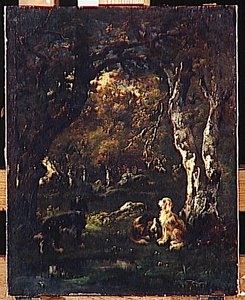
Noonday
 Barbizon School
 72.0 x 92.0 cm
 Se mere
Håndlavet oliereproduktion
Håndmalet olie på lærred i din valgte størrelse og ramme, udført efter bestilling af vores kunstnere.




P118B $10

P118H $10

P118W $10

P438Z $10

P508JH $12

P508YH $12

P805H $10

P805Z $10

P919BZ $10

P919G $10

P919XJ $10

P959ZH $10

P968JZ $12

W106C $8

W218G $10

W218JH $8

W218Y $10

W307PJ $10

W316G $10

W316PJ $8

W316Y $10

W398PJ $8

W4111J $10

W500HY $15

W500JH $15

W692G $12

W849H $8

W940BG $15

W953PJ $8




Vælg mellem vores forudindstillede størrelser, der matcher kunstværkets originale proportioner.

Du kan indtaste dine egne mål for at passe til en bestemt ramme eller plads. Hvis den valgte størrelse ikke stemmer overens med det originale billedes proportioner, vil vi enten beskære kunstværket eller udvide maleriet med yderligere håndmalede elementer. En digital skitse sendes til din godkendelse, før produktionen påbegyndes.
Bemærk venligst, at forhåndsvisningen på skærmen ikke afspejler den faktiske beskæring eller udvidelse. Kun skitsen vil nøjagtigt vise den endelige komposition.
Selvom specialmål er mulige, anbefaler vi at vælge en dimension fra den foruddefinerede liste for at bevare de originale proportioner.
Efter bestilling vil ArtsDot.com team sende en e-mail til kunden for at få instruktioner og levere et udkast til en skitse.
Levering i hele verden () på 3/4 uger i stedet for de standard 5 uger. (18 juli). Ingen kompromiser med kvaliteten.

Gratis ekspresforsendelse til hele verden

Lærred af linned i høj kvalitet

Fuld transportforsikring

Garanti for refusion af told og importafgifter

Garanti for præcis farvegengivelse

60 dages returret (kun ved fabrikationsfejl)

100% Tilfredshedsgaranti

Mængderabat tilgængelig
 Glasmulighed er kun tilgængelig i størrelser under 110 cm

Noonday
Reproduktionsmetode
Størrelse på reproduktion
-


Samlet pris
-
Lignende kunstværker



Kunstnerens biografi
William Edward Stott: A Painter of English Light and Rural Life
William Edward Stott (1855-1918) emerges from the late Victorian era as a significant, yet often overlooked, figure in British art. More than simply a landscape painter, Stott possessed a rare ability to capture not just the visual beauty of the English countryside but also its inherent atmosphere – the subtle shifts of light, the quiet dignity of rural life, and an underlying sense of melancholy that permeated his work. His career, spanning nearly six decades, witnessed profound changes in the art world, from the waning influence of academic traditions to the burgeoning excitement surrounding Impressionism and the rise of a distinctly “New English” aesthetic. While he never achieved the widespread fame of some contemporaries, Stott’s quietly powerful paintings continue to resonate with viewers today, offering a poignant glimpse into a vanishing way of life.
Born in Wardleworth, near Rochdale, Lancashire, in 1855, Stott's early life was shaped by the economic hardships faced by many industrial communities during the late 19th century. His father, Samuel Stott, was a successful cotton mill owner, and while this afforded his son a private education – including time spent at King’s Ely – it also instilled in him an awareness of social inequality and the precariousness of livelihoods. This experience profoundly influenced his artistic sensibilities, leading him to focus on subjects that depicted the lives of ordinary people connected to the land. He initially trained in Paris under Carolus Duran, a respected academic painter known for his meticulous technique and classical style. However, Stott quickly found himself drawn to the Impressionist movement, particularly the work of Bastien-Lepage, whose use of light and color to capture fleeting moments and evoke atmosphere deeply resonated with him. This Parisian period proved crucial in shaping his artistic vision, providing a foundation upon which he would later build his own distinctive style.
Upon returning to England, Stott embarked on a nomadic existence, seeking the ideal landscapes that would inspire his paintings. He spent considerable time in Sussex, establishing a small studio and building a close-knit community of artists – a tradition reminiscent of the Barbizon School in France. This period marked a significant shift in his artistic approach. He moved away from the polished surfaces and idealized forms of academic painting, embracing a looser, more expressive style characterized by broken brushstrokes, subtle color variations, and an emphasis on capturing the ephemeral qualities of light and shadow. His subjects remained largely unchanged: rural scenes – farmers working their fields, children playing in meadows, solitary figures contemplating the landscape – rendered with a remarkable sensitivity to detail and a deep understanding of human emotion. Stott’s paintings are not merely depictions of scenery; they are imbued with a profound sense of place and time, evoking memories of a bygone era.
Stott's artistic development can be traced through his prolific output during the late 1880s and 1890s. Works like “Approaching Night” (a particularly evocative example of his atmospheric style) demonstrate his mastery of light and color, capturing the subtle gradations of twilight with remarkable precision. He frequently employed a muted palette – dominated by greens, browns, and blues – to create a sense of quiet contemplation and melancholy. His compositions are often characterized by a strong sense of depth and perspective, drawing the viewer into the heart of the scene. While influenced by Impressionism, Stott’s work retains a distinctly British sensibility, reflecting his deep connection to the English landscape and its people. His paintings were exhibited with success in London and continental Europe during his lifetime, earning him critical acclaim and establishing him as a respected artist within the artistic community.
Despite achieving commercial success during his career, Stott’s style fell out of favor after World War I, overshadowed by the rise of modern art movements. His paintings were largely forgotten for decades, only to be rediscovered in the late 20th century as part of a renewed interest in British landscape painting. Today, William Edward Stott is recognized as a significant figure in Victorian and early twentieth-century art – a painter who captured the beauty and melancholy of rural England with remarkable sensitivity and skill. His work offers a poignant reminder of a disappearing world and a testament to the enduring power of observation and artistic expression.

william edward stott
1918 -
Kort om kunstneren
- Artistic Movement Or Style: Naturalism, Barbizon, Impressionist
- Artists Or Movements Influenced By This Artist: ['New English Art Club']
- Artists Who Influenced This Artist:
- Bastien-Lepage
- Corot
- Millet
- Date Of Birth: April 25, 1855
- Date Of Death: March 19, 1918
- Full Name: William Edward Stott
- Nationality: British
- Notable Artworks:
- Approaching Night
- Rural Landscapes
- Place Of Birth: Wardleworth, Rochdale, UK
Relaterede artikler

Top 25 Kunstværker på Musée d'Orsay: Impressionisme & Post-Impressionisme – ArtsDot.com
Oplev de 25 mest ikoniske kunstværker på Musée d'Orsay! Fra Monet og Renoir til Van Gogh – udforsk impressionisme & post-impressionisme. Find inspiration til dit hjem med museumskvalitets reproduktioner hos ArtsDot.com.

Alfred Worthington: Bridging Victorian Realism & Early Modern Landscape Painting
Explore the captivating landscapes of Alfred Worthington (1834-1927), a pivotal figure bridging Victorian realism & early Impressionism. Discover his Welsh hunting scenes, artistic evolution, and collecting guide.

Daniel Ridgway Knight: A Study in Victorian Genre Painting & Rural Idealism
Explore the captivating world of Daniel Ridgway Knight, a master of Victorian genre painting. Discover his serene rural scenes, realistic technique & lasting influence on American Impressionism. Learn about his life, art, and collectibility.

Edward Seago: A Life Painted in Light – Nostalgia & the British Landscape Tradition
Explore the life & art of Edward Seago, a celebrated British Impressionist painter known for evocative landscapes & seascapes. Discover his captivating works and find high-quality reproductions at ArtsDot.

Edward Wilkins Waite: A Victorian Vision of Surrey's Serene Landscapes & Artistic Legacy
Explore the serene landscapes of Edward Wilkins Waite (1854-1924), a prolific Victorian painter celebrated for his depictions of Surrey's countryside. Discover his artistic influences, career highlights & collecting guide.

