
Before the Storm

- 96.0 x 77.0cm


Billedet følger dine valg: , .
Kunstnerbiografi
A key figure of New Objectivity, Wilhelm Schnarrenberger mastered sharp, prosaic scenes. Discover his striking collection of fine art today.
 Vis mere
Dette kunstværk er ophavsretsbeskyttet
Kunstværket vist på denne side er beskyttet af ophavsretsloven, hvilket betyder, at vi ikke lovligt kan skabe eller sælge en identisk reproduktion. Denne beskyttelse håndhæves i henhold til internationale aftaler som f.eks. den Bernerkonventionen og af nationale love, herunder de bestemmelser, der er fastlagt i Amerikansk ophavsretslov - Titel 17.
Som et respektfuldt og lovligt alternativ tilbyder vi skræddersyede, håndmalede kunstværker inspireret af originalen. Vores dygtige og professionelle kunstnere studerer omhyggeligt originalens stil, stemning og kunstneriske essens for at skabe et nyt, unikt værk, der fremkalder den samme følelse – samtidig med at det forbliver en original skabelse i egen ret.
Denne metode overholder fuldt ud ophavsretsreglerne, da den ikke indebærer kopiering eller duplikering af det beskyttede kunstværk. I stedet er der tale om en kreativ nytolkning – et nyt maleri, som er inspireret af det oprindelige, men ikke identisk med det.
Bestil din i fire enkle trin
Tag dig god tid. Du kan ændre alle svar; prisen i din indkøbskurv opdateres efter hvert valg.
1 Trin et af fire
Hvilken størrelse ønsker du?
Disse størrelser bevarer det originale maleris proportioner. Tegningen viser dit valg på en væg, over en to meter lang sofa.
Eller angiv dine egne mål
Vælg mellem vores forudindstillede størrelser, der matcher kunstværkets originale proportioner.

Indtast den bredde og højde, du har brug for, så det passer til din ramme eller din væg. Da dette er håndmalet, kan kunstneren ved en anden form på størrelsen male lidt mere rundt om billedet eller skære lidt væk — det er op til dig. Vi sender dig et digitalt mockup til godkendelse, før maleriet påbegyndes. Billedet, der vises på denne side, viser ikke det endelige resultat — det er kun mockuppet, der gør.
2 Trin to ud af fire
Hvordan skal det klargøres: rullet, udstrakt eller indrammet?
Priserne nedenfor gælder for den størrelse, du valgte i trin ét.
Vælg kanterne på det opspændte lærred
Vælg din ramme

Hvid kant Dkr1

Udvasket kant Dkr1

Fortsat motiv Dkr1

P118B Dkr10

P118H Dkr10

P118W Dkr10

P438Z Dkr10

P508JH Dkr12

P508YH Dkr12

P805H Dkr10

P805Z Dkr10

P919BZ Dkr10

P919G Dkr10

P919XJ Dkr10

P959ZH Dkr10

P968JZ Dkr12

W106C Dkr8

W218G Dkr10

W218JH Dkr8

W218Y Dkr10

W307PJ Dkr10

W316G Dkr10

W316PJ Dkr8

W316Y Dkr10

W398PJ Dkr8

W4111J Dkr10

W500HY Dkr15

W500JH Dkr15

W692G Dkr12

W849H Dkr8

W940BG Dkr15

W953PJ Dkr8
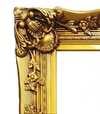
H24-GOLD Dkr30
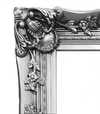
H24-SILVER Dkr30
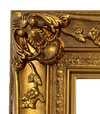
H36-GOLD Dkr45
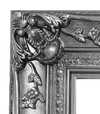
H36-SILVER Dkr45
Indrammet
Profil: . Samlet størrelse med ramme: .
3 Trin tre ud af fire
Ønsker du at få ændret noget i maleriet?
De fleste svarer nej. Da hvert maleri er håndlavet, kan vores kunstner også tilpasse det til dig.
Efter bestilling vil ArtsDot.com-teamet sende en e-mail til kunden for at få instruktioner og levere et udkast til forhåndsvisning
4 Trin fire ud af fire
Et par forskellige efterbehandlingsmuligheder
Alle er valgfrie. De svar, der allerede er valgt, koster ikke ekstra.
Hvem har malet det?
Verdensomspændende levering () på 3-4 uger i stedet for de standard 5 uger. (21 november). Ingen kompromiser med kvaliteten.
En navneplade, ligesom på et museum?
Detaljer om indgraveret bronzeskilt
This elegant plaque features the artist's name and the title of the artwork, finely engraved for a timeless presentation.
It is made from bronze with a refined, elegant finish. The text is precisely laser-engraved for a sharp and permanent result. Measuring 9x2 cm, the plaque is compact yet easy to read. It's built to be durable and scratch-resistant, offering a professional, museum-quality look. Mounting is simple thanks to the included adhesive backing.
Detaljer om gennemsigtig akrylplade
The plaque includes essential engraved details such as the artist's name, the title of the artwork, the date it was created, the type of media used-like oil on canvas or watercolor-a brief description of the piece, and a QR code that links to the complete artwork information.
It is crafted from clear acrylic, offering a sleek, modern appearance. The text is UV-engraved in black to ensure strong visual contrast. With a size of 10x15 cm, it ensures optimal readability. It comes equipped with two metal hooks for secure wall mounting. The plaque is designed to be weather-resistant, making it suitable for various environments, and it includes interactive features that work seamlessly with smartphone scanning.
Detaljer om sort akrylplade
This elegant plaque includes engraved information such as the artist's name, the title of the artwork, the date it was created, the type of media used (like oil on canvas or watercolor), a short description of the artwork, and a QR code for quick access to more information.
The plaque itself is made from refined black acrylic with a premium finish. The text is laser-engraved in white for high contrast and readability. Its size is 10x15 cm, designed to be easy to read. It comes with two metal hooks for professional mounting. The design is sleek and fits any interior style. It is also weather-resistant and durable, with built-in digital integration for mobile compatibility.
En beskyttende lak?
Hvornår skal det leveres?
✓ Tjek og bestil
Dit maleri, præcis som du har bestilt det

Before the Storm
Reproduktionsmetode
Størrelse på reproduktion
-

Eksklusivt udvalgte senior-kunstnere
Mere detaljerigdom, finesse og ekstra produktionstid
-

Indramning af reproduktion
-
-
For kunstværker eller reproduktioner, der er større end 105 cm (ca. 41 tommer) på en hvilken som helst side, vil rammen blive leveret som et adskilt sæt. Denne metode sikrer sikker levering og forhindrer skader under transport.
Professionel montering er påkrævet – dette er ikke et gør-det-selv produkt.
Sættet skal samles, og lærredet skal opspændes af en erfaren professionel indrammer ved brug af trælim (ikke medfølger), en lærredsspænder og klemmer til at holde blindrammen vinkelret, mens limen tørrer. Forkert samling eller ujævn spænding af lærredet kan beskadige kunstværket permanent og er ikke dækket af vores garanti.
 For kunstværker eller reproduktioner, der er større end 105 cm (ca. 41 tommer) på en hvilken som helst side, vil rammen blive leveret som et adskilt sæt. Denne metode sikrer sikker levering og forhindrer skader under transport.
Alle massive trælister er inkluderet, præcist tilpasset i størrelsen.
Samles med de medfølgende skruer samt trælim til hjørneforbindelserne, som ikke medfølger og skal anskaffes af din indrammer.
Professionelt værktøj er påkrævet og medfølger ikke: en lærredsstrækker (spændetang) og klemmer til at holde blindrammen vinkelret, mens limen tørrer.
Vigtigt:
Hjørneforbindelserne kræver trælim, listerne skal holdes fast med skruetvinger, indtil limen er helt tør, og opspænding af lærredet på den samlede ramme kræver en lærredsspænder. Ingen af disse dele er inkluderet i sættet. Vi anbefaler, at du kontakter en erfaren professionel indrammer, før du bestiller denne størrelse.

Navneskilt
-
-

Beskyttende fernis
Blank lak (fremhæver farverne og beskytter mod lys og fugt)
-

Tilpas mit kunstværk
Eksempler på tilpasningsmuligheder: Udskift ansigt med kunde-foto; Tilføj kæledyr (f.eks. udskift kat med hund); Inkluder skjult besked i baggrunden; Ændr baggrundslandskab eller elementer.
-

Hurtig levering
Verdensomspændende levering () på 3-4 uger i stedet for de standard 5 uger. (21 november). Ingen kompromiser med kvaliteten.
-
Ekspreslevering
Verdensomspændende levering til inden for 5 uger. (28 november).
Inkluderet
Samlet pris
Dkr 1756
Glasmulighed er kun tilgængelig i størrelser under 110 cm
Inkluderet i hver ordre
- Gratis ekspresforsendelse til hele verden
- Lærred af linned i høj kvalitet
- Fuld transportforsikring
- Garanti for refusion af told og importafgifter
- Garanti for præcis farvegengivelse
- 100 dages returret ved fabrikationsfejl
- 100% fuld returret
- Mængderabat ved flere køb


 Se i rummet

 Skift til printsalg
 Del som kort
 Del
 Detaljer
 Guide


 Download
 Lignende værker
 Røntgenundersøgelse
 Diasshow
 Spørgsmål og svar
 Statistikker
Lignende kunstværker


Wilhelm Schnarrenberger
1892 - 1966, Germany
Kunstnerbiografi
Early Life and Artistic Training
The story of Wilhelm Schnarrenberger begins in Buchen, where he was born on June 30, 1892. In those early years, the seeds of a life dedicated to the visual arts were quietly sown. He would eventually find his way to the bustling atmosphere of Munich, a city that would shape his hands and his vision for many years to come.
From 1911 to 1916, he devoted himself to his studies at the Munich School of Arts and Crafts. It was within these walls that he honed the technical precision required of a painter and graphic artist. His time in Munich was marked by a deep immersion in the craft, a period of intense learning that prepared him for the challenges of a professional life. By 1916, his talent had begun to find its footing in the public eye, as he held his first solo exhibition at the Hans Goltz' gallery in Munich. This debut marked a significant milestone, signaling his emergence as a creative force before the interruptions of military service began to alter his path.
The Munich and Karlsruhe Years
By 1920, the artist had returned to Munich, finding a place within the bustling creative currents of the city. His hand was frequently called upon to provide illustrations for notable magazines such as Simplicissimus and Wieland, marking a period of significant graphic engagement. During these years, he found fellowship among a circle of like-minded creators known as the "Rih" group, sharing the artistic landscape with figures such as Karl Hubbuch, Rudolph Schlichter, and Georg Scholz.
The trajectory of his career shifted toward academia in 1921, when he was appointed as a professor of commercial art at the Karlsruhe Academy. This position brought him into the heart of institutional teaching, a role he would hold with distinction until the political upheavals of 1933 forced his dismissal from the academy. His professional ambitions also extended into the realm of production and craft; in 1924, he founded the ORNA-Werkstätten, establishing a space for his practical and applied artistic visions.
Style and Artistic Movements
In the early years of the 1920s, Schnarrenberger’s brush moved with a certain innocence, drawing a clear line to the influence of Henri Rousseau. During this period, his compositions often embraced a deliberately naive approach, treating figures and landscapes with a simplicity that felt both quiet and intentional. This stage of his development allowed him to explore a more simplified visual language before his style underwent a significant transformation.
By 1924, his work had shifted toward the New Objectivity. This movement brought a new rigor to his hand, replacing his earlier naivety with a sharp-edged and dispassionate way of seeing. He began to render prosaic, contemporary scenes with a meticulous clarity that avoided emotional sentimentality. His paintings from this era sought to capture the world exactly as it appeared, stripped of unnecessary drama or warmth, focusing instead on the stark reality of the subject at hand.
As the decade progressed, the rigid precision of his earlier work began to soften. By 1929, he had started to adopt a looser style, moving away from the strictness that had defined his middle years. This evolution showed a painter willing to let the brushwork breathe, departing from the controlled, sharp lines of the New Objectivity in favor of a more fluid expression.
Key Works and Notable Paintings
The evolution of his hand is clearly visible through the changing subjects he chose to capture. In the early 1920s, his brush moved with a certain naivety, as seen in Old Men Going for a Walk (1922), where the figures and their surroundings were rendered with a deliberate simplicity. This lightness gave way to a sharper, more detached clarity by 1924. In The Friends, he abandoned emotional sentimentality, opting instead for a dispassionate look at a prosaic contemporary scene. This shift toward a more clinical observation of life was furthered by his 1923 Portrait of an Architect, which captured the subject with a precise, unadorned focus.
As the years progressed and the world around him grew more turbulent, his compositions took on different textures. He explored the human form in 1930 with Liegender weiblicher Akt mit schwarzen Schuhen, a work that maintained his characteristic precision. During the difficult years of the mid-1940s, his vision turned toward more somber, isolated settings, such as Kleine Bahnstation (Verlassener Bahnhof, in eisiger Luft), painted between 1942 and 1946. Even in his final decade, he returned to the quietude of still life, finding beauty in the arrangement of simple objects.
- Rote Dahlien in grünem Krug (1960–1969)
- Karierte Decke und Stilleben (1949)
- Stillleben mit Figur (1948)
- Halbporträt eines Herrn in braunem Jacket (1941)
Later Life and Recognition
The shadows of political upheaval forced a change in his surroundings during the later years of his life. From 1938 until 1947, he resided in Lenzkirch, a period of relative seclusion following the dismissal from his teaching post years earlier. This time of living away from the academic centers of art preceded a significant return to his professional roots. In 1947, he regained his position as a professor at the Karlsruhe Academy, reclaiming a place within the institution where he had once taught. By 1948, he had relocated to Karlsruhe, settling in the city where his later years would unfold.
His presence in the art community remained steady as he continued to engage with his peers. In 1955, he began exhibiting his work with the Baden-Wurttemberg Federation of Artists, maintaining a visible connection to the evolving landscape of German art. This period of renewed activity brought him significant distinction when he was awarded the Hans Thoma State Prize in 1962. This honor recognized the enduring quality of his vision after decades of navigating the complexities of the mid-twentieth century. He remained in Karlsruhe until his death in 1966.