Portrét Anthonis van Dyck

Anthonis van Dyck's Most Famous Paintings: All 100, Ranked

Aktualizováno říjen 2026 · seřazeno podle našeho skóre popularity (vyhledávání, návštěvy a objednávky u každého díla) · 1 620 děl umělce Anthonis van Dyck v našem katalogu

In short

The Anthonis van Dyck painting most people know is Charles I v třech pozicích (1636), and you can see it at the Royal Collection, Londýn. Right after it come Family Portrait (1621) and Portrait of Isabella Clara Eugenia as Widow (1628). Out of 1,620 works by Anthonis van Dyck in our catalogue, these 100 are the best known. Each one comes with its year, its museum and a short note on what makes it stand out.

1599 – 1641, Antverpy Barokní styl Nejvíce děl: Bavarské státní sbírky malby

Anthonis van Dyck's top 10: the pieces everyone knows

1
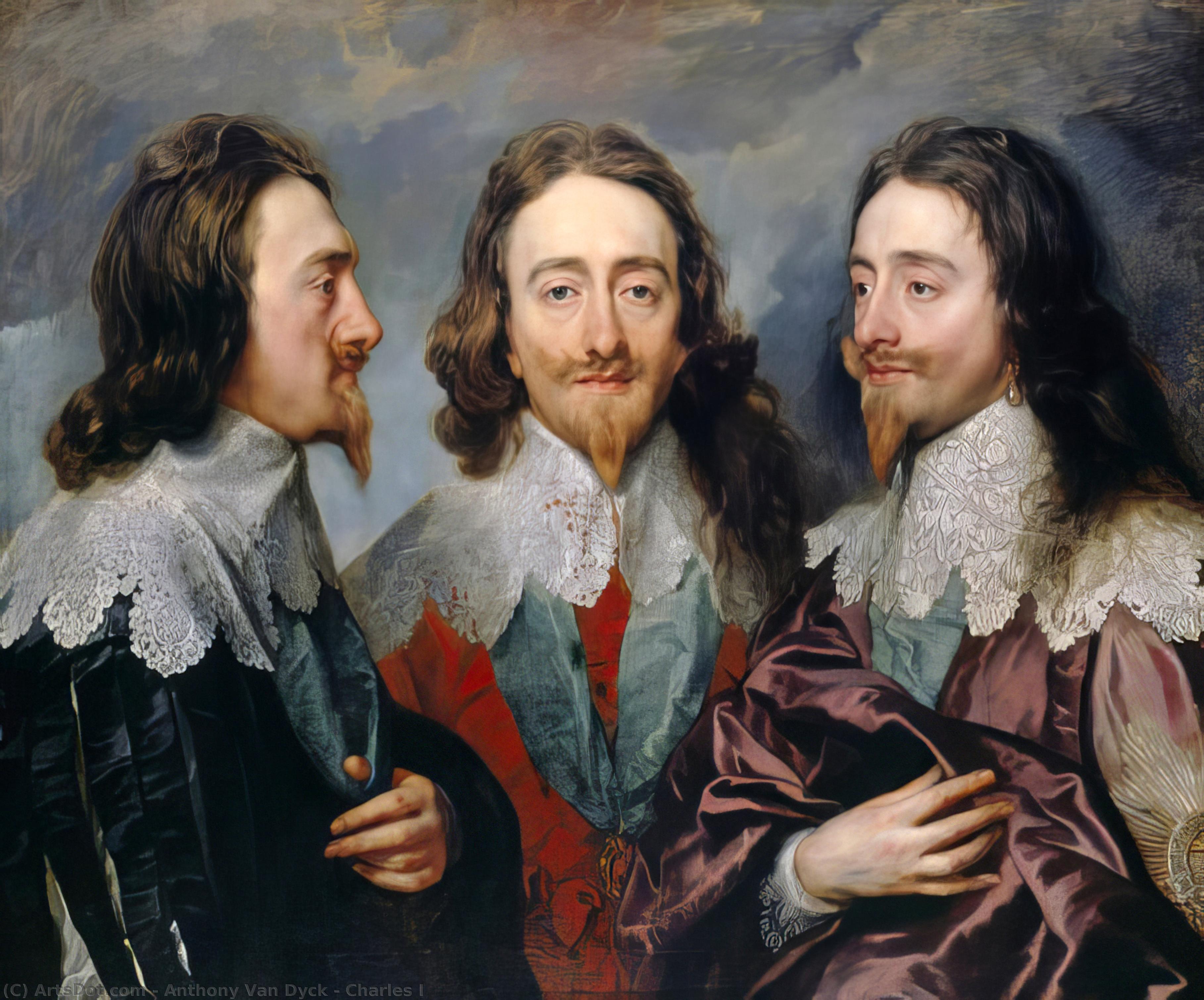
Charles I v třech pozicích (1636) od Anthonis van Dyck

Charles I v třech pozicích

1636 · Olej na plátně · Royal Collection, Londýn

"Charles I ve třech pozicích" představuje výjimečný příklad mistrovství sira Anthonyho van Dycka v oblasti barokního portrétnictví. Toto olejové plátno z let 1635–1636 odhaluje nadpozemské schopnosti flandřského umělce a jeho hluboký vliv na evropské umění. Obraz je součástí prestižní královské sbírky a v současné době je vystaven v Královské recepční místnosti ve Windsorském hradě.

2
Family Portrait (1621) od Anthonis van Dyck

Family Portrait

1621 · Oil On Canvas · Státní Ermitáž, Sankt-Petěrburg

To gaze upon this magnificent family portrait is to step directly into the opulent drawing rooms of the early seventeenth century. It captures not merely three figures—a distinguished man, an elegant woman, and a cherished child—but an entire tableau of familial pride and societal standing. The composition itself speaks volumes; every fold of fabric, every carefully placed hand, contributes to a narrative of enduring connection. The rich, dramatic red background…

3
Portrait of Isabella Clara Eugenia as Widow (1628) od Anthonis van Dyck

Portrait of Isabella Clara Eugenia as Widow

1628 · Oil On Canvas · Museo de Arte de Ponce, Ponce

Sir Anthony van Dyck’s “Portrait of Isabella Clara Eugenia as Widow” is more than just a depiction of a noblewoman; it's a carefully constructed tableau of power, grief, and the enduring legacy of a formidable ruler. Painted in 1628, this oil-on-canvas work transports us to the heart of the Spanish Netherlands during a period of significant political and personal upheaval. Isabella Clara Eugenia, daughter of Philip II of Spain, served…

4
Jacqueline van Caestre (1622) od Anthonis van Dyck

Jacqueline van Caestre

1622 · Oil On Panel · Royal Łazienki Museum, Varšava

The portrait of Jacqueline van Caestre, painted in 1622 by the masterful Sir Anthony van Dyck, is more than a mere likeness; it’s a carefully constructed tableau of wealth, status, and burgeoning domesticity. Within its richly layered composition lies a captivating story of a noblewoman navigating the complexities of marriage and courtly life in 17th-century Antwerp. Van Dyck, already establishing his signature style—characterized by an almost sensual realism and a…

5
Susánka a starci (1622) od Anthonis van Dyck

Susánka a starci

1622 · Olej na plátně · Alte Pinakothek, Mnichov

Barokní mistrovské dílo: Susanna a starci autorství Anthonyho van Dycka Sir Anthony van Dyckovo „Susanna a starci“ přesahuje pouhou portrétní malářskou umění; napojuje v sobě slávu a intelektuální žár barokní éry, čímž si osvěcuje místo jako jedno z nejslavnějších děl Van Dycka. Toto monumentální plátno, namalované v roce 1622 a měřící 194 x 144 cm, se dnes nachází v muzeu Alte Pinakothek v Mnichově na Německu a nabízí návštěvníkům vzácný…

6
Genoese Noblewoman (1622) od Anthonis van Dyck

Genoese Noblewoman

1622 · Oil On Canvas · The Frick Collection, New York

Anthony van Dyck's "Genoese Noblewoman," painted circa 1625-1627, isn’t merely a portrait; it’s a meticulously crafted window into the opulent world of early 17th-century Genoa. This captivating work, now residing within The Frick Collection in New York City, offers a rare glimpse into the refined tastes and social dynamics of a wealthy Italian city-state – a vibrant hub of commerce, art, and cultural exchange during a period of immense artistic…

7
Henrietta Maria (1635) od Anthonis van Dyck

Henrietta Maria

1635 · Oil On Canvas

The gaze of Henrietta Maria meets the viewer through this commanding portrait by Anthony van Dyck. Executed in 1636, the work captures Henrietta Maria of France in a moment of poised royal dignity. She exists here as the Queen of England, a position she holds through her marriage to King Charles I. The painting functions as a visual declaration of her status and her presence within the English court.

8
Portrait of Queen Henrietta-Maria (1638) od Anthonis van Dyck

Portrait of Queen Henrietta-Maria

1638 · Oil On Canvas · Státní Ermitáž, Sankt-Petěrburg

To stand before this portrait is to encounter the quiet gravity of the seventeenth-century English court. The Queen stands slightly off-center, her figure anchored by the heavy weight of crimson drapery and a draped table. There is a certain stillness here, a moment caught between the political tensions of 1638 and the personal dignity of the sitter. Van Dyck uses light to sculpt her form, pulling her face and chest…

9
The healing of the paralytic (1620) od Anthonis van Dyck

The healing of the paralytic

1620 · Oil On Canvas · Bavarské státní sbírky malby, Mnichov

In this oil painting, titled The healing of the paralytic, Anthony van Dyck explores a moment of profound spiritual intervention. The work, which dates to about 1618-20, captures the immediate aftermath of a miracle. We find ourselves witnessing the precise instant of transition between infirmity and restoration. The subject matter is drawn from the New Testament, specifically the narratives found in Matthew 9:1-8 or John 5:1-15.

10
Portrait of Alexandre della Faille (1589-1653) (1632) od Anthonis van Dyck

Portrait of Alexandre della Faille (1589-1653)

1632 · Oil On Canvas · Královské muzea krásných umění v Belgii, Brusel

A dignified three-quarter length portrait, this work captures a middle-aged man positioned centrally against a dark, atmospheric background. The subject, Alexandre della Faille, is rendered with a sense of quiet authority and formal composure. A voluminous white ruff collar acts as the primary focal point, its crisp texture contrasting sharply against the heavy, dark fabric of his cloak. Light enters from the upper left, casting soft shadows across the right…

Keep exploring Anthonis van Dyck: 11 to 100

11Equestrian Portrait of Charles I of England (1620) od Anthonis van DyckEquestrian Portrait of Charles I of England1620 · Bavarské státní sbírky malby 12The Pietà (1629) od Anthonis van DyckThe Pietà1629 · Museo del Prado 13Portrait of Charles Louis, Elector Palatine (1617-1680), in exile (1637) od Anthonis van DyckPortrait of Charles Louis, Elector Palatine (1617-1680), in exile1637 14Portrait of Charles, Marquis de Vieuville (1635) od Anthonis van DyckPortrait of Charles, Marquis de Vieuville1635 · Chrysler Museum of Art 15Portrait of Charles I, King of the Great Britain (1600-1649) (1638) od Anthonis van DyckPortrait of Charles I, King of the Great Britain (1600-1649)1638 · Státní Ermitáž 16The Lomellini Family (1627) od Anthonis van DyckThe Lomellini Family1627 17Queen Henrietta Maria (1640) od Anthonis van DyckQueen Henrietta Maria1640 · Wallace Collection 18Portrait of Henrietta Maria of France, Queen of England, Scotland and Ireland (1637) od Anthonis van DyckPortrait of Henrietta Maria of France, Queen of England, Scotland and Ireland1637 19Moses and the Brazen Serpent (1530) od Anthonis van DyckMoses and the Brazen Serpent1530 20Christ on the Cross (1625) od Anthonis van DyckChrist on the Cross1625 · Courtauld Gallery 21Portrait of Queen Henriëtta Maria (1632) od Anthonis van DyckPortrait of Queen Henriëtta Maria1632 22Portrait of a Family (1620) od Anthonis van DyckPortrait of a Family1620 23Thomas Hamilton, 2nd Earl of Haddington, 1600 - 1640 (1637) od Anthonis van DyckThomas Hamilton, 2nd Earl of Haddington, 1600 - 16401637 · Scottish National Portrait Gallery 24Samson and Delilah (1630) od Anthonis van DyckSamson and Delilah1630 · Kunsthistorisches Museum 25Portrait of a Lady with her Daughter (1632) od Anthonis van DyckPortrait of a Lady with her Daughter1632 26Charles I (1600-49) on Horseback (1635) od Anthonis van DyckCharles I (1600-49) on Horseback1635 · Hampton Court Palace 27Cupid and Psyche (1640) od Anthonis van DyckCupid and Psyche1640 · Royal Collection 28Queen Henrietta Maria of England (1620) od Anthonis van DyckQueen Henrietta Maria of England1620 · Bavarské státní sbírky malby 29A Family Group (1634) od Anthonis van DyckA Family Group1634 · Detroit Institute of Arts 30Queen Henrietta Maria of England (1639) od Anthonis van DyckQueen Henrietta Maria of England1639 · Statens Museum for Kunst 31Saint Sebastian and the Angel (1631) od Anthonis van DyckSaint Sebastian and the Angel1631 · Galleria Sabauda 32Portrait of a painter (1640) od Anthonis van DyckPortrait of a painter1640 · Kunstmuseum Basel 33Queen Henrietta Maria (1635) od Anthonis van DyckQueen Henrietta Maria1635 · Staatliche Kunstsammlungen Dresden 34Christ on the Cross with Saint Catherine of Siena, Saint Dominic and an Angel (1620) od Anthonis van DyckChrist on the Cross with Saint Catherine of Siena, Saint Dominic and an Angel1620 · Královské muzeum výtvarného umění Antverpy 35St Jerome (1620) od Anthonis van DyckSt Jerome1620 · Nationalmuseum 36Venetia, Lady Digby (1634) od Anthonis van DyckVenetia, Lady Digby1634 37Christ and the Penitent Magdalene (1620) od Anthonis van DyckChrist and the Penitent Magdalene1620 · Bavarské státní sbírky malby 38Crucifixion (1622) od Anthonis van DyckCrucifixion1622 · San Zaccaria 39Portrait Of Frederik Hendrik (1632) od Anthonis van DyckPortrait Of Frederik Hendrik1632 · Baltimore Museum of Art 40Ottaviano Canevari (1627) od Anthonis van DyckOttaviano Canevari1627 · The Frick Collection 41Lamentation of Christ (1620) od Anthonis van DyckLamentation of Christ1620 · Bavarské státní sbírky malby 42Portrait of an English Gentleman (1635) od Anthonis van DyckPortrait of an English Gentleman1635 · Palác Pitti 43Portrait of James Hay, 2nd Earl of Carlisle (c1612-1660) (1636) od Anthonis van DyckPortrait of James Hay, 2nd Earl of Carlisle (c1612-1660)1636 44Saint Sebastian (1620) od Anthonis van DyckSaint Sebastian1620 · Bavarské státní sbírky malby 45The Martyrdom of Saint Sebastian (1616) od Anthonis van DyckThe Martyrdom of Saint Sebastian1616 · Bavarské státní sbírky malby 46Sir Algernon Percy (1602–1668), 10th Earl of Northumberland, KG, His First Wife Lady Anne Cecil (d.1637), and Their Eldest Daughter, Lady Catherine Percy (1630–1638) (1635) od Anthonis van DyckSir Algernon Percy (1602–1668), 10th Earl of Northumberland, KG, His First Wife Lady Anne Cecil (d.1637), and Their Eldest Daughter, Lady Catherine Percy (1630–1638)1635 47Sir Kenelm Digby (1640) od Anthonis van DyckSir Kenelm Digby1640 · National Portrait Gallery 48Lord John Stuart and his Brother, Lord Bernard Stuart (1638) od Anthonis van DyckLord John Stuart and his Brother, Lord Bernard Stuart1638 49Portrait of an Old Man (1618) od Anthonis van DyckPortrait of an Old Man1618 · Liechtenstein Museum 50Portrait of a Man (1922) od Anthonis van DyckPortrait of a Man1922 · Bavarské státní sbírky malby 51Charles I in Three Positions (1636) od Anthonis van DyckCharles I in Three Positions1636 · Royal Collection 52Portrait of Nicolaes van der Borght (1620) od Anthonis van DyckPortrait of Nicolaes van der Borght1620 53Portrait of a Genovese Gentleman (1621) od Anthonis van DyckPortrait of a Genovese Gentleman1621 · Gemäldegalerie 54James Stuart (1612–1655), 1st Duke of Richmond and 4th Duke of Lennox (1636) od Anthonis van DyckJames Stuart (1612–1655), 1st Duke of Richmond and 4th Duke of Lennox1636 · English Heritage 55Mountjoy Blount (1597–1665), 1st Earl of Newport George (1608–1657), Lord Goring, and a Page (1639) od Anthonis van DyckMountjoy Blount (1597–1665), 1st Earl of Newport George (1608–1657), Lord Goring, and a Page1639 · Petworth House 56The Martyrdom of Saint Sebastian (1620) od Anthonis van DyckThe Martyrdom of Saint Sebastian1620 · Bavarské státní sbírky malby 57Rest on the Flight into Egypt (Madonna with Partridges) (1632) od Anthonis van DyckRest on the Flight into Egypt (Madonna with Partridges)1632 · Státní Ermitáž 58Portrait of a Man (1618) od Anthonis van DyckPortrait of a Man1618 · Liechtenstein Museum 59Marie de Raet (1631) od Anthonis van DyckMarie de Raet1631 · Wallace Collection 60Mozes and the brass snake (1620) od Anthonis van DyckMozes and the brass snake1620 61Portrait of Prince Charles Louis, Elector Palatine (1641) od Anthonis van DyckPortrait of Prince Charles Louis, Elector Palatine1641 62Charles Seton (1615–1672), 2nd Earl of Dunfermline, Lord Privy Seal (1640) od Anthonis van DyckCharles Seton (1615–1672), 2nd Earl of Dunfermline, Lord Privy Seal1640 63The Virgin and Child (1631) od Anthonis van DyckThe Virgin and Child1631 · Buckingham Palace 64Lord George Stuart (1638) od Anthonis van DyckLord George Stuart1638 · National Portrait Gallery 65Portrait of Wolfgang William of Palatine-Neuburg (1630) od Anthonis van DyckPortrait of Wolfgang William of Palatine-Neuburg1630 · Kunsthalle Bremen 66Queen Henrietta Maria (1760) od Anthonis van DyckQueen Henrietta Maria1760 · Birmingham Museum and Art Gallery 67Portrait of Emmanuel Philibert (1624) od Anthonis van DyckPortrait of Emmanuel Philibert1624 68Portrét Karla V. na koni (1620) od Anthonis van DyckPortrét Karla V. na koni1620 · Galleria degli Uffizi 69The Polish Rider (1620) od Anthonis van DyckThe Polish Rider1620 · Bavarské státní sbírky malby 70Charles I and the Knights of the Garter in Procession (1638) od Anthonis van DyckCharles I and the Knights of the Garter in Procession1638 · Ashmolean Museum 71Christus als Salvator Mundi (1620) od Anthonis van DyckChristus als Salvator Mundi1620 · Bildergalerie Sanssouci 72Charles I (1600–1649) (1639) od Anthonis van DyckCharles I (1600–1649)1639 · National Trust 73Královna Henrietta Maria (1636) od Anthonis van DyckKrálovna Henrietta Maria1636 · Metropolitan Museum of Art 74Lady Dacre (1633) od Anthonis van DyckLady Dacre1633 · Denver Art Museum 75Francis Junius (1591–1677) (1640) od Anthonis van DyckFrancis Junius (1591–1677)1640 · Bodleianské knihovny 76Charles i - (16) od Anthonis van DyckCharles i - (16) 77Deux têtes d (1650) od Anthonis van DyckDeux têtes d1650 · Musée des Beaux-Arts de Lyon 78Princess Henrietta of Lorraine (1611–1660), Attended by a Page (1634) od Anthonis van DyckPrincess Henrietta of Lorraine (1611–1660), Attended by a Page1634 · English Heritage 79Portrait of Father Jean-Charles della Faille, S.J. (1629) od Anthonis van DyckPortrait of Father Jean-Charles della Faille, S.J.1629 80Equestrian Portrait of Charles I, King of England (1640) od Anthonis van DyckEquestrian Portrait of Charles I, King of England1640 81François Langlois (1589–1647) (1637) od Anthonis van DyckFrançois Langlois (1589–1647)1637 · The Barber Institute of Fine Arts 82Portrait of Charles I, King of England (1640) od Anthonis van DyckPortrait of Charles I, King of England1640 · USC Fisher Museum of Art 83Christ carrying the Cross od Anthonis van DyckChrist carrying the CrossMusei di Strada Nuova 84Portrait of the Painter Cornelis de Wae (1627) od Anthonis van DyckPortrait of the Painter Cornelis de Wae1627 · Koninklijk Museum voor Schone Kunsten 85Ecce Homo (1626) od Anthonis van DyckEcce Homo1626 · The Barber Institute of Fine Arts 86Margareta Snyders (1620) od Anthonis van DyckMargareta Snyders1620 87Margareta de Vos (1620) od Anthonis van DyckMargareta de Vos1620 · The Frick Collection 88Portrait of Anna Dalkeith, Countess of Morton, and Lady Anna Kirk (1631) od Anthonis van DyckPortrait of Anna Dalkeith, Countess of Morton, and Lady Anna Kirk1631 · Státní Ermitáž 89Portrait Of Philip, Lord Wharton (1630) od Anthonis van DyckPortrait Of Philip, Lord Wharton1630 90Portrait of a Man (1618) od Anthonis van DyckPortrait of a Man1618 · Liechtenstein Museum 91Portrait of Henrietta Maria (1609–1699), Queen of England od Anthonis van DyckPortrait of Henrietta Maria (1609–1699), Queen of EnglandNárodní muzeum ve Varšavě 92Portrait of James Hamilton (1630) od Anthonis van DyckPortrait of James Hamilton1630 · Liechtenstein Museum 93Charles I na koni (1635) od Anthonis van DyckCharles I na koni1635 · National Gallery 94Thomas Killigrew and (.) William, Lord Croft (1638) od Anthonis van DyckThomas Killigrew and (.) William, Lord Croft1638 · Royal Collection 95Alexander Henderson (c.1583–1646), Presbyterian Divine and Diplomatist (1641) od Anthonis van DyckAlexander Henderson (c.1583–1646), Presbyterian Divine and Diplomatist1641 · Scottish National Portrait Gallery 96The Lomellini Family (1626) od Anthonis van DyckThe Lomellini Family1626 · National Gallery of Scotland 97Samson a Dalila (1620) od Anthonis van DyckSamson a Dalila1620 98Abraham and Isaac (1617) od Anthonis van DyckAbraham and Isaac1617 · Národní galerie Praha 99Portrait of Anna van Craesbecke (1635) od Anthonis van DyckPortrait of Anna van Craesbecke1635 · Státní muzea v Kasselu 100A wooded ridge (1630) od Anthonis van DyckA wooded ridge1630 · Art Gallery of South Australia

Anthonis van Dyck's paintings, period by period

What Anthonis van Dyck painted most

The four subjects that come up most often in these pieces, each with its best-known example.

Where you can see Anthonis van Dyck's paintings

8 muzea, v nichž je umístěno nejvíce obrazů z této stránky.

Muzea Město Díla autora Anthonis van Dyck Obrazy z tohoto seznamu
Bavarské státní sbírky malby, MnichovBavarské státní sbírky malby Mnichov 57 The healing of the paralytic, Equestrian Portrait of Charles I of England, Queen Henrietta Maria of England
Státní Ermitáž, Sankt-PetěrburgStátní Ermitáž Sankt-Petěrburg 25 Family Portrait, Portrait of Queen Henrietta-Maria, Portrait of Charles I, King of the Great Britain (1600-1649)
Royal Collection, LondýnRoyal Collection Londýn 29 Charles I v třech pozicích, Cupid and Psyche, Charles I in Three Positions
Liechtenstein Museum, VídeňLiechtenstein Museum Vídeň 23 Portrait of an Old Man, Portrait of a Man, Portrait of a Man
The Frick Collection, New YorkThe Frick Collection New York 8 Genoese Noblewoman, Ottaviano Canevari, Margareta de Vos
Wallace Collection, LondýnWallace Collection Londýn 9 Queen Henrietta Maria, Marie de Raet
National Portrait Gallery, LondýnNational Portrait Gallery Londýn 6 Sir Kenelm Digby, Lord George Stuart
Scottish National Portrait Gallery, EdinburghScottish National Portrait Gallery Edinburgh 5 Thomas Hamilton, 2nd Earl of Haddington, 1600 - 1640, Alexander Henderson (c.1583–1646), Presbyterian Divine and Diplomatist

One famous Anthonis van Dyck piece for every decade

Díla podle dekád

Pick a decade to see its standout piece.

Anthonis van Dyck paintings: what people want to know

What painting is Anthonis van Dyck best known for?See the answer

Top of the list is Charles I v třech pozicích (1636), Royal Collection, Londýn. Right behind it: Family Portrait (1621) and Portrait of Isabella Clara Eugenia as Widow (1628).

How old was Anthonis van Dyck at the time of Charles I v třech pozicích?See the answer

37 years old. Anthonis van Dyck was born in 1599, and Charles I v třech pozicích dates from 1636.

Which 10 Anthonis van Dyck paintings are the most famous?See the answer

Charles I v třech pozicích, Family Portrait, Portrait of Isabella Clara Eugenia as Widow, Jacqueline van Caestre, Susánka a starci, Genoese Noblewoman, Henrietta Maria, Portrait of Queen Henrietta-Maria, The healing of the paralytic a Portrait of Alexandre della Faille (1589-1653). You'll find the year and the museum of each in the list above.

How many Anthonis van Dyck works are there?See the answer

We have 1,620 works by Anthonis van Dyck in our catalogue, dated 1616 to 1641.

Which museums have Anthonis van Dyck's best-known paintings?See the answer

You'll find most of them in Bavarské státní sbírky malby (Mnichov), Státní Ermitáž (Sankt-Petěrburg) a Royal Collection (Londýn). The museum list above has the full breakdown.

When were Anthonis van Dyck's most famous pieces painted?See the answer

In 1630s, more than any other time: 44 of the 100 pieces on this page date from then, Charles I v třech pozicích among them.

What are the oldest and newest famous paintings by Anthonis van Dyck?See the answer

The earliest piece here is The Martyrdom of Saint Sebastian (1616); the most recent is Portrait of Prince Charles Louis, Elector Palatine (1641).

What did Anthonis van Dyck paint most?See the answer

Man (22), Portraiture (20) a Portrait (17), out of the 100 pieces on this page.

What did Anthonis van Dyck usually paint with?See the answer

Oil On Canvas, used in 75 of the 100 pieces on this page.

Which art movement is Anthonis van Dyck linked to?See the answer

Barokní styl, as you can see in the pieces on this page.

What can you see by Anthonis van Dyck at the Bavarské státní sbírky malby?See the answer

You can see 10 of the pieces on this page at the Bavarské státní sbírky malby, Mnichov, including The healing of the paralytic, Equestrian Portrait of Charles I of England a Queen Henrietta Maria of England.

Can I order a Anthonis van Dyck reproduction for my home?See the answer

Yes. Every painting on this page is available as a hand-painted oil reproduction or a print, in the size that suits you. Just open the painting's page to order.

Meet Anthonis van Dyck

Raný život, rodina a výchova

Sir Anthony Van Dyck se narodil v Antverpách 22. března 1599 a vstoupil do světa obchodu a řemesla. Byl sedmým z dvanácti dětí narozených Marií Cupers a Francoisem „Fráncem“ van Dijckem, obchodníkem s hedvábím. Toto vychování v prosperující domácnosti poskytlo stabilní základ dítěti, které projevilo brzy vyvinutý, předčasný talent pro výtvarné umění. Již v deseti letech začala jeho formální výchova v malířském umění pod vedením Hendricka van Balena Staršího.

Jeho rozvoj byl charakterizován rychlým vzestupem skrze tradiční struktury flanderského uměleckého světa. Nezůstal dlouho ve statusu pouhého studenta; jeho technická zručnost mu umožnila s neuvěřitelnou rychlostí směřovat k nezávislosti. K 18. říjnu 1617 dosáhl významného milníku, když byl přijat do antverpského cechu svatého Lukáše jako svobodný mistr. Toto brzyjší profesionální uznání naznačovalo příchod talentu, který se brzy vydal daleko za hranice jeho rodného města.

  • Autoportrét (datovaný 1613–14)

Vliv Petra Paula Rubense

Základní rysy kariérní dráhy, kterou vykročil Sir Anthony Van Dyck, byly zásadně ovlivněny jeho časem stráveným ve studiu Petra Paula Rubense. Nebylo to jen pouhé učňovské období; mladý umělec se vypracoval na pozici hlavního asistenta mistra, což byla role vyžadující nejen technickou preciznost, ale i schopnost nasát komplexní vizuální jazyk. Samotný Rubens vnímal výjimečný talent svého protežovaného a popisoval mladíka jako svého nejlepšího žáka. Toto mentorství poskytlo Sir Anthony Van Dyck přímé spojení s předestinnými uměleckými proudy sedmnáctého století a umožnilo mu na vlastní oči sledovat proces vytváření monumentálních kompozic i precizní vedení neuvěřitelně produktivní dílny.

Rubensův vliv na mladého umělce se projevoval skrze společný důraz na výraz, gesta a formu. Ačkoliv Sir Anthony Van Dyck si později vyvinul mnohem rafinovanější a klidnější styl, jeho raná léta byla věnována snaze napodobit energii a pozorování svého mentora. Naučil se překládat vitalitu života do oleje a pigmentu, což byla dovednost, která mu později umožnila vstoupit nad rámec robustní energie Rubensova stylu směrem k něčemu mnohem jemnějšímu a vznešenějšímu. Technické základy položité v této dílně mu poskytly nezbytné nástroje pro jeho budoucí vzestup na královské dvory celé Evropy.

Umělecké cesty do Itálie a Genovy

Již v pozdním dětství a rané mladosti dosáhl Sir Anthony Van Dyck úspěchu jako nezávislý malíř, což mu dodalo impuls nezbytný pro jeho odchod z Nízkých zemí. Mezi lety 1621 a koncem roku 1627 putoval Itálií, což byla éra, která mu umožnila mistrně ovládnout schopnost pohybovat se v komplexních sociálních hierarchiích evropské šlechty. Tato doba cestování nebyla pouhým touláním se; byla to spíše strategická imerze do vizuálního jazyka středomořské elity.

Jeho pobyt v Genově se ukázal jako obzvláště významný. Mezi genovskými patriciany si našel stálé klienty, jejichž aristokratické cítění dokonale ladilo s jeho rostoucím stylem. Jeho portréty těchto místních rodin byly ve městě přijímány s velkou přívzrušností, čímž si vybudoval pověst malíře schopného zachytit tu specifickou důstojnost, kterou si vysoká společnost vyžadovala. V těchto portrétech se pohyboval daleko za hranice pouhého zachycení podobnosti; dokázal totiž vykreslit společenské postavení i hloubku charakteru svých modelů.

Služba anglickému dvoru

Vztah Sir Anthony Van Dyck k anglické koruně začal dávno před jeho trvalým usazením v Londýně. Již v roce 1620 vstoupil do služby krále Jakuba I., což bylo jen krátké období, které následovalo jeho rozsáhlými cestami přes Itálii a nizozemské nízužlandské oblasti. Tyto roky neustálého pohybu a rozmanitých zakázek ho připravily na mnohem hlubší a významnější příchod. Do Anglie se vrátil v roce 1632 a usadili se na dvorě, kde si jeho pověst prvotřídního portrétisty definitivně upevnila. Ve stejném roce byl jmeněn „hlavním malířem jejich majestátů“, což byla pozice, která ho umístila přímo do středu královského života.

Jeho přítomnost v Londýně transformovala vizuální jazyk monarchie. Odklonil se od rigidní, formální portrétní tvorby minulosti a místo toho zvolil způsob, jakým představil krále i aristokracii s pocitem naprosté, přirozené elegance a autority. Schopnost zachytit skutečný charakter svých modelů mu umožnila stát se předním dvorským malířem v Anglii. On neprováděl pouze prostý záznam tváří; on konstruoval obraz moci, který ovlivňoval anglický dvůr po mnoho generací. Jeho dílo v tomto období dodalo éře estetiku důstojnosti a klidné vznešenosti.

Technika a umělecký styl

Sir Anthony Van Dyck disponoval technickou všestranností, která mu umožňovala plynule přecházet mezi bohatou, vrstevnatou aplikací olejových barev a precizními, ostrými liniemi rytiny. Jako vysoce zdatný rysovač plně chápal strukturální nezbytnost pevného základu ještě předtím, než se pustil do nanášení barvy. Jeho kompozice často stály na mistrovském uspořádání forem, které využívalo dramatickou hru světla a stínu k definování kontur jeho postav. Tento záměrný rukosloví chiaroscuro dodával dílům pocit hloubky a objemu, což bylo szczególnie patrné v jeho náboženských a mytologických scénách, kde se světlo zdálo vyvstávat z temnoty, aby zvýraznilo konkrétní gesto nebo výraz tváře.

Jeho paleta byla charakteristická hlubokými, sytými barvami a neuvěřitelnou pozorností k nejmenším detailům textury. Ať už vykresloval lesk hedvábí nebo jemné struktury lidské pleti, zachovával si pocit rafinovanosti, který mu pomáhal vyhnout se hrubosti typické některým jeho současníkům. Tato preciznost se však nezastavila u jeho formálních zakázek; schopnost zachytit pohyb a charakter mu umožnila vynikat v mnoha žánrech, od grandióznosti mytologických příběhů až po intimní psychologickou hloubku jeho portrétů. Měl zvláštní talent využívat světlo k naznačení společenského postavení nebo vnitřního temperamentu modela, často pracoval s rozmáchanými gesty a pečlivě zvolenými pozadími, které dokonale rámovaly jednotlivce.

Odkaz a nesmrtelný vliv

Smrt, kterou Sir Anthony Van Dyck odešel v Londýně 9. prosince 1641, znamenala konec kariéry, která již dávno zásadně přepsala vizuální jazyk evropských dvorů. Jako nástupce Petra Paula Rubense se vyvinul v nejvýznamnějšího flanderského malíře sedmnáctého století. Jeho přítomnost na anglickém dwore se stala základem pro standard portrétní tvorby, který ovlivňoval směřování umění dalších 150 let. Disponoval jedinečným darem definovat společenské postavení i povahové rysy svých modelů prostřednictvím rafinované techniky, která se stala nedotknutelným vzorem pro budoucí generace umělců.

Jeho působení sahalo daleko za hranice Anglie. Během celého tohoto období jeho dílo vyvíjelo hluboký vliv na umění vznikající po celé Evropě. Tento široký přesah byl poháněn jeho neuvěřitelnou všestranností, schopností plynule přecházet mezi nároky náboženských nápletí a vysoce sofistikovanými požadavky aristokracie. Sir Anthony Van Dyck neměl za úkol pouze zachytit tváře; on konstruoval obraz autority a elegance, který se stal preferovanou estetikou pro každého, kdo usiloval o vyjádření své moci a společenského statusu.

  • Charles I in Three Positions (1636)
  • The Balbi Children
  • Self-Portrait (1622)

Všechna díla od Anthonis van Dyck: 1620 →