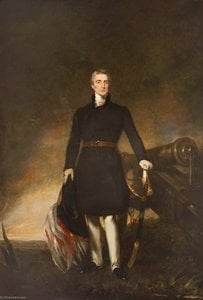
1782 - 1847

Základní informace

  • Nationality: United Kingdom
  • Top-ranked work: The Duke of Wellington (1769–1852)
  • Museums on this site:
    • Art Institute of Chicago
    • National Portrait Gallery
    • National Maritime Museum
    • English Heritage
    • Národní muzeum Soares dos Reis
  • Also known as:
    • John Philip Simpson
    • Τζον Σίμπσον
    • Джон Симпсон
    • 約翰·辛普森
  • Lifespan: 65 years
  • Works on this site: 22
  • Typical colors: phthalo green
  • Copyright status: Public domain

John Simpson: A Life in Portraiture

Early Life and Training

  • Born in London in 1782, John Simpson embarked on a career as a portrait painter during a vibrant period of British art.
  • He received his foundational training at the prestigious Royal Academy, honing his skills and establishing himself within the artistic community.
  • Crucially, Simpson spent several years as an assistant to Sir Thomas Lawrence, PRA – a leading portraitist of the era. This mentorship profoundly shaped his style and approach to capturing likenesses.

Artistic Development and Style

  • Simpson’s early work reflects the influence of Sir Thomas Lawrence, characterized by a refined technique and attention to detail. He quickly gained recognition for his ability to create flattering and accurate portraits.
  • He exhibited regularly at the Royal Academy from 1807 until his death, demonstrating consistent productivity and engagement with the art world.
  • While primarily a portraitist, Simpson’s work occasionally ventured beyond conventional society portraiture, hinting at a broader artistic sensibility.

Major Achievements and Commissions

  • Royal Patronage: In 1834, Simpson received a significant commission to travel to Portugal and paint portraits in Lisbon.
  • His success led to an appointment as Painter to the Queen of Portugal, solidifying his reputation on the international stage.
  • Notable Sitters: Simpson painted numerous prominent figures, including William IV and many other notable individuals of his time. His portraits provide valuable visual records of British society during the 19th century.

‘The Captive Slave’ and Rediscovery

  • A Turning Point: Simpson's painting, ‘The Captive Slave,’ created a significant shift in his artistic legacy. It remained largely unseen for nearly 180 years.
  • Acquisition and Recognition: The Art Institute of Chicago acquired the work in 2008, bringing it to public attention.
  • Abolitionist Significance: ‘The Captive Slave’ is now recognized as a powerful statement against slavery. It demonstrates Simpson's capacity for venturing beyond conventional portraiture and engaging with important social issues.

Legacy and Historical Significance

  • Despite some contemporary criticism suggesting his work lacked “instinct and penetration,” John Simpson established a successful career as a respected portrait painter.
  • Family of Artists: He had two sons who also pursued artistic careers – Charles, who died young, and Philip, who found success with small domestic subjects.
  • Enduring Impact: The rediscovery of ‘The Captive Slave’ has elevated Simpson's status, highlighting his talent and the painting’s importance as a symbol of the abolitionist movement. He is now recognized not only for his technical skill but also for his contribution to social commentary through art.

Rychlý kvíz

U každé otázky je pouze jedna správná odpověď.

Otázka 1:
John Simpson was a student and assistant to which prominent British painter?
Otázka 2:
Simpson received a commission that led him to paint portraits in which European capital city?
Otázka 3:
What is the title of John Simpson's rediscovered painting, now considered his masterpiece and a significant work of abolitionist art?
Otázka 4:
According to a 19th-century biographer, Sidney Lee, what was a noted characteristic of Simpson's portraiture?
Otázka 5:
Besides John Simpson, how many of his sons also practiced as artists?

Otázky a odpovědi

Mohu si prohlédnout díla umělce John Simpson podle uměleckých směrů?

Stránka Všechna umělecká hnutí seskupuje díla umělce John Simpson podle jednotlivých uměleckých směrů.

Existuje přehled všech témat, která John Simpson maloval/a?

Stránka Atlas témat mapuje díla umělce John Simpson podle tématu.

V jakém historickém období působil/a John Simpson?

John Simpson působil v období 19th Century. Toto období historicky vymezuje uměleckou činnost tohoto autora.

Je k dispozici 3D virtuální prohlídka děl umělce John Simpson?

3D galerie umělce John Simpson je stránka, která v rámci virtuální trojrozměrné galerie prezentuje umělecká díla tohoto tvůrce.

Jak mohu sledovat tvorbu umělce John Simpson chronologicky?

Prohlédněte si časovou osu děl umělce John Simpson: na stránce Chronologie děl jsou díla seřazena podle data jejich vzniku.

Mohu si prohlédnout díla umělce John Simpson podle nálady?

Stránka Galerie nálad umělce John Simpson nabízí prohlížení jeho děl rozřazených podle nálady.

Která umělecká díla umělce John Simpson mají nejvyšší počet zhlédnutí?

Stránka Statistiky pro umělce John Simpson obsahuje statistiky vypočítané z jeho děl uvedených na tato webová stránka.

Existuje kompletní seznam děl umělce John Simpson?

Veškerá díla umělce John Simpson na tato webová stránka si můžete prohlédnout na jeho stránce Všechná umělecká díla.

Jak najdu díla umělce John Simpson na konkrétní téma?

Chcete-li najít díla umělce John Simpson na konkrétní téma, navštivte jeho stránku Podle klíčových slov, kde jsou umělecká díla seskupena podle klíčových slov.