Hans Krell (Krehl/Kreil): Life and Legacy
Early Life and Career
Hans Krell, also known as Krehl or Kreil, was a German painter of the Renaissance period. Born likely in Crailsheim or Ansbach, Germany, he lived until 1565. His early career began as court painter to George the Pious, Margrave of Brandenburg-Ansbach in Ansbach. This position provided him with valuable experience and exposure to aristocratic patronage.
Service to Royalty
Krell’s artistic talents soon attracted wider attention, leading him to enter the service of King Louis II of Hungary in Prague and Buda around 1522–1526. As court portraitist, he was responsible for creating images of the Hungarian royal family and other prominent figures. This period significantly shaped his style and established his reputation as a skilled portrait painter.
The ‘Battle of Orsha’ Attribution
A pivotal moment in Krell's rediscovery came with the reattribution of the painting Battle of Orsha, previously long associated with Lucas Cranach the Elder. Art historian Dieter Koepplin convincingly argued for Krell’s authorship, dating the work to around 1524–1530. The painting depicts the battle fought on September 8, 1514, between allied Polish-Lithuanian forces and the army of Moscow. This attribution is supported by Krell's connections with patrons of the Jagiellonian dynasty and rulers of Prussia.
Artistic Style and Influences
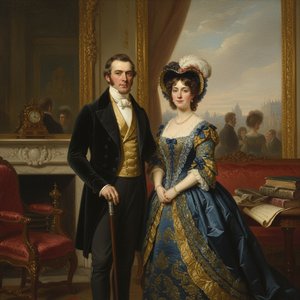
Krell’s style reflects the influences of his time, particularly that of Lucas Cranach the Elder. He was known for his realistic portraiture, attention to detail, and ability to capture the likenesses of his subjects. His work often features rich colors and a refined sense of composition.
- Portraiture: Krell excelled in creating lifelike portraits that conveyed both physical appearance and social status.
- Historical Paintings: The ‘Battle of Orsha’ demonstrates his ability to depict large-scale historical events with dramatic flair.
Patronage and Major Achievements
Krell earned the title Fürstenmaler (painter of princes) due to his extensive work for German nobility, including Albrecht of Brandenburg-Ansbach, Hedwig Jagiellon, Electress of Brandenburg, and Elector Augustus of Saxony. He continuously completed paintings of Saxon princes for the ceremonial hall and council chamber of the Old Town Hall in Leipzig.
Legacy and Historical Significance
Although not as widely recognized as some of his contemporaries, Hans Krell played a significant role in the artistic landscape of 16th-century Germany. His work provides valuable insights into the courtly life and political events of the period. Today, examples of his paintings can be found in museums such as the Kunstsammlungen Graf von Schönborn Pommersfelden in Germany.
Otázky a odpovědi
Jak mohu sledovat tvorbu umělce Hans Krell chronologicky?
Stránka Chronologie děl představuje díla umělce Hans Krell seřazená chronologicky, rok po roce.
Pod jakými dalšími jmény nebo pseudony je Hans Krell známý/á?
Hans Krell se vystupuje även pod alternativními jmény Hans Krel, Hans Krehl, Krell, Ганс Крелл.
Kde najdu díla umělce Hans Krell uspořádaná podle tématu?
Díla umělce Hans Krell si můžete prohlédnout podle tématu na stránce Atlas témat.
Mohu navštívit virtuální muzeum děl umělce Hans Krell?
Díla umělce Hans Krell si můžete prohlédnout v 3D galerii na jeho stránce 3D galerie.