Early Life and Artistic Training
The story of Aleksander Vardi begins in the city of Tartu, where he was born on 4 September 1901. It was a place of deep learning, and it would shape the very foundation of his creative spirit. As a young man with a growing hunger for the visual language of his craft, he sought out the Pallas Art School in 1919. This was a formative time, a period where his early ambitions began to take a tangible shape through disciplined study and observation.
Within the halls of the Pallas Art School, Vardi found himself under the watchful eyes and guidance of masters such as Konrad Mägi and Ado Vabbe. These teachers provided more than just technical instruction; they offered a window into the evolving sensibilities of the era. He spent years absorbing their methods and refining his hand, navigating the complexities of form and light. By the time he graduated in 1925, he had emerged not merely as a student, but as a practitioner ready to claim his place among his peers.
That same year, 1925, marked a significant milestone in his professional life when he became a member of the Pallas art association. This affiliation tied him closely to the artistic community of Estonia, signaling his arrival as a dedicated painter. His early years were defined by this rigorous training and the steady development of a vision that would eventually lead him far beyond the borders of his home.
Studies in Paris and Early Career
After completing his formal training, Vardi sought the light and atmosphere of France, arriving in Paris in 1925. He remained in the city for four years, absorbing the shifting currents of European art until 1929. This period of immersion allowed him to refine his vision away from his native surroundings, preparing him for the professional life that awaited his return to Estonia. Upon his homecoming, he spent several years working as a freelance artist in Tartu, navigating the quiet rhythms of a working painter while establishing his presence in the local art scene.
In 1932, his professional path took a turn toward the theatrical when he began working as a decorator for the Endla Theatre in Pärnu. This role required a different kind of visual discipline, moving from the private canvas to the public stage. His time in Pärnu was productive, yet his ambitions eventually pulled him back toward the academic halls of his youth. By 1934, he had left the theatre to take up a position as a lecturer at the Pallas Art School, returning to the very institution that had first shaped his hands.
Mid-Career and Professional Roles
The middle years of Vardi's life were marked by a complex interplay of professional achievement and personal hardship. In 1947, he reached a significant milestone when he was awarded the title of professor, a recognition of his standing within the artistic community. However, this period of prestige was shadowed by political and social shifts. Between 1950 and 1956, he faced the hardship of being expelled from the Artists’ Association, a period that coincided with a more difficult chapter in his life. During these years, he found stability through his work at the Vanemuine Theatre in Tartu, where he served as an artist from 1950 until 1957.
As the years progressed, Vardi's creative spirit sought new directions despite the constraints of his environment. In 1958, he began to explore the possibilities of abstractionism, working alongside a group of young, forward-looking artists. This experimentation allowed him to push beyond his previous styles and engage with the evolving currents of modern art. His commitment to his craft remained steady even as he navigated the changing landscape of Estonian artistic life, eventually finding his way back to the formal structures of the art world after his period of exclusion.
Technique and Artistic Styles
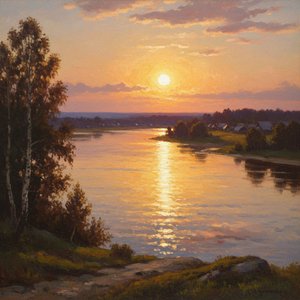
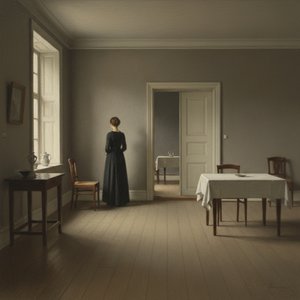
The evolution of Vardi’s hand was shaped by the shifting currents of the early twentieth century. His formative years at the Pallas Art School saw him absorbing the expressionism of Konrad Mägi and the restless energy of Ado Vabbe’s futurism. These early influences provided a foundation for a career that would refuse to remain static. As he moved through the streets of Paris, his vision began to settle into the tenets of New Realism, a style that grounded his observations in a more tangible reality. This period of study allowed him to refine his perception, capturing the world with a clarity that would soon give way to more atmospheric pursuits.
By the second half of the 1930s, his brushwork leaned heavily into impressionism, a transition that flourished during his time in Paris. He found a particular resonance in the Sezanne style, using it to structure his compositions with a sense of weight and permanence. This was not a brief phase, however. As the decades progressed, he began to experiment with the spontaneous bursts of paint found in abstractionism. He sought out the company of forward-looking artists to explore this more liberated language, continuing to push the boundaries of his form until 1972, when he composed his final abstract work.
In the twilight of his creative life, Vardi turned his attention away from the complexities of abstraction and toward the quietude of the natural world. He found a renewed focus in the study of still-life, specifically through the depiction of flowers. These later works offered a different kind of stillness compared to the energetic experiments of his middle years.
Exhibitions and Recognition
The recognition of his talent was marked by the title of Meritorious Artist of the Estonian SSR, a distinction that acknowledged his long-standing presence in the artistic landscape. His life was marked by a deep connection to the cultural centers of Estonia, particularly Tartu, where his presence was felt through various public displays of his creative output. These exhibitions allowed the public to witness the evolution of his vision, from his earlier explorations to his later, more spontaneous expressions.
In the autumn of 1961, the Tartu Kunstimuuseum hosted a solo exhibition to celebrate his sixtieth birthday, a significant moment that brought his body of work before a wide audience. Years later, in the late 1960s, his work found a prominent stage at the Eesti Kunstimuuseum, where a solo exhibition was held from 3 October 1969 to 10 November 1969. These gatherings were more than mere displays; they were moments where his personal history and his visual language met the eyes of the community.
Even after his passing, his influence continued to be felt through the curation of his legacy. In the summer of 1984, the Tartu Kunstimuuseum organized a posthumous exhibition titled Valik Aleksander Vardi abstraktsest loomingust. This collection focused on his abstract creations, offering a final look at the spontaneous bursts of paint that characterized his later years. Through these exhibitions, his presence remained anchored in the museums of Estonia, ensuring his artistic voice endured.
Otázky a odpovědi
Mohu si prohlédnout díla umělce Aleksander Vardi podle tématu?
Stránka Atlas témat umělce Aleksander Vardi umožňuje prohlížet jeho díla podle jejich témat.
Pod jakými dalšími jmény nebo pseudony je Aleksander Vardi známý/á?
Aleksander Vardi je známý/á také pod jmény Aleksander Bergman.
Mohu si prohlédnout díla umělce Aleksander Vardi podle nálady?
Stránka Galerie nálad umělce Aleksander Vardi nabízí prohlížení jeho děl rozřazených podle nálady.
Mohu si prohlédnout díla umělce Aleksander Vardi podle klíčových slov?
Díla umělce Aleksander Vardi můžete prozkoumat podle klíčových slov na jeho stránce Podle klíčových slov. Každé klíčové slovo seskupuje související umělecká díla.