


 Zobrazit v interiéru
 Odeslat
 Sdílet
 Podrobnosti
 Průvodce

 Stáhnout obrázek
 Podobné kousky
 Rentgenové snímky
 Slideshow
 Statistiky
Mahakali
 Contemporary Realism
 1980
1980 74.0 x 56.0 cm
 Přečíst si více
Ručně malovaná olejová reprodukce
Ručně malované olejné plátno v libovolném rozměru i s rámem, vyrobené našimi umělci na zakázku. ( Přepnout na tiskové verze Přepnout na digitální verzi obrazu)




































Vyberte si z našich přednastavených velikostí, které odpovídají původním proporcím díla.

Můžete zadat vlastní rozměry pro konkrétní rám nebo prostor. Pokud se vámi vybraná velikost neshoduje s proporcemi původního obrazu, dílo buď ořízneme, nebo jej doplníme ručně malovanými prvky. Před zahájením výroby vám bude zaslán digitální náhled ke schválení.
Upozorňujeme, že náhled na obrazovce neodpovídá skutečnému ořezu ani rozšíření. Pouze digitální náhled přesně zobrazí finální kompozici.
Ačkoliv je možné zvolit vlastní velikost, pro zachování původních proporcí doporučujeme vybrat rozměr z předdefinovaného seznamu.
Po přijetí objednávky vám tým ArtsDot.com zašle e-mail s pokyny a poskytne náhledovou verzi.
Celosvětová doprava () za 3–4 týdny namísto standardních 5 týdnů. (24 září). Bez kompromisů v kvalitě.

Zdarma celosvětová expresní doprava

Vysoce kvalitní lněné plátno

Úplné pojištění přepravy

Záruka vrácení celního poplatku

Záruka věrného barevného shodu

100dení lhůta pro vrácení zboží (pouze při vadách výroby)

100% garance vrácení peněz

Sleva při více objednávkách
 Skleněná varianta je dostupná pouze u rozměrů menších než 110 cm

Mahakali
Technika provedení
Velikost reprodukce
-


Celková cena
$ 263
Související díla

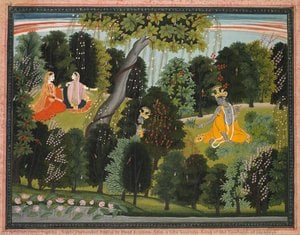


Biografie umělce
A Symphony of Color and Devotion: The Life of Y.G. Srimati
Y.G. Srimati stands as a singular figure in twentieth-century Indian art, recognized for her distinctive blend of musical performance, dance, and painting—a testament to the holistic artistic spirit prevalent during her era. Born in Mysuru, India, in 1926, she possessed an innate talent nurtured from childhood through rigorous training in Carnatic music, Bharatanatyam dance, and traditional Indian painting techniques. This multifaceted upbringing profoundly shaped her artistic vision and fueled her unwavering dedication to capturing the essence of Hindu mythology and nationalist ideals within her canvases. Her very name carried a legacy of prestige; the initials Y.G. were an honorific title granted by the Maharaja of Mysore to her grandfather, the chief astrologer of his court.
The tapestry of Srimati’s life was woven with the threads of India's struggle for sovereignty. Raised in the heated climate of the independence movement, she was a young woman deeply moved by the political and spiritual shifts of her nation. As a teenager in the 1940s, she performed devotional songs, or bhajans, at prayer meetings for Mahatma Gandhi during rallies in Chennai. These personal encounters with Gandhi and the profound atmosphere of the independence movement left an indelible mark on her soul, directing her artistic focus toward themes of religious epic literature and rural culture as a conscious expression of nationalist sentiment.
The Evolution of an Indian Aesthetic
From 1952 onwards, Srimati’s career blossomed with a solo exhibition at the Government Museum in Madras, marking a pivotal moment that garnered critical acclaim and solidified her reputation as an emerging talent. Her artistic style was characterized by an innovative approach to spatial representation—a technique heavily influenced by the Bengal School of Art spearheaded by Nandalal Bose and drawing inspiration from the monumental frescoes adorning the Ellora and Ajanta Caves. She sought to create a continuous lineage for an Indian style of painting, one that resisted mere imitation of Western traditions in favor of something deeply rooted in indigenous identity.
Her explorations extended into the burgeoning Indian Space Painting movement, a stylistic trend that merged Persian influences with local traditions to depict space harmoniously. Srimati’s work was not merely decorative; it was an act of devotion. She skillfully employed multiple vanishing points and luminous watercolours to create a dynamic visual experience that transcends conventional perspectives. Her paintings often reflected the sculptural qualities of Indian dance, translating the rhythmic movements of Bharatanatyam into fluid, expressive brushstrokes on paper.
Legacy and Global Resonance
In the early 1960s, Srimati’s journey took her to the United States, where New York became her home for the remainder of her life. Despite the distance from her birthplace, her commitment to her vision remained steadfast. Her later works continued to explore the spiritual dynamics of her chosen subjects, bridging the gap between the ancient traditions of South India and the modern global stage. This culminated in a significant milestone when The Metropolitan Museum of Art in New York mounted a retrospective exhibition of her work, showcasing her mastery of watercolour.
The historical significance of Y.G. Srimati lies in her ability to synthesize disparate art forms into a unified spiritual language. Her achievements can be summarized through the following pillars of her artistry:
- Cultural Synthesis: The seamless integration of Carnatic music, classical dance, and painting into a singular aesthetic vision.
- Nationalist Expression: Using traditional subject matter—from village life to epic legends—to assert Indian identity during and after the independence movement.
- Technical Innovation: The adaptation of ancient fresco techniques and the Bengal School's influence into modern watercolour compositions.
- Spiritual Narrative: A lifelong dedication to portraying Hindu mythology not just as myth, but as a living, breathing spiritual reality.
Through her luminous watercolours, Srimati ensured that the vibrant pulse of Indian tradition would continue to resonate far beyond the borders of her homeland, leaving behind a legacy of profound beauty and cultural pride.

y. g. srimati
1926 - 2007 , India
Rychlé informace
- Artistic Movement Or Style: Indian space painting; Bengal School influence
- Artists Or Movements Influenced By This Artist: ['Will Barnet']
- Artists Who Influenced This Artist:
- Nandalal Bose
- Ajanta Caves
- Date Of Birth: Mysuru, India (1926)
- Date Of Death: 2007
- Full Name: y. g. srimati
- Nationality: Indian
- Notable Artworks:
- Mahakali
- Apsara with Harp
- Carudatta Presenting a Pearl Necklace
- Place Of Birth: Mysore, India
Související články

Francisco Goya: 25 mistrovských děl španělského génia | ArtsDot.cz
Prozkoumejte 25 ikonických děl Francisca Goyi – od romantických portrétů po temné tiskoviny. Objevte příběhy, techniky a umělecký význam španělského mistra na ArtsDot.cz. Reprodukce obrazů pro váš interiér.

Raja Ravi Varma: Bridging Tradition & Modernity in 19th-Century Indian Art
Explore the life & art of Raja Ravi Varma, a pioneer who fused European techniques with Indian iconography. Discover his iconic paintings, lasting legacy, and influence on modern Indian art at ArtsDot.

Jan van Kessel the Elder: A Baroque Master of Floral Still Life & Miniature Portraiture
Discover the exquisite detail of Jan van Kessel the Elder's Baroque floral still lifes & captivating miniatures. Explore his artistic legacy, scientific precision, and lasting influence on 17th-century Flemish painting.
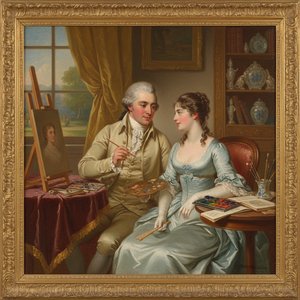
Richard Cosway: Capturing Regency Elegance & Intimacy Through Portraiture
Explore the captivating world of Richard Cosway, Regency society's celebrated portrait miniaturist. Discover his exquisite art, aristocratic patrons & lasting legacy with ArtsDot.

Shadow Catcher: Edward S. Curtis & the Ethnographic Portraiture of a Vanishing West
Explore the life & work of Edward S. Curtis, the 'Shadow Catcher,' and his groundbreaking photographic documentation of Native American cultures. Discover iconic images from *The North American Indian* and a critical look at his lasting legacy.