


 Zobrazit v interiéru
 Odeslat
 Sdílet
 Podrobnosti
 Průvodce

 Stáhnout obrázek
 Podobné kousky
 Rentgenové snímky
 Slideshow
 Statistiky
Hosta
 Oil On Canvas
- WallArt
- Contemporary Realism
 1943
1943 66.0 x 48.0 cm
 CAFA Art Museum
 Přečíst si více
Ručně malovaná olejová reprodukce
Ručně malované olejné plátno v libovolném rozměru i s rámem, vyrobené našimi umělci na zakázku. ( Přepnout na tiskové verze Přepnout na digitální verzi obrazu)




P118B Kč10

P118H Kč10

P118W Kč10

P438Z Kč10

P508JH Kč12

P508YH Kč12

P805H Kč10

P805Z Kč10

P919BZ Kč10

P919G Kč10

P919XJ Kč10

P959ZH Kč10

P968JZ Kč12

W106C Kč8

W218G Kč10

W218JH Kč8

W218Y Kč10

W307PJ Kč10

W316G Kč10

W316PJ Kč8

W316Y Kč10

W398PJ Kč8

W4111J Kč10

W500HY Kč15

W500JH Kč15

W692G Kč12

W849H Kč8

W940BG Kč15

W953PJ Kč8




Vyberte si z našich přednastavených velikostí, které odpovídají původním proporcím díla.

Zadejte šířku a výšku, které potřebujete pro váš rám nebo stěnu. Protože se jedná o ruční malbu, při výběru jiného formátu může umělec kolem obrazu domalovat o něco více, nebo jej mírně oříznout — rozhodnete si vy. Před zahájením malby vám zašleme digitální náhled ke schválení. Obraz zobrazený na této stránce neodpovídá skutečnému výsledku — pouze digitální náhled jej zobrazuje.
Po přijetí objednávky vám tým ArtsDot.com zašle e-mail s pokyny a poskytne náhledovou verzi.
Celosvětová doprava () za 3–4 týdny namísto standardních 5 týdnů. (22 říjen). Bez kompromisů v kvalitě.

Zdarma celosvětová expresní doprava

Vysoce kvalitní lněné plátno

Úplné pojištění přepravy

Záruka vrácení celního poplatku

Záruka věrného barevného shodu

100dení lhůta pro vrácení zboží (pouze při vadách výroby)

100% garance vrácení peněz

Sleva při více objednávkách
 Skleněná varianta je dostupná pouze u rozměrů menších než 110 cm

Hosta
Technika provedení
Velikost reprodukce
-


Celková cena
Kč 5630
A Pioneer Bridging Worlds: The Life and Art of Xu Beihong
Xu Beihong, born Xu Shoukang in 1895 in the tranquil town of Yixing, Jiangsu province, stands as a monumental figure in 20th-century Chinese art. His life was a compelling narrative of artistic evolution, dedicated to forging a new path for Chinese painting—one that harmoniously blended the rich traditions of his homeland with the innovations of Western art. From humble beginnings steeped in classical learning and traditional brushwork under the tutelage of his father, Xu Dazhang, a struggling artist himself, young Beihong’s early life was marked by both artistic promise and economic hardship. This formative period instilled within him not only technical skill but also a deep appreciation for Chinese culture and a resilient spirit that would define his career. The family's itinerant existence, painting portraits and landscapes to make ends meet, exposed him to the realities of rural China and fueled an early ambition to elevate artistic expression beyond mere representation. Early influences shaped Beihong’s artistic vision profoundly. His father’s unwavering dedication to preserving Chinese art forms—particularly landscape painting—provided a bedrock of knowledge and aesthetic sensibility. Simultaneously, exposure to Western art during his studies in Paris ignited a desire to experiment with new approaches and techniques. This dual engagement proved instrumental in shaping his distinctive style: a masterful synthesis of Eastern idealism and Western realism. He embraced Impressionistic principles, prioritizing capturing fleeting moments of light and atmosphere—a bold departure from the meticulous detail favored by earlier generations of Chinese painters. Yet, he never abandoned the fundamental tenets of traditional brushwork, maintaining a deliberate control over line and color that conveyed profound emotion and spiritual depth. The artwork itself – “Hosta” – exemplifies this remarkable fusion. Painted in 1943 amidst the tumultuous backdrop of wartime China, it depicts a single specimen of Hosta plant—a symbol of resilience and enduring beauty—against a muted tonal palette dominated by shades of grey and brown. The artist’s technique is characterized by loose brushstrokes layered upon one another to build up texture and depth, creating an illusionistic surface that captures the subtle nuances of natural light. Careful attention to detail renders individual leaves and flower buds with remarkable accuracy, demonstrating Beihong's mastery of observation and rendering form. However, these precise representations are tempered by a broader Impressionistic sensibility—a deliberate blurring of edges and softening of contours—that imbues the painting with an ethereal quality. Beyond its technical prowess, “Hosta” resonates with deeper symbolic significance. The Hosta plant itself represents perseverance through adversity; its ability to thrive in shaded conditions speaks to the enduring spirit of Chinese culture during a period of significant upheaval. The muted color scheme reflects the somber mood of the era—a poignant reminder of loss and sacrifice—yet simultaneously conveys an underlying sense of hope and optimism. The artist’s deliberate choice of subject matter – a humble plant rather than grand landscapes – underscores Beihong's belief that beauty can be found in simplicity and that artistic expression should serve as a conduit for conveying profound emotional truths. Ultimately, “Hosta” transcends mere botanical depiction; it is an embodiment of Xu Beihong’s artistic philosophy—a testament to the transformative power of blending tradition with innovation. It invites viewers to contemplate not only the visual splendor of the natural world but also the enduring values of resilience, contemplation, and spiritual awareness. This artwork stands as a beacon of Chinese art history, demonstrating that true artistry lies in capturing both the tangible beauty of existence and the intangible essence of human experience.Otázky a odpovědi
Jakou techniku a styl charakterizuje „Hosta“ od Xu Beihong?
„Hosta“ je vytvořeno v technice Oil On Canvas v rámci směru Contemporary Realism.
Kde najdu průvodce k dílu "Hosta"?
Pro dílo „Hosta“ od Xu Beihong je k dispozici stránka Průvodce: tiskem připravený informační list o uměleckém díle, navržený pro studenty a použití ve výuce.
Kde je dnes možné vidět dílo „Hosta“ od Xu Beihong?
Originál díla „Hosta“ od Xu Beihong je uložen v instituci CAFA Art Museum, Pekin, Čínská lidová republika. Reprodukce však umožňuje toto dílo vystavit i ve vašem domově.
Související díla


Biografie umělce
A Pioneer Bridging Worlds: The Life and Art of Xu Beihong
Xu Beihong, born Xu Shoukang in 1895 in the tranquil town of Yixing, Jiangsu province, stands as a monumental figure in 20th-century Chinese art. His life was a compelling narrative of artistic evolution, dedicated to forging a new path for Chinese painting—one that harmoniously blended the rich traditions of his homeland with the innovations of Western art. From humble beginnings steeped in classical learning and traditional brushwork under the tutelage of his father, Xu Dazhang, a struggling artist himself, young Beihong’s early life was marked by both artistic promise and economic hardship. This formative period instilled within him not only technical skill but also a deep appreciation for Chinese culture and a resilient spirit that would define his career. The family's itinerant existence, painting portraits and landscapes to make ends meet, exposed him to the realities of rural China and fueled an early ambition to elevate the status of art and artists. A pivotal moment arrived when he adopted the name “Beihong,” meaning "sad wild goose," a reflection perhaps of his youthful anxieties and aspirations.The European Awakening: Forging a New Artistic Vision
Driven by a thirst for knowledge and a desire to modernize Chinese art, Xu Beihong embarked on a transformative journey to Europe in 1917. Initially studying in Tokyo, he soon secured a coveted scholarship to the prestigious École Nationale Supérieure des Beaux-Arts in Paris. This period proved crucial in shaping his artistic philosophy and technique. Immersed in the heart of European art, he meticulously studied oil painting and drawing, mastering Western principles of perspective, composition, and realism. While embracing these new techniques, Xu Beihong remained critical of certain modernist trends prevalent at the time, favoring instead the classical traditions he encountered. He adopted the French name "Ju Péon" during his stay, a testament to his immersion in European culture. However, it was not merely technical skill that he sought; he aimed to understand the underlying principles of Western art and adapt them to revitalize Chinese painting—a vision articulated in his later writings and teachings. This period laid the foundation for his unique artistic style, characterized by a powerful synthesis of Eastern aesthetics and Western techniques. He spent years absorbing the works of masters like Ingres and Delacroix, not simply copying their styles but analyzing their approaches to form, color, and light. His time in Germany allowed him to study sculpture, further broadening his artistic horizons.Iconic Motifs and Artistic Style: A Synthesis of East and West
Upon returning to China in 1927, Xu Beihong embarked on a prolific career marked by groundbreaking works that captured the spirit of a nation undergoing profound change. He quickly became renowned for his dynamic depictions of horses and birds—motifs that transcended mere representation to become powerful symbols of strength, freedom, and national pride. His horses, in particular, are celebrated for their muscularity, energy, and expressive power, often depicted galloping across vast landscapes with a sense of untamed spirit. Galloping Horse, perhaps his most iconic work, embodies this perfectly—a testament to the vitality and resilience of the Chinese people. The painting is not just a portrait of a horse; it’s an embodiment of China's spirit, its power, and its connection to the land. Beyond these signature subjects, Xu Beihong also excelled in portraiture and historical painting, demonstrating his mastery of both oil painting and traditional ink wash techniques. He seamlessly integrated Western perspective and composition into the fluidity of Chinese brushwork, creating a visual language that was both innovative and deeply rooted in tradition. Foolish Old Man Who Removed the Mountains, inspired by a traditional Chinese fable, exemplifies his ability to imbue classical themes with modern energy and social commentary. His work is characterized by bold colors, dynamic compositions, and a masterful use of texture—a testament to his versatility as an artist.Legacy and Influence: Shaping Modern Chinese Art Education
Xu Beihong’s impact extended far beyond his own artistic creations; he was also a pioneering art educator who profoundly shaped the development of modern Chinese art education. After returning to China, he held teaching positions at several prestigious universities, including National Central University and Peking University, where he tirelessly advocated for curriculum reform. He championed the incorporation of Western sketching and oil painting techniques into traditional Chinese art programs, believing that this integration was essential for revitalizing Chinese artistic expression. His approach wasn't about discarding tradition but rather enriching it with new tools and perspectives. Following the founding of the People’s Republic of China in 1949, he became president of the Central Academy of Fine Arts and chairman of the China Artists Association, further solidifying his influence on the nation’s artistic landscape. He trained generations of artists who went on to become leading figures in Chinese art, carrying forward his vision of a modern yet culturally grounded aesthetic. Xu Beihong's emphasis on artistic conception, the importance of life experiences, and the integration of Eastern and Western traditions left an indelible mark on Chinese art history, cementing his legacy as one of its most influential figures. His work continues to inspire artists and captivate audiences worldwide, serving as a powerful reminder of the enduring power of art to bridge cultures and transcend boundaries.Key Achievements and Recognition
Throughout his career, Xu Beihong achieved significant recognition for his artistic contributions and educational leadership. He was awarded numerous medals and honors, including the National Arts Prize in 1953. His paintings are held in major museums throughout China and internationally, demonstrating their enduring value and significance. He is considered one of the "Four Great Academy Presidents" – a group of influential figures who shaped modern Chinese art education. Xu Beihong's legacy extends beyond his individual works; he fundamentally altered the trajectory of Chinese painting, fostering a new generation of artists who embraced both tradition and innovation. His influence can still be felt in contemporary Chinese art today.
Xu Beihong
1895 - 1953 , Čína
Rychlé informace
- Artistic Movement Or Style: Modern čínská malba
- Artists Or Movements Influenced By This Artist: ['Moderni čínští umělci']
- Date Of Birth: 19. 7. 1895
- Date Of Death: 26. 9. 1953
- Full Name: Xu Beihong
- Nationality: Čínský
- Notable Artworks:
- Kůň v pohybu
- Šílenec
- Matka a dcera
- Place Of Birth: Yixing, Čína
Související články

The Enduring Legacy of Oil on Canvas: Technique, History & Aesthetic Impact
Explore the rich history & techniques of oil painting – from Renaissance masters to Impressionism. Discover pigments, layering methods, and why this timeless medium endures. Expert insights for artists & art enthusiasts.

The Enduring Power of Painting: A Historical & Contemporary Exploration of Form and Emotion
Explore the rich history & enduring techniques of oil painting with ArtsDot. Discover masterpieces, learn about art collecting, and find authentic handmade reproductions crafted by skilled artists.

Trvalý odkaz olejomalby: Technika, historie a současná praxe
Prozkoumejte historii a techniky olejomalby s námi! Od středověku po současnost – detailní průvodce pro milovníky umění a profesionály. Objevte tajemství mistrů a inspirujte se.

Oil on Canvas: A Historical & Technical Exploration of a Timeless Artistic Medium
Explore the rich history & enduring techniques of oil painting on canvas. Discover the science behind its longevity, conservation practices, and contemporary relevance. Expert insights for art enthusiasts.
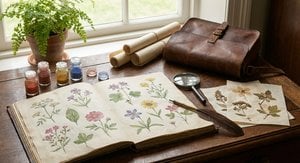
The Flourishing Canvas: A Historical Journey Through Botanical Illustration
Explore the captivating history of botanical illustration! Discover renowned artists like Robert Havell & Mary Walcott, learn about techniques, and find museum-quality art at ArtsDot.com.