


 Náhled
 Sdílet
 Sdílet
 Podrobnosti o díle

 Stáhnout
 Podobné položky
 Rentgenové snímky
 Slideshow
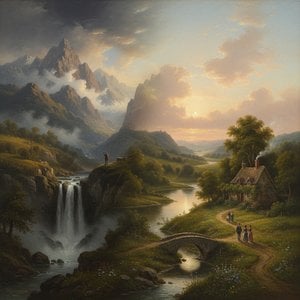
Tintern Abbey

 Zobrazit více
Ručně malovaná olejová reprodukce
Ručně malovaná olejná barva na plátně ve vašem zvoleném rozměru i s rámem, vyrobená našimi umělci na zakázku. ( Koupit tisk Koupit obrázek)




































Vyberte si z našich přednastavených velikostí, které odpovídají původním proporcím díla.

Můžete zadat vlastní rozměry pro konkrétní rám nebo prostor. Pokud se vámi vybraná velikost neshoduje s proporcemi původního obrazu, dílo buď ořízneme, nebo jej doplníme ručně malovanými prvky. Před zahájením výroby vám bude zaslán digitální náhled ke schválení.
Upozorňujeme, že náhled na obrazovce neodpovídá skutečnému ořezu ani rozšíření. Pouze digitální náhled přesně zobrazí finální kompozici.
Ačkoliv je možné zvolit vlastní velikost, pro zachování původních proporcí doporučujeme vybrat rozměr z předdefinovaného seznamu.
Po přijetí objednávky vám tým ArtsDot.com zašle e-mail s pokyny a poskytne náhledovou verzi.
Celosvětová doprava () za 3–4 týdny namísto standardních 5 týdnů. (27 srpen). Bez kompromisů v kvalitě.

Zdarma celosvětová expresní doprava

Vysoce kvalitní lněné plátno

Kompletní přepravní pojištění

Záruka vrácení celního poplatku

Záruka přesného barevného shodu

60denní lhůta pro vrácení zboží (pouze při vadách výroby)

100% garance vrácení peněz

Sleva při hromadné objednávce
 Skleněná varianta je dostupná pouze u rozměrů menších než 110 cm

Tintern Abbey
Technika reprodukce
Rozměry reprodukce
-


Celková cena za výběr
$ 288
Podobná umělecká díla


Biografie umělce
The Master of the Muted Palette: The Life and Legacy of William Callow
In the grand tapestry of Victorian art, where many sought to overwhelm the senses with dramatic light and vibrant color, William Callow carved a niche of profound serenity. Born in Greenwich in 1812, Callow was an artist of remarkable constancy, a man whose artistic vision remained anchored in the delicate traditions of the early nineteenth century even as the world around him underwent radical industrial transformation. His life was a testament to the power of meticulous observation, and his work serves as a window into a vanished era of European landscapes, captured with a precision that feels both intimate and eternal.
Callow’s journey into the heart of the visual arts began in childhood, driven by a lineage of creative talent. His early training was far from accidental; he was apprenticed to Copley Fielding, an experience that instilled in him the fundamental discipline of sketching en plein air. This foundational skill—the ability to sit before nature and translate its fleeting essence onto paper—would become the heartbeat of his entire oeuvre. As he matured, his education expanded under the guidance of Theodore and Thales Fielding, where he mastered the intricate complexities of aquatint engraving and the delicate application of watercolor. These formative years in London and later in Paris provided him with a technical toolkit that allowed him to navigate between the worlds of precise topographical documentation and evocative atmospheric painting.
A Journey Through Light and Texture
The development of Callow’s style was deeply influenced by his time in France, where the works of Richard Parkes Bonington offered a new horizon of possibility. While he absorbed the lightness of the French school, Callow did not succumb to flamboyant expressionism. Instead, he refined a method characterized by a restrained, almost monastic devotion to tonal accuracy. He became a master of the monochrome and the subtle wash, utilizing shades of grey, ochre, and soft brown to build depth and texture. To look at a Callow watercolor is to witness a masterful command of medium; he could render the weathered grain of an ancient stone wall or the translucent ripple of water with equal, breathtaking fidelity.
His technical prowess was not limited to the brush alone. As an engraver and illustrator for prestigious publications such as The Illustrated London News and The Cornhill Magazine, Callow possessed a unique ability to communicate narrative through line and shadow. This dual identity as both a fine artist and a skilled illustrator allowed him to capture the pulse of Victorian England, documenting everything from the bustling urbanity of London to the quiet, pastoral corners of the English countryside. His work functioned much like a precursor to the travel photography of later generations, satisfying a public hunger for picturesque views of European cities and coastal retreats.
The Enduring Resonance of a Quiet Observer
Throughout his long and prolific career, which spanned nearly nine decades, Callow remained remarkably true to his artistic principles. He was a direct heir to the topographic watercolor tradition, a style that emphasized clarity and topographical truth over romanticized distortion. This steadfastness earned him a place of respect within the Society of Painters in Water Colours, where he exhibited annually for much of his life. Even at the age of ninety-five, Callow’s dedication was such that he attended a retrospective exhibition of his own work, a poignant moment that celebrated a lifetime of unwavering commitment to his craft.
The historical significance of William Callow lies in his role as a visual chronicler of a changing world. His paintings are more than mere landscapes; they are atmospheric records of memory and place. By eschewing the trend toward heavy body-color and instead embracing the purity of the watercolor wash, he preserved a sense of lightness and air that is often lost in more heavily pigmented works. Today, his legacy survives in the quiet beauty of his compositions, which continue to evoke the nostalgic charm of the nineteenth century, reminding us of the profound emotional depth that can be found in the most subtle of observations.

william callow
1812 - 1908 , United Kingdom
Rychlé fakta
- Artistic Movement Or Style: Romanticism
- Artists Or Movements Influenced By This Artist: ['Hudson Lowe']
- Artists Who Influenced This Artist:
- John Constable
- George Frederic Handel
- Date Of Birth: 1812 Greenwich UK
- Date Of Death: 1908
- Full Name: William Callow
- Nationality: British
- Notable Artworks:
- Coastal Landscape with seamen loading ships
- Tintern Abbey
- Religious procession
- Place Of Birth: Greenwich UK
Související články

Romantická krajina v malbě: 10 mistrovských děl, které definovaly umělecký proud | ArtsDot
Prozkoumejte 10 ikonických děl romantické krajinářské malby! Objevte příběhy Caspara Davida Friedricha, Turnera a dalších mistrů. Reprodukce obrazů nejvyšší kvality pro váš interiér na ArtsDot.com.

The Sublime and the Picturesque: Exploring Emotion & Nature in Romantic Landscape Painting
Explore the emotional power of Romantic landscape painting! Discover the sublime & picturesque traditions, key artists like Friedrich & Cole, and find your perfect artwork at ArtsDot.

Hubert Robert: Picturing Ruins, Preserving Memory – A Study of Romantic Antiquarianism & Artistic Innovation
Explore the captivating world of Hubert Robert, master of Romantic landscape painting & 'capriccio' ruins. Discover his historical context, artistic innovations, and collecting insights with ArtsDot.

Evocations of Place: A Historical Journey Through Landscape Art
Explore the rich history of landscape art with ArtsDot. Discover renowned artists, movements like Impressionism & Romanticism, and expert guidance for collecting timeless pieces. Find your perfect serene escape today!
The Sublime and the Picturesque: Exploring Emotion & Nature in Romantic Landscape Painting
Explore the emotional power of Romantic landscape painting! Discover the sublime & picturesque aesthetics, key artists like Friedrich & Cole, and lasting influence on art history. Find your perfect piece at ArtsDot.

