

 Náhled v interiéru
 Sdílet
 Sdílet
 Podrobnosti o díle
 Průvodce

 Stáhnout
 Podobné položky
 Rentgenové snímky
 Slideshow
 Q&A
Q&A Statistiky
The Fish Dinner

- 160.0 x 213.0 cm


 Zobrazit více
Giclée / Umělecký tisk
Giclée nebo plátěný tisk muzeální kvality s rychlou výrobou a širokou nabídkou povrchových úprav. ( Koupit ručně malovaný obraz Přepnout na digitální obraz)




P118B Kč10

P118H Kč10

P118W Kč10

P438Z Kč10

P508JH Kč12

P508YH Kč12

P805H Kč10

P805Z Kč10

P919BZ Kč10

P919G Kč10

P919XJ Kč10

P959ZH Kč10

P968JZ Kč12

W106C Kč8

W218G Kč10

W218JH Kč8

W218Y Kč10

W307PJ Kč10

W316G Kč10

W316PJ Kč8

W316Y Kč10

W398PJ Kč8

W4111J Kč10

W500HY Kč15

W500JH Kč15

W692G Kč12

W849H Kč8

W940BG Kč15

W953PJ Kč8




Vyberte si z našich přednastavených velikostí, které odpovídají původním proporcím díla.

Zadejte šířku a výšku, které potřebujete pro váš rám nebo stěnu. Tisk lze pouze oříznout, nikdy však nelze zvětšit obraz nad jeho původní rozměr, proto při výběru jiného formátu dochází ke ztrátě části obrazu. Před samotným tiskem vám zašleme digitální náhled k schválení. Obraz zobrazený na této stránce nenabízí skutečný výřez — ten uvidíte pouze v náhledu.
Celosvětové doručení () do 2 týdnů namísto standardních 4/5 týdnů. (2 listopad)

Zdarma celosvětová expresní doprava

Vysoce kvalitní lněné plátno

Kompletní pojištění přepravy

Záruka vrácení celního poplatku

Záruka věrného barevného souladu

100dení lhůta pro vrácení zboží (pouze při vadách výroby)

100% záruka vrácení peněz

Sleva při více objednávkách
 Skleněná varianta je dostupná pouze u rozměrů menších než 110 cm

The Fish Dinner
Giclée / Umělecký tisk
Rozměry reprodukce
-


Celková cena za vybrané možnosti reprodukcí
Kč 1346
A Glimpse into Georgian Satire: Thomas Rowlandson’s “The Fish Dinner”
Thomas Rowlandson's "The Fish Dinner," painted in 1788, isn’t merely a depiction of a convivial gathering; it’s a meticulously crafted slice of Georgian society viewed through the discerning and often critical lens of a master satirist. This remarkable monochrome illustration, rendered in ink on paper with an extraordinary command of cross-hatching and stippling, captures a scene brimming with boisterous energy and subtle social commentary – a testament to Rowlandson’s unparalleled ability to expose the follies and vanities of his era.
Rowlandson, born into modest circumstances in London, quickly established himself as a leading figure in the burgeoning world of caricature. His work wasn't simply about humor; it was a pointed critique of the upper classes, their excesses, and the prevailing social norms. “The Fish Dinner” exemplifies this perfectly, presenting a scene of apparent merriment that subtly reveals the underlying chaos and indulgence characteristic of Georgian high society. The crowded dining table, dominated by a large fireplace and surrounded by figures engaged in animated conversation and feasting, immediately establishes a sense of controlled pandemonium.
The Language of Line: Technique and Style
What truly sets this work apart is Rowlandson’s masterful technique. He abandons the conventions of color, relying entirely on tonal variations achieved through an intricate network of cross-hatching and stippling to create a remarkably rich and textured image. The varying densities of lines delineate forms with astonishing precision – from the folds of fabric draped across the table to the expressive features of the assembled guests. Notice how the loose, sketchy lines contribute to the overall feeling of spontaneity and movement; it’s as if we're witnessing a fleeting moment captured in ink.
The deliberate flatness of the composition, achieved through the absence of strong perspective and diffused lighting, further emphasizes the satirical intent. Rowlandson deliberately avoids creating a sense of depth, instead focusing on capturing the immediate impression of the scene – a snapshot of overindulgence and social awkwardness. The use of grey tones also lends the work a timeless quality, allowing it to resonate with viewers across centuries.
Symbolism and Social Commentary
Beyond its technical brilliance, “The Fish Dinner” is laden with symbolic meaning. The abundance of food, the boisterous behavior of the guests, and their exaggerated expressions all point towards a critique of the extravagance and moral laxity prevalent in Georgian society. Rowlandson’s caricatured figures – their faces contorted in laughter, gestures overly dramatic – are not meant to be admired but rather scrutinized. They represent a broader commentary on the superficiality and self-absorption that characterized the upper classes.
The inclusion of the fireplace mantel, a common feature of domestic interiors at the time, adds another layer of meaning. It serves as a backdrop to the revelry, suggesting both warmth and potential for destructive indulgence. The scene subtly suggests a warning – a reminder of the dangers of unchecked pleasure and social excess.
A Timeless Masterpiece: Reproduction Possibilities
ArtsDot is proud to offer meticulously hand-painted reproductions of Thomas Rowlandson’s “The Fish Dinner.” Our skilled artists recreate the intricate details, expressive lines, and nuanced tonal variations of the original with exceptional fidelity. Whether you're an art collector seeking a unique addition to your collection or an interior designer looking for a striking piece to enhance a space, our reproduction captures the essence of this iconic work of satire. The choice of monochrome allows it to seamlessly integrate into diverse décor styles, adding a touch of wit and historical depth.
Consider commissioning a custom size – from a compact statement piece to a grand-scale artwork for a formal setting. Each reproduction is created with the same care and attention to detail as the original, ensuring that you receive a truly exceptional work of art that will be treasured for generations to come. Explore our options today and bring this captivating glimpse into Georgian society into your home.
Otázky a odpovědi
Kdo vytvořil dílo "The Fish Dinner" a v jakém stylu je zpracováno?
Dílo "The Fish Dinner" vytvořil/a Thomas Rowlandson v rámci stylu Late 18th Century Satire. Autor/ka i toto umělecké směřování definují tradici tohoto díla.
Působí dílo "The Fish Dinner" celkově spíše světle, nebo tmavě?
Zaznamenané hodnoty pro dílo „The Fish Dinner“ od Thomas Rowlandson jsou: jas brilliant, luminance Bright Balance.
Jsou barvy díla „The Fish Dinner“ od Thomas Rowlandson syté, nebo tlumené?
Barvy díla „The Fish Dinner“ od Thomas Rowlandson mají Muted saturaci. Saturace určuje, jak jsou barvy živé nebo tlumené.
Podobná díla


Biografie umělce
A Life Etched in Satire: The World of Thomas Rowlandson
Thomas Rowlandson, born July 13th, 1757, in the bustling heart of London’s Old Jewry, was a defining voice – and pen – of Georgian England. His life began amidst financial hardship for his family, leading to a move to Richmond, North Yorkshire, but ultimately blossomed into an artistic career marked by unparalleled wit and incisive social commentary. Rowlandson wasn't merely documenting his era; he was holding a mirror to its follies, exaggerating its vanities, and immortalizing its characters with a uniquely satirical eye. From humble beginnings, nurtured by an uncle’s support that allowed him access to education at Dr. Barwis’ school in Soho Square, Rowlandson embarked on a path that would see him become one of the most celebrated – and controversial – caricaturists of his time. Even as a schoolboy, his innate talent manifested itself in playful sketches adorning the margins of his books, foreshadowing a career dedicated to visual storytelling with a mischievous edge.Formative Years and Artistic Development
Rowlandson’s formal artistic training commenced at the Royal Academy in 1772, where he honed his skills for six years, including a period of study in Paris under Jean-Baptiste Pigalle. This exposure to continental techniques proved invaluable, laying the foundation for his distinctive style – a blend of delicate draughtsmanship and bold exaggeration. However, it was upon returning to England that Rowlandson truly found his voice. Initially attempting portraiture, he soon discovered his true calling lay not in flattering representation but in pointed satire. The financial pressures following his aunt’s death further propelled him towards caricature as a means of livelihood, yet this shift wasn't merely pragmatic; it was an artistic awakening. He began to dissect the social landscape with ruthless accuracy, targeting politicians, aristocrats, and ever-present everyday citizens alike. His early works were characterized by a remarkable facility for line and a keen understanding of human expression, qualities that would become hallmarks of his mature style.Collaboration and The Rise to Prominence
The true flowering of Rowlandson’s career came through his fruitful collaboration with publisher Rudolph Ackermann. This partnership yielded some of his most enduring works, including the immensely popular *The Schoolmaster's Tour* (1809), a series of plates accompanied by verses from Dr. William Combe, and the iconic *Tour of Dr. Syntax in Search of the Picturesque* (1812). The *Dr. Syntax* series, with its subsequent installments – *Dr. Syntax in Search of Consolation* (1820) and *The Third Tour of Dr. Syntax in Search of a Wife* (1821) – captivated audiences with its whimsical narrative and Rowlandson’s masterful illustrations. These works weren't simply visual accompaniments to text; they were integral to the storytelling, enhancing the humor and social commentary through dynamic compositions and expressive characterizations. The delicate color washes and precise reed-pen outlines became synonymous with Rowlandson’s style, showcasing his technical brilliance and artistic flair. His ability to capture both the grandeur of landscapes and the absurdity of human behavior cemented his reputation as a leading artist of the era.A Legacy of Satire and Social Observation
Rowlandson's impact extends far beyond the immediate popularity of his works during his lifetime. He left behind an extensive body of art – over 381 artworks are cataloged at ArtsDot.com alone – that provides a vivid and often unflattering portrait of Georgian society. His caricatures weren’t merely about ridicule; they were astute observations on the political climate, social customs, and human foibles of his time. He fearlessly lampooned figures like the Duchess of Devonshire, William Pitt the Younger, and Napoleon Bonaparte, exposing their vulnerabilities and challenging established power structures. Beyond the overtly satirical, Rowlandson also produced a wealth of illustrations for novels and topographical works, demonstrating his versatility as an artist. His legacy continues to inspire artists and art enthusiasts today, offering a unique window into a bygone era. The enduring appeal of his work lies in its timeless relevance – the human tendencies towards vanity, hypocrisy, and absurdity that he so brilliantly captured remain remarkably consistent across centuries. His influence can be seen in subsequent generations of cartoonists and illustrators who have embraced satire as a means of social commentary.Preserving Rowlandson’s Vision
Today, Rowlandson's work is preserved in numerous museum collections worldwide, including those accessible through platforms like ArtsDot.com, which offers an extensive catalog of his creations alongside works by contemporaries such as Samuel Henry Gordon Alken and William Hogarth. Pieces like *Hengar House the Seat of Matthew Mitchell Esq., Cornwall* (1812) and *Glorious Defeat of the Dutch Navy* (1797) stand as testaments to his artistic skill and historical significance. Exploring these collections allows us to appreciate not only Rowlandson’s technical mastery but also the depth of his social insight. His art serves as a reminder that laughter can be a powerful tool for critique, and that even in the most frivolous of subjects, there is often a profound truth waiting to be revealed. The continued accessibility of his work ensures that Thomas Rowlandson's satirical vision will continue to provoke thought and inspire amusement for generations to come.
Thomas Rowlandson
1756 - 1827 , Spojené království
Rychlé informace o umělci
- Artistic Movement Or Style: Karikatura, Satira
- Artists Or Movements Influenced By This Artist:
- Gillray
- Ackermann
- Artists Who Influenced This Artist:
- Rubens
- Gainsborough
- Date Of Birth: 13. července 1757
- Date Of Death: 21. dubna 1827
- Full Name: Thomas Rowlandson
- Nationality: Britský
- Notable Artworks:
- Schoolmaster Tour
- Dr. Syntax
- Hengar House
- Place Of Birth: Londýn, Velká Británie
Související články

The Sharpest Wit: A Historical Exploration of Satire in Visual Culture
Explore the history of satire in art! From ancient masters like Aristophanes to Goya & Grosz, discover how artists use wit and critique to reflect—and challenge—society. Expert insights at ArtsDot.
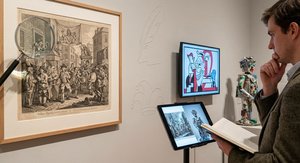
The Sharpest Wit: A Critical Exploration of Satire in Art History – From Hogarth to Contemporary Critique
Explore the history of satire in art! From Hogarth's London to contemporary critique, discover how artists use wit & visual power to reflect and challenge society. Expert insights at ArtsDot.

Top 10 slavných obrazů s dominantní černou barvou | ArtsDot.cz
Prozkoumejte 10 nejslavnějších obrazů s dominantní černou barvou od Van Gogha, Muncha a dalších mistrů. Objevte příběhy za uměleckými díly, techniky a inspiraci. Reprodukce obrazů nejvyšší kvality na ArtsDot.com.
Top 10 slavných obrazů v odstínech černé – Umění a dekor s ArtsDot
Prozkoumejte 10 nejslavnějších obrazů ovládaných odstíny černé. Objevte příběhy za uměleckými díly, techniky a inspiraci ikonických mistrů. Reprodukce obrazů s ArtsDot – luxusní dekorace pro váš domov. Prohlédněte si celou kolekci online!

Thomas Rowlandson: Satire, Society & the Art of Caricature in Georgian England
Explore the witty world of Thomas Rowlandson, master Georgian caricaturist! Discover his satirical prints & insightful social commentary on 18th-century England. Learn about his life, techniques, and enduring influence.