


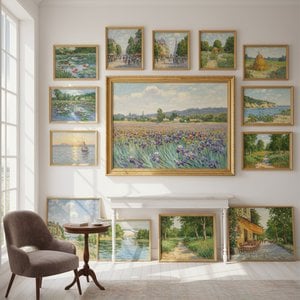
 Náhled v interiéru
 Sdílet
 Sdílet
 Podrobnosti o díle
 Průvodce

 Stáhnout
 Podobné položky
 Rentgenové snímky
 Slideshow
 Q&A
Q&A Statistiky
Landscape
 Hague School
 29.0 x 27.0 cm
 Leeds Art Gallery
 Zobrazit více
Ručně malovaná olejová reprodukce
Rukou malované olejné plátno v libovolném rozměru i s rámem, vyrobené našimi umělci na zakázku. ( Přepnout na tisk Přepnout na digitální obraz)




































Vyberte si z našich přednastavených velikostí, které odpovídají původním proporcím díla.

Zadejte šířku a výšku, které potřebujete pro váš rám nebo stěnu. Protože se jedná o ruční malbu, při výběru jiného formátu může umělec kolem obrazu domalovat o něco více, nebo jej mírně oříznout — rozhodnete si vy. Před zahájením malby vám zašleme digitální náhled ke schválení. Obraz zobrazený na této stránce neodpovídá skutečnému výsledku — pouze digitální náhled jej zobrazuje.
Po přijetí objednávky vám tým ArtsDot.com zašle e-mail s pokyny a poskytne náhledovou verzi.
Celosvětová doprava () za 3–4 týdny namísto standardních 5 týdnů. (29 říjen). Bez kompromisů v kvalitě.

Zdarma celosvětová expresní doprava

Vysoce kvalitní lněné plátno

Kompletní pojištění přepravy

Záruka vrácení celního poplatku

Záruka věrného barevného souladu

100dení lhůta pro vrácení zboží (pouze při vadách výroby)

100% záruka vrácení peněz

Sleva při více objednávkách
 Skleněná varianta je dostupná pouze u rozměrů menších než 110 cm

Landscape
Technika reprodukce
Rozměry reprodukce
-


Celková cena za vybrané možnosti reprodukcí
Kč 5663
Podobná díla


Biografie umělce
The Quiet Master of the Dutch Countryside
Théophile Emile Achille de Bock (1851–1904) remains one of the most evocative, if understated, voices of the Hague School. Born in The Hague, Netherlands, De Bock’s early life was far removed from the bohemian studios of the art world; he initially pursued a pragmatic career as a clerk for the Dutch Railway Company. However, an innate passion for drawing and a profound sensitivity to the natural world eventually pulled him away from the ledger books and toward the easel. This transition marked the beginning of a lifelong devotion to capturing the atmospheric soul of the Dutch landscape, a pursuit that would define his legacy.
His artistic journey was shaped by rigorous training under some of the most significant figures of the era. By studying under masters such as J.W. van Borselen, J.H. Weissenbruch, and Jacob Maris, De Bock became deeply immersed in the principles of Tonalism. These mentors taught him to look beyond mere topographical accuracy, encouraging instead a focus on light, moisture, and the subtle gradations of color that define the Low Countries. His association with Willem Maris further enriched his palette, fostering a collaborative spirit that allowed him to refine his ability to translate the heavy, damp air of the Netherlands onto canvas.
A Vision of Atmospheric Tonalism
De Bock’s work is characterized by a distinctive, often somber temperament. While some contemporary critics occasionally dismissed his style as overly subdued or sketch-like, modern admirers recognize this as a deliberate and masterful choice. He possessed an unparalleled ability to evoke the quietude of the Dutch polders, often utilizing a dark, moody palette to create scenes of profound contemplation. His landscapes are rarely about dramatic action; rather, they are studies in stillness, where the interplay of shadow and soft light suggests the fleeting moments of dusk or the heavy presence of an approaching storm.
The influence of the French Barbizon School played a transformative role in his development. During his frequent travels to Paris and the forests of Barbizon in 1880, De Bock encountered the works of Gustave Courbet and Jean-François Millet. This exposure to French Realism deepened his commitment to depicting rural life and natural landscapes with an unvarnished, honest eye. He sought to capture the essence of the earth—the texture of the soil, the weight of the clouds, and the solitary beauty of a farmstead at twilight—blending the Dutch tonalist tradition with a newfound French-inspired realism.
Legacy and Historical Significance
The historical significance of De Bock lies in his unwavering commitment to his artistic vision. Even when faced with pressure to diversify his subject matter, he remained steadfastly dedicated to the pastoral scenes that resonated most deeply with his spirit. This dedication was noted even by Vincent van Gogh, who recognized De Bock’s inherent talent and temperament, though Van Gogh famously attempted to persuade him to explore more dynamic and varied themes. This interaction serves as a testament to the respect De Bock commanded among his peers.
Today, the works of Théophile de Bock are celebrated for their emotional depth and technical mastery of atmosphere. His paintings serve as windows into a vanished era of the Dutch landscape, offering a sense of peace and melancholy that continues to captivate collectors and historians alike. Through his meticulous observation and devotion to the subtle nuances of nature, De Bock secured his place as a vital contributor to the Hague School, leaving behind a body of work that remains as evocative and timeless as the landscapes he so lovingly depicted.

Theophile Emile Achille De Bock
1851 - 1904 , Netherlands
Rychlé informace o umělci
- Full Name: Théophile Emile Achille de Bock
- Nationality: Dutch
- Date Of Birth: 1851
- Date Of Death: 1904
- Place Of Birth: The Hague, Netherlands
- Notable Artworks:
- Landscape
- Schaapskooi - October
- Artistic Movement Or Style: Hague School
- Artists Who Influenced This Artist:
- Jacob Maris
- Corot
- Johannes Hendrik Weissenbruch
- Artists Or Movements Influenced By This Artist: ['Vincent van Gogh']
Související články

The Hague School: Realism, Atmosphere & the Dawn of Dutch Impressionism
Explore the Hague School's pivotal role in Dutch art history. Discover realism, atmospheric landscapes & its influence on Impressionism. Learn about key artists like Mauve & Maris with ArtsDot.

Wilhelmus de Zwart: Capturing Dutch Life Through the Lens of Realism & Impressionism
Explore the captivating world of Wilhelmus de Zwart, a Dutch master bridging Realism & Impressionism. Discover his landscapes, cityscapes, and unique technique – a compelling study for art enthusiasts and collectors.

Francisco Goya: 25 mistrovských děl španělského génia | ArtsDot.cz
Prozkoumejte 25 ikonických děl Francisca Goyi – od romantických portrétů po temné tiskoviny. Objevte příběhy, techniky a umělecký význam španělského mistra na ArtsDot.cz. Reprodukce obrazů pro váš interiér.

Top 10 impresionistických krajin: Mistrovská díla, která změnila umění | ArtsDot.cz
Prozkoumejte 10 ikonických impresionistických krajin od Monet, Renoir a dalších. Objevte příběhy umělců, techniky a barvy, které definovaly toto revoluční hnutí. Najděte dokonalý obraz pro váš interiér na ArtsDot.cz
Top 10 impresionistických krajin: Mistrovská díla, která změnila umění | ArtsDot
Prozkoumejte 10 ikonických impresionistických krajin od Monet, Renoir a dalších. Objevte příběhy umělců, techniky a barevnost tohoto revolučního hnutí. Najděte perfektní obraz pro váš interiér na ArtsDot.com