


 Náhled v interiéru
 Sdílet
 Sdílet
 Podrobnosti o díle
 Průvodce

 Stáhnout
 Podobné položky
 Rentgenové snímky
 Slideshow
 Statistiky
Self-Portrait
 Drawing
- WallArt
- Pre-Raphaelite Revival
 1859
1859- 19th Century
 17.0 x 15.0 cm
 Tate Britain
 Zobrazit více
Ručně malovaná olejová reprodukce
Rukou malované olejné plátno v libovolném rozměru i s rámem, vyrobené našimi umělci na zakázku. ( Přepnout na tisk Přepnout na digitální obraz)




P118B Kč10

P118H Kč10

P118W Kč10

P438Z Kč10

P508JH Kč12

P508YH Kč12

P805H Kč10

P805Z Kč10

P919BZ Kč10

P919G Kč10

P919XJ Kč10

P959ZH Kč10

P968JZ Kč12

W106C Kč8

W218G Kč10

W218JH Kč8

W218Y Kč10

W307PJ Kč10

W316G Kč10

W316PJ Kč8

W316Y Kč10

W398PJ Kč8

W4111J Kč10

W500HY Kč15

W500JH Kč15

W692G Kč12

W849H Kč8

W940BG Kč15

W953PJ Kč8




Vyberte si z našich přednastavených velikostí, které odpovídají původním proporcím díla.

Zadejte šířku a výšku, které potřebujete pro váš rám nebo stěnu. Protože se jedná o ruční malbu, při výběru jiného formátu může umělec kolem obrazu domalovat o něco více, nebo jej mírně oříznout — rozhodnete si vy. Před zahájením malby vám zašleme digitální náhled ke schválení. Obraz zobrazený na této stránce neodpovídá skutečnému výsledku — pouze digitální náhled jej zobrazuje.
Po přijetí objednávky vám tým ArtsDot.com zašle e-mail s pokyny a poskytne náhledovou verzi.
Celosvětová doprava () za 3–4 týdny namísto standardních 5 týdnů. (26 říjen). Bez kompromisů v kvalitě.

Zdarma celosvětová expresní doprava

Vysoce kvalitní lněné plátno

Kompletní pojištění přepravy

Záruka vrácení celního poplatku

Záruka věrného barevného souladu

100dení lhůta pro vrácení zboží (pouze při vadách výroby)

100% záruka vrácení peněz

Sleva při více objednávkách
 Skleněná varianta je dostupná pouze u rozměrů menších než 110 cm

Self-Portrait
Technika reprodukce
Rozměry reprodukce
-


Celková cena za vybrané možnosti reprodukcí
Kč 5630
A Glimpse into the Soul: The Introspective World of Simeon Solomon
In the quiet, monochromatic depths of Simeon Solomon’s 1859 Self-Portrait, we encounter more than just a mere likeness; we witness a profound moment of psychological vulnerability. This delicate drawing, rendered with the sensitive touch characteristic of the early Pre-Raphaent era, captures a figure lost in deep contemplation. The subject, possessing long, elegantly styled hair and a pensive gaze that drifts toward an unseen horizon, serves as a window into the artist's internal landscape. Through the masterful use of light and shadow in this black and white medium, Solomon invites the viewer to share in a private moment of introspection, where the boundaries between the creator and the creation begin to blur.
The composition is enriched by a subtle sense of place, featuring a window that frames the subject against a backdrop containing a hanging painting. This layering of imagery—a portrait within a portrait—adds a sophisticated depth to the work, suggesting the layers of identity that Solomon himself navigated throughout his complex life. The interplay between the physical setting and the emotional weight of the expression creates a tension that is both haunting and beautiful, making this piece an exquisite example of how Victorian artists utilized domestic intimacy to explore much larger, universal themes of longing and self-discovery.
Symbolism and the Pre-Raphaelite Spirit
To understand this work, one must look through the lens of the Pre-Raphaelite movement, a period defined by an intense devotion to detail and a fascination with symbolic truth. While Solomon’s later works became famous for their explorations of Jewish identity and classical mythology, this early self-portrait reveals the foundational seeds of his artistic preoccupation: the exploration of the "inner self." The soft textures of the hair and the flowing drapery of the dress are not merely decorative; they represent a tactile connection to the physical world that contrasts sharply with the ethereal, distant gaze of the subject.
For the discerning collector or interior designer, this piece offers a unique opportunity to introduce a sense of historical gravity and poetic melancholy into a space. The artwork functions as a focal point of quietude, perfect for a study, a library, or a gallery wall where conversation and reflection are encouraged. Its monochromatic palette ensures a timeless elegance, allowing it to integrate seamlessly into both classical and contemporary decor, providing a sophisticated touch of Victorian romanticism that transcends the passing trends of modern design.
A Timeless Legacy for the Modern Collector
Owning a reproduction of such a significant piece is an act of preserving a fragment of art history. Solomon’s life, marked by both immense brilliance and profound tragedy, imbues his work with an emotional resonance that remains palpable over a century later. This Self-Portrait stands as a testament to the power of the line and the depth of the human spirit. It is a piece that does not merely decorate a room but breathes life into it, offering a continuous dialogue between the nineteenth-century artist and the modern observer.
Whether you are drawn to the technical precision of the drawing or the evocative atmosphere of the Victorian era, this work serves as an enduring inspiration. It invites anyone who views it to pause, to look inward, and to find beauty in the quietest moments of existence.
Otázky a odpovědi
Využívá „Self-Portrait“ od Simeon Solomon výrazné kontrasty, nebo jemné harmonie?
V díle "Self-Portrait" se Gentle kontrast snoubí s Unified Palette harmonií.
Jakou úroveň kontrastu má dílo „Self-Portrait“ od Simeon Solomon?
„Self-Portrait“ od Simeon Solomon vykazuje Gentle kontrast mezi světlými a tmavými částmi.
Je k dispozici vysokorozlišená verze ke stažení díla "Self-Portrait"?
Digitální kopii díla „Self-Portrait“ od Simeon Solomon si můžete objednat jako stažení digitálního obrazu ve vysokém rozlišení na jeho stránce Digitální snímek.
Podobná díla


Biografie umělce
A Life Shrouded in Beauty and Scandal: The World of Simeon Solomon
Simeon Solomon, a name whispered with both reverence and regret within the annals of Victorian art, occupies a unique and often tragic position amongst the Pre-Raphaelites. Born in London in 1840 into a prominent Jewish family – the eighth and final child of merchant Michael (Meyer) Solomon and artist Catherine (Kate) Levy – his life was one of remarkable artistic promise tragically curtailed by societal prejudice and personal demons. Unlike many of his contemporaries who enjoyed long and celebrated careers, Solomon’s trajectory was abruptly altered by scandal, yet his work continues to captivate with its delicate beauty, evocative symbolism, and poignant exploration of themes often considered taboo for the era. He wasn't merely a painter; he was a cultural mirror reflecting the complexities of Victorian England, grappling with faith, desire, and identity in a rapidly changing world.Early Influences and Artistic Development
Solomon’s artistic education began within his own family circle. His mother possessed an amateur talent for miniature painting, while his elder siblings, Abraham and Rebecca Solomon, were both established artists exhibiting at the Royal Academy. It was from them, particularly his brother Abraham, that Simeon received his initial training, learning the fundamentals of draftsmanship and composition. He formally studied at Carey’s Art Academy in 1852 before entering the prestigious Royal Academy Schools in 1856. This period proved pivotal, as it introduced him to the burgeoning Pre-Raphaelite Brotherhood through Dante Gabriel Rossetti. The encounter with Rossetti, along with friendships forged with Edward Burne-Jones and Algernon Charles Swinburne, profoundly shaped Solomon’s artistic sensibilities. He embraced their commitment to detailed realism, vibrant color palettes, and a fascination with literature, mythology, and religious narratives. Early works like *Isaac Offered* (1858) demonstrate this initial influence, showcasing a meticulous attention to detail and a dramatic narrative style characteristic of the Pre-Raphaelites. However, Solomon quickly began to forge his own path, infusing his paintings with a distinctly personal vision.The Pre-Raphaelite Brotherhood and Artistic Exploration
Solomon’s involvement with Rossetti and Burne-Jones cemented his place within the influential Pre-Raphaelite Brotherhood. This group championed artistic ideals rooted in medieval art – rejecting academic conventions and prioritizing emotional sincerity and imaginative storytelling. The brotherhood's aesthetic principles profoundly impacted Solomon’s artistic practice, encouraging him to delve into biblical narratives and classical mythology with unparalleled sensitivity. He skillfully blended meticulous observation with lyrical expression, creating images imbued with spiritual depth and psychological nuance. His depictions of figures like Moses and Shadrach, Meshach, Abednego exemplify this approach, capturing both the grandeur of religious symbolism and the human experience of faith—often confronting uncomfortable truths about morality and societal expectations. Solomon’s artistic explorations extended beyond mere representation; he sought to convey profound emotions and ideas through carefully crafted compositions and luminous color palettes.Themes of Faith, Desire, and Identity – A Bold Vision
Solomon's artistic output was remarkably diverse, encompassing biblical scenes, classical mythology, and genre paintings depicting Jewish life and rituals. He found particular inspiration in the Hebrew Bible, creating works such as *Moses* (1860) and *Shadrach, Meshach, and Abednego* (1863), which resonated with his own cultural heritage. Yet, it was his exploration of classical themes that truly set him apart. Paintings like *In the Temple of Venus* (1863) and *Bacchus* (1867) reveal a fascination with sensuality and beauty, often imbued with an undercurrent of melancholy and longing. These works also hint at Solomon’s growing interest in same-sex desire, a theme he would explore more explicitly – and dangerously – throughout his career. His association with Algernon Charles Swinburne, whose poetry celebrated unconventional love and challenged Victorian morality, undoubtedly fueled this exploration. Solomon's art became a subtle yet powerful commentary on the constraints of Victorian society, hinting at hidden passions and unspoken desires. He was one of the first artists to openly depict homoerotic themes, albeit often veiled in classical allegory or biblical narrative.Scandal and Decline – A Tragic Interruption
The year 1873 marked a devastating turning point in Solomon’s life. His arrest in a public urinal for attempting to commit sodomy brought swift and brutal consequences. Though he received a relatively light fine, the scandal shattered his reputation and effectively ended his career as a publicly exhibited artist. A subsequent arrest in Paris in 1874 led to a three-month prison sentence. Shunned by much of the art establishment, Solomon descended into alcoholism and poverty. Despite these hardships, however, he continued to create art—albeit often under difficult circumstances—finding solace in his craft amidst personal turmoil. He spent time in the St Giles Workhouse, continuing to paint even amidst hardship. His death in 1905, resulting from complications related to alcoholism, went largely unnoticed by the wider public. Yet, Solomon’s legacy persists as a testament to artistic courage and a poignant reminder of the limitations imposed by societal prejudice—a figure whose work continues to inspire debate and admiration for its daring exploration of human emotion and desire. His story serves as a tragic illustration of how personal struggles can overshadow artistic achievement, leaving behind an enduring image of brilliance tragically curtailed.
Simeon Solomon
1840 - 1905 , Spojené království
Rychlé informace o umělci
- Artistic Movement Or Style: Pre-Raphaeliti
- Artists Who Influenced This Artist:
- Rossetti
- Burne-Jones
- Date Of Birth: 1840
- Date Of Death: 1905
- Full Name: Simeon Solomon
- Nationality: Britský
- Notable Artworks:
- Isaac Offered
- Moses
- Shadrach, Meshach...
- Bacchus
- Place Of Birth: Londýn, UK
Související články

Arthur Hughes: Pre-Raphaelite Visions of Beauty & Melancholy
Explore the captivating world of Arthur Hughes (1832-1915), a leading Pre-Raphaelite painter. Discover his dreamy landscapes, poetic narratives & iconic Victorian artworks. Learn about his life, style & collecting today.

Dante Gabriel Rossetti: Top 25 děl a umělecké ikony pro váš domov | ArtsDot.cz
Prozkoumejte 25 ikonických děl Dante Gabriela Rossettiho – symbolismus, viktoriánský romantismus a krásné ženy v obrazech. Reprodukce obrazů nejvyšší kvality pro váš interiér na ArtsDot.cz. Objevte celou kolekci online!
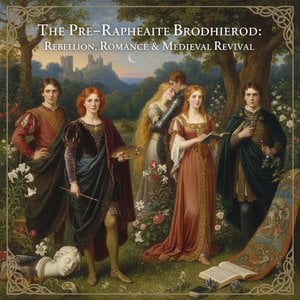
The Pre-Raphaelite Brotherhood: Rebellion, Romance & Medieval Revival
Explore the captivating world of the Pre-Raphaelite Brotherhood! Discover their rebellious spirit, iconic masterpieces & lasting influence on art history. Learn about Rossetti, Millais & more.

Ford Madox Brown: Pre-Raphaelite Visionary & Victorian Social Commentary
Explore the life & art of Ford Madox Brown, a pivotal Pre-Raphaelite painter renowned for his powerful social commentary and masterpiece 'Work'. Discover his lasting influence on British art history.

Sir John Everett Millais: Pre-Raphaelite Rebellion & Victorian Narrative Detail
Explore the revolutionary art of Sir John Everett Millais & the Pre-Raphaelite Brotherhood. Discover their radical realism, symbolic narratives, and lasting impact on Victorian aesthetics. A deep dive into 19th-century masterpieces.