

 Náhled v interiéru
 Sdílet
 Sdílet
 Podrobnosti o díle
 Průvodce

 Stáhnout
 Podobné položky
 Rentgenové snímky
 Slideshow
 Otázky a odpovědi
 Statistiky
Number 3

- 77.0 x 57.0 cm


 Zobrazit více
Giclée / Umělecký tisk
Giclée nebo plátěný tisk muzeální kvality s rychlou výrobou a širokou nabídkou povrchových úprav. ( Koupit ručně malovaný obraz Přepnout na digitální obraz)




P118B Kč10

P118H Kč10

P118W Kč10

P438Z Kč10

P508JH Kč12

P508YH Kč12

P805H Kč10

P805Z Kč10

P919BZ Kč10

P919G Kč10

P919XJ Kč10

P959ZH Kč10

P968JZ Kč12

W106C Kč8

W218G Kč10

W218JH Kč8

W218Y Kč10

W307PJ Kč10

W316G Kč10

W316PJ Kč8

W316Y Kč10

W398PJ Kč8

W4111J Kč10

W500HY Kč15

W500JH Kč15

W692G Kč12

W849H Kč8

W940BG Kč15

W953PJ Kč8




Vyberte si z našich přednastavených velikostí, které odpovídají původním proporcím díla.

Zadejte šířku a výšku, které potřebujete pro váš rám nebo stěnu. Tisk lze pouze oříznout, nikdy však nelze zvětšit obraz nad jeho původní rozměr, proto při výběru jiného formátu dochází ke ztrátě části obrazu. Před samotným tiskem vám zašleme digitální náhled k schválení. Obraz zobrazený na této stránce nenabízí skutečný výřez — ten uvidíte pouze v náhledu.
Celosvětové doručení () do 2 týdnů namísto standardních 4/5 týdnů. (20 listopad)

Zdarma celosvětová expresní doprava

Vysoce kvalitní lněné plátno

Kompletní pojištění přepravy

Záruka vrácení celního poplatku

Záruka věrného barevného souladu

100dení lhůta pro vrácení zboží (pouze při vadách výroby)

100% záruka vrácení peněz

Sleva při více objednávkách
 Skleněná varianta je dostupná pouze u rozměrů menších než 110 cm

Number 3
Giclée / Umělecký tisk
Rozměry reprodukce
-


Celková cena za vybrané možnosti reprodukcí
Kč 1361
Jackson Pollock: A Revolutionary in Abstract Expressionism
Jackson Pollock (1912-1956) stands as a monumental figure within the abstract expressionist movement, forever altering the trajectory of modern art. His groundbreaking approach to painting—characterized by spontaneous gesture and unconventional materials—challenged established artistic conventions and cemented his place among the most influential artists of the 20th century. Pollock’s legacy continues to inspire contemporary creatives, demonstrating the enduring power of innovation and emotional resonance in visual art.Early Life and Influences
Paul Jackson Pollock was born January 28, 1912, in Cody, Wyoming—a formative experience that instilled a restless spirit within him. His upbringing involved frequent relocations due to his father’s profession as a land surveyor, fostering an environment of instability which arguably fueled his artistic inclination. Despite pursuing formal studies at NYU and the Art Students League, Pollock's initial artistic explorations were shaped by regionalist painters like Thomas Hart Benton and David Alfaro Siqueiros—artists who championed depictions of American landscapes and social realities. Furthermore, he absorbed significant inspiration from Surrealism, particularly the techniques of automatism and dreamlike imagery, alongside Native American art forms that emphasized ritualistic patterns and symbolic representations.Artistic Development & Technique
Pollock’s artistic journey began with representational works reflecting his teachers' stylistic sensibilities—scenes rendered in a regionalist style imbued with meticulous detail. However, he swiftly transitioned toward experimentation, delving into diverse mediums and approaches. During the 1930s, Pollock honed his skills in watercolor and gouache, mastering tonal gradations and blending techniques—skills that would prove invaluable as he developed his signature drip technique. This method involved pouring or splashing liquid household paint onto a horizontal surface, allowing Pollock to engage with the canvas from all angles and creating an immersive artistic experience for both himself and the viewer. The resulting paintings are characterized by dynamic compositions, vibrant colors, and intricate patterns that seem to dance across the surface—a deliberate departure from traditional painting methods.“Number 3” – An Emblematic Work
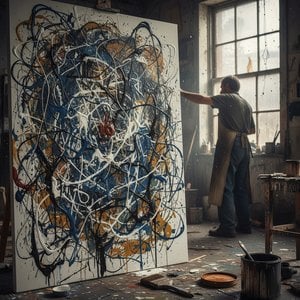
“Number 3,” created in 1948, exemplifies Pollock’s revolutionary drip technique and embodies his artistic philosophy. This monumental canvas—measuring 77.2 by 57.2 centimeters—is a testament to his unwavering commitment to spontaneity and process-based artmaking. The painting's palette is dominated by shades of blue, red, yellow, and orange, interwoven with black lines that contribute to the artwork’s textural complexity. Pollock meticulously applied paint using a drip method, resulting in an astonishing array of shapes and textures—a visual manifestation of his inner turmoil and a bold assertion of artistic freedom. The painting was showcased at the Betty Parsons Gallery in New York City during 1948, marking a pivotal moment in Pollock’s artistic career and establishing him as a leader within the burgeoning abstract expressionist movement.Historical Context & Legacy
“Number 3” emerged against the backdrop of a period marked by profound social and intellectual upheaval—the postwar era witnessed an explosion of creativity fueled by anxieties about nuclear war and a yearning for new forms of artistic expression. Pollock’s work resonated deeply with fellow artists like Willem de Kooning, fostering a collaborative spirit that propelled the abstract expressionist movement forward. His innovative technique not only challenged conventional notions of beauty but also fundamentally altered the way artists approached their craft—inspiring generations of creatives who followed in his footsteps and shaping the landscape of contemporary art. The painting’s enduring influence is undeniable, serving as a bridge between traditional painting traditions and modern abstraction.Exhibitions & Recognition
“Number 3” gained considerable acclaim upon its debut at the Museum of Modern Art (MoMA) retrospective exhibition in New York City in 1956—a recognition that underscored Pollock’s impact on the art world and solidified his status as a visionary artist. This monumental undertaking showcased the breadth of Pollock's oeuvre, demonstrating his mastery across various mediums and styles. The painting continues to captivate audiences today, reflecting the timeless appeal of abstract expressionism and its capacity to evoke profound emotional responses.- Jackson Pollock - A major figure in the abstract expressionist movement.
- Number 3 - A painting that exemplifies Pollock’s drip technique and artistic philosophy.
- Painting by 'Jackson Pollock' | Jackson Pollock:Number 3 (77 x 57 cm,Abstract Expressionism,Enamel,)
- Museum of Modern Art - Hosted a memorial retrospective exhibition for Pollock in 1956.
Otázky a odpovědi
Patří dílo „Number 3“ mezi nejpopulárnější práce autora Jackson Pollock?
„Number 3“ je klasifikováno jako Iconic.
Kdo je autorem díla "Number 3"?
Dílo "Number 3" se připisuje autorovi Jackson Pollock.
Kde mohu najít statistiky k dílu „Number 3“ od Jackson Pollock?
Statistiky k dílu „Number 3“ od Jackson Pollock naleznete na stránce Statistiky tohoto díla: měsíční návštěvnost díla, návštěvnost děl daného umělce a rozpis nedávných návštěvníků podle zemí a jazyků.
Podobná díla


Související články

Top 10 mistrovských děl abstraktního expresionismu | Umění a dekorace s ArtsDot.com
Prozkoumejte 10 ikonických děl abstraktního expresionismu od Pollocka, Rothka a dalších. Objevte příběhy za obrazy, techniky a barevné palety tohoto revolučního uměleckého hnutí. Reprodukce obrazů s ArtsDot.com – luxusní dekorace pro váš interiér. Prozkoumejte celou kolekci online!
Paul Jackson Pollock: A Radical Departure – Exploring Abstract Expressionism's Pioneering Figure and His Enduring Legacy
Explore the revolutionary art of Jackson Pollock & Abstract Expressionism. Discover his iconic drip paintings, lasting impact, and considerations for collecting this pivotal American artist. Expert insights at ArtsDot.

25 Mistrovských Děl MoMA: Umění, které Změnilo Svět | ArtsDot.cz
Prozkoumejte 25 ikonických děl z MoMA v New Yorku! Obrazy Van Gogha, Picassa a Warhola ožívají. Inspirace pro moderní dekorace interiéru a luxusní reprodukce umění na ArtsDot.com.

Beyond Representation: Emotional Depth & Formal Innovation in Abstract Expressionism
Explore the profound emotional depth & formal innovation of Abstract Expressionism. Discover key artists, collecting insights, and investment potential with expert guidance. Learn more now.

Thomas Pollock Anshutz: Capturing American Life with Realism & Reform
Explore the life & work of Thomas Pollock Anshutz, a key figure in American Realism. Discover his powerful paintings, influence on art education, and commitment to portraying everyday life with honesty and social awareness.


